Agenda-setting intelligence, analysis and advice for the global fashion community.
Agenda-setting intelligence, analysis and advice for the global fashion community.

Earlier this month, Gap rereleased its “Happy Stripe” design, reimagining the beloved 1990s knit as a colourful mesh tank, skirt and maxi dress.
Yet instead of falling for the products’ nostalgia, shoppers fixated on one detail: the fabric composition.
Many had expected a faithful reinterpretation of the original, which was made of cotton, only to find that the new garments were composed of 80 percent polyester and 20 percent elastane. The synthetic material make up quickly led to a wave of criticism on social media, with commenters likening the collection to Shein and questioning why they should pay premium prices for synthetic clothing.
“If I’m going to spend my hard-earned money on something, I want to feel that it’s worth it,” said Eleonora Ferrari, co-founder of natural, upcycled accessories label Alla Svago, in an interview. “If I’m spending £70 or £80 on a garment, I’d much rather it be linen or cotton than acrylic or polyester.”
ADVERTISEMENT
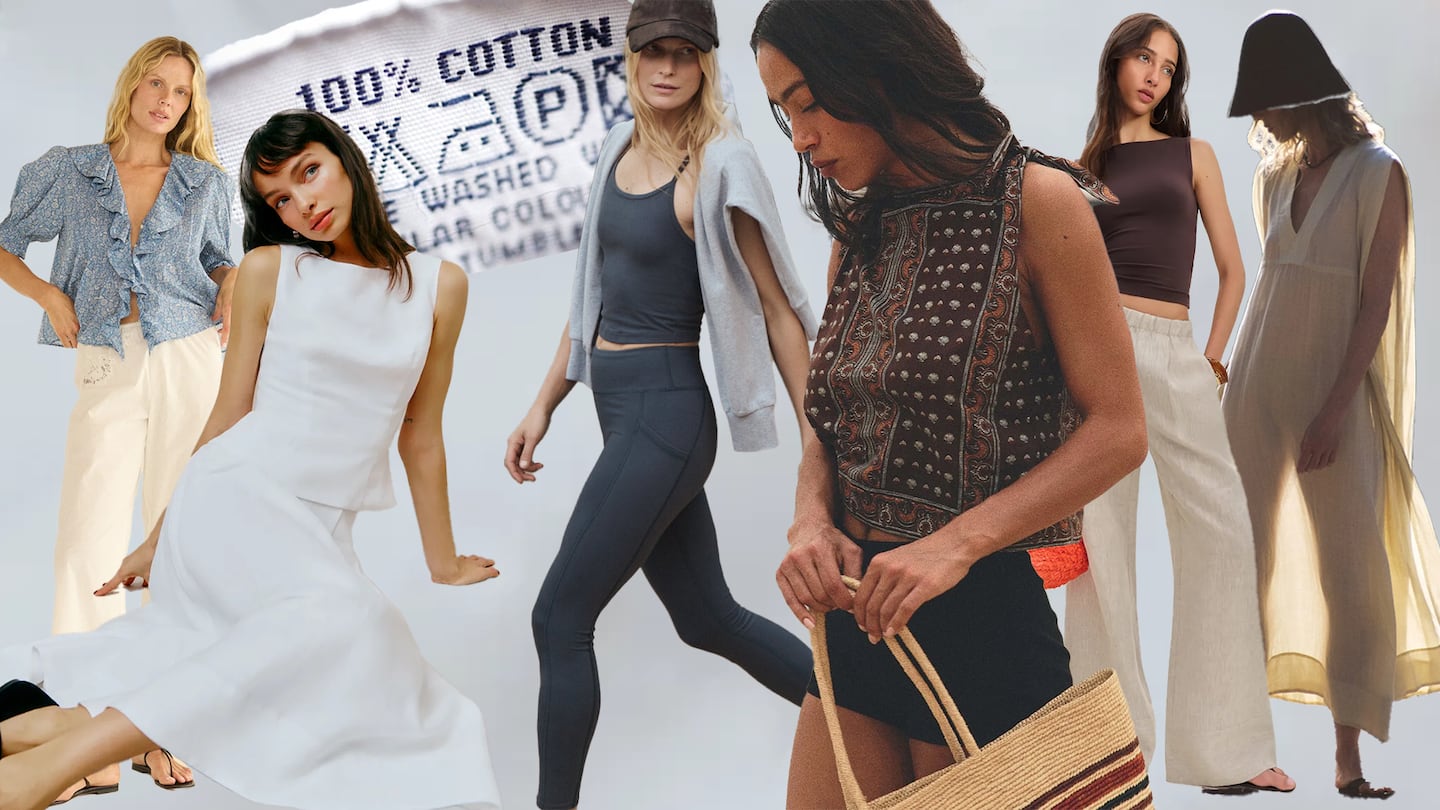
That reaction reflects a broader shift in how consumers are evaluating their clothing. Many are turning away from synthetics, demonising them as little more than cheap plastic, and seeking out products made of natural fibres such as cotton, linen and wool, which are often portrayed as more comfortable and durable.
The renewed enthusiasm for natural fibres, however, is about more than just value. It sits at the intersection of several cultural shifts reshaping consumer behaviour: growing concerns around health, including the impact of microplastics and chemicals shed by fabrics; frustration with increasingly synthetic wardrobes; a desire for breathable fabrics brought about by the warming climate; and a broader wellness movement that has prompted people to scrutinise everything from food and skincare to the clothes they wear.
Consequently, the discourse about fibre composition that was once largely confined to sustainability circles have become more widespread.
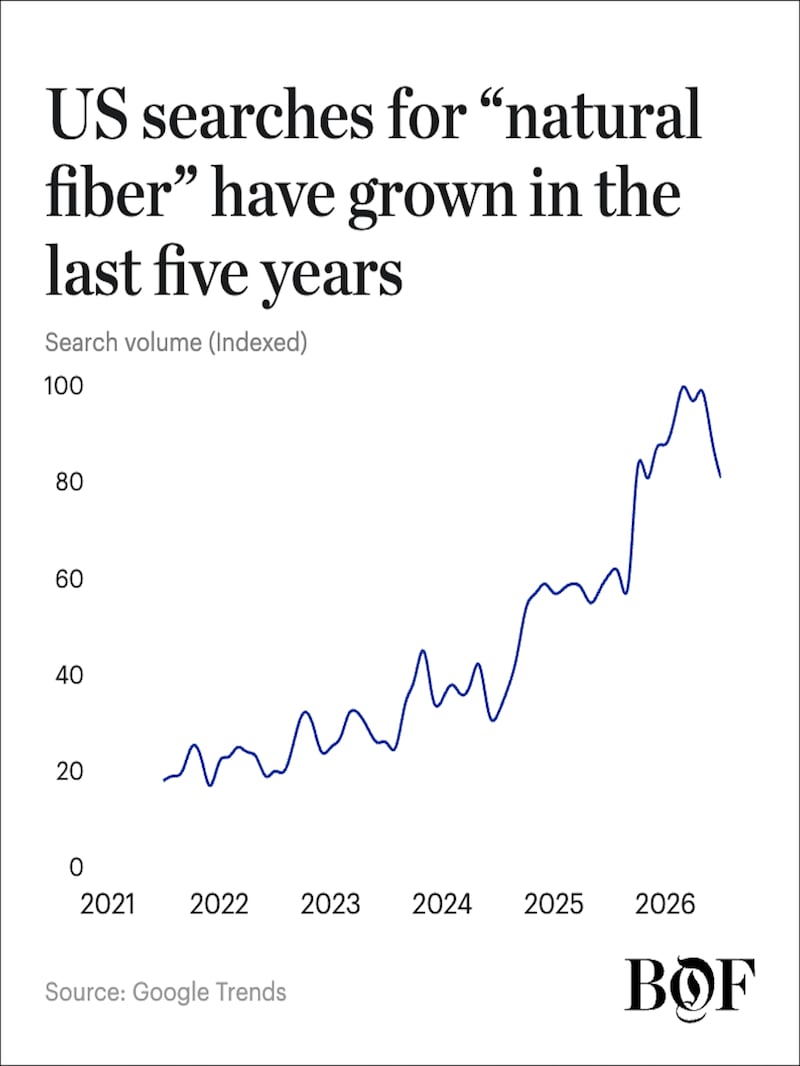
In the past five years, for example, Google searches in the US for “natural fiber” have risen roughly 110 percent, peaking in March this year according to Google Trends, while searches for “natural material clothing” have increased around 850 percent, also having peaked in March 2026. Worldwide, searches for the latter have quadrupled. Tellingly, searches for “Is viscose a natural fibre?” have risen by more than 5,000 percent, suggesting consumers are no longer simply choosing between fabrics but increasingly trying to understand them and what it might mean for them.
“I think the starting point is actually very simple: People realised that a lot of their clothes don’t last,” said fashion content creator and author Andrea Cheong, who has spent years educating consumers on garment quality and fibre composition. As shoppers became increasingly frustrated by poor-quality clothing, they began paying closer attention to what garments were actually made from. “That’s the new norm,” she said.
For many, concerns about synthetic fibres have been fuelled by growing awareness of issues such as microplastics, alongside wider conversations around chemicals such as PFAS, which are used for purposes like waterproofing and have been linked to increased risks of cancer.
According to a seven-country survey conducted by Cotton Incorporated, which promotes cotton as a plastic-free alternative to materials like polyester, awareness of microplastic pollution has increased steadily over the past decade, with 45 percent of consumers globally now familiar with the issue, compared with 27 percent in 2017. Most respondents were also able to correctly identify polyester, nylon and spandex as fibres that contain microplastics.
But consumers are also arriving at natural fibres for a variety of other reasons.
ADVERTISEMENT
Younger shoppers often approach material choices through climate concerns, said Sydney Oh, founder of communications and PR firm Oh the Agency. Millennials and Gen X, meanwhile, who tend to have higher disposable income, increasingly connect clothing to health and wellness as many become parents, pay greater attention to the products they use and are able to pay a premium for higher-quality items.
Others are simply looking for clothing that feels better, lasts longer and performs more comfortably in a warming climate. Oh pointed out that, in regions like the Middle East and South Asia that experience extreme heat, natural fibres are seen as a practical choice.
“The motivations may differ, but the outcome is the same,” Oh said, who added that her own buying habits have evolved as she’s become more aware of PFAs and plastic shedding.
The result of these various trends is more shoppers taking an interest in the material make up of the products they’re buying.
It’s a change Cheong has seen firsthand. When she began posting videos explaining garment quality and fibre composition in 2019, the audience was small and had little knowledge of the topics.
“At the beginning, people would ask things like, ‘What is a synthetic fibre?’ or ‘What do you mean by a care label?’” she said. By the end of last year, however, “the conversation had started entering the mainstream.”
The enthusiasm for natural fibres is pushing some brands to prioritise those materials above synthetics or promote their use of only natural fibres. These include the likes of Reformation, Doen, Pact and Rise & Fall, which released a recent summer campaign featuring a woman wearing a gauze linen tunic at the beach with a caption that read, “This and never wearing polyester again.”
Even activewear brands, which have historically been some of the heaviest users of materials like polyester and nylon, are looking to natural alternatives like wool.
ADVERTISEMENT
But synthetics won’t be so easy for the fashion industry to abandon. Polyester’s low cost, paired with its unique material qualities, including durability and malleability, continue to make it a mainstay, relied on for everything from performance to high-fashion creations. While there are growing bio-based alternatives, most of those innovations remain at pilot stages.
Natural materials are also not by definition always the best option, according to Matthew Needham, sustainability consultant and head of sustainability at Central Saint Martins.
“People are drawn to it because consumers usually interpret natural as meaning something good for them,” said Needham, sustainability consultant and head of sustainability at Central Saint Martins.
The growing interest in natural fibres reflects a larger trend in how people understand sustainability itself. Where the conversation once centred on supply chains, emissions and labour conditions, consumers are increasingly defining it through something much more immediate.
“The reality is the general consumer cares less about an impact occurring far away in a supply chain than they care about what is directly touching their skin,” said Needham. “They are thinking about toxins, chemicals and their own health — something that has only grown since the pandemic.”
This change presents both an opportunity and a challenge for brands. Greater consumer curiosity could encourage investment in natural and bio-based materials, but it also risks oversimplifying one of fashion’s most complex environmental debates. Cotton, wool and other natural fibres all carry environmental impacts, depending on how and where they’re produced.
“Too much of anything is not good,” Needham said, warning that a wholesale shift towards cotton alone could simply create new pressures elsewhere in the supply chain.
Still, few believe it’s a bad thing for consumers to be asking questions about how their clothes are made and what they’re made of. Cheong, for one, would like to see the interest in material-makeup continue and develop beyond simple binaries.
“My hope is that awareness around synthetics evolves into something more balanced and lasting,” she said. “Not fear. Not panic. Just more informed purchasing and consciousness about how we buy clothes.”
The consumer base for activewear made of natural materials like cotton and wool is growing, as more people on the political right join progressives in worrying about the health effects of polyester and other synthetics.
As sustainability loses its allure, brands are reframing their messaging around use of natural fibres or avoidance of chemicals to appeal to customers.
The material may be most closely associated with fast fashion, but high-end labels depend on it heavily because of its versatility. They’re not giving it up, even as surging fossil fuel prices push up costs.

Shayeza Walid is Senior Editorial Associate covering Sustainability at The Business of Fashion. She reports on fashion's environmental impact, climate accountability, supply chain and labour issues. Based in London, she also contributes to BoF's Global Markets and UK coverage.
Loading recommended reads…
Christoph Kaul will succeed Amanda Baldwin, who led the hair care label through its acquisition by Henkel earlier this year.
This week, Priya Rao argues that Gen Alpha’s interest in cosmetics and skincare mirrors that of its predecessors,
The sportswear giant's spot in the Dow Jones Industrial Average is looking increasingly uncertain as the brand braces for its exit from the S&P 100.
Beauty brands, major conglomerates and indie labels see perfume as an opportunistic venture for growth. But as category sales moderate, can new scents and players break through?