Agenda-setting intelligence, analysis and advice for the global fashion community.
Agenda-setting intelligence, analysis and advice for the global fashion community.

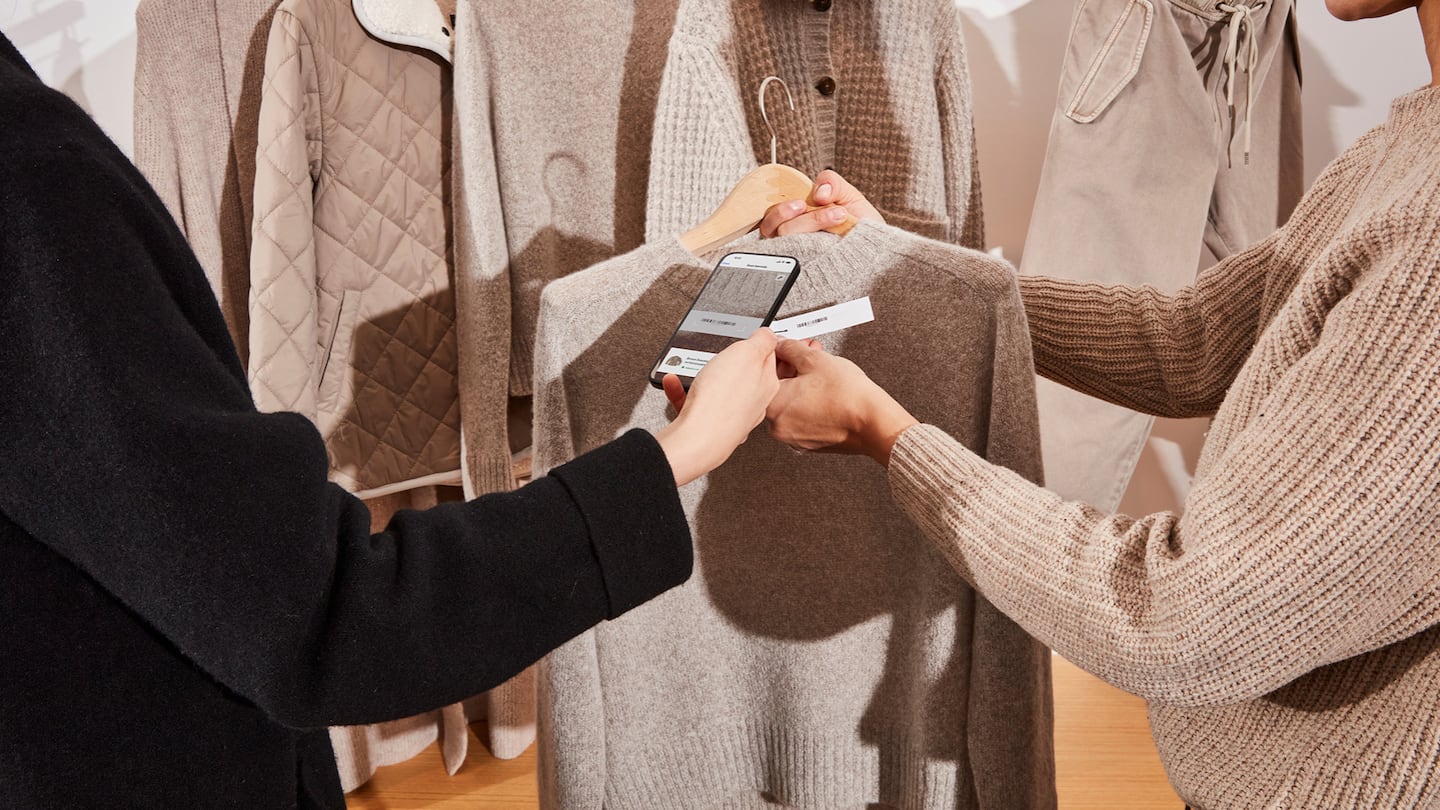

Wholesale has long been the steady part of a fashion brand’s business, a reliable way to reach new customers and move volume. That assumption has been tested. Bankruptcies and restructurings from Matches to Ssense to Saks Global have tightened terms and pushed brands to rethink how much risk they will carry.
NuOrder by Lightspeed sees those shifts up close. The B2B wholesale platform connects brands and retailers in a single network: brands use it to run virtual showrooms, manage orders and plan assortments, while retailers discover, order and restock directly from their point-of-sale system. Its network now includes more than 4,000 brands, from Rag & Bone to Carhartt, and retailers such as Nordstrom and Bloomingdale’s.
From that vantage point, the company sees brands investing more in wholesale, not less. In its State of B2B eCommerce Report 2026, a survey of 200 senior wholesale leaders, 78 percent ranked wholesale as their top investment channel, up from 72 percent last year. Just 18 percent said the same of DTC physical retail, down from 40 percent.
The report points to a reason beyond the numbers: wholesale doubles as a source of market intelligence. Every buyer conversation, assortment decision, reorder and cancellation reflects what customers are buying. Retailers also bring their own market knowledge to those decisions. In NuOrder’s “Retail Insights Report 2025: The Age of Intelligent Buying,” 60 tenured buyers, merchandisers and planners from retailers with over $50 million in revenue said market and consumer research shapes their product strategy more than any other input, including historical trend analysis. The result is a view of demand that reaches beyond a brand’s own stores.
The timing matters, too. US retail sales rose 1.2 percent in August, according to the Census Bureau, but department store sales fell 0.8 percent. When demand moves unevenly, given low consumer confidence and rising prices, brands that spot shifts early have more room to plan.
The challenge is acting on those signals. NuOrder’s B2B report found that 67 percent of brands use sell-through data in daily processes, but only 9 percent report seamless integration with their Enterprise Resource Planning (ERP) systems. The data exists, but often sits in separate systems, which slows the path from insight to action. Retailers face the same problem: buyers named accessing and using data as a growing operational challenge in NuOrder’s report.
BoF’s Yasmine Dahlberg sat down with Marie Baldauf-Lenschen, senior director of Lightspeed Wholesale, to discuss what brands can learn from retail partners, why connecting those signals matters now and where to start as they plan for 2027.

Wholesale has a built-in timing advantage given many orders are still placed months before product reaches the shop floor. Platforms like NuOrder track and analyse those orders together across retailers.
Brands now have more reason to read that view closely. Saks Global’s bankruptcy showed how quickly a retail partner’s troubles can turn into losses, and brands are increasingly asking for regular sell-through reporting as an early warning.
In NuOrder’s 2026 report, respondents said their focus has shifted from chasing volume to protecting profit, making it more valuable to know what is selling before committing to the next buy. Seventy-four percent now report medium visibility into how their products sell at retail, up from 36 percent a year earlier. That means some, but not full, insight into performance once products reach retailers. The direction is encouraging, but most brands are still working with a partial picture.
“Every buyer conversation, every assortment choice, every reorder and even every cancellation is a live market signal,” said Baldauf-Lenschen. “When brands aggregate those signals across hundreds of doors, they can see where demand is softening, which styles are resonating and what’s happening in specific micro markets, much earlier than in their DTC [direct-to-consumer] business.”
Retail buyers add another layer of insights, because they bring in proprietary research most brands don’t have. According to NuOrder’s Retail Insights Report, buyers say market and consumer research shapes their product strategy more than any other input, and 68 percent now use quantitative data as their primary forecasting tool.
Retailers are buying from fewer brands, but buying more from each. According to NuOrder, 76 percent of buyers cited cutting low-performing products and categories as their most common assortment optimisation strategy in 2025. Meanwhile, the share of buyers planning to buy more from key brands grew from 28 percent to 55 percent. The question for brands is how to become one of them.
Shared visibility is the starting point. On NuOrder, brands see how product performs after the order, while retailers see availability and can reorder directly. “Retailers want to know what inventory is available, what’s selling and what they can replenish now,” said Baldauf-Lenschen. “Brands need a clear line of sight into post-order performance and which accounts and regions are driving healthy demand.”
That product-performance data facilitates navigating the most complex step: tailoring product mix, price points and inventory depth to each partner and region, instead of pushing one static seasonal line to every door. “For the retailer, that means higher sell-through and less inventory risk. For the brand, it’s faster reorders and healthier accounts,” she said. “It shifts the relationship from taking an order once a season to actively managing a joint business.”
The broader market gives brands reason to be cautious. According to The State of Fashion 2026 report by BoF and McKinsey & Company, 46 percent of fashion executives expected industry conditions to worsen in 2026, and 76 percent said tariffs would be the defining issue of the year.
In Baldauf-Lenschen’s view, this is why wholesale is attracting investment. “It comes down to control and predictability,” she said. “Digital acquisition costs are unpredictable, but wholesale gives brands much more control over their unit economics and margins. That doesn’t mean wholesale is risk-free. It means brands are clear on which levers they can pull: which retail partners they work with, whether they focus on independents or enterprise retailers, how they structure pricing and margins, and how deeply they sell into an account.”
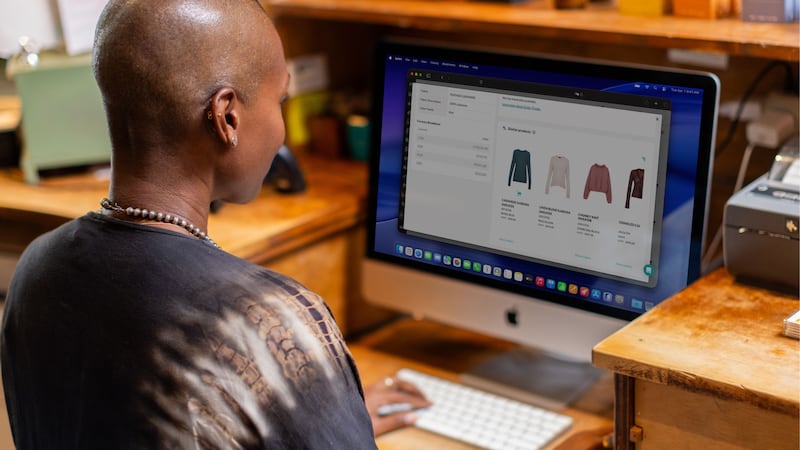
Wholesale is also shaping how brands expand. Fifty-four percent of the leaders NuOrder surveyed said wholesale helps them enter new markets, and 43 percent cited lower operating costs than DTC. Target markets are widening, too: 45 percent plan to expand into Southern Europe, up from 11 percent, and 38 percent into Southeast Asia, up from 3 percent.
“Wholesale is still a really capital-efficient way to expand geographically,” said Baldauf-Lenschen. “You’re not taking on the balance sheet burden of owning physical retail in every market. You can partner with boutiques or enterprise retailers to share that risk while testing whether your product resonates there.”
“Sales is pulling numbers from one dashboard, merchandising is working off a spreadsheet and operations is looking at a third system,” said Baldauf-Lenschen. NuOrder calls the cost “Toggle Tax”: the time lost and errors made as teams jump between disconnected systems. “By the time those teams agree on what happened last week, the window to address it has closed.”
The cost is most visible mid-season. One luxury brand on NuOrder used centralised reporting to spot slowing sell-through in North America early and adjusted its strategy before the slowdown became an end-of-season write-off. “Early visibility gives brands choices,” she said. “You can pivot your assortment, adjust allocation or, if it’s early enough, change your next manufacturing buy.”
Retailers want to know what inventory is available, what’s selling and what they can replenish now. Brands need a clear line of sight into post-order performance and which accounts and regions are driving healthy demand.
— Marie Baldauf-Lenschen
The same holds for AI, which is only as good as the data underneath it. “AI readiness is a reflection of operational readiness,” she said. “If the same product has a different SKU structure, naming convention or wholesale pricing format across your ERP, your B2B platform and your warehouse management software, AI is going to synthesise all of those errors into flawed demand forecasts and reorder recommendations. If your organisation can’t measure, standardise or execute a process manually today, AI will not fix it.”
Brands that get the foundations right stand to gain the most. Use of AI for inventory forecasting among wholesale leaders doubled from 22 percent to 44 percent in the past year, according to NuOrder’s report.
Baldauf-Lenschen recommends three starting points. First, a single data dictionary across product, pricing, customer and inventory attributes. Second, real-time integrations between ERP, B2B and fulfilment systems. Third, tying every AI initiative to operational KPIs such as fill rates and sell-through velocity.
“When the data is clean and connected, whatever AI layer you add on top actually has live, reconciled data to work from,” she said. “That’s when it can make accurate recommendations, not outdated ones, and start showing up in the bottom line.”
This is a sponsored feature paid for by NuOrder by Lightspeed as part of a BoF partnership.
Retail software solution Lightspeed gathered industry leaders in New York City in January 2026 to examine how fragmented technology systems are becoming a competitive liability amid mounting operational pressures.
Loading recommended reads…
Runner Andreas Almgren’s NYC Marathon win in Nike’s Apex runner just brought the brand back into the super shoe battle.
Zalando reported a 0.9 percentage-point drop in its third-quarter gross profit margin to 38.7%, missing market expectations, according to analysts at Jefferies and JPMorgan.
The conglomerate is focussed on sharpening its positioning as a pure-play beauty and personal care organisation.
The Bengaluru-based company plans to use the mammoth funding round to boost manufacturing and more than double its store count to over 1,000 locations.