Agenda-setting intelligence, analysis and advice for the global fashion community.
Agenda-setting intelligence, analysis and advice for the global fashion community.

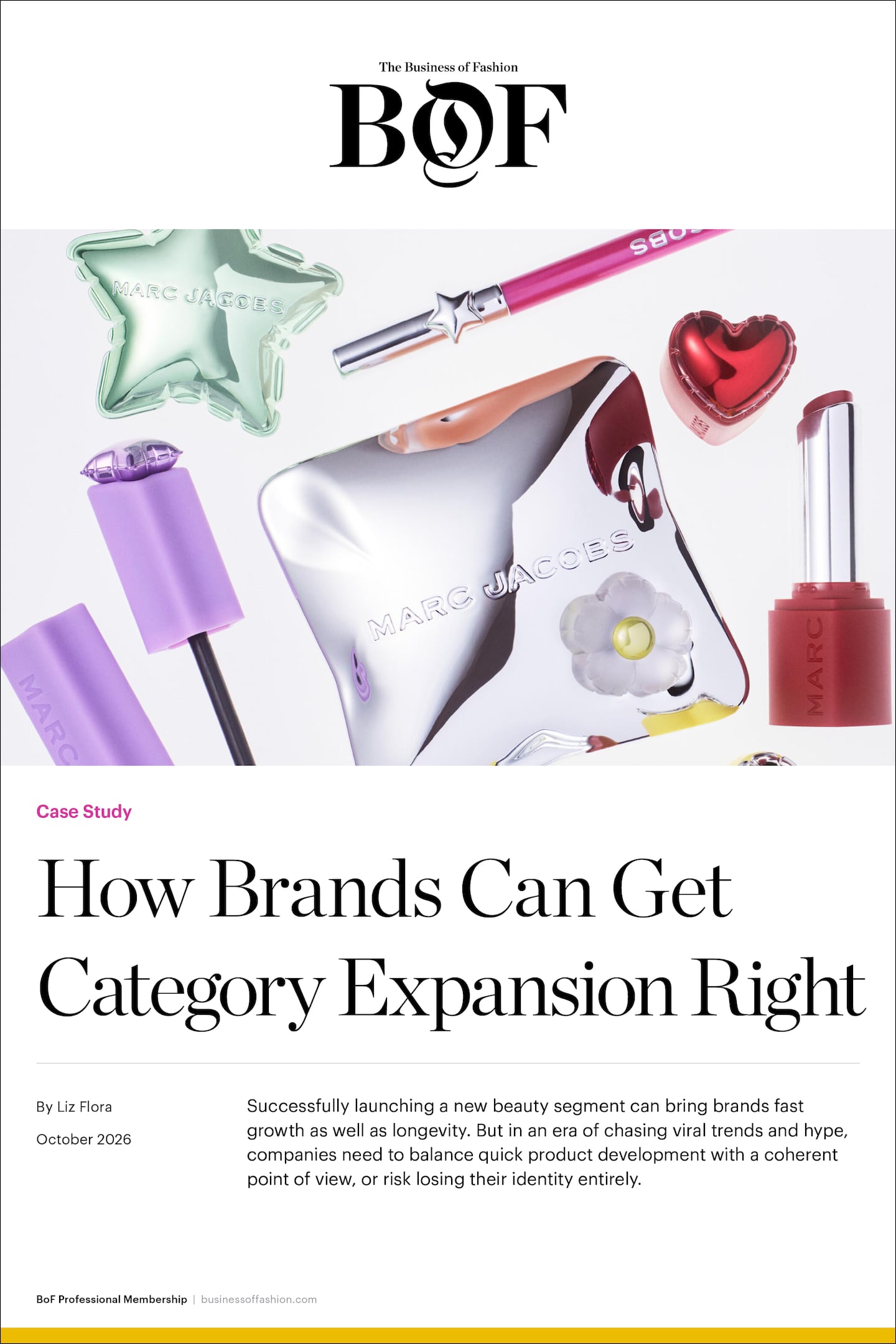
Most beauty brands launch in a single category, whether that be skincare, makeup, fragrance or hair care. But successfully scaling a multi-category empire is an industry North Star.
A diverse selection of products can be key to a label’s longevity, as creating an ecosystem of items can help hedge against the cyclical nature of the beauty market. Brands are furiously adapting, pushing into a vast range of unexpected new areas to ensure that their product portfolios are ready for consumers’ changing tastes.
However, expanding quickly beyond a core category is not without its challenges. The pressure to grow, whether it comes from investors or retailers, has led many companies to develop their product lineups reactively. Poorly executed new launches, such as adopting a trend too late, can confuse consumers and weaken overall brand equity.
“A startup beauty brand needs to drive sustainable and strong brand saliency and velocity of its core products. You don’t want to expand too early, where you don’t really have that strong foundation of your core value proposition,” said David Schneidman, consumer and retail managing director at the professional services firm Alvarez & Marsal.
ADVERTISEMENT
This rush to diversify is seen time and time again and have oversaturated the market after one label’s standout success. Milky toners have launched en masse following the popularity of Rhode’s Glazing Milk Hydrating Ceramide Facial Essence, which debuted in 2023, while bronzer drops were hitting beauty shelves long after Gen Alpha’s frenzy for Drunk Elephant’s D-Bronzi drops had come and gone.
Beauty brands that move into new segments on their own terms and act as trendsetters have seen stronger performance. Summer Fridays helped kick off the lip gloss resurgence with its Lip Butter Balm, which paved the way for its move from skincare to makeup. Known for its Jet Lag Mask, the label highlight edits lip line as first and foremost a skincare product, which built consumer trust. Today, Summer Fridays faces competition from skincare and makeup brands alike, which hope to hop on its tinted treatment success.
This report analyses the development, marketing and repositioning phases of a brand’s entrance into a new category, sharing examples of labels with especially unique product expansion strategies. Supplement maker The Nue Co. opted to take an unexpected step into fragrance. Odele became one of several hair care brands expanding its scope by adding body mists to its slate. Skincare maker Medicube has brought its signature K-beauty ingredients to the body- and hair-care space in the past two years, and Marc Jacobs Beauty has revived its makeup after years of a fragrance-only offering. Each of these brands paired analysis of market demand with its own identity to determine which category to enter next, adapting to an existing trend or defying beauty expansion norms.
Loading recommended reads…
Join us on Thursday, October 22, at 16:00 BST / 11:00 EDT for our next #BoFLIVE.
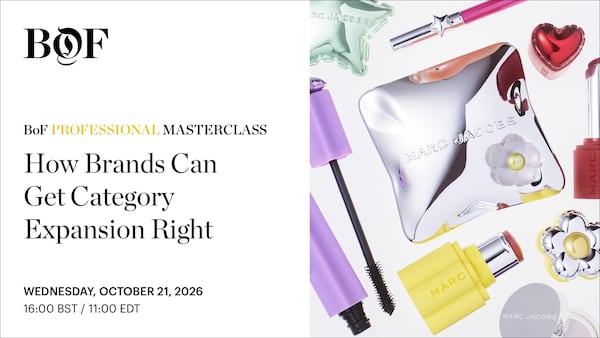
Join us for our next BoF Professional Masterclass on Wednesday, October 21, at 16:00 BST / 11:00 EDT as BoF’s Priya Rao and Liz Flora unpack how to successfully launch a new beauty segment with fast growth as well as longevity.
Successfully launching a new beauty segment can bring brands fast growth as well as longevity. But in an era of chasing viral trends and hype, companies need to balance quick product development with a coherent point of view, or risk losing their identity entirely.
The former Dior and Fendi creative director is reviving his namesake label as a DTC lifestyle brand, anchored by a 4,000-square-foot flagship store in Hong Kong.