Agenda-setting intelligence, analysis and advice for the global fashion community.
Agenda-setting intelligence, analysis and advice for the global fashion community.

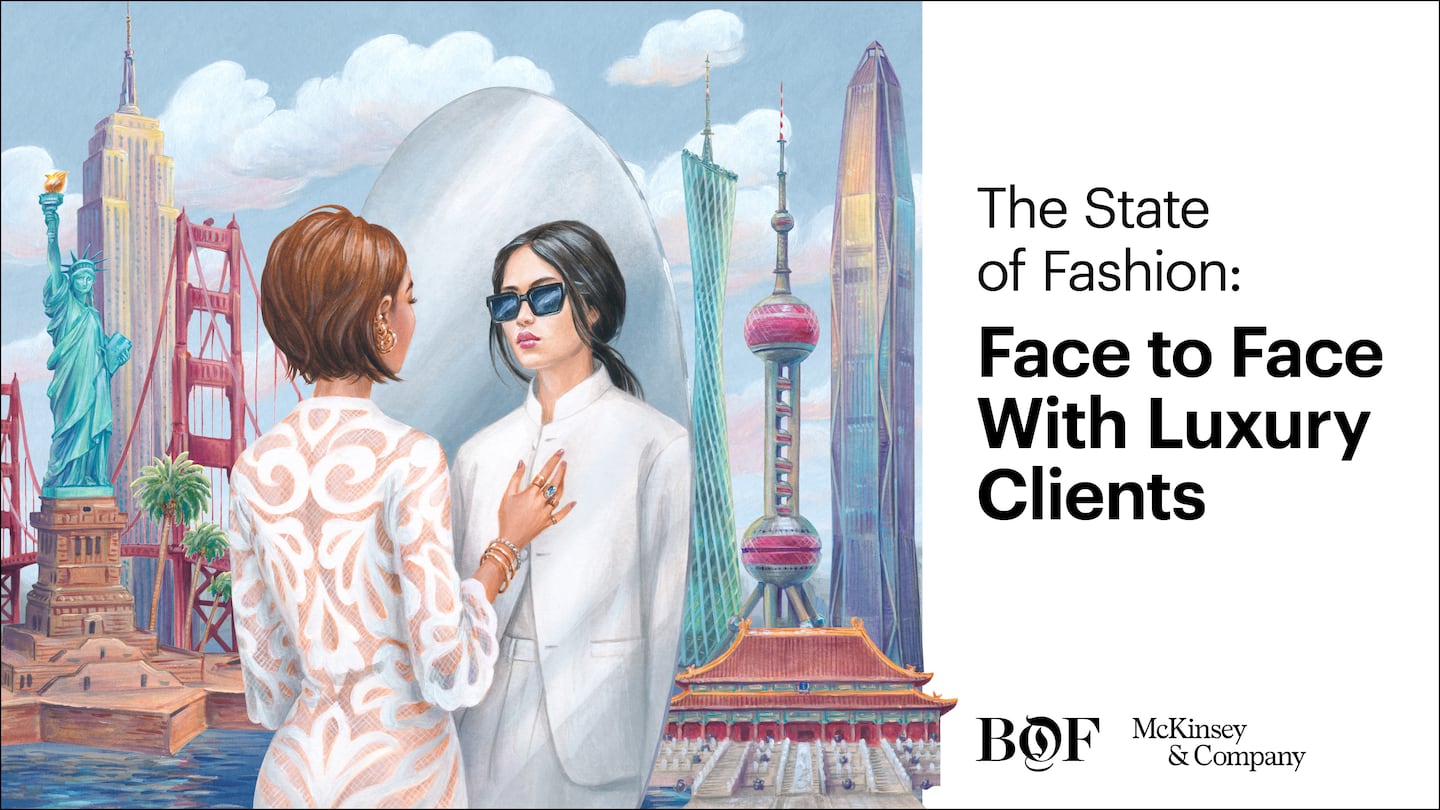
After years of struggling to reignite sales, the luxury industry is projected to slowly pull out of its prolonged slump in 2026. Overall growth will likely remain muted, expanding at an annual rate of 4 to 6 percent through 2030, a slower pace than the high single-digit increases of previous periods.
Much of the sector’s growth will be driven by the world’s two most important markets: the United States and China. Valued at around $130 billion, the US is the world’s largest luxury market, projected to grow by as much as 5 percent annually through 2030. China’s $60 billion high-end market, meanwhile, is expected to recover and outpace other major regions, expanding by as much as 6 percent a year.
Rekindling growth will not come easily for many brands. Since emerging from the pandemic, and the winding down of the spending frenzy that followed, luxury clients have realigned their priorities. They have become more discerning about the brands and products they are willing to buy. Growth in experiences like travel is overtaking product purchases, while inflation has dampened appetite for fashion, including handbags. Price hikes from leading fashion brands during boom times — often without corresponding product innovation — turned off clients across the spectrum, particularly at the aspirational level.
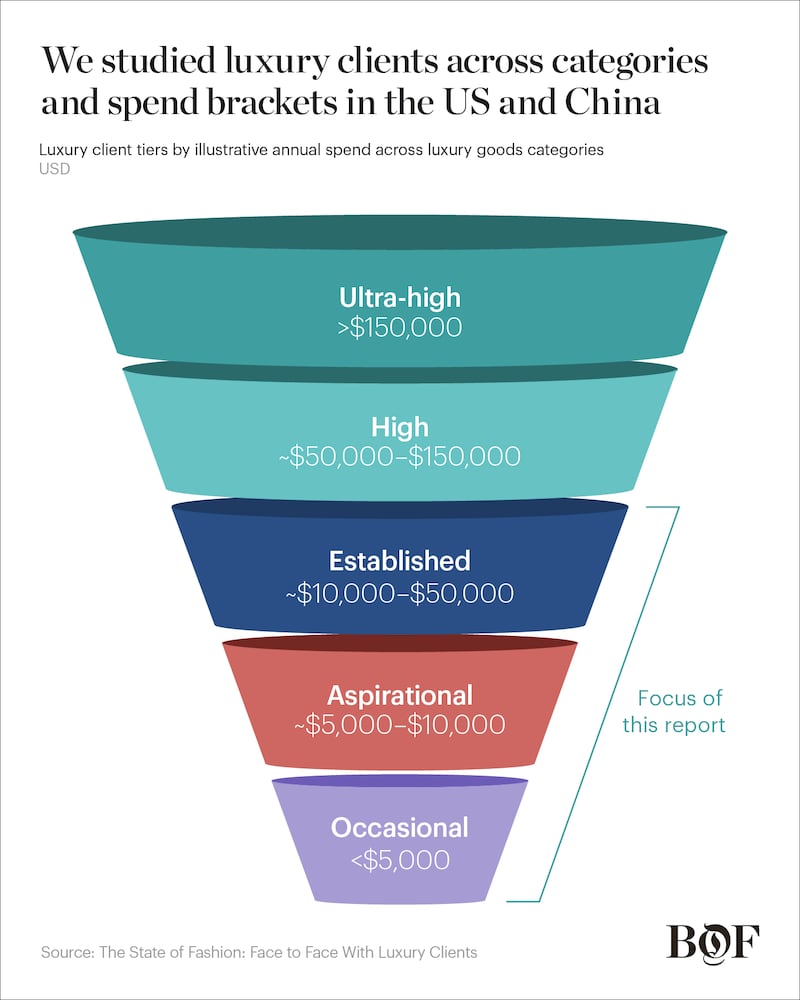
As the post-pandemic euphoria began to fade, brands sought to insulate their businesses from choppy trading conditions by focusing attention on VIC clients. They bulked up on products at the very high end and carved out space for expansive private salons in flagship stores in prestigious shopping districts. But as they focused on clients most immune from economic headwinds, many brands lost track of lower-tier clients and failed to give them a reason to visit stores. These customers, a critical base for the sector, ended up turning away in droves.
ADVERTISEMENT
For the latest report in our “State of Fashion” series, we thought it was a good opportunity to get to know these clients better. We conducted a rigorous survey of more than 2,000 clients across spending tiers in both the US and China. We held in-depth interviews with customers and executives. This allowed us to cut through widespread assumptions and get to the values and priorities shaping clients’ purchasing decisions across markets and segments.
We discovered key values that clients in China and the US have in common. For both markets — where building desirability has become more tricky — emotional connection has emerged as the leading driver of luxury purchases. As clients become more selective, they are most drawn to brands that resonate personally and reflect their tastes and values. Heritage and brand history, meanwhile, are playing a less important role.
But there is plenty that also sets these two markets apart. While clients in China look to brands more as a means of external expression, their counterparts in the US are more interested in self-reward, gravitating most to brands that share their values.
Drilling down to the shopping experience, physical stores play a strong role in motivating all ranges of clients in China — especially at the entry-level, highlighting the central role of retail when it comes to reaching aspirational clients.
For US clients, poor retail experiences are proving to be a major pain point, with pushy sales tactics and long queues turning off clients — highlighting a critical area for improvement.
The rising use of AI and resale channels to shop for luxury products is a trend we uncovered in both markets. More customers in the US are looking to AI for inspiration than in China, where entry-level clients are most engaged with AI across the shopping journey, from discovery to deciding on a purchase. Secondhand channels are also playing an increasingly important role, for higher-spending clients in the US in particular, motivating shoppers with the “thrill of the hunt” as much as bargains.
Here are four strategic priorities from our research decoding these shifts in luxury client preferences, key for executives as they navigate a “new-normal” era of slower growth:
Quality and craftsmanship are now baseline expectations, not differentiators. Allocate leadership attention, KPIs and investment to emotion-driven storytelling, cultural positioning and building community with the same rigour applied to product and campaign development. In the US, connect products to identity and self-reward. In China, build long-term trust and emotional resonance rather than rely on scarcity to justify full-price purchasing.
ADVERTISEMENT
Incremental spend is flowing to travel, wellness and brand-hosted moments — areas where interest is rising across all tiers of clients. Design recurring and scalable formats (memberships, cultural series, lifestyle partnerships) that give aspirational and established luxury clients a reason to engage between purchases. Draw on the store, the creative director and tailored services as relationship tools.
Artificial supply constraint can create urgency, but exclusivity has to feel earned to be effective. In the US, prioritise early access, insider drops and loyalty rewards — earned privileges like private previews and tailored brand experiences — that serve to deepen engagement over time, especially with younger clients. In China, double down on bespoke services and high-touch advisory, which is especially important for Gen X who have strong spending power in China.
Around half of luxury clients that use AI rely on it to explore luxury brands and understand product differences. As much as 59 percent of established luxury clients regularly purchase pre-owned products. By the time clients enter a boutique, their preferences have already been shaped. AI search and resale platforms are strategic brand assets to actively manage — what products surface, how products are authenticated and how the story of a product is told — or accept the role of third parties in defining their relevance.
These shifts are already reshaping markets, setting the terms for the decade ahead. The industry’s future will no longer be defined by a single, global luxury client, but rather the ability of brands to navigate increasingly different expectations across markets. Meanwhile, the window between earning a client’s loyalty and losing it has compressed from years to months. Brands set up to lead in this environment will be those that can answer this fundamental question: Beyond the products you make, what makes the relationship with your brand irreplaceable?
— Imran Amed, Founder, CEO and Editor in Chief, The Business of Fashion
— Gemma D’Auria, Global Apparel, Fashion & Luxury Leader, McKinsey & Company
The report examines client preferences for personal luxury goods and adjacent categories:
Research methods include:
BoF Insights is The Business of Fashion’s in-house consultancy. We partner with leading fashion and beauty brands and investors to help them sustainably grow for the long term. Get in touch to find out how we can support your business.
Loading recommended reads…
This week, Europe’s leading luxury groups LVMH, Kering, Hermès and Prada will show who’s pulling ahead in the stubbornly choppy environment.
Sales of gems, precious metals and artwork at Japan’s department stores climbed 19 percent in the first half of 2026 from a year earlier to $2 billion.
Though Adidas dressed both teams in the World Cup finals, the global football tournament still presented some bright spots for Nike, writes Bloomberg’s Andrea Felsted.
From our archive, the creator and host of award-winning podcast “Articles of Interest” joins BoF founder, CEO and editor-in-chief Imran Amed to explore what clothing can reveal about identity, culture, labour and the world around us.