Agenda-setting intelligence, analysis and advice for the global fashion community.
Agenda-setting intelligence, analysis and advice for the global fashion community.

Subscribe to The Frayed Edge, a fortnightly newsletter on how to build a cleaner, fairer fashion system.
Hello and happy Friday ahead of the much-anticipated World Cup final to all our readers who’ll be tuning in! I know I will be.
This is Shayeza Walid, BoF’s sustainability reporter, bringing you this week’s edition of The Frayed Edge.
A few weeks ago, I wrote about the FIFA World Cup as a big moment for sustainability, with textile-to-textile recycled polyester making its way onto one of sport’s biggest global stages. It was a reminder of the value of fashion’s sustainability efforts gaining visibility beyond the industry’s usual bubble.
ADVERTISEMENT
But increasingly, as the climate crisis exacerbates, fashion also needs to look beyond that bubble for solutions.
I get into the value of this interconnected mindset and more below. So let’s get straight to it!
In this edition:
As always, send us your thoughts, tips, feedback and questions.
TL;DR: Extreme heat’s growing impact on fashion — from its supply chain to its runways and stores— and consumers’ mounting scrutiny of synthetic fibres may seem unrelated, but they offer the industry the same lesson, which is that its sustainability challenges don’t exist in isolation. They are intertwined with much bigger questions around health, climate, agriculture, energy and consumption.
The Link: Over the past two weeks, I’ve reported on two seemingly different shifts taking place at opposite ends of fashion’s value chain.
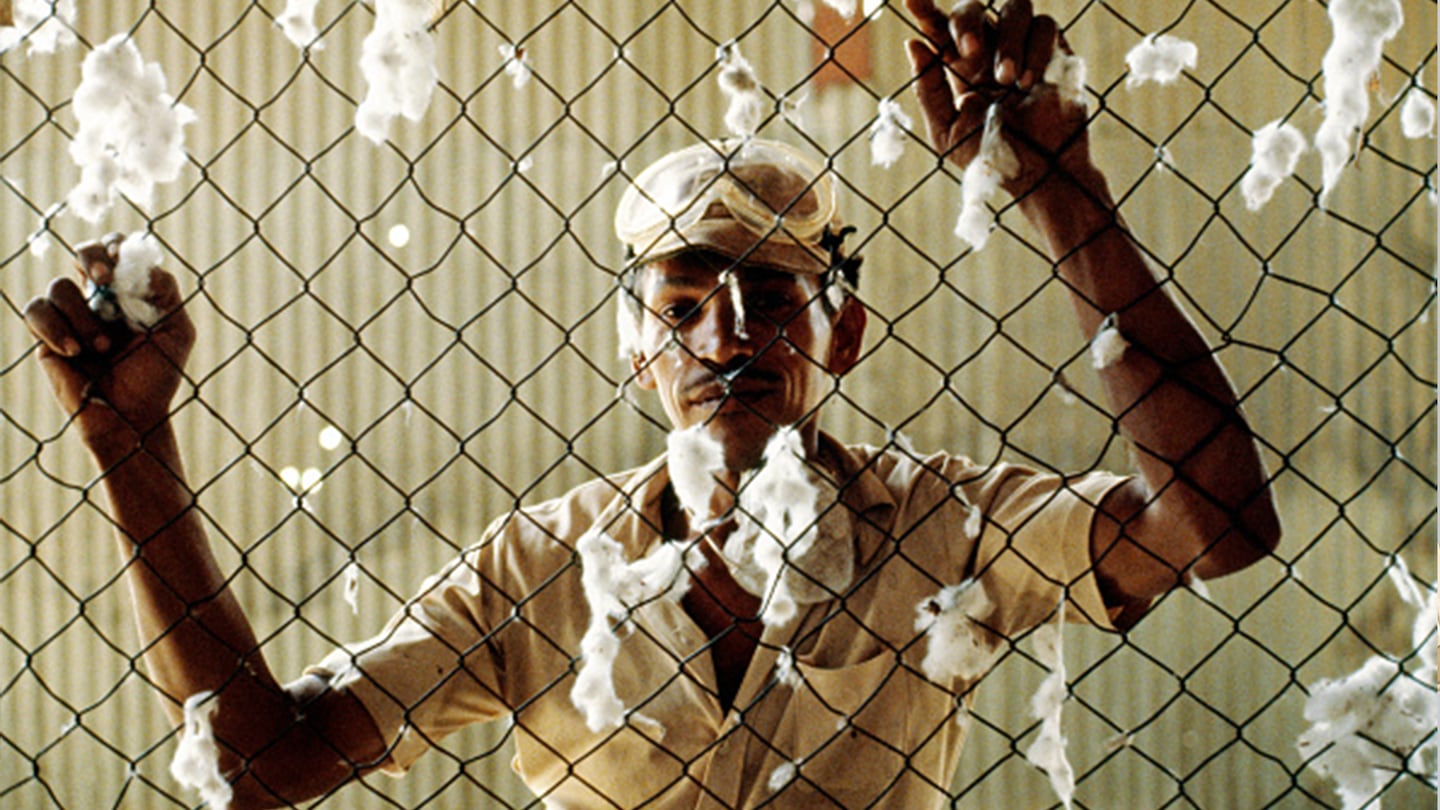
The first is the growing threat extreme heat poses to the people making our clothes. In major garment-producing hubs, temperatures are routinely rising above 40 degrees Celsius, with heat stress already harming workers’ health while reducing productivity, increasing absenteeism and contributing to accidents and quality-control problems. (The good news is that solutions that can help in the near term are cost-effective and easy to implement. You can read the full story on how to fight extreme heat in fashion’s supply chain here.)
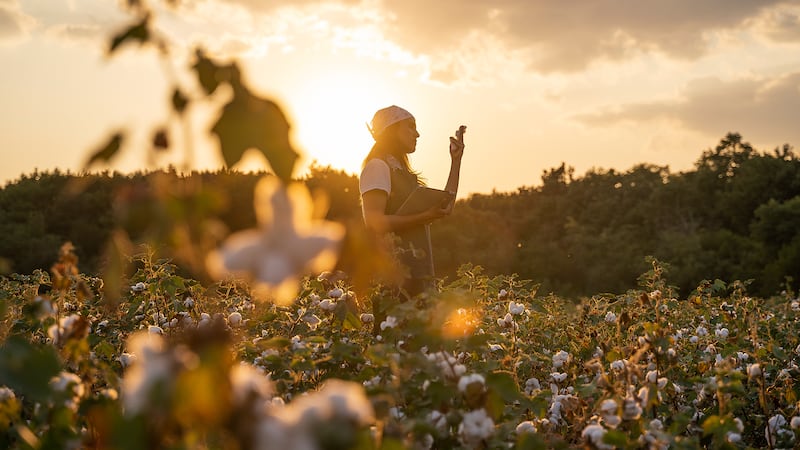
The other shift is a growing consumer backlash against synthetic fibres. Shoppers are paying closer attention to what their clothes are made from and increasingly seeking out cotton, linen, wool and other natural fibres. There are many forces driving that shift — concerns about microplastics and chemicals, frustration with poor quality and a growing focus on health and wellness among them. But another factor is becoming harder to ignore: People simply want clothes that feel comfortable as the world gets hotter.
ADVERTISEMENT
The Bottom Line: Extreme heat and shifting climate patterns are changing fashion from both directions, and will continue to do so if not addressed, escalating discomfort for workers and shoppers.
Why This Matters More Than Ever: In places like the Middle East and South Asia, where extreme temperatures have long shaped everyday life, breathable natural fibres have always been a practical choice. As hotter summers become a reality in places historically less accustomed — and less structurally equipped — to deal with sustained heat, that same logic is travelling.
This turn of events makes clear that climate change isn’t simply an emissions problem to be considered by sustainability teams. It is increasingly a worker health issue, a productivity issue, a materials issue and a consumer issue. Yet fashion’s sustainability efforts still have a tendency to treat these challenges as separate conversations.
The Bigger Picture: Addressing heat stress in factories requires expertise spanning occupational health, building design and climate adaptation. Understanding how consumers will dress for a hotter world means looking at public health and wellness, as well as the centuries of knowledge embedded in how people in hot climates have traditionally dressed. The same thinking applies elsewhere: Fashion’s relationship with natural fibres cannot be separated from agriculture and land use, while its decarbonisation challenges increasingly overlap with energy and climate tech.
It also means paying closer attention to what people actually want. As sustainable fashion content creator Andrea Cheong told me: “Fashion has always been very good at creating demand where demand doesn’t naturally exist, and I think that’s what we’re seeing again. There’s a mismatch between what brands are investing in and what consumers are actively seeking.”
That mismatch matters. Fashion has poured significant resources into technological solutions to sustainability, from new materials to recycling innovations. But as the climate crisis becomes more tangible in people’s everyday lives, the industry’s biggest opportunities may not always lie in creating something new. They may also lie in understanding what people already need: whether that’s a safer and cooler factory floor or simply a breathable shirt.
Carbon capture doesn’t have the best reputation among many in the sustainability community. It’s often viewed as a way to allow corporations to continue cranking out emissions rather than focusing on slashing them, and the technology remains expensive and inefficient..
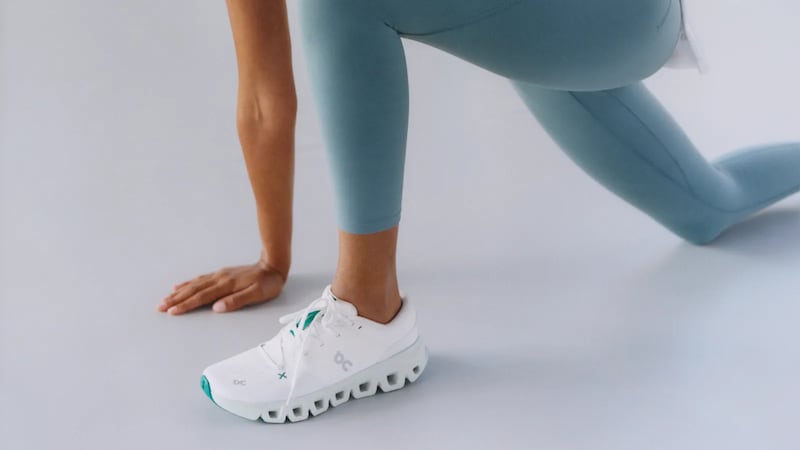
But over the past few years, On has been using the idea for a novel purpose: making midsoles. It’s now scaling production.
ADVERTISEMENT
The Breakthrough: Rather than capturing CO2 to bury it underground, which is the standard way it’s disposed of, On is using captured industrial emissions as a raw material to help make EVA, or ethylene vinyl acetate, the lightweight foam used for cushioning in most sports shoes and typically made using fossil fuel-derived ingredients.
This week, the brand launched the technology in its popular Cloud X 5 shoe, scaling it to more than one million pairs four years ahead of its original commercialisation target.
According to an On-commissioned life-cycle assessment, the resulting foam has a modelled carbon impact at least 80 percent lower than conventional fossil-based EVA. (One important caveat: The assessment relies on modelled scenarios and secondary data, so that figure shouldn’t be interpreted as a verified emissions reduction for the finished shoe.)
Why It Matters: When On first unveiled CleanCloud in 2022, it had produced just five pairs. Reaching more than one million is significant not only because of the scale, but how it got there. Rather than building an entirely new manufacturing system, On worked with companies from the energy and chemicals sectors to develop a supply chain that could plug into existing infrastructure.
It’s another reminder that some of fashion’s most promising sustainability solutions may come from outside the industry, and that the opportunity for brands isn’t necessarily to invent every solution themselves, but to find ways to apply and scale innovations emerging elsewhere.
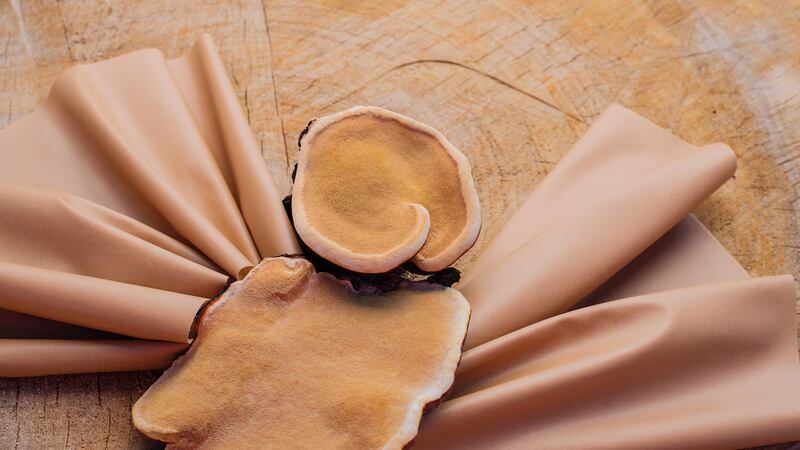
The News: Back in May, the European Commission decided to remove leather, hides and skins from its landmark — and world first — anti-deforestation law, officially known as EUDR, following pressure from industry groups. The proponents for leather argued that, as a by-product of meat production, it does not itself incentivise the cattle farming driving deforestation.
Now, that exemption is official. This week, the Commission confirmed that leather, cattle hides and skins will be removed from the regulation, which requires companies selling commodities including beef, soy, coffee and palm oil into the EU to prove their products aren’t linked to deforestation. The latest changes will take effect from December 2027.
What This Means for Fashion: The change means one less regulatory requirement for fashion brands. The bigger loss, however, may be to the regulation’s intended goal of leveling the playing field.
Many major companies, including Kering, Tapestry, Nike and Inditex, have already made voluntary commitments to deforestation-free leather and invested in cleaning up their leather supply chains. But while they may continue doing so, competitors will no longer be compelled to meet the same standard.
A Win for Leather, a Loss for Sustainability: For the leather industry and its lobbyists in fashion, the exemption removes a potentially costly traceability burden and represents a major win. But for environmental groups, it’s yet another example of a wider retreat from the EU’s once-ambitious sustainability agenda, which has faced repeated delays and efforts to ease compliance requirements on businesses, justified as a move to boost European competitiveness.
More importantly, this move holds significant sustainability repercussions that extend beyond fashion. Cattle farming remains a major driver of deforestation, particularly in the Amazon, where this year it was reported to cause 40 percent of agriculture-linked forest destruction. While the leather industry maintains its by-product argument, removing leather from the EUDR also removes a lever designed to reduce the market for products linked to forest destruction.
With forests critical to absorbing carbon, preserving biodiversity and regulating the global climate, ultimately, this exemption risks weakening wider efforts to curb deforestation at a time when the consequences of losing them are only becoming more urgent.
Italian Labour Probe Into Luxury Brands: The Italian police visited the headquarters of 9 fashion brands including Chanel, Moncler and Brunello Cucinelli, demanding documents on governance and supply-chain controls as part of an investigation into alleged exploitation of workers at subcontractors. Chanel said it has already cut ties with concerned subcontractors. [The Business of Fashion]
Shein IPO Value Lower Than Expected: The Chinese ultra-fast fashion giant’s ambitions for a valuation of up to $50 billion in its long-awaited Hong Kong IPO are likely to face a tough test from investors, as new fees on e-commerce parcels in Europe weigh on sales growth and profits. [The Business of Fashion]
A Fatal Factory Fire in China’s “Shoe Capital”: A fire at a shoe factory in southeastern China killed at least 28 people. It is the latest in a string of deadly workplace accidents in the world’s largest shoe and apparel manufacturing country. [The New York Times]
Syntetica Raises $30 Million Series A: The nylon recycling startup, whose proprietary chemical technology recovers the two most widely used forms of nylon from mixed textile waste, received investment from the French public investment fund BpiFrance, Lululemon and MAS Holdings for its first commercial-scale facility. [The Business of Fashion]
EU Launches Programme to Scale Circular Textile Production: The ALADIN (Advanced Local and Digital Innovation Network for Circular Garments) aims to build a network of regional microfactories that can produce garments closer to consumers by promoting on-demand manufacturing, material waste reduction and regional textile production. [Sourcing Journal]
Loading recommended reads…
Sales of gems, precious metals and artwork at Japan’s department stores climbed 19 percent in the first half of 2026 from a year earlier to $2 billion.
Though Adidas dressed both teams in the World Cup finals, the global football tournament still presented some bright spots for Nike, writes Bloomberg’s Andrea Felsted.
From our archive, the creator and host of award-winning podcast “Articles of Interest” joins BoF founder, CEO and editor-in-chief Imran Amed to explore what clothing can reveal about identity, culture, labour and the world around us.
Saunders, the brand’s first creative director in five years and a skilled colourist, promises to give Kate Spade the clarity it has long lacked. Now, Tapestry must apply the same long-term brand-building discipline that fueled Coach’s success.