Mike Ashley’s Frasers Says It’s Taken Control of Hugo Boss
The British retail group has pushed its stake in the German apparel brand above 50 percent in a move that will turn Hugo Boss into a subsidiary of Frasers.

A BoF analysis of recommendations by ChatGPT, Claude and Gemini found that brands' online reputations and how users phrase their questions matters more than actual environmental performance.
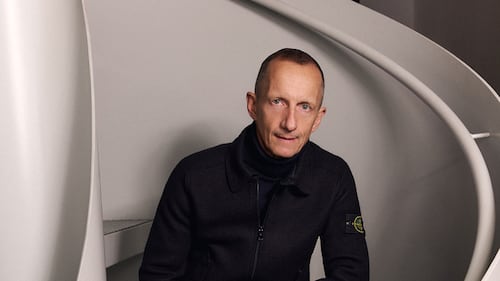
Robert Triefus believes his role as a brand leader is not to invent authenticity. It is to protect it and leave it stronger than it is found. Two years of brand tracking with BoF's advisory team, BoF Insights, confirmed Stone Island could grow without losing the authenticity that has defined it for more than four decades.
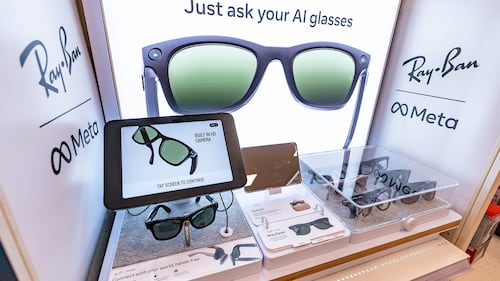
The Franco-Italian eyewear maker reported a 15 percent rise in first-half profit, beating expectations, while revenue growth was driven by strong demand for AI-enabled glasses myopia products.

Algorithms are increasingly shaping how luxury clients shop, redefining their relationships with brands, according to BoF Insights and McKinsey’s report ‘Face to Face With Luxury Clients.’

As AI makes it easier than ever to produce polished résumés, recruiters are relying on new methods to assess attributes like judgment, adaptability and potential.

Artificial intelligence is changing how businesses operate as employees become more self-sufficient and routine work is increasingly automated. To build companies that thrive in this new paradigm, fashion executives must rethink leadership structures, talent pipelines and decision-making processes.

DressX’s latest intelligence report suggests shoppers who engage with AI virtual try-on are 50 percent more likely to purchase overall, while conversion rates among luxury consumers jump up to 10 times higher. BoF unpacks and analyses the key insights from the report.

As AI transforms how consumers search, discover and purchase from brands, marketing and creative leaders gathered in London with The Business of Fashion and LTK to discuss the future of creator-led commerce and the growing value of trust.

The beauty conglomerate has become the founding ‘olfactory’ partner of Dataland, embracing the technology that L’Oréal’s Cyril Chapuy calls the ‘luxury of tomorrow.’

The Business of Fashion convened senior leaders from Amazon Fashion, Calvin Klein, and Victoria Beckham Beauty, among others, to explore its latest coverage of artificial intelligence.

BoF and Shopify convened commerce and marketing leaders from Coach, Revolve, Jennifer Fisher, Giorgio Armani, Estée Lauder, Lacoste, COS, FullBeauty Brands and more in New York City to discuss how AI is rewriting the rules of product discovery and online shopping.

BoF speaks with six designers from RaiseFashion's 2026 masterclass — Andrew Kwon, Mckenzie Liautaud, Natasha Das, Patricio Campillo, Rodney Patterson and Shao Yang — on the challenge of building discoverability in the age of AI and the distribution decisions that define an independent brand.
The British retail group has pushed its stake in the German apparel brand above 50 percent in a move that will turn Hugo Boss into a subsidiary of Frasers.
The settlement, equivalent to 44 percent of the ultra fast-fashion company’s second-quarter profit, is the latest blow amid regulatory and tax crackdowns in Europe and the US that have hampered Shein’s growth.
The recovery long promised by luxury brands seems nowhere in sight, as the expansion of war in the Middle East, along with China’s tax crackdown on the wealthy, piled further pressure on the world’s biggest luxury conglomerates in the third quarter, and executives buckled in for a tough winter.
Sales fell in September as above-average temperatures hit demand for autumn clothing.
Hitting newsstands in October, the magazine marks Elle’s 51st international edition, published under licence by the Geomedia group.
Pearl, a subsidiary of David’s Bridal, will own David’s Bridal and license its intellectual property back to the bridalwear brand. David’s Bridal CEO Kelly Cook will serve as Pearl’s CEO.
The French giant handily beat expectations on strong demand for hair products at salons and premium skincare from its dermatological division.
The maker of Pantene shampoo was helped by strong personal care demand, but expects higher commodity costs to reduce profit by about $1.4 billion this year.