Agenda-setting intelligence, analysis and advice for the global fashion community.
Agenda-setting intelligence, analysis and advice for the global fashion community.

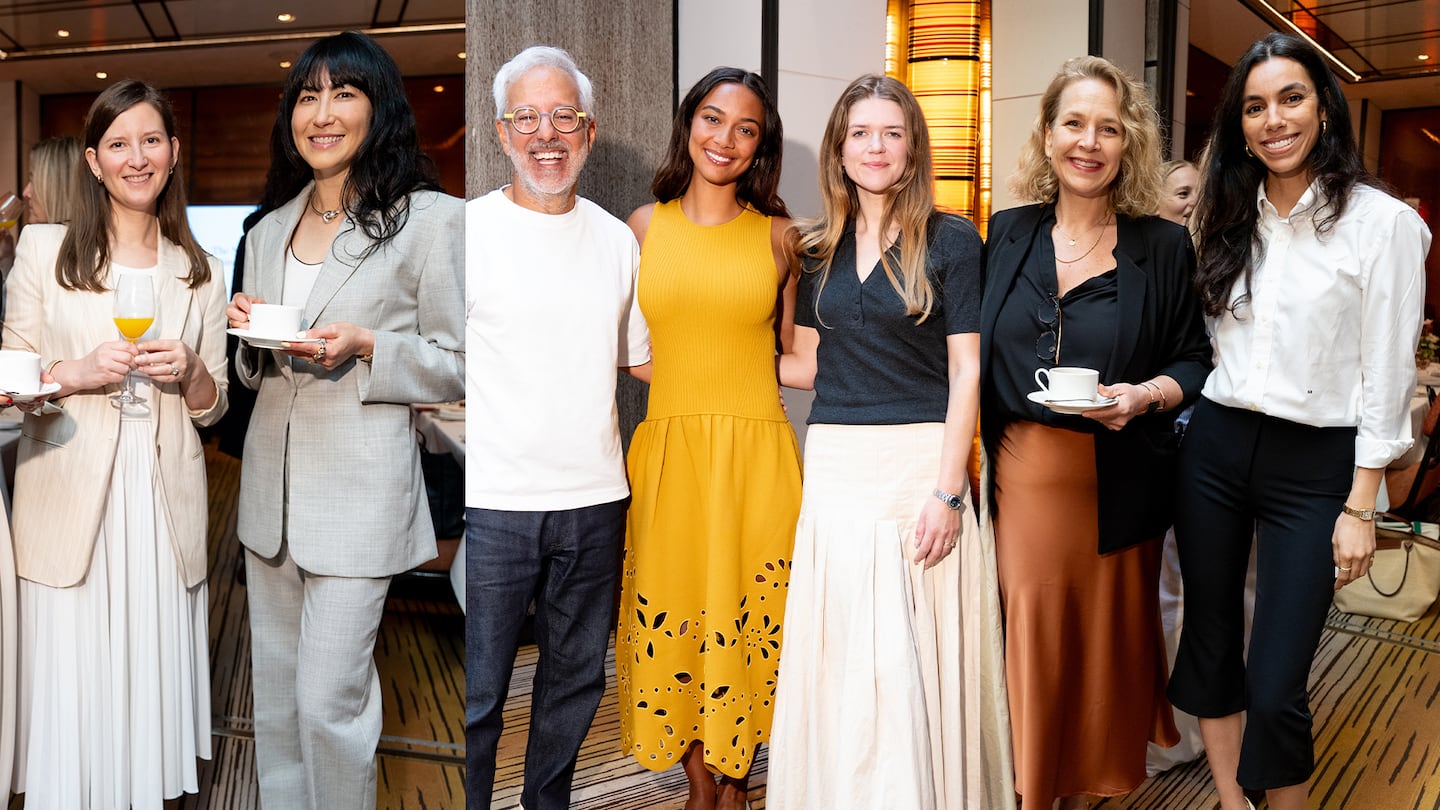

NEW YORK — On Tuesday, senior leaders from across fashion, beauty and retail gathered at The Mark Hotel on Manhattan’s Upper East Side for a knowledge breakfast on how AI is reshaping commerce and the consumer shopping journey.
The conversation — moderated by The Business of Fashion’s (BoF) Yasmine Dahlberg — brought together Alice Gividen, BoF’s director of content strategy, and Eduardo Frias, field chief technology officer for lifestyle at Shopify. Executives from Coach, Giorgio Armani, Jennifer Fisher, Revolve, Gill Apparel Group, Coniglio, Lacoste, Madewell, Estée Lauder, COS and FullBeauty Brands, among others, sat in the audience before discussing over breakfast.
Large language models (LLMs) — such as ChatGPT, Copilot, and Google Gemini — are now the first place where many consumers discover, evaluate, and in some cases, purchase products.
Shopping-related searches on generative AI platforms grew nearly 4,700 percent between 2024 and 2025, and more than half of US consumers using generative AI for search are already using it to shop, according to the The Business of Fashion and McKinsey and Co.’s The State of Fashion 2026 report. According to Shopify, orders from AI searches are up 13 times year over year.
The stakes resonated with the brand leaders in the room. “We’re making sure that we have strong content for LLMs that not only describes our product in a clarifying way, but nods to who we are as a brand — so customers get that experience no matter where they’re discovering us,” said Jen Volk, senior director of e-commerce at Coach.
For Sabrina Cherubini, chief marketing officer at FullBeauty Brands — an umbrella holding company with multiple plus-size apparel brands — AI has addressed a long-standing challenge around size representation. “AI is helping us show body diversity and demonstrate how a product will fit your own body shape — regardless of photoshoot budgets or production constraints,” she told BoF.
At Revolve, generative AI lead José Pedro Sobral noted that AI-led discovery has had significant impact across the brand’s portfolio, adding that “the ability to utilise customer data and engagement at scale has become fundamental to the business.”
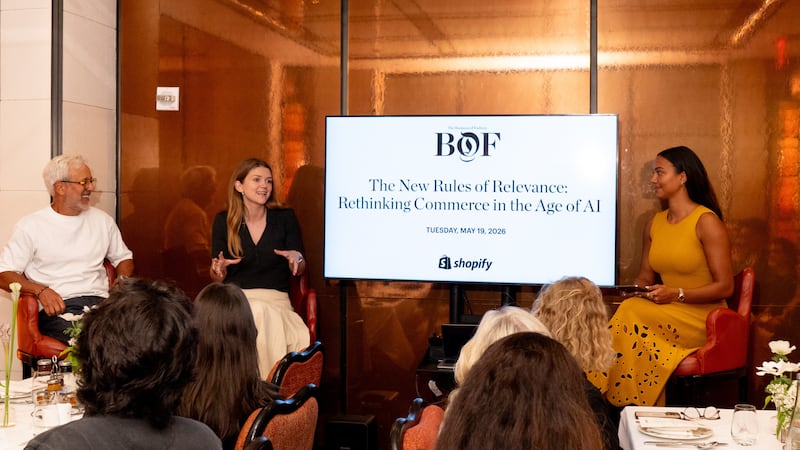
Most brand leaders can describe what their homepage looks like, but fewer know how their products appear — or whether they appear at all — when a consumer asks an LLM for a recommendation. According to Frias, that gap is where brands are most exposed. “There is an infrastructure problem, a content problem, and a brand problem, all collapsing into one,” he said. “Shopify is working to be the foundation enterprise to lead in agentic commerce and whatever comes next. We guide them through every transformation to reach their buyers wherever they are.”
The urgency is real. AI shoppers convert 50 percent better than organic search shoppers, carry an average order value 14 percent higher, and more than half of their sessions begin on a product detail page (PDP), bypassing the homepage entirely, according to Shopify data published in May 2026.
“Consumers are changing how they search for things. Either products are surfaced through an algorithm, through creators that they trust, through their friends — or they are delegating that process increasingly to LLMs. It’s creating a conversational layer between brands and consumers,” Gividen said.
The practical starting point is a simple self-audit: search for your own products on the major LLMs and assess what comes back. Is your brand showing up? Is the information accurate? From there, the focus shifts to tracking AI as a distinct traffic source and ensuring the PDP — where most AI-referred shoppers land — is built to convert.
Frias drew a distinction between the operational groundwork some brands are completing — clean and consistent product catalogues, establishing a presence on Reddit, Wikipedia, and third-party editorial sites, ensuring return policies and specifications are accessible — and the harder work of ensuring a brand is recommended over alternatives.
“It’s so important that your product is easily read by AI to serve that new shopper journey — more so even, perhaps, than the storefronts or the shelf space that we saw in luxury retail,” Gividen added.
The aspirational, narrative-driven copy that has long defined fashion e-commerce does not translate well into the structured, attribute-rich format that LLMs parse effectively. “Those beautiful product descriptions that make shoppers feel inspired need to be structured in a way that LLMs also understand,” said Frias.
Brands need product descriptions that are machine-readable — precise on material, fit, use case and category — and signal the differentiation that sets one brand apart from another.
AI platforms that don’t have access to structured data rely on web scraping, which can surface incorrect, missing or outdated data. Incorrect pricing, out-of-stock products, missing details all actively lower an LLM’s confidence in a brand and reduces the likelihood of future recommendations.
“On Shopify, there’s nothing to configure; eligible products are listed in Shopify Catalog by default and any updates made in admin are reflected automatically across all AI channels,” said Frias.

Trust operates on two levels in the AI commerce environment: the signals that influence whether an LLM recommends a brand and the signals that determine whether a consumer accepts that recommendation.
On the discoverability side, third-party validation carries more weight than many brands realise. “Brands are underestimating how much of a trust signal they need to be exposing. Reviews, Reddit forums, Wikipedia pages, blogs — that’s what actually gets your products recommended,” Frias said. These should be treated as part of the core discoverability infrastructure, not as peripheral marketing activity.
On the consumer side, sentiment is more divided. Forty-one percent of consumers now trust generative AI results more than paid search ads, according to the State of Fashion 2026 — yet 55 percent of Americans today believe AI will do more harm than good in their day-to-day lives, up from 44 percent in April 2025 according to research from Quinnipiac University.
The distinction, Gividen noted, often comes down to where and how AI shows up. “Customers are comfortable with AI as an invisible interface. Where it shows up matters, and functionality is definitely a clear starting point,” she said.
At a moment when consumer trust in fashion is already strained — following years of price increases and perceived quality drops — brands introducing AI into customer-facing creative should do so with clear disclosure and a defined use case.
As AI becomes the primary interface for discovery, the role of the brand website is being fundamentally questioned. “What is a website for? What is an owned channel for? That’s going to be front of mind,” Frias said.
When a consumer does arrive on a brand’s site via an AI recommendation, they come with high intent and a specific need: confirmation that the product matches what the LLM described and a frictionless path to purchase. PDP optimisation is, in this context, the primary conversion lever.
But owned channels carry a longer-term role beyond transaction. “If I search for something and get two different brand recommendations, at the end of it I’m still making the final choice as the shopper. I’m the one who clicks on the brand, and usually that’s due to an emotional connection,” Gividen said.
For Frias, the right technology infrastructure is what makes both possible: “Brands need platforms that will allow them to express their identities — what it stands for, the emotional and human part of it — while being machine-friendly. If a platform gives them the power to express their brand voice creatively, without having to worry about the nuts and bolts of the tech that make them discoverable, then they have a winner.”
This is a sponsored feature paid for by Shopify as part of a BoF partnership.
Executives and technology leaders from luxury and fashion brands including Kering, Hermès, Gucci, Fendi, Nordstrom, Tapestry, Savage x Fenty, Versace and Value Retail, among others, joined BoF and Shopify for dinner in New York City.
Loading recommended reads…
The German sports brand posted a narrower loss in the second quarter as it pushed ahead with an effort to restore growth next year.
Dsm-firmenich beat market expectations for second-quarter core earnings, said full-year sales growth should reach the upper end of its target range on the back of broad-based volume growth.
Influencer marketing represents a nearly $44 billion dollar industry that’s set to surpass traditional media, but a stigma around its personalities and economics still persists. Should it?
This week’s LVMH and Kering results suggest a fragile recovery is underway in the face of sluggish Chinese demand, succession drama, wildfires and heat waves.