Agenda-setting intelligence, analysis and advice for the global fashion community.
Agenda-setting intelligence, analysis and advice for the global fashion community.

What's up, down and making news this week in the fashion and beauty businesses.
Jacey Duprie has always had an uneasy relationship with the word influencer.
Duprie launched her blog, Damsel in Dior, in 2009, and has been supporting herself full-time through her online presence since 2011. She has over 500,000 followers across social media platforms, published a memoir and launched her own brand. But she still has trouble referring to herself as an “influencer.”
“I’m so scarred by the stigma,” she admitted. “I was one of the first to be labelled that, and people hated influencers and Instagrammers. I can’t get past the fact that they probably still do. I carry that with me.”
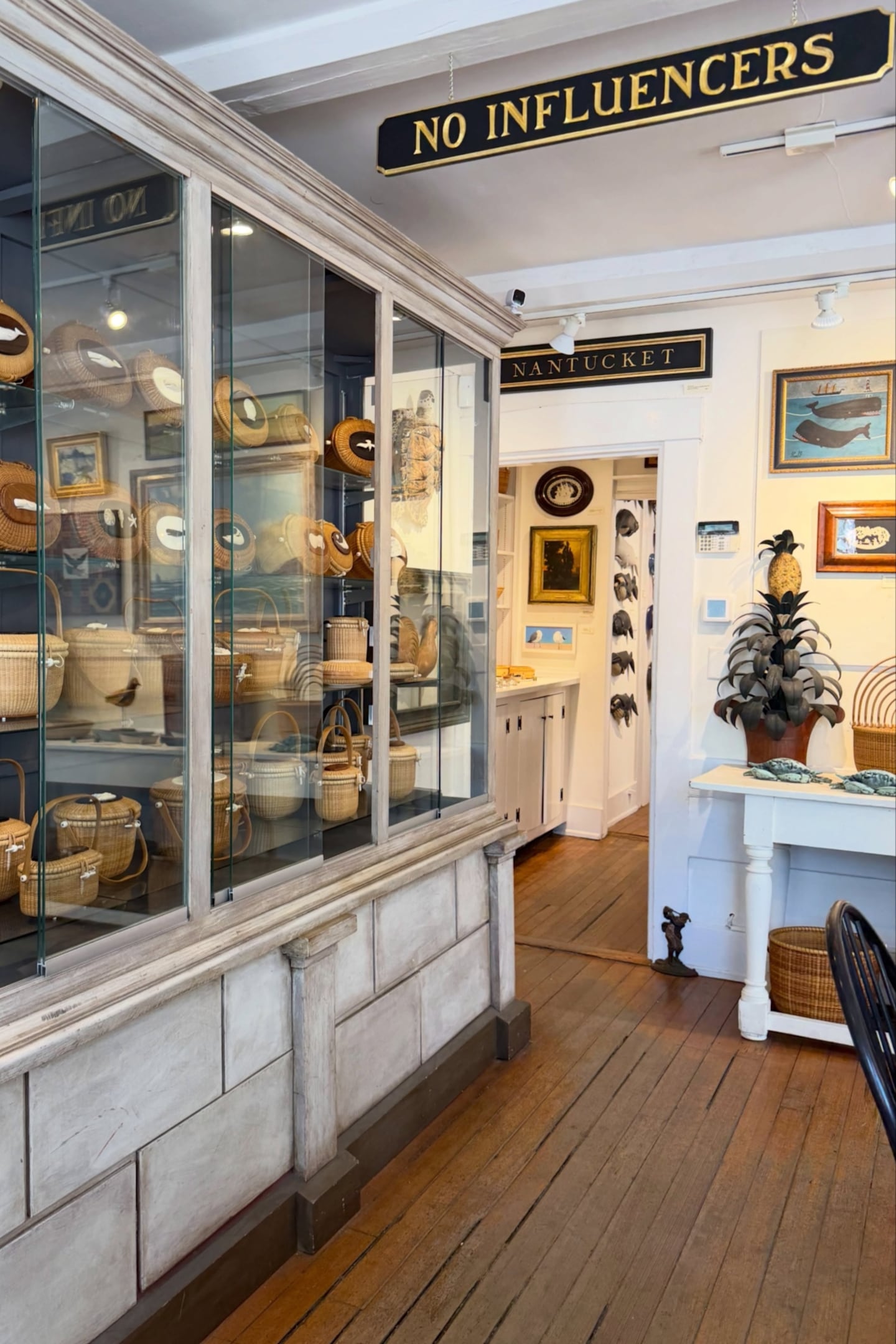
She has good reason to — even as the influencer marketing sector has gone from shiny new toy to massive, multi-billion dollar behemoth, the term “influencer” has never quite managed to shake its negative connotation. It’s a debate that was reignited this week when Four Winds Craft Guild, a 56-year-old shop on Nantucket, a ritzy island off the coast of Cape Code that has seen an influx of retail openings this summer, posted a photo of a new “no influencers” sign hanging in its shop. Paige Paul, an influencer and founder of Dairy Boy, which opened its first store on the island this summer, publicly criticised the sign, writing in an Instagram comment: “if you call yourself a feminist but proudly put up a ‘No Influencers’ sign, it’s worth asking who you are attempting to delegitimise, and why.”
ADVERTISEMENT
Store owner John Sylvia told the New York Times that the sign was meant to be a joke. Influencers, however, clearly didn’t take it as such. Over the past week, countless others have joined Paul not just in condemning the sign, but also lamenting the public disdain that has become synonymous with their profession.
The defensiveness is understandable: From the early 2010s, when bloggers first began nabbing front row seats at runway shows, usurping an editor-first model, a certain amount of snobbery has existed towards online personalities like Paul. As influencer marketing grew, that attitude permeated into the mainstream.
There’s no doubt that misogyny holds some of the blame. Influencer marketing may be the first extremely lucrative industry that’s primarily benefited women. Influencer monetisation company LTK has minted 400 self-made millionaires since its launch in 2011 — all are women. What’s more, they’ve been able to make this money outside of a traditional corporate environment, allowing for more control over their schedules and oftentimes, making their home lives and childcare easier to manage.
Just look at the differing reactions to the terms “influencer” and “creator.” The influencer label was the one applied to the generation of mostly women that began as bloggers sharing their outfits online, eventually moving en masse to Instagram. There, they posted curated snapshots of their day-to-day with affiliate links. On YouTube, where the gender divide was more evenly split, they were labeled creators. It’s not a coincidence that the latter is the one the industry has embraced today.
I’ve explored the idea before that in abandoning the “influencer” label, certain creators are diminishing what makes them unique — while anyone who shares content online can, technically, be a creator, it’s influencers who have the power to sway purchasing decisions, which requires a certain degree of authority and intimacy with their audience. In today’s market, where brands are paying equal, if not more, attention to conversion metrics versus reach, it’s individual power that’s the industry’s most valuable commodity. For creators, their value is in the content, for influencers, it’s more about the person.
That’s not to say all of the critique is without merit: there have been plenty of examples of influencers saying one thing and being caught doing another or failing to properly disclose paid partnerships. And influencer culture has undoubtedly changed places like Nantucket, bringing in more visitors and more obnoxious behaviour in stores — whether the perpetrators are actual “influencers” or not.
But the level of vitriol which they routinely receive hardly feels fair — or accurate. As the industry has matured, more and more influencers understand that their audience’s trust is their most valuable asset; a paycheck for an off-brand partnership is not worth the long-term career risk. Overconsumption would exist with or without their posts, as would the insecurity-inducing mentality that defines much of modern social media.
Plus, as influencer and longtime Nantucket visitor Carly Riordan told New York magazine earlier this week: “I’d be interested to see a comparison of the bad behaviour of men (Chads passed out in the street, crashing boats, starting fires on the beaches) versus the ‘bad’ behaviour of women (standing on line to buy a madras dress).”
ADVERTISEMENT
There’s an undercurrent of envy or even simple misunderstanding in much of the pushback. Take a quick scroll on TikTok and it appears that being an influencer mostly consists of taking all-expenses-paid vacations, unboxing an endless stream of gifted products and building wealth seemingly overnight. Less visible is the 24/7 pressure to create content, the nasty messages that can fill inboxes and the uncertainty that can come if a brand partner fails to reup a deal. Influencing may not be a traditional corporate job, but it certainly is a “real” one that requires both work and a level of natural ability.
“A lot of people try, but I don’t think everybody has that special sauce where they can do this and be successful at it,” said Mallory Goldman, a Los Angeles-based influencer who said she is “proud” to call herself by the title.
Given how prevalent the stigma is, it makes sense that the industry is trying to adopt creator as a less-charged alternative. But some criticism will inevitably follow — and there’s an argument that if so, why bother?
“I’ve been pleasantly surprised by people’s reactions once I just ripped off the band aid and decided I’m gonna say this with confidence,” added Goldman. “I try to just own it.”
Editors' Note: This article was updated on July 30, 2026.
Teens are taking over social feeds and racking up bigger partnerships than ever before — but young creators play by a different set of rules than their predecessors.
Influencer marketing is bigger than ever, but it’s also become more complex as the number of creators multiplies, consumers grow more resistant to blatant ads, platforms like Substack gain traction and new tools for tracking performance appear. Fashion brands need to update their strategies.
As influencer marketing becomes more essential, and creators demand more money, brands have to parse through an increasing amount of data to confidently invest in their influencer strategies.

Diana Pearl is US Editor at The Business of Fashion. She is based in New York and drives BoF’s marketing and media coverage.
Loading recommended reads…
The company’s share price notched its biggest weekly rise since 2020 as investors bet on softer gold prices to bring customers back to stores.
Workers staged fresh demonstrations in Dhaka Thursday, forcing factories to suspend operations despite government promises to raise wages before the end of the year.
The cult menswear designer and former Demna collaborator is returning to Balenciaga as owner Kering seeks to revive sales at the French house.
Just a few years ago, commentators were declaring the brand as past its peak amid multiple ownership changes and a broader streetwear cooldown. Today, consumer tracking metrics shows domestic sales and youth market share is rebounding strongly.