Agenda-setting intelligence, analysis and advice for the global fashion community.
Agenda-setting intelligence, analysis and advice for the global fashion community.

Interviews and views on creativity and business in the world of luxury writ large — from fashion and watches to art, wellness, travel and more — from our chief luxury correspondent in Paris.
Subscribe to High Margin by Robert Williams: perspectives on creativity and business in the world of luxury.
France is burning; France is dancing in the streets.
Last week, just days after The Times ran a feature dubbing Cap Ferret “The Hamptons of France,” the upmarket getaway was evacuated by sea as forest fires came raging down the Atlantic coast. A spate of epic wildfires — from Fontainebleau, outside Paris, to the mountains of Corsica to the pine forests near Bordeaux — has been the latest turn in a summer balanced on a razor’s edge.
In Paris, there’s been the euphoria of crowds jumping into the Canal Saint-Martin, the Fête de la Musique, World Cup fever and PSG’s championship win — all set against a backdrop of a deadly heatwave, of forest fires blazing across the country, of mounting anxiety over a 2027 presidential election whose leading candidates espouse radically divergent visions for France’s future.
ADVERTISEMENT
The tension is palpable. And makes for an awkward moment to be chronicling French luxury companies — masters of hypernormalisation whose default is to forge ahead with business as usual comme s’il n’y avait rien, even as the gap widens between the image of France they project and the reality of France today.
In this edition: Luxury groups report H1 results, Arnault swats back at Le Monde, weird times in France and a check-in on luxury’s biggest stories.
Case in point: “Nothing to see here” would be a fair summary of LVMH chairman Bernard Arnault’s multi-page letter responding to a six-part investigation by Le Monde, which included the latest and most comprehensive account of internal rifts over succession in the Arnault clan. Time will tell how much longer France’s biggest company can keep ignoring that elephant in the room.
As European companies finish reporting their first-half results before heading off for August break, I thought I’d resurface from High Margin’s summer hiatus to look at how the results stack up against The Business of Fashion‘s list of the big luxury themes we’ve been tracking this year (as well as a couple more).
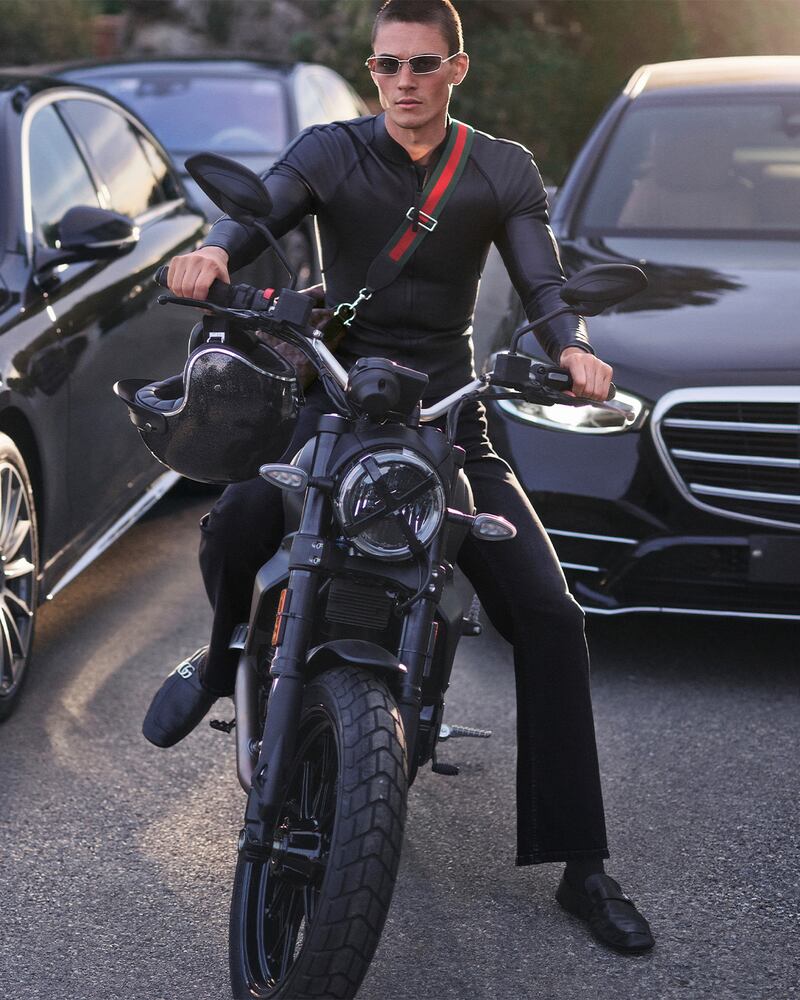
Unpopular opinion: Fashion’s “great reset” kind of worked. Everyone keeps asking me why Chanel’s refresh by Matthieu Blazy is the only designer relaunch that’s really taken off. Blazy’s Chanel might have been the fastest and most visible success. But this week’s luxury results underscored that most of the other major revamps underway are actually starting to click, even if not to the same degree.
A year into Jonathan Anderson’s tenure, Dior has returned to organic growth, with estimated sales rising by a low-single-digit percentage last quarter. LVMH stablemates Loewe and Celine (both of which also changed designers last year) are both growing faster than the group’s average, too, the company said.
Kering’s Gucci is still in negative territory as Demna’s first runway collection starts to arrive in stores — Q2 sales fell 2 percent — but this still made for the brand’s best quarter since 2023, despite having accelerated a store closure plan. Tom Ford is also growing (albeit from a smaller base), powered by the “Haider effect,” according to parent company Zegna.
Muddling through with low-single-digit growth (or a slight decline, in Gucci’s case) is hardly enough to declare victory in light of the staggering sums brands have spent onboarding and marketing new designer visions. But considering the macro-economic and geopolitical headwinds luxury is facing (including, since February, a war in the Middle East) as well as challenges like overpricing, improved performance suggests new designer visions are doing their part to get customers back in the door.
ADVERTISEMENT
Overpricing may still be the biggest issue facing the luxury sector. Most ready-to-wear prices for the new designers’ collections have been insane — continuing to limit fashion’s cultural impact, as brands target an increasingly narrow segment of ultra-rich buyers.
That said, luxury brands have made some progress when it comes to reining in price hikes. Handbag prices for like-for-like styles were flat last quarter at both Dior and Chanel, while Gucci actually cut prices on some carry-over styles like the Mercato tote, according to a July report by Bernstein.
New handbag styles being introduced have been less expensive at Dior and Gucci, bringing down average prices, while Chanel’s new styles commanded a premium, pushing up average prices, but only slightly (+1.5 percent to 3 percent quarter on quarter, just ahead of inflation).
Whether it was calling out the quality issues at Chanel and Miu Miu, relentlessly demystifying the sales practices at Hermès or showing off their haul from The Row’s sample sale, the voice of fashion’s end consumers — VICs in particular — has been getting louder and louder online.
This year, the chorus of opinions (not always positive) about the new Chanel seems to have ultimately tipped the scales in the brand’s favour. Shopping influencers announced the arrival of collection drops and answered key questions about what the new Chanel looks like in real life, how it fits and how much it costs. More importantly, perhaps, the discourse positioned Chanel stores as the place to be, reminding audiences that fashion exists to be purchased and worn, not just ogled at and debated on social media.
If my own algorithm is any indication, Chanel’s increasingly visible community of shoppers has taken a bite out of Hermès’ share of voice online. That may be all the better for Hermès, which honestly needs to take back the narrative after letting its community run the show for too long, hastening a sense of Birkin fatigue that’s had investors on tenterhooks this year. On Wednesday, the company reported Q2 leather goods sales up 10 percent, but shares fell their most in a decade as the company’s growth outlook seemed too cautious to justify sky-high valuations.
Next year’s menswear debut by Grace Wales Bonner and first-ever Hermès couture show by Nadège Vanhée represent prime opportunities for the brand to rebalance its image.
I had previously forecast a “quiet luxury reckoning.” So far, that isn’t happening. While the term sounds more hackneyed than ever, key players in that beige-tinted segment of the luxury market have continued to pull ahead. Zegna reported second-quarter sales up 17 percent. Loro Piana had an “excellent” quarter according to LVMH, and Citi analysts say the Italian brand is on track to hit €3 billion ($3.5 billion) by 2028.
ADVERTISEMENT
What I am tracking, however, is how Zegna and Loro Piana are both leaning into storytelling and new products in order to better differentiate themselves and keep customers engaged. Zegna showcased its latest warm-weather innovations (linen blends being a focus) at a travelling show in Los Angeles dedicated to old-world Italian getaway culture. Loro Piana debuted a DIY scarf-bag handle, and has swapped out the beige jumpers for all-over florals, funky hats and high-necked silk dresses in recent campaigns, including one shot at Houston, Texas’s legendary Menil Collection. I’m here for it.
US uncertainty has taken a backseat to US dynamism in recent months.
After propping up the luxury market during its downturn, the US is now driving the industry’s recovery. Kering’s sales rose 10 percent in the Americas last quarter; LVMH grew 6 percent. Prada Group grew 15 percent on an organic basis.
Some uncertainty lingers: AI-fuelled wealth creation is what’s driving demand, and many believe the AI economy will struggle to keep up with high stock-market valuations and unprecedented levels of investment (in processors, data centres, the power grid and more). Microsoft’s better-than-expected earnings this week appear to have been enough to reassure the market… for now.
Long indeed. Many brands’ sales remain in negative territory in the crucial market, which has ceased to be a reliable growth engine for luxury brands. Kering referred to China as “challenging,” notably as it works to restore Gucci’s image in the region. LVMH’s sales in its “Asia excluding Japan” segment rose 4 percent, but slowed following a more buoyant start to the year in the region.
Even Hermès, which still enjoys a sterling reputation in an increasingly discerning Chinese market, only managed to eke out 2 percent growth in Asia excl.-Japan, which accounts for 43 percent of sales.
Outliers include Burberry, which grew sales in Greater China by 9 percent, and Moncler, whose sales in Asia jumped 12 percent with “China outperforming the region.”
Earlier this year, we predicted fashion’s C-suites might see some reshuffling as companies seek the right leaders to help roll out designer-led revamps and spark a new cycle of recovery. So far, movement has been limited. Executives appear to be “job hugging” as much as the rest of us in this era of AI uncertainty, and boards prefer to muddle through with the teams they already have.
One exception is Kering, where McQueen CEO Gianfilippo Testa has been swapped out for former Prada and Dior executive Gianfranco D’Attis after a disastrous four-year run. Bottega Veneta’s Leo Rongone decamped to Moncler Group, replaced by LVMH’s Romain Spitzer. There may be further changes at the French group. “For me, the org chart is always written in pencil,” new CEO Luca de Meo said at an April investor day.
LVMH’s succession is surely one to watch. Private tensions in the Arnault clan keep going public in recent months, leading to mounting scrutiny. This would be France’s biggest business story of the next five years if it weren’t for…
France’s 2027 presidential race.
Since his ascent in 2017, Emmanuel Macron has redrawn France’s political centre, leaving a fractured landscape behind him. With the president constitutionally barred from seeking a third consecutive term, attention is turning to a field of candidates that includes far-right leader Marine Le Pen, leftist Jean-Luc Mélenchon and Macron’s former prime minister Édouard Philippe. Their visions for French society, culture and the economy diverge radically.
That’s all for the summer. Thanks so much for reading. See you in September!
Loading recommended reads…
The British retail group has pushed its stake in the German apparel brand above 50 percent in a move that will turn Hugo Boss into a subsidiary of Frasers.
The settlement, equivalent to 44 percent of the ultra fast-fashion company’s second-quarter profit, is the latest blow amid regulatory and tax crackdowns in Europe and the US that have hampered Shein’s growth.
Among the takeaways from the latest round of quarterly reports from European luxury groups: China’s hurting, industry growth in the US has slowed and quiet luxury is having a moment.
Bloomingdale’s chief executive Olivier Bron joins Imran Amed on The BoF Podcast to discuss how a name every American knows is re-earning its place in luxury and why he sees Europe’s biggest houses wrestling with the same problem.