Agenda-setting intelligence, analysis and advice for the global fashion community.
Agenda-setting intelligence, analysis and advice for the global fashion community.

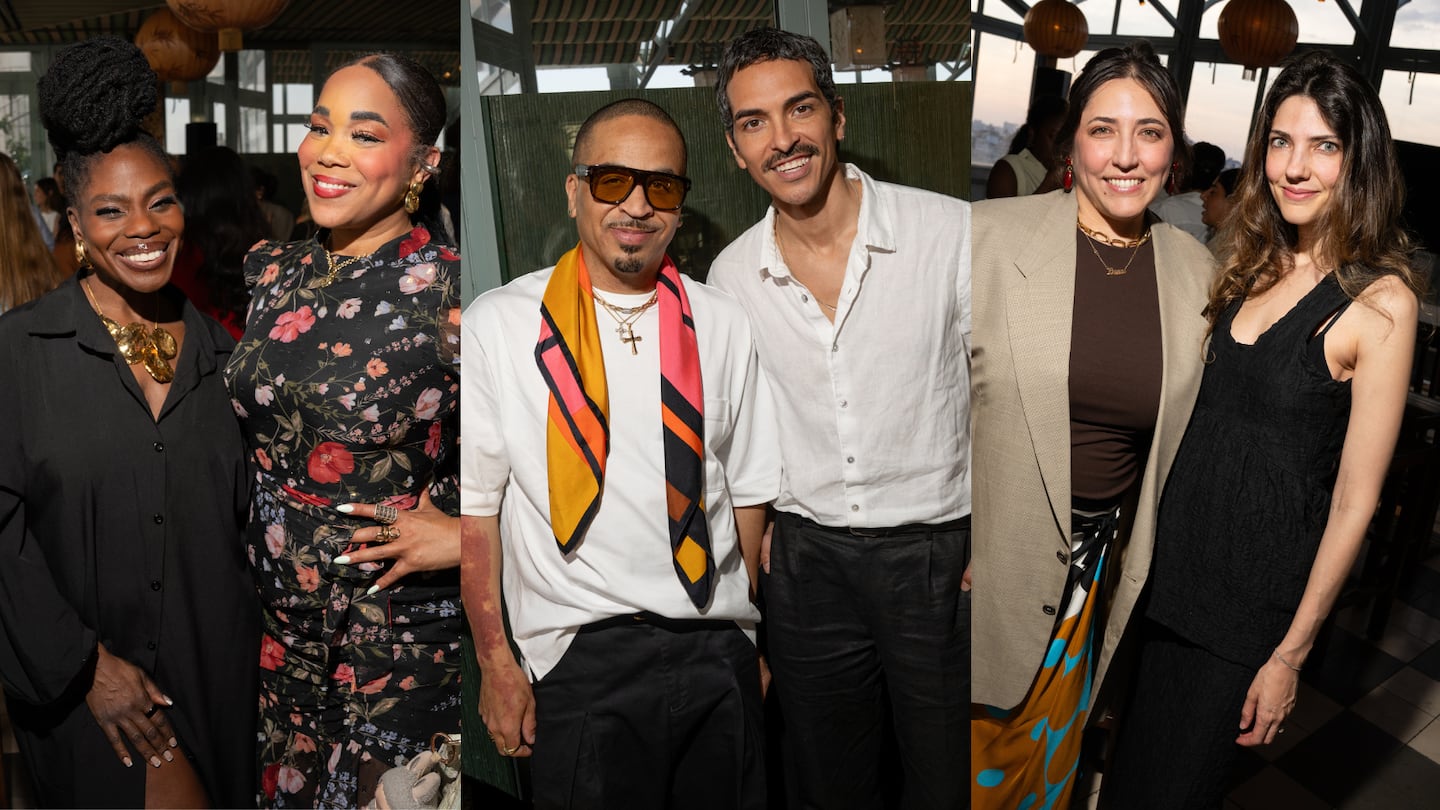
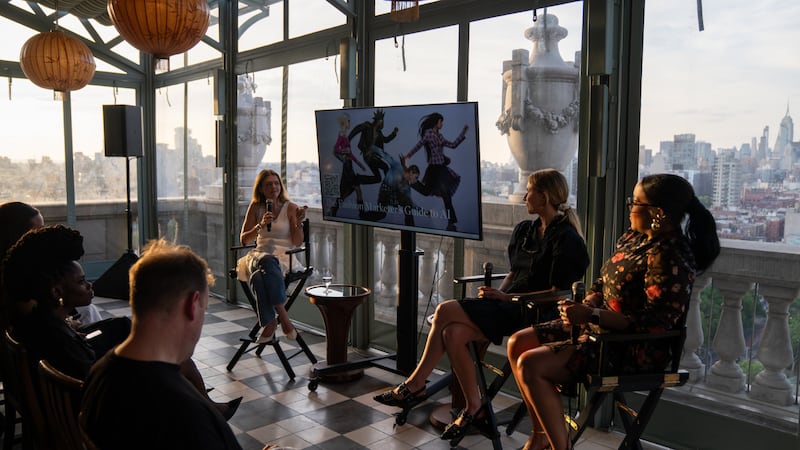
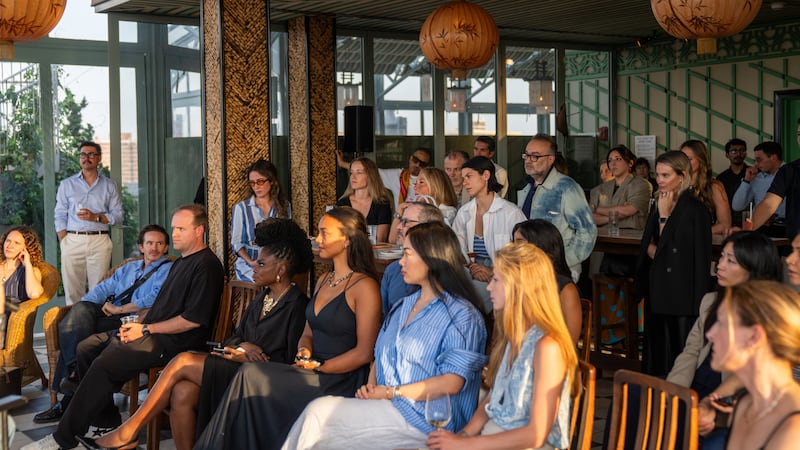
NEW YORK — On May 19, senior leaders from Victoria Beckham Beauty, Proenza Schouler, David Yurman,, Amazon Fashion, Steve Madden and Calvin Klein, among others, gathered at Nine Orchard for an intimate cocktail conversation hosted by The Business of Fashion, to explore how brands are moving from AI experimentation to deployment — and what is at stake when they do.
The evening was led by Alice Gividen, BoF’s director of content strategy, alongside senior correspondent Sheena Butler-Young and marketing correspondent Haley Crawford, whose latest case study, The Fashion Marketer’s Guide to AI, maps the terrain the room was navigating.
Drawing on real-world examples from Goop, Beekman 1802, Maison Kitsuné, The RealReal and Zalando, it concludes that the brands getting AI right are not choosing between efficiency and creativity — they are proving they can pursue both.
The findings resonated with executives in the room. For Danessa Myricks, founder and CEO of Danessa Myricks Beauty, AI’s clearest value lies in deepening customer relationships. “We’re really looking to use AI to create a better customer experience — whether it’s educating consumers on products or helping them find things that solve their problems more easily,” she said.
ADVERTISEMENT
Henry Barton, global head of network and community at social affiliates SaaS platform Duel, pointed to the role of authenticity in AI searchability and discoverability. “It doesn’t care about your website, it doesn’t care about your blog — it cares about how your customers, your community, your fans and advocates are showing off your brand.”
As AI intermediates discovery, brands have less direct control over the customer journey. For Jess Burns, senior vice president of global marketing at Rag & Bone, the urgency is rethinking what distinctive value or experience a brand offers beyond simply being found.
“LLMs are where consumers are getting a ton of their information, especially younger generations — they’re using ChatGPT and Gemini to do their shopping,” she said. “But for me the question is: what does your experience look like in all of this?” For brands like Rag & Bone, the harder creative challenge begins once LLM optimisation is in place.
According to BoF and McKinsey and Co.’s The State of Fashion 2026 report, more than half of US consumers using generative AI for search are already using it to shop, and 41 percent now trust those results more than paid advertising.
Yet the rapid adoption of AI is creating unease on both sides. Brands are racing to integrate the technology, while consumers are growing more sceptical of it. This tension is reshaping every part of the marketing organisation, from campaign creation to talent strategy.
Below, BoF shares key insights from the panel conversation.
The traditional awareness-to-conversion funnel is being structurally transformed. “AI has made the customer experience so much more dynamic and personalisable. When you think about the upper funnel — generating awareness for your brand — this comes down to campaigns, to AI search, to how you’re surfacing on ChatGPT. And what’s exciting is that brands can use AI to trend-spot across different markets and turn around a campaign in a matter of days,” said Crawford.
She pointed to luxury resale platform The RealReal as an example of a brand using AI to identify ideal shoppers, consignors and creator partners — significantly reducing advertising costs. The company also uses AI models to personalise product recommendations and tailor the timing of marketing messages to each customer’s journey. “The biggest structural change is when brands begin to think of the funnel as a lifecycle.”
ADVERTISEMENT
Butler-Young offered a counterpoint worth sitting with. Consumers are embracing AI to ease cognitive load and filter noise, she noted, but fashion occupies a distinct category.
“Shopping for fashion is different from ordering on Amazon. I’m letting Amazon order my necessities — fashion is visceral. I’m not going to let ChatGPT or Claude choose how I dress or what I want to wear today.” The implication for brands rethinking their funnel is that AI may compress the journey, but the emotional decision at the end of it remains stubbornly human.
In March 2026, 55 percent of Americans said they believed AI would do more harm than good in their day-to-day lives, up from 44 percent the previous year — and 32 percent said they would trust a brand less if they knew it generated content with AI according to research from Quinnipiac University.
Nonetheless, Butler-Young drew a distinction between what consumers say and what they actually do. “There’s a real disconnect between espoused anxieties and how people actually live their lives. But the extent to which people are online value-signalling versus actually enacting those feelings in their day-to-day lives, remains to be seen.”
The anger tends to surface when AI is visible and feels like a cost-cutting measure at the expense of workers or craft — not when it quietly improves a customer’s experience.
Crawford highlighted how operational applications — AI-assisted personalisation, AI-generated product packshot imagery for brand websites, behind-the-scenes measurement tools — generate little friction. “Consumers are comfortable with AI as an invisible interface,” she said. The distinction is about whether the technology is being used to enhance what the customer already values, or to replace it.
The Gucci Primavera campaign was brought up as an example during the panel conversation of what happens when that line gets crossed. Consumers who perceived the imagery to be AI-generated were questioning what it implied about the brand’s commitment to craft.
“People get really upset when a campaign feels like a brand is trying to pull the wool over their eyes, especially when consumers are spending so much on the products being marketed to them,” Crawford said. For luxury brands in particular, the creative expression of a campaign is part of the value proposition, not separate from it.
ADVERTISEMENT
When AI surfaces options in response to a query, it hands the consumer a shortlist — not a decision. “AI gives me a choice. At the end of the day, the choice that I make is going to be connected to emotional connection — maybe a customer feels connected to the brand and because they like creators they worked with. Emotional connection is the absolute basis of everything,” said Gividen.
Crawford reinforced the point through the lens of search visibility. Brands like Beekman 1802, featured in her case study, are working to ensure they surface not just on Google but across the trusted editorial, medical, and community platforms that LLMs now draw from, such as Reddit.

As AI handles more execution, the skill brands are actually competing for is judgement — the ability to recognise what is good, what is off and what is missing. Butler-Young, who oversees BoF’s reporting on workplace and talent, said brands need to catch up on what that means for recruitment. “Taste is a proxy for judgement — we need new mechanisms to assess whether someone can actually do that,” she said.
As employees grapple with AI anxiety and fear of automation replacing humans, she said the responsibility starts at the top. “Many companies have operated from fear — they have not engaged in a conversation at all because even up to the CEO, they don’t know how safe their own job is.”
She suggests more openness and honesty at the executive level — saying, ‘I don’t know myself if my job is safe.’ On the employee level, she says each individual should take sovereignty over making themselves employable in this new era. Organisations that stay quiet cede ground to the ones willing to lead through the uncertainty.
The brands that come out ahead will be those that invested in human judgement alongside the technology. “AI is going to free us up to do all the things that are uniquely human,” Butler-Young said. “So what are those things? I don’t think any brand leader has been able to answer that clearly yet — and that is exactly the work.”
Senior strategists across fashion and beauty are available to deliver BoF Professional Briefings in-house, tailored to your business. Please get in touch here to arrange one.
Senior leaders from Bottega Veneta, Harrods, Bvlgari, Selfridges, Manolo Blahnik and Tiffany & Co., among others, attended an intimate aperitivo evening at The Roof Gardens in London to explore the integration of artificial intelligence across the fashion and beauty industries.
Loading recommended reads…
Online fashion retailer Asos has brought on celebrity stylist Law Roach to bring his creative lens and styling approach to its campaigns and recently relaunched magazine.
In a now-viral video, the former longtime trade body president is seen wrestling with protestors and covering their mouths.
The online clothing retailer, which rebranded as Debenhams Group last year, said Friday that Iain McDonald had taken over from Tim Morris with immediate effect in a move aimed at ‘rebuilding equity value.’
This week, an altercation with animal rights activists at the Cos show in New York has put a long-shot campaign against wool in the media spotlight.