Agenda-setting intelligence, analysis and advice for the global fashion community.
Agenda-setting intelligence, analysis and advice for the global fashion community.
If every era has its own makeup look, then how will the late 2020s be remembered?
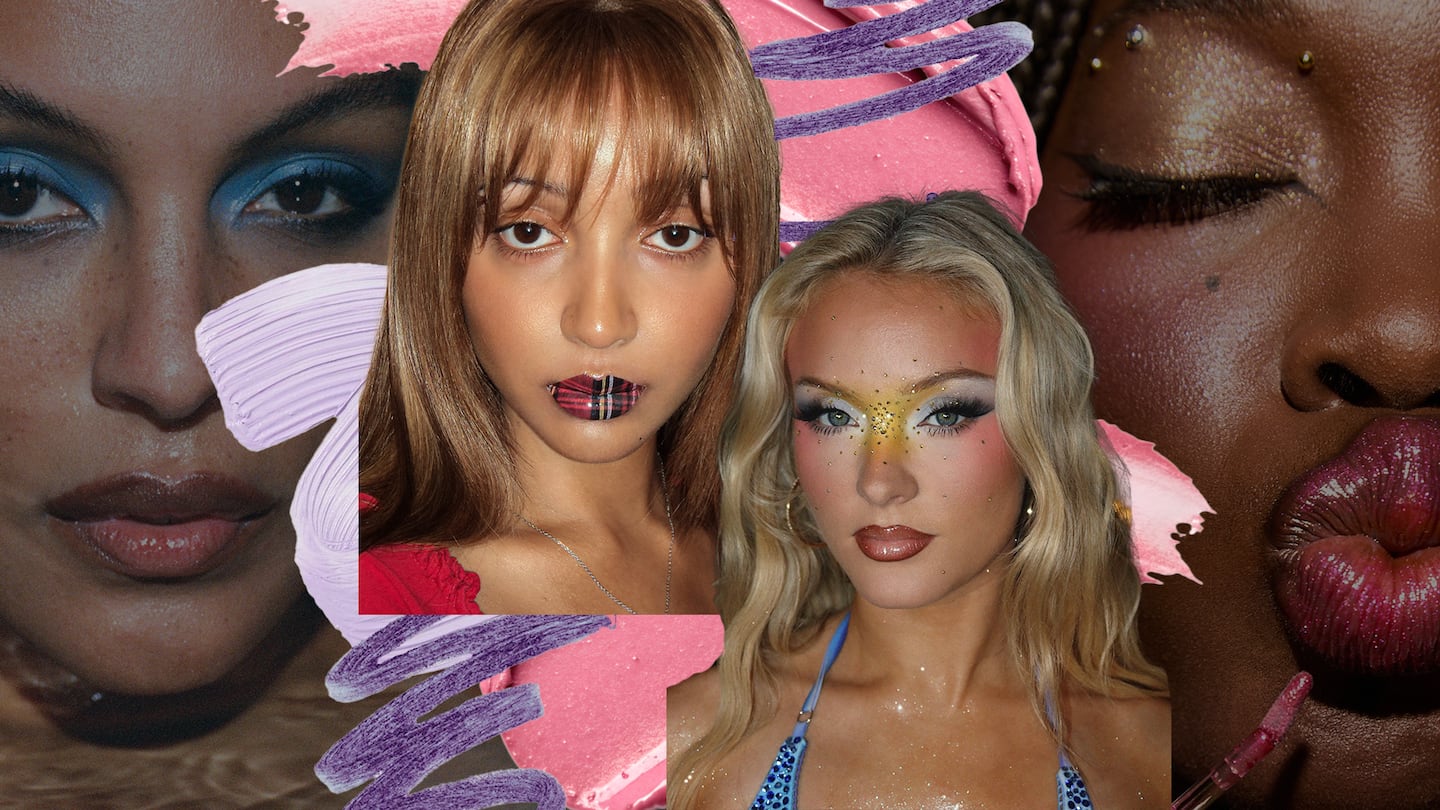
The most exciting cultural beauty moments of late, including Olympian Alysa Liu’s bleached halo hair, PinkPantheress’ tartan lips and Zara Larsson’s high-impact tour makeup, have teased the return to a bolder era of beauty. But elsewhere, despite whisperings of her downfall, the clean girl still lives: According to Google Trends, searches for the term hit a five-year peak in late February — just two weeks after “2016 makeup” also hit a peak of its own.
So it follows that the face of the moment borrows from both camps: Dewy skin against an illustrated lip, or galactic smoky eyes paired with a humble lip balm. “Two things can exist at once,” said Megan Bang, a fashion and beauty trend forecaster at WGSN. “We like to call them trend tensions.”
This particular tension suggests a budding desire to break with the ubiquity of the decade so far. Consumers have grown exhausted of the homogenous “Instagram Face”, which has been exacerbated by AI and the democratisation of aesthetic injectables, added Bang.
ADVERTISEMENT
Neither a reversion to the regimented excess of the mid-2010s or the hyper-decorative era popularised by makeup artist Donni Davy’s looks for “Euphoria”, the new maximalism is a more subtle evolution. The perfected, complexion-focus of the last five years endures, while colour, technique and texture are reintroduced in more deliberate and innovatively-formulated ways.
Makeup artist and brand founder Fara Homidi heralds the fusion as something like an amped-up clean girl. “We’re refining what maximalism is. It could be a big, bold look, but it still looks modern, and softer than what was happening 10 years ago.”
But beauty experts have giddily theorised a return to makeup maximalism before. In 2023, Piper Sandler’s teen survey saw Gen Z spend more on cosmetics than skincare for the first time in three years — only for fragrance to emerge as the beauty frontrunner the year after. “I know people are saying this is happening,” said Davy, founder of Half Magic, of the death of the clean girl. “Is it really happening, or am I just surrounded by beauty industry folks and influencers?”
But a distinctive look is undoubtedly emerging, both more wearable and precise than previous eras. Looks are built from a perfected complexion, often showcasing a single point of sharp focus: a blurred lip, a high-contrast blush or a painterly applied liner.
A continued emphasis on dewy skin also means shoppers don’t have to throw out their Rhode. “People try to put makeup into one box, like it’s been clean and now it’s going to be something else,” said Lisa Payne, head of beauty trends at intelligence agency Stylus. The full portrait is “much more nuanced.”
Rather than a wholesale revival of the full-glam and full-coverage looks that defined the mid-2010s, today’s aesthetic is more modular.
According to market research company Circana, concealer sales are outperforming foundation, with masstige sales in the category up 15 percent in 2025. It points to a more selective era of coverage, that prioritises precision above blanket application.
Lip liners — associated with both contouring and the matte “blurred lip” trend — have seen a 26 percent increase in adoption compared to this time last year, according to forecasting company Trendalytics. In contrast, lip oils, a minimalist staple, were down significantly across searches and sales, both firms added.
ADVERTISEMENT
For eye makeup, data suggests that smaller formats are gaining traction: While searches for eyeshadow palettes were down, liquid eyeshadows are up by 12 percent, while stick formats have grown by 19 percent, per Circana. Recent launches including Danessa Myricks two-in-one Colorfix Stix, Patrick Ta’s Major Dimension Eye Illusion Duos and Fara Homidi’s Essential Eye Compact trio all promise a one-and-done wash of colour.
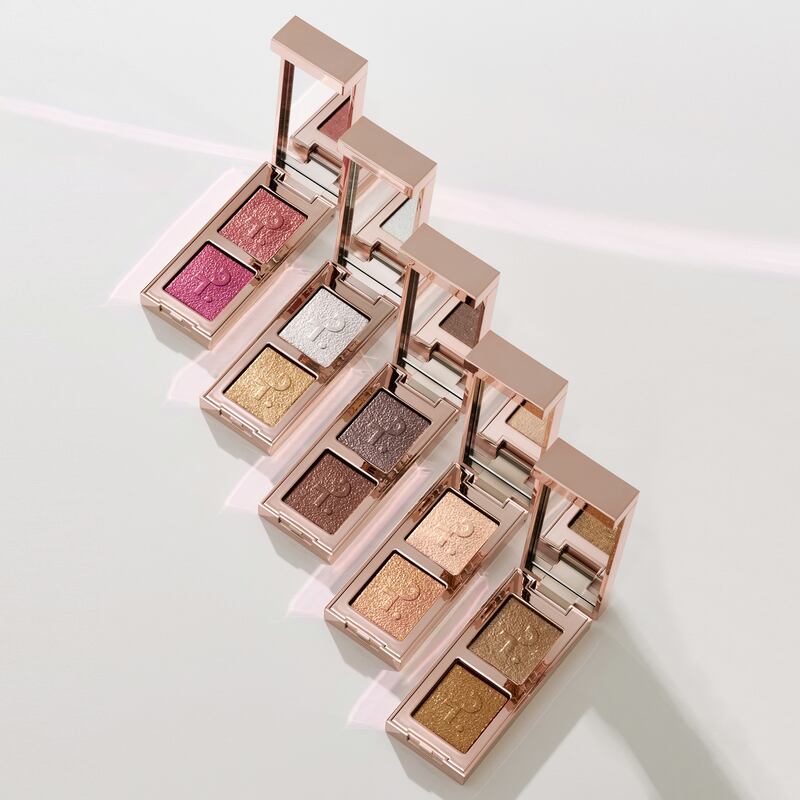
Instead of investing in expansive (and expensive) palettes, shoppers are gravitating towards single-use, high-impact products that can be layered on top of their existing routine.
“I like to bring to the table this clean-girl base, juicy complexion, then anything experimental,” said Davy. “It doesn’t have to be a huge eye — I mean, it’s best if it is — but a makeup detail, maybe it’s a wing that’s sparkly, or glitter on top of your everyday eyeshadow, and then lip liner, lip colour.”
Reflected is a shift both in consumer skillset, and their desire for education. According to influencer marketing platform Kyra’s state of beauty report, only 11 percent of US and UK Gen Z feel educated about makeup, while 54 percent want to improve their techniques. The return of longform makeup tutorials in 2025 was the first hint of consumer appetite to return to complex artistry.
While bygone aesthetics prescribed a regimented routine — carve, contour, bake — today the look is more about applying only what makes the user feel good, with an emphasis on technique. “What I love about modern maximalism is that it doesn’t have to be 16 steps,” added Davy. “It’s lived in, and it’s more forgiving.”
Though Bang is witnessing consumer exhaustion with the homogenous look, she doesn’t see the reign of “quiet luxury” minimalist aesthetics ending in the immediate future. “But maximalism is where the creativity and interest will be,” she said. The creators defining the look of now, like Liu, Rowi Singh and Esantoinette champion elements of individuality.
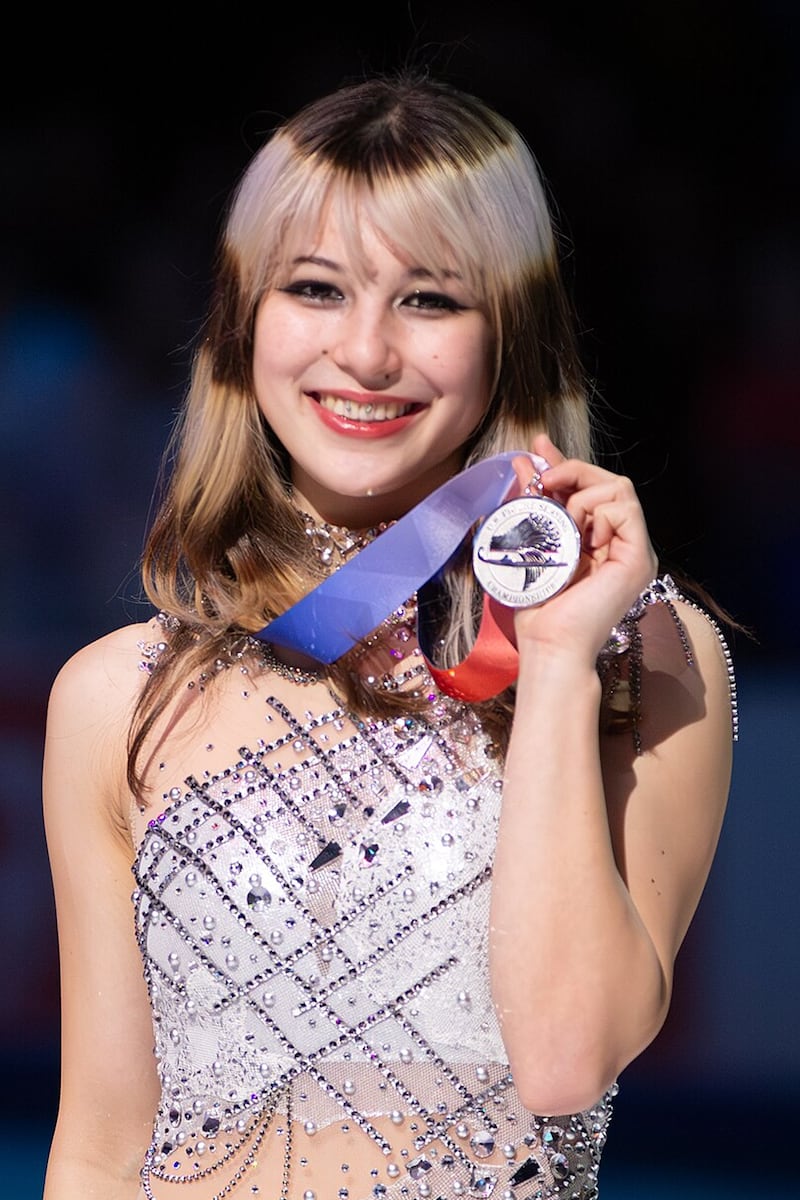
That individuality spills beyond colour cosmetics. Bold hair colour trends are on the rise, with searches for temporary options such as hair chalk up 119 percent year-on-year, and searches for the vibrant split dye style “gemini hair” surging by 400 percent, per Trendalytics.
While not traditionally associated with maximalism, skincare and fragrance have firmly blown past the innovator stage, also becoming tools for individualised self-expression. Unexpected collaborations, like Starface’s recent drop with fashion houses like Ashley Williams — which transforms a pimple patch into a slogan-y fashion statement — offer a different kind of maximalism, added Bang. Meanwhile, fragrance has emerged as a key means of identity expression, especially among Gen Z.
ADVERTISEMENT
As consumers seek reprieve from the humdrum reality of the squeezed economy, playful experimentation within colour cosmetics could become widespread as early as this year, said Katie Thomas, Kearney Institute lead. “They’re going to stick to basics within skincare, then they’ll spend on the ‘wow’ factor: one great eyeshadow palette or lip kit,” she said.
But truly mainstream maximalism will likely take a few more years to fully manifest, and are primed for a “renaissance” later in the decade, said Bang. “Interesting techniques, textures and application methods will allow beauty to feel a lot more authentic. Currently, we’re on the verge of it feeling really same-y, boring and fake.”
The aspirational makeup looks on the recent fashion week runways — such as Pat McGrath’s 1980s inspired eyes for Saint Laurent, or Sam Visser’s 1990s Grunge vision for Demna’s Gucci debut — will gradually trickle down onto faces, but maybe not so quickly: While consumer demand for clean girl staples remains a key growth driver for brands over bolder products, it doesn’t mean that the maximalist moment has arrived yet.
To Davy and Homidi, a dominant mid-to-late-20s beauty aesthetic is already being carved. “It’s a blurry, smudgy, delicious sort of lived-in makeup,” Homidi said, that defines the current moment.
Davy thinks of the moment’s makeup as more emotional. “It doesn’t have to be perfect,” she said. “It’s makeup that means something.”
Sign up to The Business of Beauty newsletter, your complimentary, must-read source for the day’s most important beauty and wellness news and analysis.
Want to dive deeper into an insight from this article? Check out The Brain of Fashion, BoF’s new generative AI tool where you can unlock BoF’s beauty archive with a single question.
The trend, characterised by glowing skin, fluffy brows and fake freckles, successfully ended an era dominated by high-glamour makeup. The standards it has set will shape the kinds of cosmetics that consumers will want for years to come.
The sleepy category is waking up after years of ‘clean girl’ minimalism caused a sales slump.
While social media is nostalgic for the year that birthed the cut crease and contouring, many of the brands that benefitted at the time are now behind the curve.

Rachael Griffiths is a Senior Editorial Associate at The Business of Beauty. She is based between St Helens and London, and covers beauty, wellness and industry news.
Loading recommended reads…
Beauty brands have long paid to be featured in ‘Get Ready With Me’ videos. Now, they’re designing their products and tools for maximum screentime.
As she prepares to hand power to the next generation, the doyenne of Italian fashion contemplates what makes Prada Prada and what she’ll leave behind, as well as more immediate matters like absorbing Versace.
As the beauty industry evolves to cover new frontiers, global beauty giant Unilever is proactively shaping its talent strategy to meet the new business realities.
Michele goes deep, Miuccia gets happy.