Agenda-setting intelligence, analysis and advice for the global fashion community.
Agenda-setting intelligence, analysis and advice for the global fashion community.

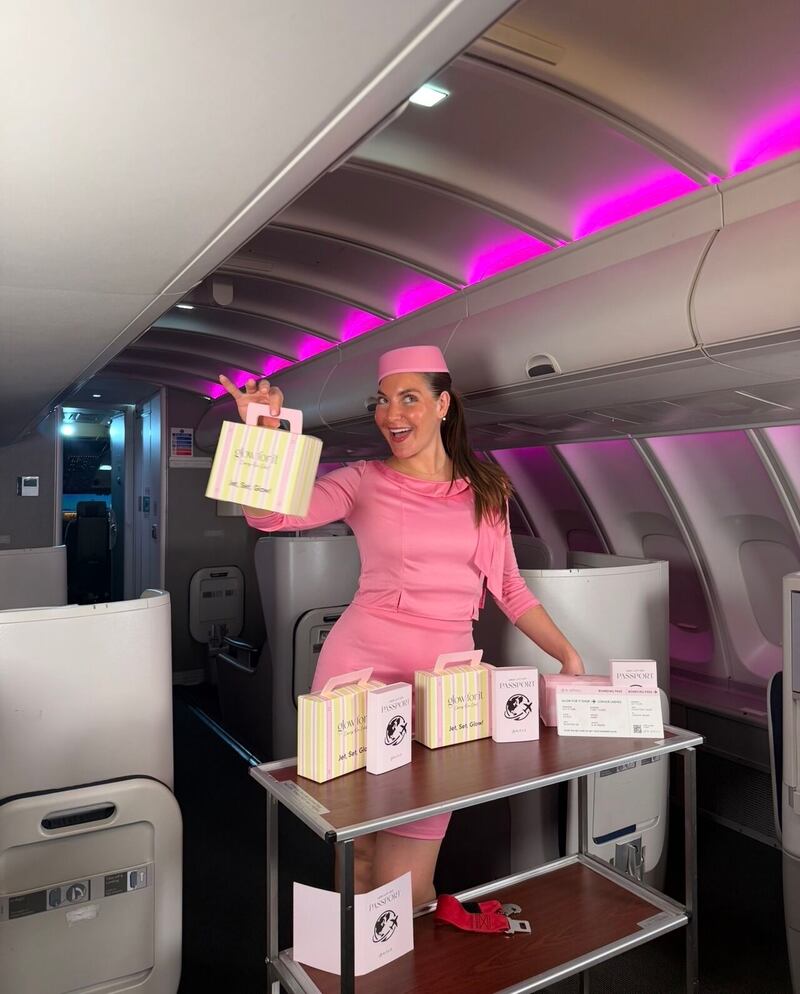
There are plenty of places that Daisy Kelly envisaged herself selling her lash growth serum. An abandoned Boeing 747 wasn’t one of them.
But that’s where Kelly found herself in late June, broadcasting to her 180,000 followers as the founder and chief executive of the beauty brand Glow For It. As she switched between air hostess and pilot, Kelly showed themed bundles curated specifically to be sold during one live, and one live only. “If someone’s streaming into our live, it has to be engaging,” she said later.
Kelly is one of thousands of beauty founders for whom live selling has moved from niche experiment to mainstream retail channel. While streams began with Kelly alone at home with a tripod, the brand now goes live for six to nine hours per day and attributes a fifth of its monthly sales to the format.
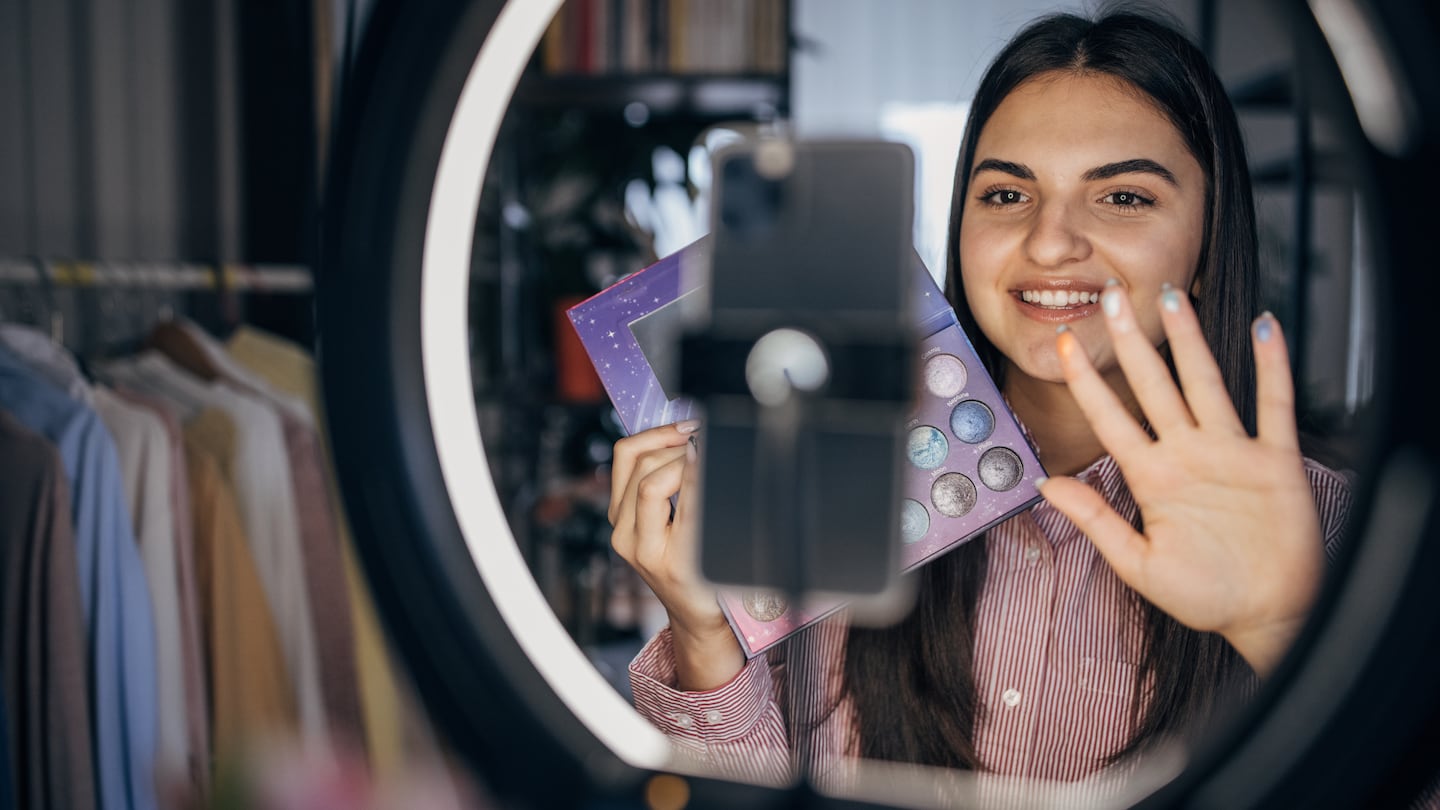
For beauty, live selling has always been a natural fit, as products benefit from real-time demonstration in a way that is hard to replicate beyond the shop floor. “The format allows buyers to see products in action, have their questions answered and learn how to use different items,” said Patrick Nommensen, TikTok Shop’s head of strategic initiatives for the Americas and Europe, noting that beauty is a top performing category on the app.
ADVERTISEMENT
Though platforms including Whatnot, Palmstreet and Tilt are building their own live shopping audiences, none have repopularised the format for a new generation like TikTok Shop. Unlike traditional channels such as QVC, TikTok livestreamers can broadcast from anywhere. Brands can train their own hosts, conquer valuable digital space and build a community with each broadcast.
Early adopters like Made by Mitchell show the format’s runaway potential. After generating over $1 million of income in a single stream, the UK makeup brand has leveraged its success into a springboard to brick-and-mortar retail relationships with the likes of Boots and Ulta Beauty. But not all labels can find the same success as “brands without a clear creator commerce strategy risk losing share of voice, relevance and conversion to more socially fluent competitors,” per NielsenIQ.
Long before TikTok Shop, the company QVC (which stands for Quality, Value and Convenience) built a multibillion dollar business around charismatic hosts demonstrating products on television. But as audiences have migrated online, traditional TV shopping has struggled. Between 2018 and 2024, QVC Group’s two networks, QVC and HSN, each lost roughly half of the US households they used to reach, according to Fortune. In April 2026, the company filed for Chapter 11 bankruptcy to cut its $6.6 billion debt.
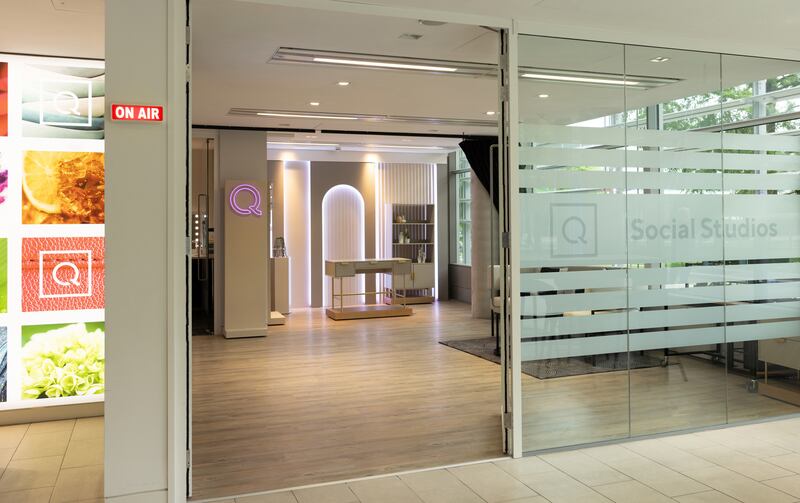
The company is aware it must move with the times: in August 2024 it launched TikTok Shop, becoming the first ever 24/7 live social shopping channel on the app by April 2025. Its UK business is following suit. After launching on TikTok Shop in March 2025, QVC UK has hosted more than 185 livestreams, and attracted over 30,000 new shoppers. In June it opened dedicated social commerce studios at its London headquarters, a strong pledge to support its livestreaming and creator content.
“This is not a different thing, it’s an evolution,” said Robyn Cooke, QVC UK’s director of social commerce. “We’re not pivoting.” For Cooke, TikTok doesn’t replace television shopping so much as changing its delivery — meaning that the two companies are not in competition with one another, but partners. “We bring the trust, the credibility, the commercial knowledge, and TikTok brings the discoverability,” she added.
Legacy beauty brands are arriving, too. When MAC Cosmetics launched on TikTok Shop in April, it reached the platform’s highest merchant tier in just 25 days (around 11 times faster than the typical seller trajectory), and became the biggest beauty debut in TikTok Shop UK’s history. The brand investing in TikTok Shop alongside a major retailer such as Sephora suggests it sees the two channels as of comparable strategic importance in its bid for relevancy.
“MAC had almost stopped being at the forefront of the conversation,” said Sara Staniford, MAC’s vice president and general manager, who helped helm the launch. “Such a volume of beauty searches are done on TikTok Shop, and we just weren’t really present there.”
While luxury brands were slow to get on board with the now dominant Amazon channel, premium labels like Allies of Skin are already experimenting with the TikTok Shop live format. To promote its summer launches, the brand has scheduling a series of lives throughout August. “As a routine-building brand, a lot of our customers also really enjoy these live question and answer,” said founder Nicolas Travis. “If there’s already people hungry for information, and so loyal they’re used to tuning in for hours, it makes a lot of sense for us.”
ADVERTISEMENT
Beyond Studio Fix, what was MAC’s secret sauce? Employee-generated content, said Staniford. Ahead of its TikTok Shop launch, MAC held nationwide auditions of its store employees, selecting 16 of them to become official livestream hosts, allowing the rest to become TikTok Shop affiliates and setting up livestream studios in-store. For an artistry-led brand, spotlighting the authentic, in-store makeup artists over the brand’s usual superstar faces had a natural synergy. “People want to see what is going on behind the scenes. In my opinion, affiliates are the new influencers,” said Staniford.
Non-influencer hosts are also resonating on Tilt, the streetwear turned cross-category liveselling platform. “We think commerce is about the human experience,” said Abhi Thanendran, co-founder and chief executive of livestream marketplace Tilt. “It’s about connecting people.” Per Thanendran, Tilt’s most successful beauty sellers are ordinary people who began streaming as a side hustle.
And while Kelly’s Glow For It mega livestream sets are elaborate, the brand’s audience are seeking human connection as much as they are entertainment. “When someone places the order, we give them a shoutout, ask them what they’re excited about and how their day’s going. It’s what people are craving right now.”
As brands and affiliates decipher how to keep audiences engaged, platforms are working in the backend to evolve the livestream experience itself even further. The potential is huge: According to data from NielsenIQ, China’s sophisticated live commerce market is worth around $900 billion — around the size of the entirety of the US commerce market — with 87 percent of users attending livestream events once or more per month.
In spring, Tilt introduced an AI-feature known as Snap that generates product listings as sellers hold items to the camera: clearer listings have delivered a 47 percent increase in sell-through rate and made less administrative work for the sellers themselves. Meanwhile, TikTok Shop’s 2026 innovation is the introduction of live auctions, where stream audiences can bid on products from the likes of Sephora and Living Proof in real-time, per Nommensen.
Beyond that, Nommensen shared that the platform’s work on livestreaming education and brand-to-affiliate matchmaking is extensive — all tools that have allowed the platform to attract 76 percent of its users to purchase a product via a livestream. “We give sellers, brands and creators the platform to be storytellers of their products, so that buyers can find products that they didn’t even know they were looking for,” he added.
Sign up to The Business of Beauty newsletter, your complimentary, must-read source for the day’s most important beauty and wellness news and analysis.
The platform is now a top e-tailer for cosmetics, skincare and hair care, and smart legacy and indie brands are increasingly being lured by its proposition.
Gen Z is turning beauty into a social sport, blending AI, ingredient obsession and a preference for in-store shopping. But only brands with real credibility and community cachet will convert curiosity into lasting loyalty.
Liverpool-based mass cosmetics brand Made by Mitchell was on the brink of closure when TikTok Shop made it a star. Now it has its sights set on making a splash in wholesale, too.

Rachael Griffiths is a Senior Editorial Associate at The Business of Beauty. She is based between St Helens and London, and covers beauty, wellness and industry news.
Loading recommended reads…
The valuation target marks a dramatic reset for Shein, which plans to launch its IPO as early as mid-August, three people familiar with the matter said.
The online fashion retailer said 2026 revenue and growth will land in the lower half of its previously guided range and narrowed its adjusted operating profit outlook.
Company veteran Connor Boon will oversee the British footwear brand's creative strategy as it expands further into apparel and formal wear.
Investment in artificial intelligence promises to help fashion companies work faster, smarter and more efficiently, but one key obstacle stands in the way of good returns.