Agenda-setting intelligence, analysis and advice for the global fashion community.
Agenda-setting intelligence, analysis and advice for the global fashion community.

As GQ magazine’s first-ever watch editor, Cam Wolf has covered the crème de la crème of horology since launching his weekly watch market newsletter in 2022.
But Rolexes or Patek Philippes selling for over a million dollars at auction aren’t the only timepieces catching his eye lately. On his Instagram, alongside photos of vintage Audemars Piguet and Parmigiani Fleurier watches that easily fetch five-digit price tags, he’s also been spotlighting newly released timepieces from brands such as Seiko and Casio that cost less than $500.
“The range of affordable watches has gotten so great,” said Wolf. “What is really cool about watches [today] is that even if you are trying to swim in the affordability pool, there’s still such a depth of collecting that you can jump into.”
Wolf isn’t just talking about how the masses clamoured for Swatch’s $400 collaboration with Audemars Piguet earlier this year. Today, a new generation of enthusiasts is driving demand for watches ranging from $100 G-Shocks to $1,500 timepieces by indie “microbrands” that have launched within the past two decades, such as Christopher Ward and Baltic. The post-pandemic boom fuelled by hype for the most prestigious Swiss labels like Patek Philippe and Audemars Piguet has largely stabilised; in its place has emerged a new kind of watch-buying philosophy rooted in attention to value, quality and novelty. Today, a growing number of young consumers are seeking more affordable timepieces that don’t compromise on style, creating an opening for accessible brands that have significantly sharpened their product offerings and marketing.
ADVERTISEMENT
These Gen-Z shoppers may not have the spending power to buy a $50,000 Rolex, but they have plenty of other options to covet, according to Owen Rickert, an analyst for Northland Securities who’s bullish on affordable watchmakers such as Movado and Fossil.
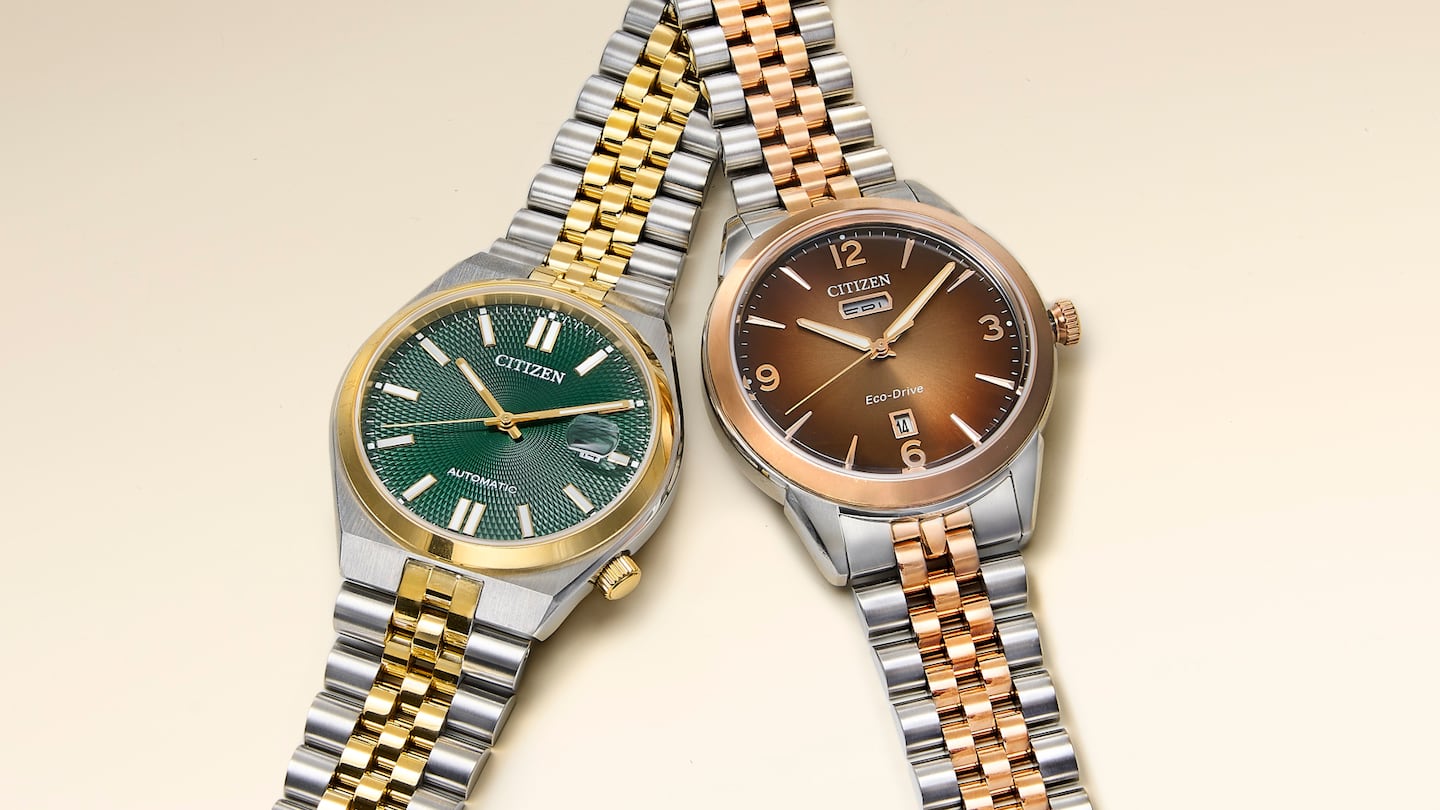
What’s considered affordable in the category varies widely. The Federation of the Swiss Watch Industry categorises its exports into four pricing tiers, from pieces under $250 to those that exceed $3,700. For context, a Rolex Oyster Perpetual typically retails for over $6,000. The brands seeing recent momentum — including Casio, Seiko and Citizen, the “big three” Japanese watchmakers — are known, more or less, for watches priced below $1,000.
“They can find a watch that’s just as cool for one-fiftieth of the price, and it does the same job,” said Rickert.
To be sure, the hottest luxury brands such as Rolex and Cartier have seen considerable growth, with ultra-luxe timepieces priced over $10,000 driving the bulk of growth in the overall watches market, according to Morgan Stanley. But in recent months, companies that have historically addressed lower price segments, including American and Japanese watchmakers typically excluded from mainstream market analysis that focuses on Swiss exports, are also witnessing strong momentum as they expand their product offerings and boost marketing while also pushing new watch buyers on a path towards premiumisation. In July, Swatch Group reported 8.5 percent sales growth within the first half of 2026, buoyed by demand for entry and mid-range timepieces. Meanwhile, Casio, Seiko and Citizen all reported double-digit annual sales growth in May — with Seiko and Citizen crossing €1 billion ($1.1 billion) in annual timepiece sales for the first time.
Today’s hottest accessible watches are desirable because of not only their price but also what they offer in terms of style and technology.
“[Our shoppers] are definitely looking for value, but I wouldn’t say value necessarily means price point,” said Allison Kantor, Macy’s vice president and divisional merchandise manager for fine jewellery and watches. “They’re really looking for a watch with a great price that’s also delivering on the style that they’re looking for while also being a quality timepiece.”
Kantor said what draws customers to watches at Macy’s, which sells a wide range from $225 quartz Seikos to $2,395 mechanical Tissots, is how these brands strike a balance between value, style trends and high-quality functionality that’s also bolstered by effective storytelling.
She flagged how Fossil, a brand whose ongoing turnaround efforts have been underscored by its nearly decade-long attempt to flourish in the wearables market before closing its smartwatch division in 2024, has attracted new customers through archival designs. The most notable example was the brand’s re-release of its $195 “Big Tic” watch from 1999 in March, which was dubbed by GQ earlier this year as a “marvel of Y2K blob design.” Similarly, Movado’s Heritage 1917 collection — which debuted last fall and ranges from $850 to $1,895 — draws on archival designs and has been cited by the company as a strong performer on recent earnings calls.
ADVERTISEMENT
Fossil shares have surged more than 75 percent in the last six months, while that of Movado Group has risen 57 percent, both in part driven by how they’ve addressed a surge of new young consumers, said Rickert. Both brands are also dialling in on trends popular among women with smaller case sizes or rectangular shapes, he added.
Across the board, accessible watchmakers have improved their product innovation, marketing efforts and distribution, according to Jean-Philippe Bertschy, head of Swiss Equity Research at Vontobel.
Wolf points to the likes of American brand Timex, for instance, which has recently driven hype from collaborations with brands like Noah and tastemakers such as Dimepiece founder Brynn Wallner on sub-$500 watches.
At the same time, mid-tier watches are also gaining appeal among engaged watch customers, according to Jody Musgrove, a YouTuber whose channel focuses on watches priced under $1,000 and co-founder of the label Erebus Watches. Enthusiasts are realising that they don’t need to spend $10,000 to attain a high-quality timepiece. Musgrove highlighted the latest edition of Swatch-owned Longines’ HydroConquest, a $2,200 Swiss diver watch released in March, as an example of a new product that hits a sweet spot with collectors for offering prestige at a solid price.
“You get the Swiss brand, the history and the heritage and a really high-quality product that would cost four times as much from a different brand,” he said.
This interest for innovative, higher-quality pieces is enabling value brands such as Seiko to expand their product offerings. A decade ago, Seiko rarely sold watches for more than $1,000, Musgrove noted. Nowadays, the brand offers numerous timepieces that retail for over $3,000 and has also opened boutiques dedicated to its Grand Seiko timepieces which currently start at $2,600.
At Macy’s, customers have embraced $1,300–$1,500 watches from Citizen’s Series 8 and Attesa collections, according to Kantor. But introducing pricier lines must be justified by offering and communicating a distinct value proposition.
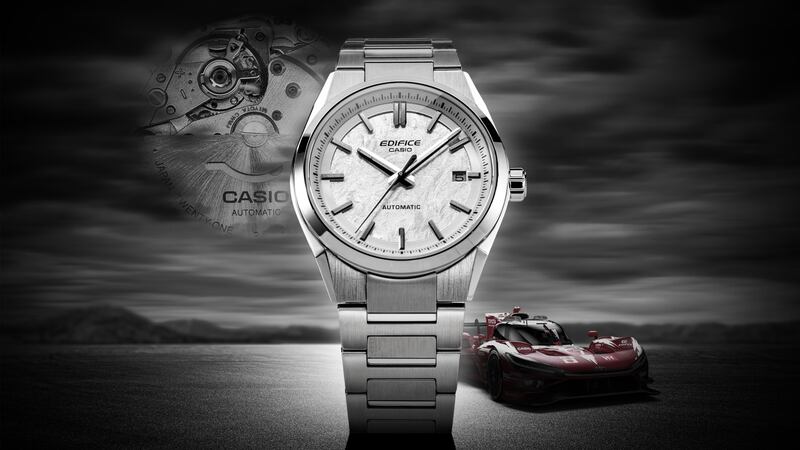
One way brands can help customers navigate the category is through a clear pricing architecture. Mike Princiotto, senior marketing manager for Casio’s American timepiece division, said the brand is using a series of “stepping stones” to encourage shoppers who enter through its sub-$100 watches to trade up over time. Between its resin G-Shocks, which start around $50 to $100, and its $1,000-plus MR-G line made from premium materials, Casio has introduced mid-tier G-Steel models to ease the transition. The brand has also elevated its distribution for higher-end timepieces, placing them with jewellers and speciality retailers such as Kith.
“In today’s economy especially, with all the prices rising, I think people look for something of stability and value,” said Princiotto. “We’ve always done well in a down economy.”
As fans camp out in front of stores for the 'Royal Pop' collaboration, analysts weigh in on the collaboration’s potential.
Switzerland’s support for watchmaker jobs has been extended another year, but a wider structural problem looms.
Marc Hayek, Blancpain’s CEO and a member of the family that controls Swatch Group, warns aggressive price hikes at Omega, Longines and more are undermining performance even as his own brand seeks to get back in the conversation with a $2 million dollar watch.

Lei Takanashi is a Correspondent at The Business of Fashion (BoF). He is based in New York City and covers menswear, streetwear, young consumer trends, and the intersection between fashion and culture.
Loading recommended reads…
Brands are finding success with products that are scarce because of real constraints, such as the materials and craftsmanship involved, as consumers tire of chasing limited drops engineered to sell out.
After a fire destroyed more than a decade of her work, designer Kanyinsola Onalaja had just three months to prepare for her London Fashion Week debut. Here, she explains how Adobe Firefly sped up her design and sampling process while keeping her creative vision and the collection’s craftsmanship front and centre.
Pricing for speedier express parcel deliveries is forecast to jump 13.8 percent from the fourth quarter of 2025, according to the TD Cowen/AFS Freight Index.
Whereas Rolex is both a buyer and seller of its second-hand watches through official retail partners, Audemars is setting up a marketplace where sellers set prices.