Agenda-setting intelligence, analysis and advice for the global fashion community.
Agenda-setting intelligence, analysis and advice for the global fashion community.

Welcome back to Full Coverage.
Sydney Towle was a revelation. After being diagnosed with bile duct cancer at age 23, and gaining an online following for sharing her treatment — and optimism — with the world, the content creator passed away on Wednesday. Towle joined us at The Business of Beauty Global Forum in 2025, where she spoke on stage about medical misinformation and fostering digital connection. “Vulnerability is a superpower,” she said then. Our love and prayers are with her family. May she rest in peace.
It’s a tag-team effort today between the wonderful Rachael Griffiths and me, Daniela. (Priya is back next week from a brief trip to BoF HQ in London — TBD on all the British treats I asked for on her return.)
While it feels like the whole world is on vacation, the beauty earnings season is in full swing. Shiseido reported a long-awaited profit uptick, though sales growth was flat. As our Brennan Kilbane has detailed, there’s weaker demand for some of its brands like Drunk Elephant, but it’s also facing a strained China-Japan relationship and tariff-related setbacks. Meanwhile, Bloomberg got an unofficial look at Chanel’s earnings, and reported that beauty revenues rose 8 percent in the first half of the year. Looks like Blazymania is working for its cosmetics, too.
ADVERTISEMENT
It was also a big week for M&A, with P&G buying supplement label Thorne for $3.8 billion. As Barclays analyst Lauren Lieberman pointed out in a note, P&G may have felt it needed to “do something” to keep pace with Unilever, which reported 5.5 percent volume growth against P&G’s flat sales growth last week. Unilever has made its beauty and wellness intentions well known; on the supplement front, it announced its acquisition of gummy vitamin brand Grüns in June. Supplements is a tricky business, but Thorne is growing at around 20 percent a year and speaks to a wide array of customers wanting gluten, dairy or soy-free products. They’ve also got the coveted medical stamp of approval. My doctor has certainly brought them up.
Supplement mania isn’t going anywhere, so I’m guessing Lemme gets picked up next.
Now on to the good stuff; read on for:
Sephora has always bet big on makeup artistry brands — think of Nars and Charlotte Tilbury — but its more recent push with Mary Phillips’s Mph, Violette Serrat’s Violette_Fr and Hung Vanngo’s namesake line has made its claim on the segment crystal clear. After putting its artists front and centre (and a bit in competition, some might say) last fall in a splashy marketing campaign, insiders tell me an updated version will be returning this year.
But with so many artist-founded lines jostling for shelf space, finding a new point of view can be hard.
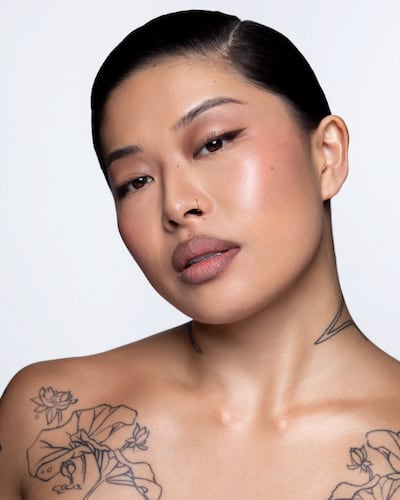
Enter Katie Jane Hughes. A beloved celebrity makeup artist and founder of KJH.Brand, Hughes’ look is modern, but neither minimalist nor maximalist. Her signature style is glowing, dewy skin; a deftly feathered brow; slightly graphic liner; and a vibrant shade on the cheeks. She’s unafraid of colour — a lilac lid, a super-ochre cheek — and she is partly responsible for why Dua Lipa looks so good.
As Sephora continues to carve out its artistry point of view, KJH.Brand will be the retailer’s next indie darling. The label features multi-use, easy-to-apply products with a focus on sculpting, defining and adding glowing colour like its Precision Sculpture Stylo, Prism Lite Lip Crayon and Hyper Shine Lite Pigment, all under $30. From Aug. 21, it will launch at more than 300 Sephora stores in the US and Canada, either on its own shelf or the retailer’s “Next Big Thing” wall.
Launched by Hughes and her husband Tarek Gamal Eldin in 2023, the duo have bootstrapped the label since day one; they have only a single employee on staff other than themselves. The couple declined to give a specific figure, but Gamal Eldin said he expects the brand to quadruple its revenue this year by both doubling its direct-to-consumer business and launching into Sephora, and has a goal of being in all stores by 2029. KJH.Brand has been direct-to-consumer until now— as a content creator with over 2 million followers across Instagram and TikTok, Hughes has a direct line to her customers, and can see feedback and requests in real time. That puts her in a sweet spot: there’s authority and audience.
ADVERTISEMENT
“I refer to myself as a makeup artist first and an influencer second,” Hughes told me. (In July, she was named on TIME Magazine’s 100 most influential creators list.)
British-born Hughes got her start as a beauty advisor in the UK’s Space NK (as did I!) and a nail technician, slowly building a fashion week and celebrity following before moving to the US to help grow the brand Butter London in 2013. But she soon realised the power of social media, and began posting tutorials and look breakdowns.
“I always say Instagram was my first agent and manager,” said Hughes, explaining how her early posts helped secure a long-running partnership with Glossier and clients like model Rosie Huntington-Whiteley.
What sets Hughes apart is her affability, which belies her A-List client roster and millions of followers. Her tutorials are genuinely doable (I’ve taken to using her thumb-pad blush placement trick and her blurred-lip routine), and her content feels unfussy, not aloof. She still works with other brands, especially those that feel native to her audience: a collaboration with Target last year to make an edit of her favourite drugstore products was a particular favourite.
“It was an amazing opportunity from an exposure perspective, and an accessibility perspective,” said Hughes.
Blending artistry and approachability is a winning combination; especially when so much of aesthetics today feels unattainable. On Reddit, her matter-of-fact nature makes her beloved in a way unusual for the forum. “Her concealer brush loading technique literally changed my life,” reads a sample comment. (For what it’s worth, Hughes said she was “too intimidated” to look herself up on Reddit.)
In Sephora, KJH.Brand will be just one of innumerable makeup lines. (On Tuesday, I reported that Mikayala Nogueira’s brand POV Beauty will soon launch there.) It’s also without the deep pockets of venture-backed brands. Still, her point of view is distinct enough for a big debut.
“I’m an artist, but I’m just like a girl that wants to paint my face,” she said. “I don’t take myself too seriously… I’m an anti-gatekeeper.”
ADVERTISEMENT
— Daniela Morosini
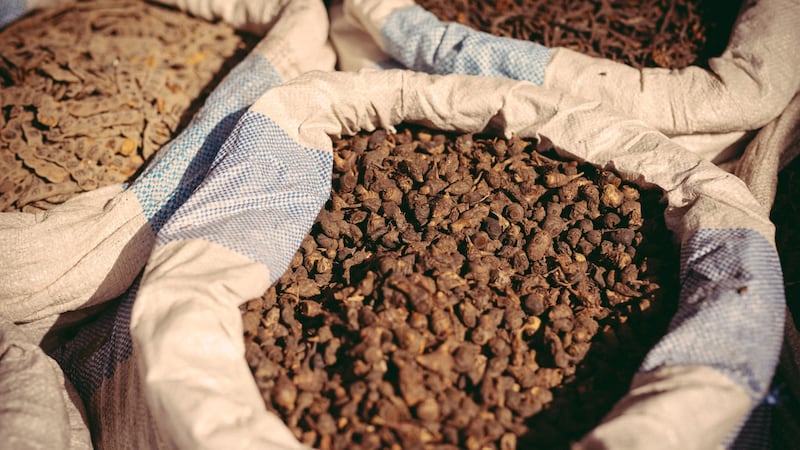
In the ages-old fragrance trade, what does it mean to “discover” something new? It’s a question — or accusation — that’s been lobbied at two fragrance houses, the Omani label Amouage and the UK firm CPL Aromas this week, following social posts announcing “an industry first”: gowé, “a new natural ingredient for perfumery.” The two houses, along with Hamaé, had partnered on the introduction of the raw material to be used in an upcoming Amouage scent nosed by CPL senior perfumer Julien Rasquinet, under the creative direction of Renaud Salmon.
Their suggestion that gowé — a root used traditionally in Senegal as incense and for perfuming clothes — was in any way “new” struck perfume fans as clumsy at best and, at worst, indicative of a familiar pattern in luxury where indigenous traditions are routinely appropriated. (See: Prada’s Kolhapuri-inspired sandals.) Within days, the caption had been edited to “gowé, a natural ingredient for perfumery.”
But a second complaint was brewing, centred around the Swedish-West African independent perfumer Maya Njie, who commented on Instagram that CPL Aromas had already met with her in 2023 to discuss gowé before ultimately deciding not to pursue a partnership. Njie developed the idea independently with an olfactory reconstruction inspired by gowé in her fragrance Aethi Opum. The fragrance contains churai, a traditional West African incense blend that often incorporates the root alongside other botanicals. In June, the scent was honored at the 12th Art and Olfaction Awards in the Artisan category. A few days after the award arrived, she saw the Amouage post.
“I don’t think there should be a necessity to claim discovery of anything, because these are indigenous plants,” said Njie, who added that previous work connected to gowé could have been acknowledged. To her, the incident illustrates a David-and-Goliath dynamic between brands large and small. (Amouage generated sales of $190 million during the first quarter in 2026 alone.)
CPL Aromas told The Business of Beauty it disputes any connection between the two projects, that the 2023 enquiry did not identify gowé, and that the Amouage project was totally unrelated. Meanwhile, Njie’s camp claims the same person that took the meeting in 2023 is directly credited on Amouage’s post. Discussions between the two are ongoing.
Amouage said that the criticism stemmed from a misunderstanding. Following an open letter shared via Instagram, chief creative officer Salmon told me that the “newness” the company was referring to was an extraction technique that makes gowé available to perfumers in a form that did not previously exist. “It was never my intention to claim that we have discovered an ingredient that has been used for centuries in West Africa,” he said, adding that the company tweaked its caption after realising readers had understood it differently.
Within the fragrance industry, innovating formulas and “discovering” rarer ingredients are key drivers for growth, particularly within the niche category. Beyond the tricky business of “discovery,” sourcing often raises ethical questions of fair trade, with workers farming popular notes such as ylang ylang paid remarkably low wages.
Salmon hopes that the brand’s original intention — to raise awareness of the ingredient’s history and ensure a flow of fair, reliable income for the local Senegalese community — will become clearer when the gowé scent arrives in 2027.
— Rachael Griffiths
Lilac is beauty’s favourite new shade. [The Business of Beauty]
It looks like Ronald S. Lauder is tightening his belt: the billionaire hasn’t donated to a single Republican cause this year in the US, and has dismissed a slew of advisors. [The New York Times]
Brands are flocking to TikTok Shop as live selling booms. [The Business of Beauty]
Doctor’s appointments have become a luxury. [The Cut]
Professional influencer? Arizona State University now offers a bachelor’s degree in content creation. [CNN]
Bye for now!

Daniela Morosini is Senior Beauty Correspondent and Special Projects Editor at The Business of Beauty at BoF. She covers the global beauty industry, with an interest in how companies go to market and overcome hurdles.

Rachael Griffiths is a Senior Editorial Associate at The Business of Beauty. She is based between St Helens and London, and covers beauty, wellness and industry news.
Loading recommended reads…
Chanel’s surging sales underscore that the luxury industry’s challenges may be less about demand than desirability.
Chris Green joins Imran Amed to explain how his self-funded Brooklyn menswear store earned a place among the world's best fashion stores — by staying off the internet and betting everything on how it feels to walk in the door.
Global editorial director Steff Yotka will succeed Bettridge, who is leaving to focus on his creative studio Content World.
Kith's new collaboration with Salomon on the XT-Evo is the latest example of the way footwear companies are leveraging influential outside partners to help them debut their newest shoes or even co-design entirely new styles.