Agenda-setting intelligence, analysis and advice for the global fashion community.
Agenda-setting intelligence, analysis and advice for the global fashion community.

What's up, down and making news this week in the fashion and beauty businesses.
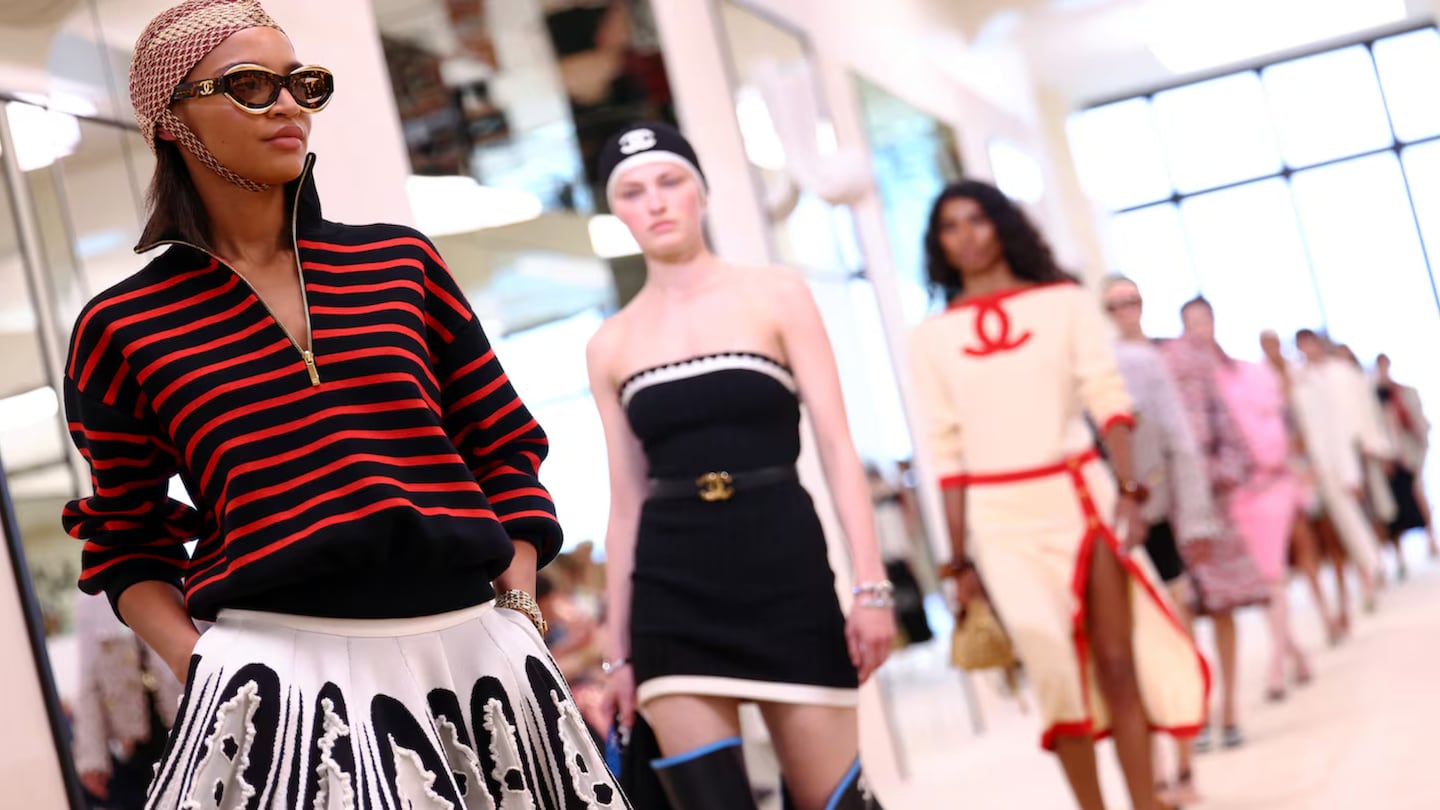
At a press event last month, I was informed by a fashion publicist with much conviction that Chanel is singularly the hottest brand right now. But specifically, new Chanel, she said: “Blazy or bust.”
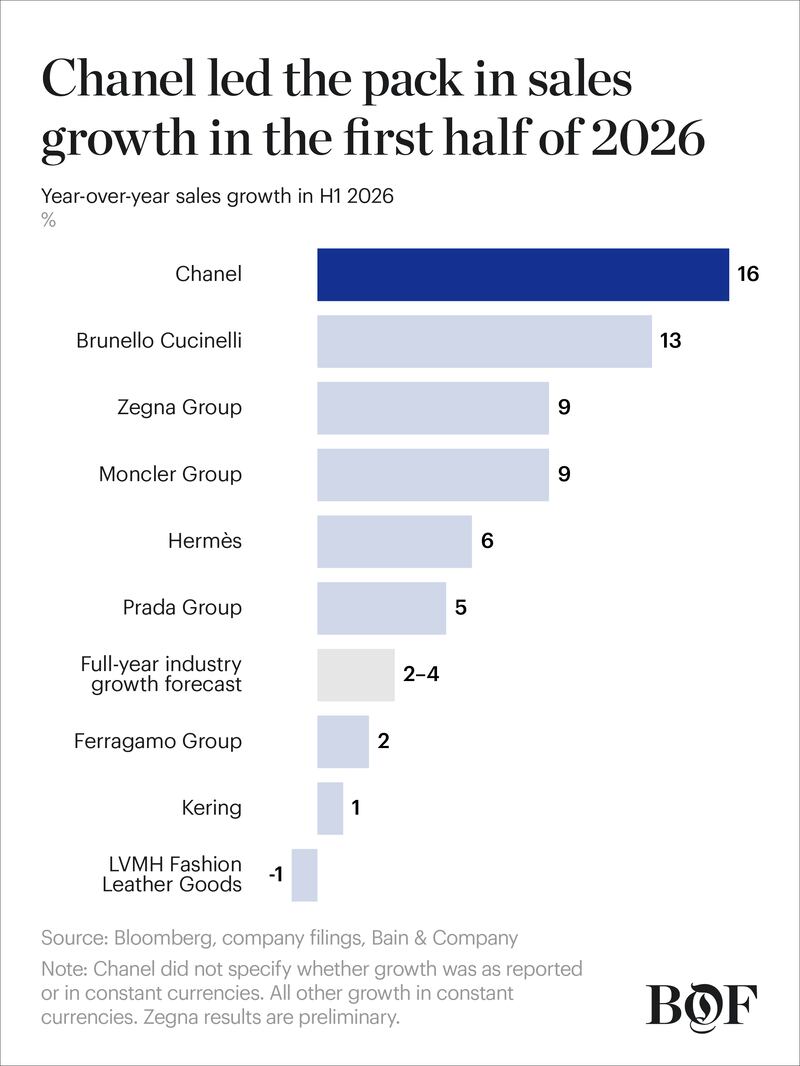
It turns out, this was no hyperbole. Sales at Chanel grew a whopping 16 percent in the first half, according to a Bloomberg report this week, citing an anonymous source. The brand publicly discloses its financials once a year, so we’ll have to wait until May 2027 for confirmation.
But if the numbers are accurate, the label is dramatically outperforming a luxury market expected to grow just 2 to 4 percent this year, according to Bain & Company’s latest forecast. At a time when rivals including LVMH and Kering continue to grapple with sluggish demand, Chanel is taking market share.
The immediate reaction from investors suggested they see success in luxury right now as a zero-sum game. Shares in LVMH and Hermès fell following the Bloomberg report, reflecting concerns that one brand’s gain simply means another’s loss.
ADVERTISEMENT
But there’s another way to read the data. For much of the past two years, the luxury industry has debated whether consumers had permanently lost their appetite for fashion after years of relentless price hikes without upgrades in product innovation and creativity. Chanel’s success underscores that the industry’s challenges may be less about demand than desirability. In other words, when a label gives shoppers something genuinely new, they are still willing to spend.
There are signs that Chanel may not be alone. LVMH highlighted last week that Dior was growing faster than the industry standard in the second quarter, while Zegna’s recent show in the US generated a strong response. Together, they hint that thoughtful creative reinvention can still reignite consumer excitement, even if the recovery remains uneven.
Meanwhile, the very top of the market continues to separate itself from the rest. Loro Piana continues to be one of LVMH’s standout performers, while Brunello Cucinelli and Zegna have continued to post strong growth.
That divergence could become even more pronounced. In Silicon Valley, executives and investors are already anticipating another wave of wealth creation tied to artificial intelligence, with expected IPOs from companies including OpenAI and Anthropic poised to create a new cohort of ultra-wealthy consumers. If that’s the backdrop, Chanel’s latest results just might mean that luxury’s future belongs to the brands capable of capturing cultural attention at precisely the moment the world’s richest consumers have more money than ever to spend.
By Cathaleen Chen
Loading recommended reads…
Sales fell in September as above-average temperatures hit demand for autumn clothing.
This week in luxury, Art Basel Paris was cut short by lingering civil unrest and Gucci owner Kering scrapped its guidance for a return to growth in 2026.
As customers expect more from the shopping journey — across lifestyle, luxury, beauty and fashion — brands are using automation to create more relevant, individualised experiences. BoF sits down with Klaviyo’s CMO Jamie Domenici to explore how brands can move beyond standard personalisation.
The watchmaker, which aims to move upmarket, will close stores and discontinue collections in a bid to stem losses before reemerging in 2029.