Agenda-setting intelligence, analysis and advice for the global fashion community.
Agenda-setting intelligence, analysis and advice for the global fashion community.

19-year-old Becca Petty knows when she’s looking at a woman over 30, and it has almost nothing to do with her style of dress or the quality of her skin.
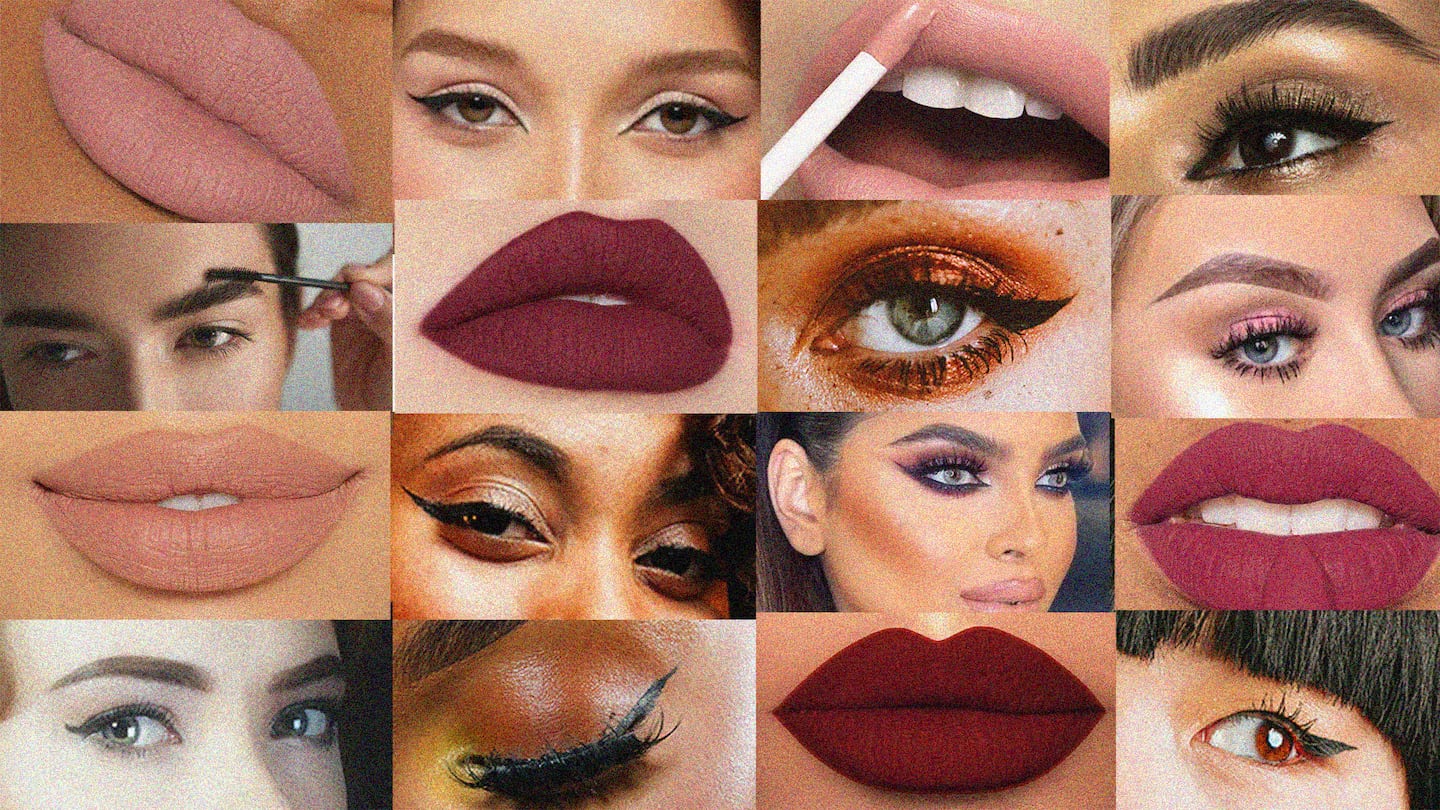
“It’s winged liquid eyeliner for sure [that gives it away]. And also a bold, matte lip or maybe like a really full coverage foundation,” said Petty.
The look Petty is referring to is now referred to as “Millennial makeup”, a style that is fast becoming outdated in the modern beauty landscape. While trend cycles in beauty and fashion are always rapid and somewhat subjective, creators on TikTok have begun discussing “Millennial makeup” with lingering precision. Many trending videos show viewers how to master the modern style by ditching the “Millennial eyeshadow” or liner, use a lighter foundation, and switch to lip liner and gloss rather than a lipstick.
The concern is widespread — The New York Times pondered earlier this month if eyeliner can make one “look Millennial” and Australian Vogue said that skipping mascara is a key Gen-Z look — but it’s not just about wanting to keep up with the trends. For some consumers, there’s an avid desire to avoid so-called “Millennial cringe”, a phenomenon which online commentators associate with overly idiosyncratic speech that skews towards outdated memes, overly enthusiastic or sincere social media posts and clinging to fashion styles like skinny jeans or flower crowns.
ADVERTISEMENT
In one video, a Millennial creator called Ilinca, asks her Gen-Z sister if her face belies their seven-year age gap. Her sister’s response? Only in her zealous application of winged liner.
“The thick winged liner is kind of out,” said Andrew Dahling, a makeup artist who works with the singer Chappell Roan. “It reminds me of when I was working at the makeup counter in Dillard’s in 2013.”
While a flick of liquid eyeliner, a filled-in brow, iridescent highlighter and a bold lip are makeup mainstays for many Millennials, the trends favoured by their Gen-Z counterparts tend towards a softer look: liquid liner is perhaps replaced by a feline shape sketched in a softer eyeshadow or pencil, or perhaps just applied with a lighter touch. Glossy balms are preferred to matte lipsticks, and sheer skin tints are in favour rather than full coverage foundation. In April, a post from the Instagram account Data But Make It Fashion signalled mascara’s popularity as particularly waning, suggesting further desire for a natural look.
Even consumers who don’t subscribe wholesale to the “clean-girl” aesthetic — slicked-back buns, faux freckles, heavy blush — are quickly ditching the liner, lips and brows. 35-year-old New York-based marketing executive Nida Ahmed said she changed the way she was doing her liner a few years ago after being prompted by her younger sister. She used to line the whole upper lash line. Now, she just does a flick at the end.
“My intention is to not look dated,” she said, adding that her sister had already encouraged her out of a side parting for her hair.
Google searches for “liquid eyeliner” and “liquid lipstick” have broadly been trending down for years; according to industry data firm Circana, liquid liner sales have been declining for three years. Four out of five of the eye products on Sephora’s website marked as “best-selling” are eyeshadow sticks or smudgeable pencils; of the 10 best-selling lip products, only one offers a bold, matte finish. (The others are balms, glosses and liners.) This new generation of makeup has made brands like Rhode, Refy and Saie wildly popular with young shoppers.
Not everyone grieves its loss. “[Winged liner] was the first thing I was so excited to get rid of,” said Tisha Thompson, founder of the cosmetics line LYS Beauty.
“Thank goodness it’s not cool anymore. It was always kind of a pain in the butt to apply,” she added.
ADVERTISEMENT
In many ways, Millennials were the first generation to learn how to “do” their makeup.
With the advent of beauty influencers, Millennials were granted more in-depth tutorials and explanations of how to apply makeup than Boomers or Gen Xers, who largely relied on magazines or peer advice. The likes of Carli Bybel, Jackie Aina, NikkieTutorials and Patrick Starrr taught an entire generation how to apply makeup via long-form “Get Ready With Me” tutorials on YouTube, which focussed on the style of the time in the mid-aughts.
“There’s something to those formative years of finding out who you are, and then that solidifying for the rest of your life,” said Dahling. “For the Millennial age group, they maybe got set on that look, and then the way they dress and do their makeup is kind of stuck there.”
As the first generation to grow up online, Millennials had more resources at their fingertips to teach them semi-professional hair and makeup styling tips, which helped many consumers find greater confidence and self-expression. The downside is that as the first generation to grow up online, photographic evidence of those experiments and trends is readily available across the internet, making comparisons against modern trends easier. Many contemporary looks built on those foundations — baking, or setting makeup with loose powder, and making a statement with one’s brows through filling them in or fluffing them up have their roots in more “Millennial” trends.
The deceleration in the trend has shaped the kinds of products brands launch: the market is awash with innovations in balmy lip products, dewy skin tints and innumerable blush format. It’s also shaping how willing conglomerates are to bet on the category. Some hypothesise that the current logjam in cosmetics M&A is due to strategic firms wanting to ensure that current brands can survive changes in the trend cycle. The likes of Morphe, Anastasia Beverly Hills and Too Faced were all Millennial favourites but have struggled to consistently excite younger shoppers.
Gen Z are not exactly anti-makeup — they just want a different look. Petty is an avid makeup user, and said she was surprised when a sorority sister of hers had described herself as wearing a “full face” of makeup. “She wasn’t wearing any eyeshadow or eyeliner,” said Petty. She said her peers were more interested in looking “natural”, and the focus was on skincare and even aesthetic treatments to give the look of sculpted, smooth skin without the need for cosmetics.
“One of my [sorority] sisters saw me applying powder and said she had never used that before,” said Petty.
While Millennials may have spent hours poring over long-form makeup tutorials and taking pride in mastering complex techniques, their younger counterparts are more interested in mastering the art of no-makeup makeup. Now a new, hybrid look has emerged — one that combines clean-girl nonchalance with pops of controlled colour.
ADVERTISEMENT
“The trend now is about adding shadows and adding dimension where you need it to enhance your natural features,” said Dahling. “That older style was a mask. You were creating a whole new face on top of your face.” Despite some online commentators feeling that the clean-girl look was homogenising, Thompson said she had identified that her younger customers were more interested in enhancing their individuality. “Gen Z just rocks this level of confidence,” she said.
Still, for Petty and for Ahmed, their versions of individuality still include some Millennial touches. Petty wears eyeliner, and Ahmed said as a South Asian woman, a wing is still “classic” for her and suits her features.
“I stand by that,” she said. “But I’m okay with the technique changing.”
Sign up to The Business of Beauty newsletter, your complimentary, must-read source for the day’s most important beauty and wellness news and analysis.
The trend, characterised by glowing skin, fluffy brows and fake freckles, successfully ended an era dominated by high-glamour makeup. The standards it has set will shape the kinds of cosmetics that consumers will want for years to come.
As several industry insiders forecast its decline, the 'clean girl' aesthetic continues to dominate beauty. But emerging makeup trends, and fascination with ‘2016 makeup,' signal consumer appetite for something new.
The sleepy category is waking up after years of ‘clean girl’ minimalism caused a sales slump.

Daniela Morosini is Senior Beauty Correspondent and Special Projects Editor at The Business of Beauty at BoF. She covers the global beauty industry, with an interest in how companies go to market and overcome hurdles.
Loading recommended reads…
The sunscreen label has appointed former Coty executive Jamie Parker to the newly created role as it gears up to become a “global skin health company.”
The underwear juggernaut has been hard at work revitalising its offer by returning to its glamorous roots. But its massive cosmetics and fragrance business has been slower to transform.
LuxExperience posted a rise in sales as the luxury multibrand platform’s strategy of catering to the ultra wealthy helped it navigate a difficult environment for high-end fashion.
The former Versace designer is set to open a new aesthetic era at one of Giorgio Armani’s biggest lines. The appointment marks the Italian fashion empire’s first creative shake-up since its founding.