Agenda-setting intelligence, analysis and advice for the global fashion community.
Agenda-setting intelligence, analysis and advice for the global fashion community.

What's up, down and making news this week in the fashion and beauty businesses.
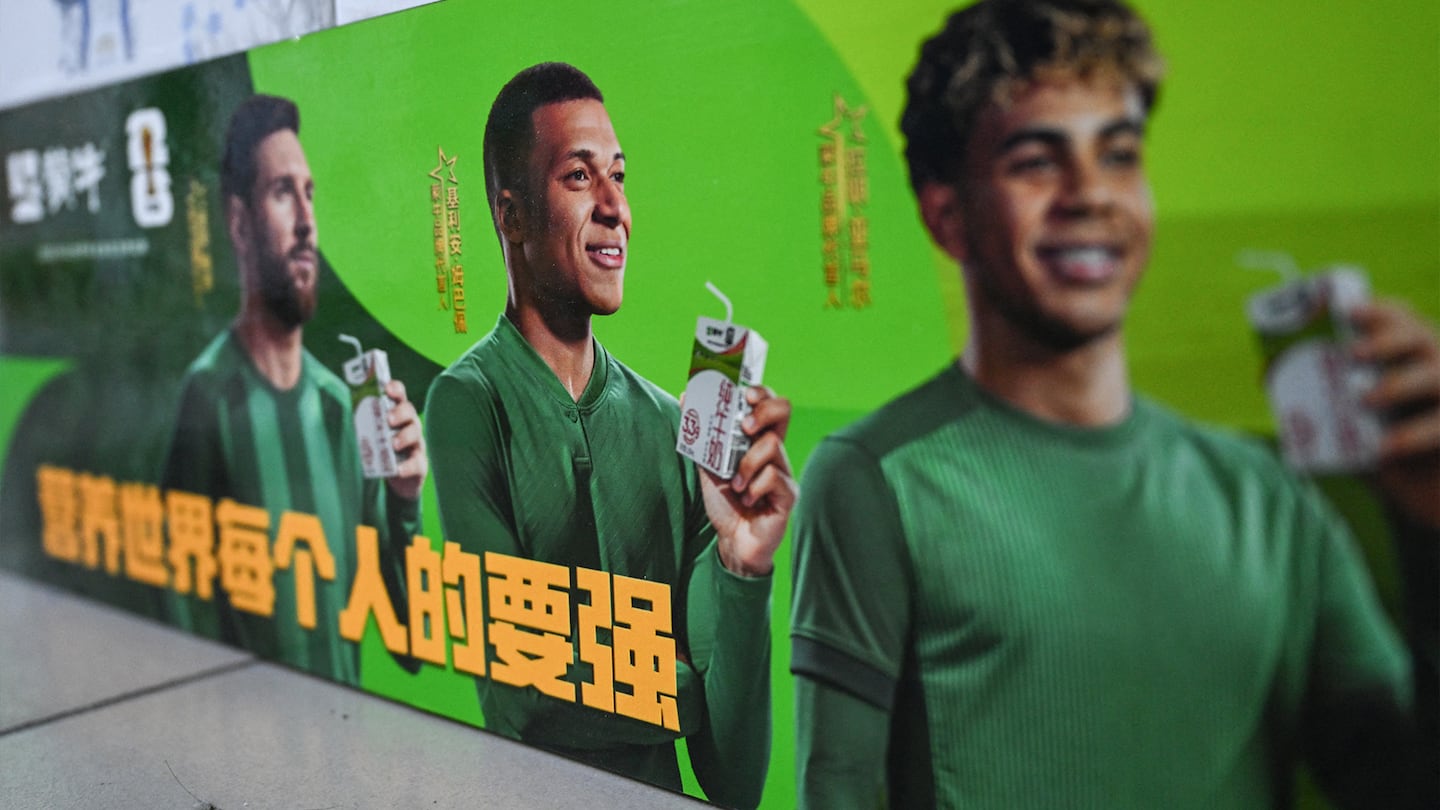
Earlier this week, a podcast clip emerged of French football star Kylian Mbappé describing the funniest meme he’d seen of himself.
China didn’t get the joke.
The meme in question showed Mbappé’s face superimposed on “some guy — I think he’s a Chinese dictator,” Mbappé reportedly said in the clip. That “guy” was Mao Zedong, modern China’s founding father. Jokes and criticism of him remain taboo in the country, especially coming as they did just ahead of a major Communist Party meeting that also took place this week.
The backlash was swift and unforgiving. Chinese state television blocked Mbappé’s matches and major mainland brands cut ties with him. International labels including Dior, Hublot and On reportedly removed mentions of Mbappé from their Chinese social media accounts.
ADVERTISEMENT
The controversy is perhaps most delicate for On. The Swiss sportswear brand recently scored a coup by poaching Mbappé from Nike to sign a major partnership deal. China is a key growth opportunity. The company’s share price fell as much as 4 percent on Tuesday when the news broke, but has since largely recovered.
A swift apology from Mbappé was acknowledged by Chinese officials, but didn’t stop the backlash from spreading. On welcomed the footballer’s apology. The company said it has “deep respect” for China and remains in dialogue with its partners.
For global brands operating in China this is a familiar story. Companies have faced repeated backlash in the country for missteps ranging from insensitive ads to statements on politically charged topics like Xinjiang and China’s sovereignty.
The standard playbook is to apologise and then lie low until things blow over, but that can come at significant costs. It took companies like H&M and Nike years to recover after comments on Xinjiang provoked consumer boycotts in the country. The NBA faced an 18-month blackout on state TV and a six-year hiatus on pre-season games in China after a team manager made a comment in support of Hong Kong protests in 2019.
Though brands have shown themselves perfectly capable of making their own blunders — Louis Vuitton’s unpopular decision to sue a local tea brand for trademark infringement this year is another recent example — the risks are amplified when working with partners and influencers whose comments and behaviour are outside a company’s direct control.
To be sure, the issue is not unique to China. Opportunities to offend are arguably growing globally as geopolitics become more tense, more polarised and more complicated. But the size of the Chinese market, strong nationalist sentiment among consumers and the role state media can play in amplifying and stoking outrage when political red lines are crossed mean that when things go wrong the stakes are uniquely high.
The incident with Mbappé underscores how swiftly a brand’s relationship with a famous ambassador can switch from valuable to damaging.
Closer coordination with external partners on sensitive topics and standard good hygiene around crisis-management processes can help mitigate such risks. So can empowering local teams to identify potential pain points and react in real time when issues come up. But there will always be limitations and blind spots.
“There is no hard black-and-white rule for where the line sits,” said Wei Kan, founder of consultancy Conduit Asia. “It moves with consumer sentiment, the wider social mood, and how loudly platforms and media amplify a story.”
Loading recommended reads…
In this week’s High Margin, a search for images that cut through our visual fatigue — with leads from M/M Paris, Ferdinando Verderi and stylist Emilie Kareh. Plus: Tod’s designer exit; Burberry’s resilient sales.
The producer price index rose 6.5% from October 2025, an acceleration from the prior month, according to Bureau of Labor Statistics data out Friday. On a monthly basis, the PPI increased 0.3%.
The creative director and strategist joins Imran Amed on The BoF Podcast to discuss the evolution of his career, the realities of shaping artist narratives and why long-term collaboration outperforms short-term marketing.
The former Nvidia CEO was central to an AI boom that has propelled the US stock market and fueled the country’s unmatched luxury spending. After his exit, nobody is sure what happens next.