Agenda-setting intelligence, analysis and advice for the global fashion community.
Agenda-setting intelligence, analysis and advice for the global fashion community.


Your scannable cheat sheet to the coming week in fashion and beauty.
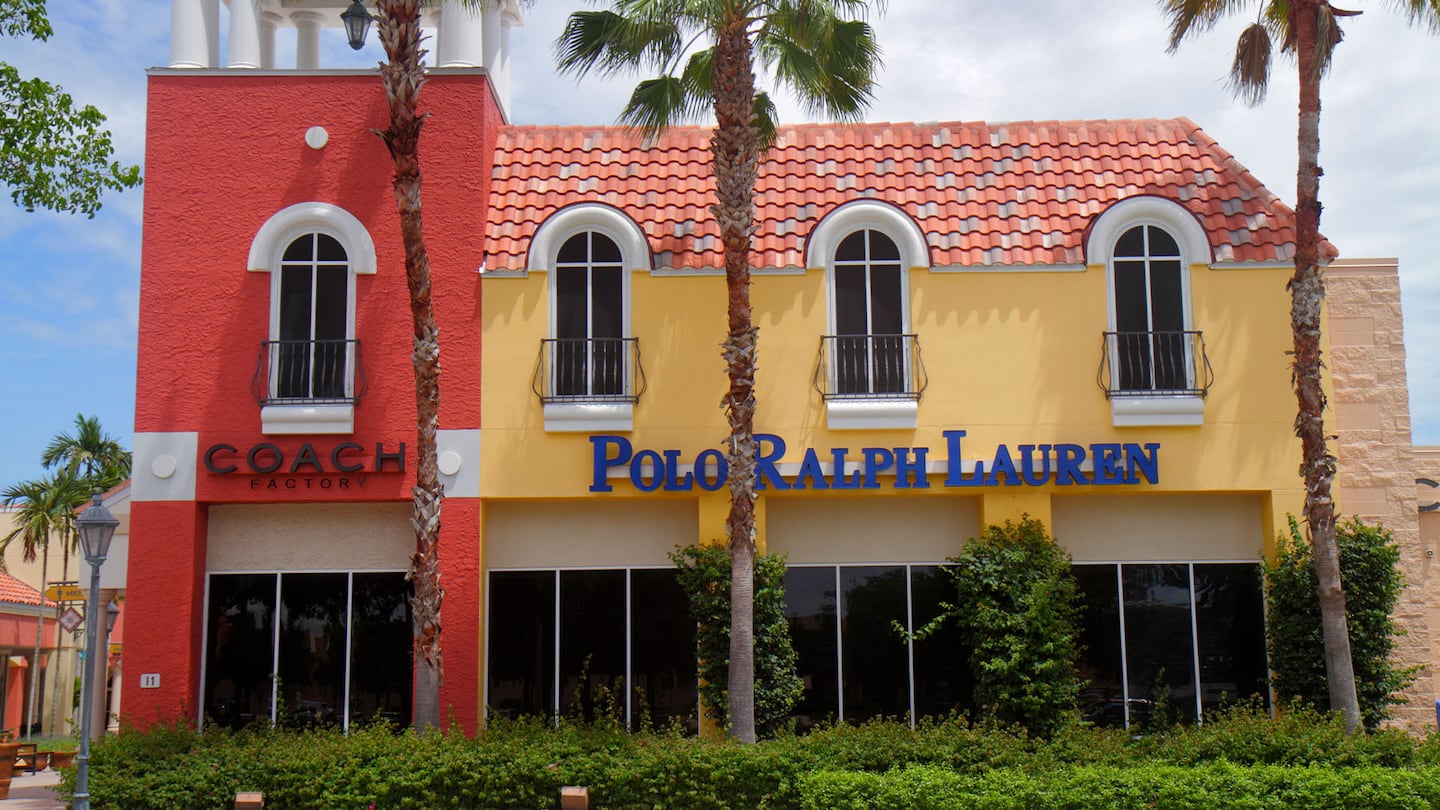
Ralph Lauren and Tapestry, owner of Coach and Kate Spade, report results this week, offering a chance to see whether the slowdown experienced by large European luxury brands in the US last quarter has spread to their more affordable American counterparts.
US luxury spending hasn’t fallen off a cliff, but the slowdown is real. The time when shoppers in New York and Los Angeles could make up for disappointment in Beijing and Shanghai may have run its course. Hermès, Kering, Prada, Ferragamo and Zegna all posted considerable declines in US or North American revenue growth last quarter. LVMH eked out a small improvement.
The results will also offer clues about whether consumers are shifting towards recognisable American brands at more accessible prices or whether the appeal of labels like Coach and Ralph Lauren is being driven more by their own momentum. Put another way, did fewer Prada Galleria bags sold mean a better quarter for the Coach Brooklyn? And, more broadly, how much appetite is there for recognisable, aspirational fashion?
The focus will be on whether the company can sustain its strong growth, particularly in Asia, and whether consumers are developing a more durable appetite for recognisable American brands that offer a more accessible path to luxury.
ADVERTISEMENT
The American icon reports fiscal second-quarter results in the midst of a multi-year high, with 17 straight quarters of sales growth. First-quarter revenue rose 13 percent at constant currency, with North America also delivering double-digit growth, while Asia jumped 25 percent. On the back of the strong performance, management raised its full-year revenue growth forecast.
UBS forecasts that revenue in Asia will grow another 25 percent in the second quarter. The bank says Ralph Lauren is probably benefiting from consumers trading down from more expensive European brands.
The analyst consensus is for a 6 percent increase in second-quarter global revenue, to $2.13 billion, according to S&P Global Market Intelligence. The industry will be watching to see whether Asia can sustain its rapid pace of growth and the extent to which higher average selling prices are contributing to the expansion.
The big question for Tapestry as it reports its fiscal first-quarter results is whether Coach can keep delivering the growth that has made it one of the stronger performers in accessible luxury, and whether that is enough to offset continued weakness at Kate Spade.
Coach sales rose 14 percent at constant currency in the fourth quarter of fiscal 2026, taking full-year growth to 23 percent. Sales at Kate Spade dropped 7 percent in the quarter. UBS expects Kate Spade to post another revenue decline, as the brand continues to weigh on the group. Kate Spade’s new creative director Jonathan Saunders’ first collection doesn’t debut until February, meaning that its impact on the brand’s results is still a few quarters away. Still, even timid signs of stabilisation would be enough to cheer industry watchers.
For the just-completed quarter, analysts are expecting revenue of about $1.85 billion, an increase of 8 percent, according to S&P Global Market Intelligence.
For Coach, the industry will be searching for clues as to whether the brand’s momentum is holding up, particularly in North America, where growth slowed to 7 percent in the latest quarter. A potentially worrying sign? On the Lyst Index’s top 20 brands ranking, which published this week, the brand fell three spots to number 12 on the list.
Loading recommended reads…
In this week’s High Margin, a search for images that cut through our visual fatigue — with leads from M/M Paris, Ferdinando Verderi and stylist Emilie Kareh. Plus: Tod’s designer exit; Burberry’s resilient sales.
The producer price index rose 6.5% from October 2025, an acceleration from the prior month, according to Bureau of Labor Statistics data out Friday. On a monthly basis, the PPI increased 0.3%.
The creative director and strategist joins Imran Amed on The BoF Podcast to discuss the evolution of his career, the realities of shaping artist narratives and why long-term collaboration outperforms short-term marketing.
The former Nvidia CEO was central to an AI boom that has propelled the US stock market and fueled the country’s unmatched luxury spending. After his exit, nobody is sure what happens next.