Agenda-setting intelligence, analysis and advice for the global fashion community.
Agenda-setting intelligence, analysis and advice for the global fashion community.

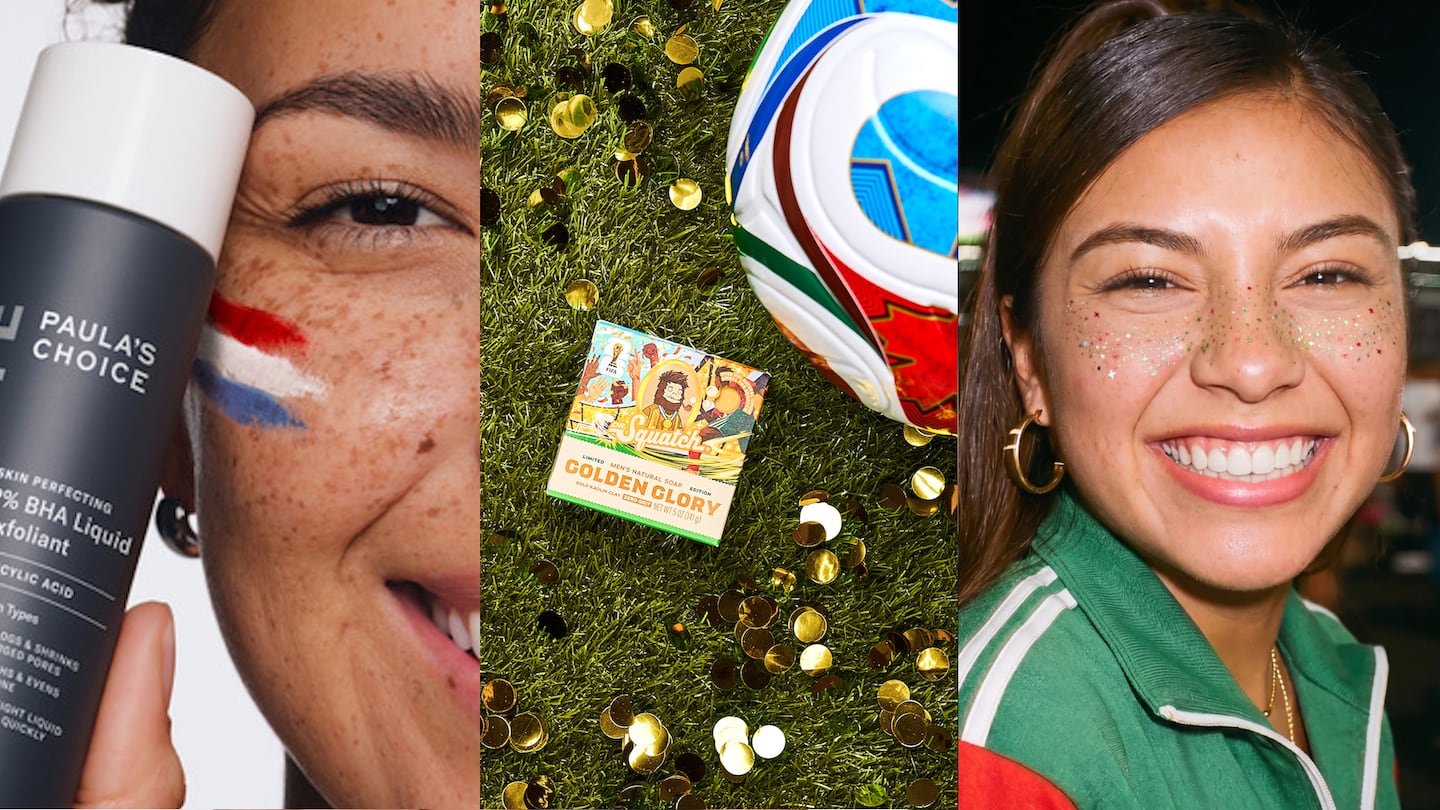
After being seen on Taylor Swift at a Chiefs game two years ago, glitter freckle patch brand Fazit has become the de facto leader of sports fan face decals. Last year, the United States Soccer Federation reached out to partner on creating a collection of patriotic patches in time for the upcoming FIFA World Cup. Once they launched in March, the comments started pouring in.
“Everyone was like, ‘Well, where’s my team? Where’s my country?’” said Aliett Buttelman, co-founder of Fazit. The US brand’s collection of unofficial “Speckles” in the colours of other teams has been growing over the last several weeks, and now includes Argentina, Brazil, Mexico, Colombia, Spain, Portugal, England and Canada. The best-selling set now: Mexico.
As the World Cup kicks off on Thursday, beauty brands of all sizes are betting on the contest. The list of event sponsors and officially FIFA-affiliated brands, historically dominated by beverages, sports apparel, financial services and airlines, is filled with more beauty than ever this year, from individual team partnerships to large-scale event sponsorship by beauty giant Unilever, with more interest in a rising female fan base than ever.
This follows a broader trend of beauty brands invading sports marketing, including recent pushes against events like the Super Bowl and Olympics as well as sports like skiing or racing.
ADVERTISEMENT
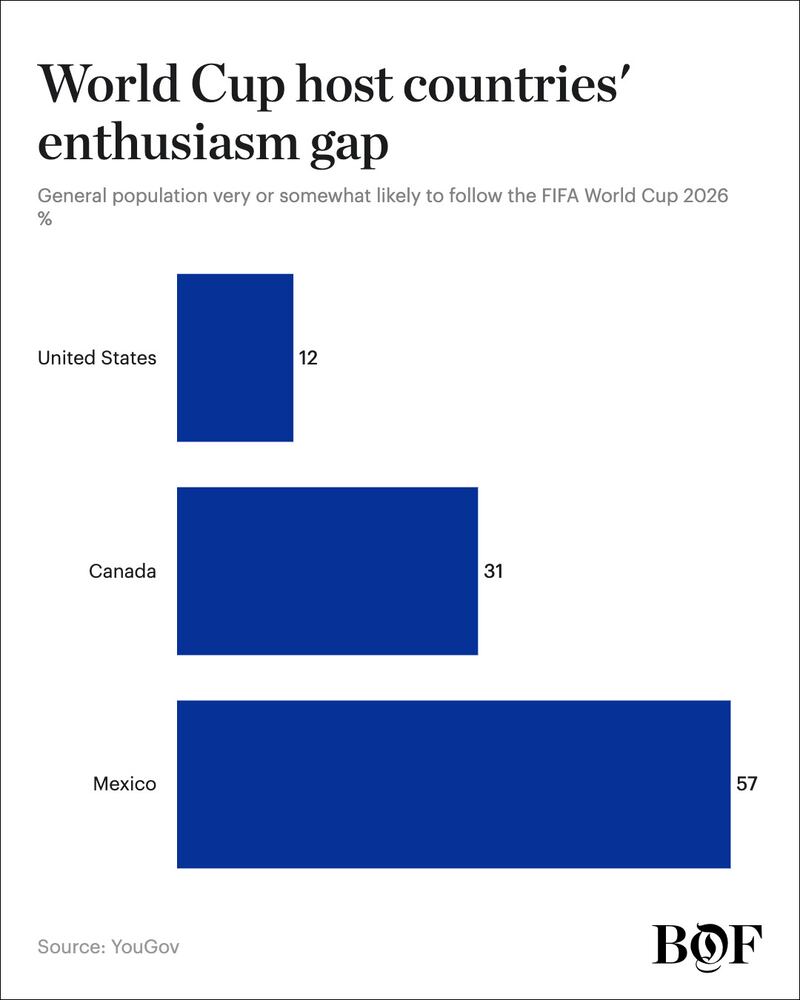
The World Cup, however, is a global, 48-country behemoth that dwarfs them all. Over 5 billion people watched the tournament in 2022, according to FIFA, with 1.5 billion tuning into the final — nearly 12 times the 2026 Super Bowl’s viewership. Yet, the US remains the event’s statistically least enthusiastic market. A YouGov poll found that despite the country’s co-host status this year alongside Mexico and Canada, only 12 percent of Americans plan to follow the 2026 World Cup, well below the 42 percent multi-country average.
“It’s a global spectacle. If you’re a US-based brand, you should keep yourself open to the global possibilities,” said Sydney Stanback, head of trends and research at Pinterest, which released a report ahead of the World Cup finding that Brazil, Mexico, Colombia and Argentina were among the most-searched countries associated with fan merch.
Large and small brands alike are finding ways to tap into football fandom through pop-ups in the cities where games will take place, influencer marketing and themed products, like Fazit’s face tattoos, even without the large check that grants access to official FIFA intellectual property.
On the big-budget end, official sponsor Unilever has 35 brands worldwide sponsoring activations. These include US labels like Dove alongside international names in more football-centric locales like Rexona in Australia and Lynx in the UK. Multi-brand pop-ups will also be globally spread, with locations in New York, Miami and Mexico City, while newer portfolio brands like Dr. Squatch and Paula’s Choice will also be sponsors.
“The World Cup, for us as a brand, is not something we would normally be able to afford to participate in,” said John Ludeke, chief brand officer at Dr. Squatch, which was acquired by Unilever last year and released a special-edition soap bar for its first official sports sponsorship. While the brand has worked with US football, MMA and rock-climbing athletes, the football sponsorship will help it reach a more global fandom after it expanded to 19 countries in recent years.
Brands without official partnerships, especially men’s labels, are finding creative ways to tap into fandoms and influencer marketing. Fazit will be hosting pop-ups across the country, sometimes at bars showing the games. Grooming brand Bevel created a campaign starring influencer Obi Uchendu and his son, sending them to a World Cup game on Father’s Day in Atlanta. Australian hair care label Kings Domain Melbourne, meanwhile, is sponsoring a three-day pop-up promotion in New York where celebrity barbers such as Cristiano Ronaldo’s stylist Joey Scandizzo will be giving live football player-inspired hair tutorials at Australian bars throughout the city.
Following a blueprint set by David Beckham, today’s male football superstars have become coveted brand ambassadors for beauty as well as fashion. According to YouGov data, recognisable names Lionel Messi, Ronaldo and Kylian Mbappé are favourites among surveyed host country fans. The nature of these endorsements is shifting. These players have all aligned with luxury brands at LVMH, but in beauty, Ronaldo and Messi have stuck to mass-market labels like Gillette or Head & Shoulders — and each has launched their own masstige fragrance brands. Messi Fragrances will be hosting pop-ups at Ulta Beauty in five US cities with World Cup matches.
Younger players are moving upmarket in beauty: Mbappé became a face of Dior Sauvage in 2021 in addition to representing the fashion label. In April, Vichy Laboratoires announced Portuguese footballer Vitinha (Vítor Machado Ferreira) as its global brand ambassador.
ADVERTISEMENT
Beauty brands are also increasingly targeting a massive global female football fanbase, evidenced recently with Estée Lauder’s sponsorship of UK football club Manchester United and L’Oréal’s partnership with rival Arsenal.
Paula’s Choice, Unilever’s sole prestige beauty sponsor for the tournament, is taking this a step further, focusing on female fans with Sephora window displays and an athlete-attended watch party in Los Angeles, alongside a Paris pop-up and displays in German beauty retailer Douglas. Tina Pozzi, CMO at Paula’s Choice, noted that the brand plans to go even bigger for the Women’s World Cup in 2027 and is already scouting female football stars for authentic, “grassroots” partnerships.
“We’re not a brand that is bigger or more corporate, that is just going to sign faces,” said Pozzi. “It has to be truly authentic and be a really great brand fit.”
Non-activewear categories like beauty or fashion have seen mixed results in finding authentic brand connection, even when championing female athletes. Alysa Liu’s viral Olympic gold win this past winter became a win for Sephora and Louis Vuitton with subsequent brand deals, while her organic nod to Rare Beauty boosted the brand. Conversely, Victoria’s Secret scrapped its ambassador “Collective,” which featured soccer icon Megan Rapinoe and skiing gold medalist Eileen Gu, in 2023 after executives admitted the pivot wasn’t enough to drive a sales comeback.
For the 2026 games this summer, brands will likely be closely watching to see who gains glory and fandom during the tournament.
“There’s always that Cinderella story that comes through,” said Stanback. And brands are hoping that the US’s status as one of the host countries will help drum up more hype for the games than it currently has.
“I don’t think the US is going to have the same excitement leading up to the World Cup as other countries do, but once the World Cup is in full swing, then people are really going to start to pay attention,” said Ludeke.
ADVERTISEMENT
Sign up to The Business of Beauty newsletter, your complimentary, must-read source for the day’s most important beauty and wellness news and analysis.
More teams, more countries and a massive push into the American mainstream. Here is how sportswear giants and fashion houses are lining up.
Nike’s new World Cup ad brings a jolt of star power like LeBron James and Kim Kardashian to go along with the football royalty featured. But can it boost the brand’s standing in the sport?
Mackage CEO Tanya Golesic explains why the fashion world is so keen on the 2026 World Cup.
Liz Flora is a Beauty Correspondent at Business of Fashion. She is based in Los Angeles and covers beauty and wellness.
Loading recommended reads…
Chanel’s surging sales underscore that the luxury industry’s challenges may be less about demand than desirability.
Chris Green joins Imran Amed to explain how his self-funded Brooklyn menswear store earned a place among the world's best fashion stores — by staying off the internet and betting everything on how it feels to walk in the door.
Global editorial director Steff Yotka will succeed Bettridge, who is leaving to focus on his creative studio Content World.
Kith's new collaboration with Salomon on the XT-Evo is the latest example of the way footwear companies are leveraging influential outside partners to help them debut their newest shoes or even co-design entirely new styles.