Mike Ashley’s Frasers Says It’s Taken Control of Hugo Boss
After the retail empire’s initial takeover bid failed, the company raised its holding to 50.08 percent in a move that will turn the German apparel brand into a subsidiary of Frasers.

Investment in artificial intelligence promises to help fashion companies work faster, smarter and more efficiently, but one key obstacle stands in the way of good returns.
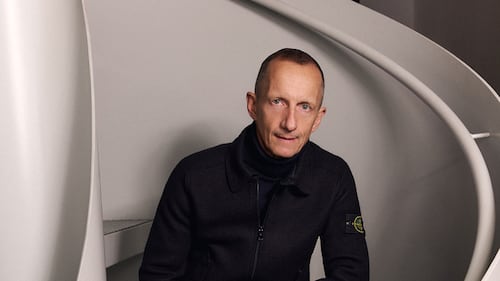
Robert Triefus believes his role as a brand leader is not to invent authenticity. It is to protect it and leave it stronger than it is found. Two years of brand tracking with BoF's advisory team, BoF Insights, confirmed Stone Island could grow without losing the authenticity that has defined it for more than four decades.
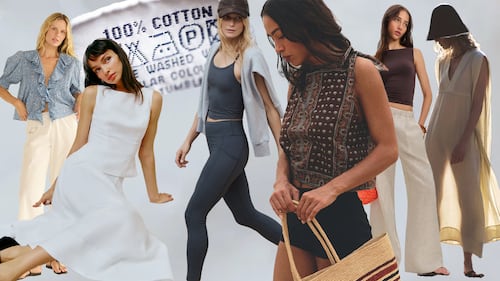
The material has become a lightning rod on social media as shoppers reject synthetics and seek out clothes made from natural fibres. The reasons go beyond consumers viewing polyester clothing as cheap or poor quality.

As Prime Day stretches into Prime Week, and retailers crowd the calendar with overlapping promotions, beauty brands are rethinking how to discount without eroding their long-term value.

The era of buying luxury purely for status and visibility is giving way to something more personal, centred on identity, connection and self-expression, according to BoF Insights and McKinsey’s report ‘Face to Face With Luxury Clients.’

After a prolonged slowdown, luxury is gradually returning to growth, led by the US and China. Drawing on a survey of more than 2,000 clients and dozens of interviews across both markets, The Business of Fashion and McKinsey & Company find in the latest edition in our State of Fashion series a base of customers with increasingly distinct local preferences that nonetheless share an overarching desire for emotional connection.

Talon.One’s ‘Creative Currencies in Promotions’ explores how brands are moving beyond traditional discounting and using promotions to create stronger customer engagement, emotional connection and long-term loyalty. Here, BoF shares key extracts from the report, alongside analysis of the shifts reshaping promotional strategy.

While H&M and Kering have cut emissions by more than a third, the majority of fashion’s biggest brands remain behind the schedule they set for themselves.

Artificial intelligence is changing how businesses operate as employees become more self-sufficient and routine work is increasingly automated. To build companies that thrive in this new paradigm, fashion executives must rethink leadership structures, talent pipelines and decision-making processes.

With the US, EU and Canada introducing measures on forced labour in supply chains, traceability is no longer just a sustainability initiative but a necessity for market access.

The beauty industry is experiencing a new wave of demand for affordable treats, and salon-grade hair treatments used at home are emerging as a key part of the trend, writes Bloomberg’s Andrea Felsted.

Visibility matters, but as metrics like ‘media impact value’ come under scrutiny, analytics providers including Launchmetrics and CreatorIQ are evolving their toolsets to measure brand moments beyond impressive-sounding numbers that don’t tie back to key business outcomes.
After the retail empire’s initial takeover bid failed, the company raised its holding to 50.08 percent in a move that will turn the German apparel brand into a subsidiary of Frasers.
The settlement, equivalent to 44 percent of the ultra fast-fashion company’s second-quarter profit, is the latest blow amid regulatory and tax crackdowns in Europe and the US that have hampered Shein’s growth.
The recovery long promised by luxury brands seems nowhere in sight, as the expansion of war in the Middle East, along with China’s tax crackdown on the wealthy, piled further pressure on the world’s biggest luxury conglomerates in the third quarter, and executives buckled in for a tough winter.
Sales fell in September as above-average temperatures hit demand for autumn clothing.
Hitting newsstands in October, the magazine marks Elle’s 51st international edition, published under licence by the Geomedia group.
Pearl, a subsidiary of David’s Bridal, will own David’s Bridal and license its intellectual property back to the bridalwear brand. David’s Bridal CEO Kelly Cook will serve as Pearl’s CEO.
The French giant handily beat expectations on strong demand for hair products at salons and premium skincare from its dermatological division.
The maker of Pantene shampoo was helped by strong personal care demand, but expects higher commodity costs to reduce profit by about $1.4 billion this year.