Agenda-setting intelligence, analysis and advice for the global fashion community.
Agenda-setting intelligence, analysis and advice for the global fashion community.

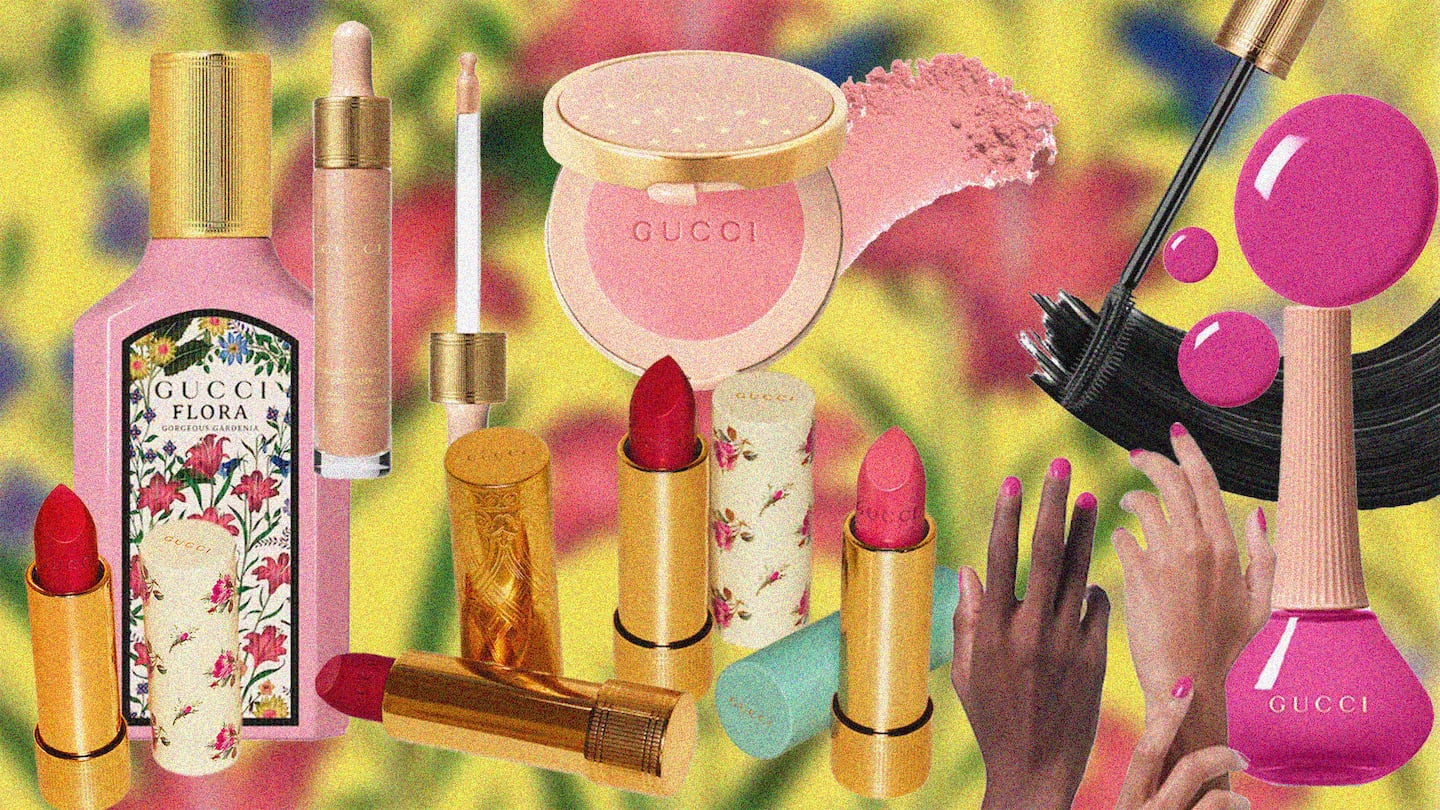
Gucci Beauty has a new home — but the renovations, so to speak, are just getting started.
On Tuesday, L’Oréal confirmed that it would take over Gucci’s beauty licence from Coty in June 2027, one year ahead of its original expiration date, as part of its $4.6 billion deal with parent company Kering to run its beauty business. It’s positive for both Kering and L’Oréal — the former has trusted the latter with YSL Beauté since 2008; the line has grown to more than $3 billion in sales in that time. With Gucci Beauty’s annual sales estimated at $570 million — including the 11th best-selling designer scents in the US, according to Circana data — there’s plenty of room to grow.
For Coty, the $400 million it will receive for the early termination is reportedly less than it asked for; more than that, losing Gucci will erase around 10 percent of its annual revenues.
L’Oréal also inherits some baggage. Unlike the other brands it will oversee in beauty as part of the Kering deal like Bottega Veneta and Balenciaga, Gucci is well established in beauty, especially with fragrance which generates most of its revenues, including franchises like mid-level Guilty and the higher-end Alchemist’s Garden range. But its beauty line has been in the midst of an identity crisis since the 2022 departure of creative director Alessandro Michele, who revamped the line to reflect his signature floral, romantic aesthetic. Since then, the fashion house has had two head designers (first Sabato de Sarno, and as of July 2025, Demna.) It hasn’t been updated since, and as such, its fashion and beauty outputs no longer connect.
ADVERTISEMENT
“The territory of the brand is quite blurred with the change of designers,” said Vincent Jeanniard, a brand and M&A advisor who has worked at the likes of Burberry and L’Occitane, “They will probably close the makeup [line] and restart from fresh.” (Owing to a pre-earnings quiet period, L’Oréal declined to comment for this story; Coty did not respond to a request for comment.)
L’Oréal are designer beauty experts — its Luxe division generated $17 billion in 2025 — and agile, too. It took over Prada’s beauty offering in 2019, which is worth over €700 million ($800 million) today, L’Oréal’s Luxe president Cyril Chapuy told The Business of Beauty. Valentino, which it licensed from Puig in 2018, has grown more than “tenfold” since then, L’Oréal has said.
Its key reference point might be the success of Kering stablemate YSL Beauté, and it’s clear that L’Oréal plans to supersize the Gucci business. If the question is how, the answer is almost certainly makeup. Gucci launched a chic cosmetics line with Procter & Gamble and Pat McGrath in 2014, but the licence sold to Coty two years later, which introduced a Michele-ified cosmetic range in 2019.
While reception to the smokey, party-girl look of Demna’s Autumn/Winter 2026 show was mixed, some beauty creators hailed the more adventurous approach. But L’Oréal executives are also coming in with the knowledge that pinning the line’s aesthetic to a single designer is a bad idea. In shoppers’ minds, Gucci still stands for a bolder kind of luxury; a cosmetic proposition should follow suit.
“If I’m in a Gucci mood, it means that I’m going out to be noticed,” said Chrissy Pasquale-Urso, a longtime loyal Gucci fashion and beauty client. “It’s for when I want to stand out and feel glamorous.”
Brennan Kilbane contributed to reporting.
Who’s up and down in the business of fashion, luxury and beauty this week.
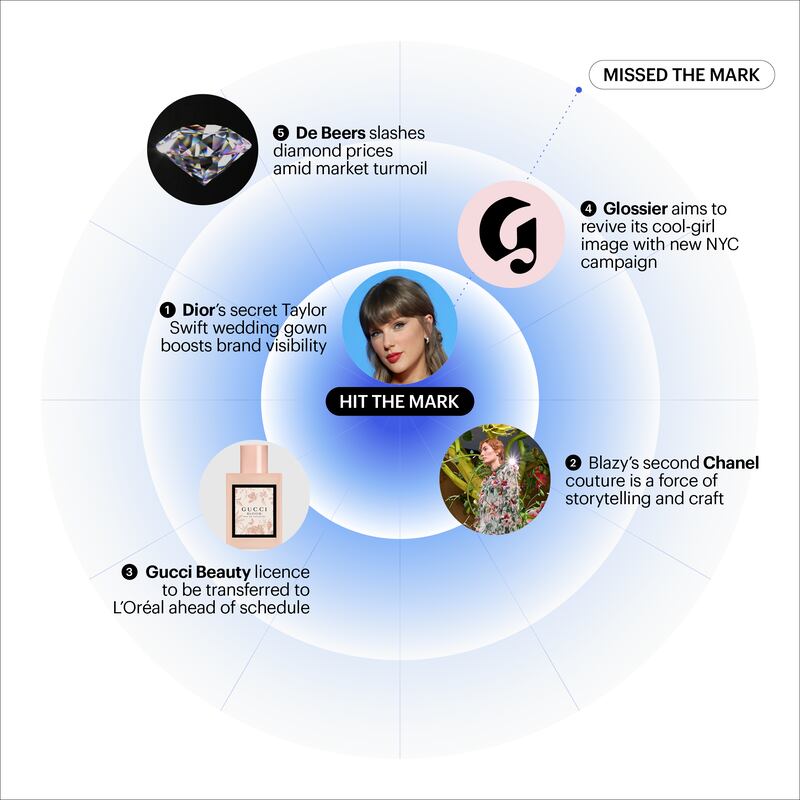
1. Dior’s Taylor Swift wedding gown, designed by Jonathan Anderson, gave the brand huge visibility just days before its latest couture show even as the dress itself remained a mystery.
ADVERTISEMENT
2. Matthieu Blazy’s Chanel second couture show offered an enchanting juxtaposition of fairy tale and “the adventure of the everyday” even if some critiqued the looser silhouettes.
3. Coty’s agreement to relinquish Gucci’s beauty license one year early was a big win for Kering and L’Oréal, but making the most of the opportunity will require a more stable brand identity.
4. Glossier is aiming to revive its early-era cool-girl appeal with a New York-centric campaign featuring founder Emily Weiss and original brand ambassador Coco Baudelle.
5. De Beers has made some of the deepest ever cuts to its official diamond prices, as weak Chinese demand, lab-grown stones and tariffs continue to batter the sector.
Catch up on all the news of the week in fashion, luxury and beauty here.
Loading recommended reads…
Sales of gems, precious metals and artwork at Japan’s department stores climbed 19 percent in the first half of 2026 from a year earlier to $2 billion.
Though Adidas dressed both teams in the World Cup finals, the global football tournament still presented some bright spots for Nike, writes Bloomberg’s Andrea Felsted.
From our archive, the creator and host of award-winning podcast “Articles of Interest” joins BoF founder, CEO and editor-in-chief Imran Amed to explore what clothing can reveal about identity, culture, labour and the world around us.
Saunders, the brand’s first creative director in five years and a skilled colourist, promises to give Kate Spade the clarity it has long lacked. Now, Tapestry must apply the same long-term brand-building discipline that fueled Coach’s success.