Agenda-setting intelligence, analysis and advice for the global fashion community.
Agenda-setting intelligence, analysis and advice for the global fashion community.

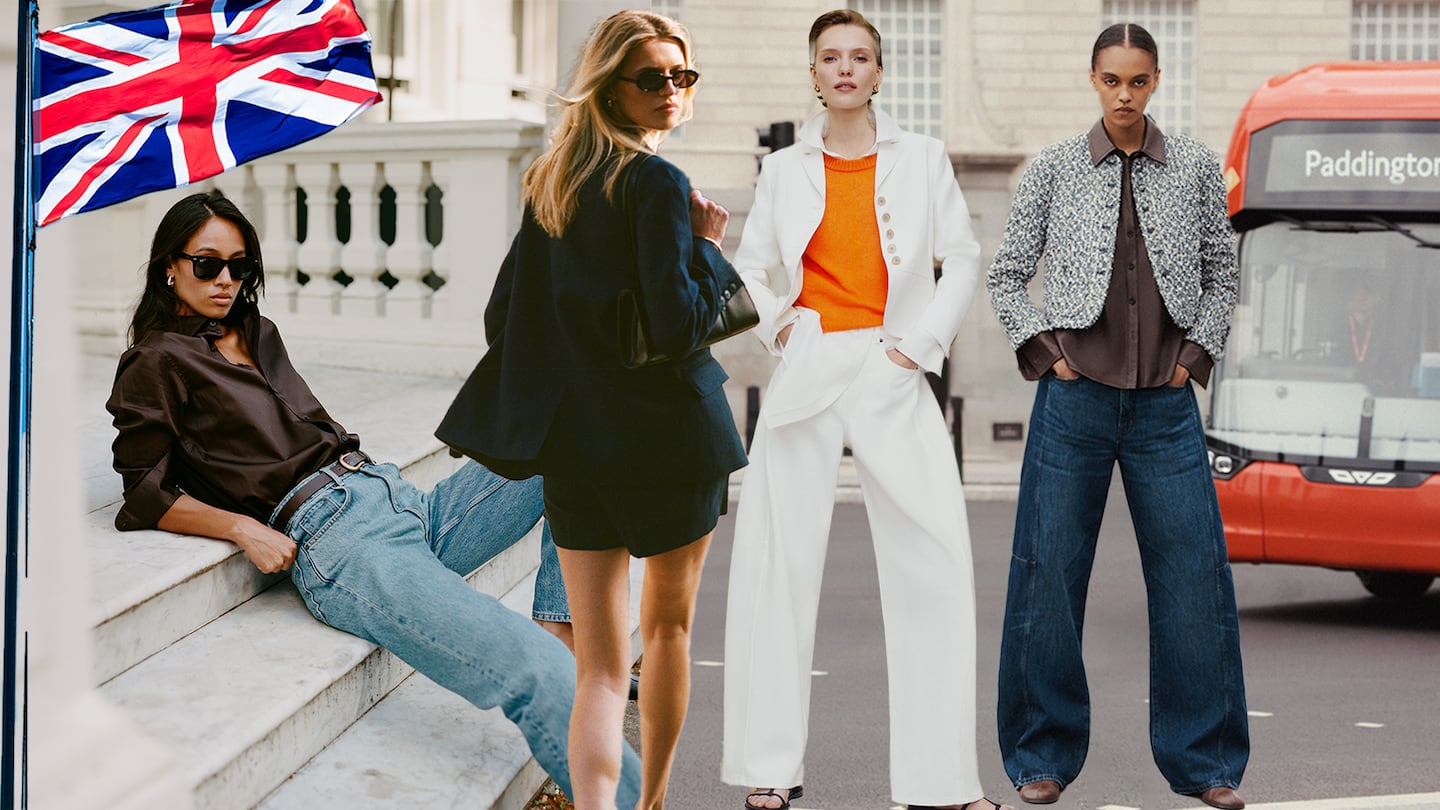
In the UK, everyone knows Marks & Spencer. For more than a century, the retailer, which operates hundreds of stores in the country, has developed a reputation as the go-to for reliable, affordable quality in all things apparel, from underwear and workwear to dresses and shoes.
Across the pond, however, that familiarity quickly fades: As of this year, just one in 10 US consumers was aware of the brand, per its own research.
Marks & Spencer sees that as an opportunity: In March, the retailer made its US fashion debut through a partnership with Nordstrom, bringing an edited assortment of its bestselling womenswear to 30 stores across the country.
It’s just one of several British fashion brands making a big stateside push, from fast-fashion players like Primark, which opened a New York flagship in May to luxury outerwear label Marfa Stance, which is set to open its first permanent US store on New York’s Madison Avenue in the coming weeks. In the contemporary market, a slew of brands, including Mars the Label, Boden and Me+Em, are all expanding their US presence, whether it’s with new warehouses for faster shipping or new brick-and-mortar storefronts.
ADVERTISEMENT
Like Marks & Spencer, these brands are looking beyond their home market for growth. Amid economic uncertainty, geopolitical unrest and the lingering effects of Brexit, the US remains one of the industry’s deepest and most resilient growth markets. Its sheer scale creates growth opportunities well beyond New York and Los Angeles, reaching fast-growing markets across Texas, the Midwest and the South. The US has roughly five times the population of the UK and an apparel market several times the size of Britain’s.
Cashing in on that opportunity, however, has historically proven to be a challenge. From Topshop and Laura Ashley to more recent names like Jack Wills, there’s no shortage of UK-born labels that have struggled to translate success at home into lasting momentum across the Atlantic.
“The challenge is to translate culturally and business wise a brand that is seemingly very British or has been established under British intel and processes … into the States,” said Emma Harding, co-founder and chief executive of Re: Agency, which helps British brands expand into the US. “We always say that we speak two languages: English and American because they are two very different cultures.”
This time, some brands are betting that British heritage can be a selling point. While American shoppers are spoiled for choice, UK brands say they occupy a distinct position in the market, offering the quality and understated style associated with British fashion at a more accessible price point than many European luxury maisons.
“When I think of English fashion … it’s a focus on quality and really good pieces that will last from year to year,” said Danielle Mandelbaum Anderman, founder and chief executive of Bespoke Fashion, Thomas Pink’s primary licensee in the US Thomas Pink. “That vibe is in in America. .. It’s the antithesis of fast fashion, … sensible and good quality, cool and chic at the same time.”
The playbook for getting that appeal to stick will require more than opening stores or inking wholesale partnerships. Success depends on everything from building local communities and navigating the country’s fragmented wholesale and distribution landscape to reworking campaign imagery, choosing the right American ambassadors and fine-tuning how the brand is presented to a US audience — all while preserving the British identity that drew consumers in the first place.
The old playbook for entering the US was to open a store or ink a wholesale deal and hope consumers followed. Today, brands have reversed that approach. Experts say success increasingly depends on responding to existing demand — or cultivating it through community events, market research, public relations and small-scale activations — before making a significant investment.
“The number one mistake that brands make coming into this market is they rush it and they don’t make time to build community,” Harding said. “I always say, ‘Don’t open a store to build community. Open a store to serve community.’”
ADVERTISEMENT
That philosophy is reflected across brands like Marfa Stance, Me+Em, shirt maker With Nothing Underneath and perfume label Ffern, all of which say they followed demand that had already begun building among American consumers who discovered their labels through social media, e-commerce, word of mouth and travel to the UK and Europe.
“It was very natural,” said Ffern founder Owen Mears. “It was a lot of friends and family of British customers who’d heard about it, emailing and asking … commenting or messaging us on social media.”
Once that demand is there, the focus shifts to building familiarity and relationships on the ground.
“We’re focusing on building our brand world there in the same way that we have over here,” said Lexy Martin, WNU’s marketing director. “We know how important it is when you’re building the brand [to] meet press and customers [through] community events … and small, unscalable grassroots efforts.”
Trunk shows and pop-ups have also become a key way for brands to test demand and generate sales before committing to permanent retail.
Much of Marfa Stance’s in-person American business comes through trunk shows in cities including Tulsa, Oklahoma, and Birmingham, Alabama, alongside pop-ups in destinations like Montecito, California, and Chicago — markets that could eventually support permanent stores. The brand also hosts an annual Marfa & Friends gathering in the Hamptons, which brings together founders and customers for conversations ranging from motherhood to menopause, which helped build a New York-based community that will then support its forthcoming Madison Avenue store.
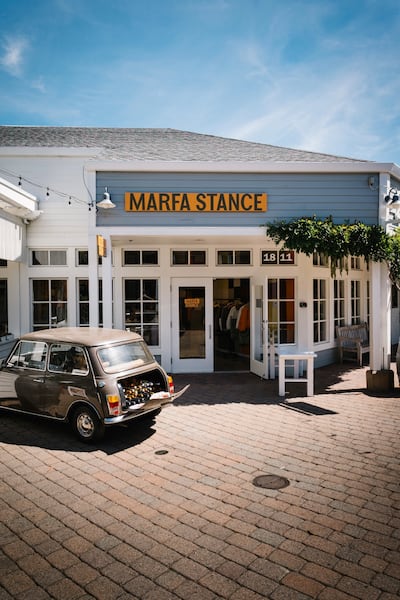
“Our trunks are continuing in [both] established and new locations, allowing us to build the business across the US …that’s very responsive and agile,” said Jenna Littler, who joined the company as chief executive in May.
M&S is taking a similarly measured tact, albeit at a different scale. Rather than rushing into owned retail, the company is focused on what managing director Mark Lemming described as “a disciplined, capital-light approach,” using both its own e-commerce operation and placement in Nordstrom wholesale to drum up awareness and get early reads on future success.
ADVERTISEMENT
“We’re expanding through strategic wholesale partnerships that complement our brand proposition and customer profile,” he said.
One of the trickiest balances brands have to strike is figuring out what they should adapt for the American consumer — and what to preserve to maintain an edge.
At Me+Em, founder and chief executive Clare Hornby said she has stayed true to the philosophy the brand was built on: filling what she saw as a gap in the “quality-price ratio” for premium womenswear. That proposition has so far translated well in the US, where the brand has expanded from its first Madison Avenue store to locations in California, Texas and Connecticut on the back of double-digit gains in New York. (It now operates two New York stores.)
“A bestseller is a bestseller globally,” she said, and the brand’s core customer remains a busy woman who travels frequently.
Where Me+Em has adjusted is around timing rather than product. For instance, the brand has found that American shoppers begin buying occasionwear earlier in the year than their UK counterparts, so it’s moving up deliveries of its dress collections in the US.
For Me+Em, Britishness is “icing on the cake” rather than a central part of its positioning, per Hornby. Other brands have leaned into it more deliberately. Ffern and Thomas Pink see British heritage as a competitive advantage, betting that craftsmanship, understatement and a distinctly British point of view resonate with American consumers looking beyond fast fashion.
Mears and his sister, Emily Cameron, built Ffern around memories of their upbringing in Somerset, next door to one of Europe’s first biodynamic herb farms.

“Some of the best British brands have that cultural side to them and this appreciation of what they’re doing as art,” Mears said.
Even as it remains a direct-to-consumer brand in the US, Ffern now counts the market as its largest by revenue. WNU says its US business is growing 250 percent year on year, compared with 100 percent growth in its home market.
Holding onto values like craftsmanship and quality is one thing. Running the business as though it were still operating solely in the UK is another, Harding cautioned.
That means making practical adjustments, from converting e-commerce sites from pounds to dollars and swapping British terminology (“trousers” become “pants,” for example) to rethinking budgets and marketing plans. A US-based photographer, for instance, typically costs significantly more than one in the UK.
And while New York and Los Angeles still matter, some of the biggest opportunities may lie in places like Dallas, Chicago and other fast-growing cities. Boden just opened a store in Nashville, for instance, and plans to add another in Birmingham, Alabama before the end of the year. It can also mean rethinking collaborations and campaign casting. A partnership or tastemaker that resonates in Britain may mean little to American shoppers.
“What I see is brands still prioritise their UK business when their US business is probably growing at a far superior rate,” Harding said. “Could my American business be 10, 20, 50 times bigger than my UK business? If so, I need to flip [my priorities] and translate my marketing plan to reflect that, too.”
London-based DTC womenswear brand Me+Em is betting that its lego-like approach to fashion, which built it a following in its home country, will translate to the US market.
To break into the hard-to-penetrate American market, British-born DTC upstarts are embracing wholesale and investing in US-centric marketing channels.
Sheena Butler-Young is Senior Correspondent at The Business of Fashion. She is based in New York and covers workplace, talent and issues surrounding diversity and inclusion.
Loading recommended reads…
An AI-based healthcare startup started offering acne prescriptions to Utah patients on Monday, the first time a state has allowed such technology to replace the role of a doctor.
BoF examines new mindsets of US shoppers and unpacks Chanel’s designer revamp. Also, how a fashion e-tailer is pulling ahead on AI and why fashion marketers are tapping artists. Read on for your analysis of September’s top news.
Beauty brands have long paid to be featured in ‘Get Ready With Me’ videos. Now, they’re designing their products and tools for maximum screentime.
As she prepares to hand power to the next generation, the doyenne of Italian fashion contemplates what makes Prada Prada and what she’ll leave behind, as well as more immediate matters like absorbing Versace.