Agenda-setting intelligence, analysis and advice for the global fashion community.
Agenda-setting intelligence, analysis and advice for the global fashion community.

Dear Member,
Welcome back to your Executive Briefing, a look back at the most significant events and trends of the past month.
Fashion stocks suffered another unforgiving month in September, even as markets overall continued to rise on AI optimism. In luxury, shares in LVMH, Kering and even Hermès — normally an outperformer — slumped as investors grew impatient waiting for a turnaround in the segment. Shein’s share price plunged as much as 14 percent following its underwhelming first earnings report as a public company. After climbing in late July and August, H&M’s stock slid and erased the gains. There’s now speculation that the billionaire Persson family behind the retailer is looking to take the company private.
Nike had a particularly difficult month. The sneaker giant was bumped from the S&P 100 after an 18-year run, and its spot in the Dow Jones Industrial Average is similarly at risk. The announcement from superstar footballer Kylian Mbappé, whom Nike had sponsored from childhood, that he would join Swiss brand On as its new face of football did nothing to reassure investors, many of whom have have lost faith in Nike’s ability to reverse its fortunes in the near term. Bank of America analyst Lorraine Hutchinson predicted a turnaround won’t arrive before 2028, a forecast Nike did not dispel with its restructuring announcement last week.
ADVERTISEMENT
There are still some fashion companies winning the market over. Richemont’s stock was down in September, but it’s still up for the year as its strength in jewellery helps it defy luxury’s downturn.
The general sentiment towards fashion, however, seems to be a lack of confidence. Investor expectations are clashing with companies’ conservative outlooks as they navigate challenges like inflation, China’s economic slowdown and war in the Middle East. With the critical holiday season fast approaching, fashion businesses will be battling to prove they’re the ones investors can believe in.
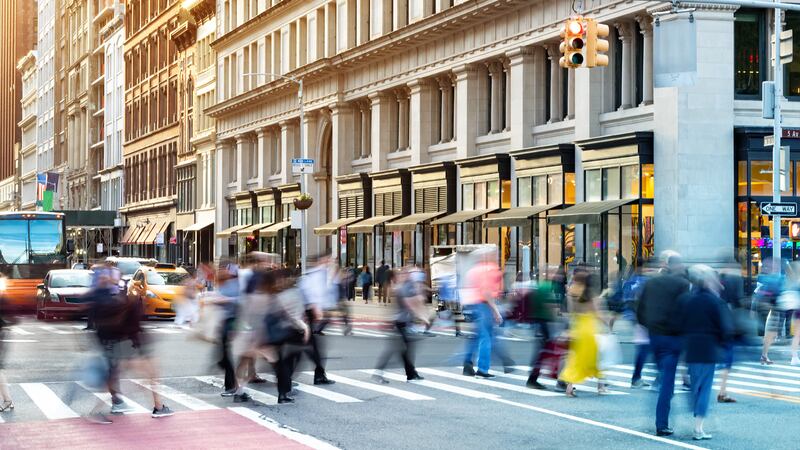
US resilience: Over the past few years, the US has become fashion’s most important market, outpacing China and Western Europe in growth. Retail sales in the country are projected to increase 4.4 percent in 2026, surpassing $5.6 trillion according to the National Retail Federation, and as of September had grown ahead of those expectations.
The main drivers are US shoppers’ tendency to spend rather than save and the expanding population of affluent households, which has buoyed the luxury sector in particular. But succeeding in the country requires accounting for changes in how Americans are shopping and where they’re moving.
New mindsets: All but the wealthiest shoppers are rigorously scrutinising every purchase as pressures like inflation and geopolitical turbulence sap their confidence. They’re weighing price against value in every transaction and often trading up or down — regardless of income level.
“A shopper might pair a viral $25 TikTok-endorsed tank top with a $1,500 designer leather jacket patiently sourced secondhand, seeking a bargain and something unique at the same time,” BoF’s Cathaleen Chen wrote in her memo for executive members.
Cities and suburbs: Retailers examining their store footprint also need to look at where US consumers are moving. Growth has slowed across the biggest cities in the US; New York and Los Angeles have even lost residents. Many Americans are opting for smaller cities such as Nashville or Charleston, or flocking to suburbs and distant exurbs.
Not every brand looking to open a store will discover that, say, Austin offers a better opportunity than a city like New York. Luxury’s megabrands, for example, have renewed their focus on bigger stores in “alpha cities.” But many retailers are finding success in other areas of the country and exploring retail formats such as open-air shopping centres as they see demand among burgeoning populations with an appetite to spend.
ADVERTISEMENT
Leader of the pack: Fashion’s great reset in 2025 saw a number of top luxury houses debuting new designers to restore creativity and reignite desire in consumers who had lost interest amid the industry’s rapid price hikes.
More than a year after hiring Matthieu Blazy, Chanel has emerged as the clearest example of a revamp working. Executives at the brand including fashion president Bruno Pavlovsky spoke to BoF’s Robert Williams about its multi-pronged strategy.
What Chanel did right: Blazy introduced a more relaxed, wearable style to the brand while using techniques that made the craftsmanship of the clothes visible and easy to grasp, justifying their pricing. His runway shows also connected with audiences by centring emotional narratives rather than the massive spectacles Chanel had become known for.
At the same time, the company reworked the price architecture of its handbags with new styles at relatively more accessible price points. It increased investment in its stores as well to elevate the customer experience.
The results: Chanel’s sales in the first half of 2026 soared 16 percent, according to a report by Bloomberg, well ahead of rivals. The brand is back at the centre of the fashion conversation, and now not because of its prices.
The challenge for Chanel will be to keep the momentum going. Examples like Alessandro Michele’s Gucci show how a rapid rise can lead to an equally rapid fall. Chanel, however, has approached the issue cautiously, giving Blazy freedom but also maintaining control of its brand identity. How its performance progresses over the coming years will be one of fashion’s most-watched storylines.

AI advantage: While countless fashion companies try to use AI to be more efficient and boost growth, Zalando is actually doing it. The German e-tailer has cut the cost of producing on-site content by 90 percent with the technology. Where it previously took weeks to produce on-site marketing campaigns with physical photoshoots, it now aims to do it in as little as 24 hours, and more than 90 percent of its on-site campaigns are AI-generated.
The company is also using AI in areas like logistics, improving size and fit recommendations to reduce returns and personalising the customer experience on its site and app, which could be its biggest opportunity.
ADVERTISEMENT
Personal commerce: Zalando continues working to make shopping ever-more personalised. Returning customers will already see a mix of content and products tailored to their interests based on their past activity on the site, including their interactions with Zalando’s AI shopping chatbot. Its goal is to take this even further and develop what it internally calls lifestyle AI.
Instead of the usual catalogue-like shopping experience where users search and scroll through pages of products, it envisions shopping more like scrolling through a social media feed, where you see an engaging mix of inspirational content along with shoppable items, all customised to you.
AI’s limits: The technology hasn’t solved every problem for the retailer. It’s still subject to changes in consumer demand, and investors question whether its use of AI offers a true competitive advantage as other companies also invest in the technology.
Zalando believes its data infrastructure gives it an edge, however, and plans to keep investing as it sees the benefits of AI.

The anti-slop: In a very different approach to the one Zalando is taking, as AI content proliferates, brands such as Hermès, Loewe, Chanel and more are enlisting visual artists to create marketing that feels distinctly human. They’re leaning into formats such as hand-drawn paintings and illustrations, which helps them to stand out from other content online and lets them create a brand world in miniature.
Craft connection: Importantly, the manual nature of the work also offers them a way to show their appreciation for craft — and reinforce their connection to it in the minds of consumers.
That’s likely the reason the approach has been especially popular among luxury labels, though not exclusively. UK brand Toast, for instance, works with a number of artisans.
Beware the bandwagon: But the danger for brands that suddenly start posting content like animations now is that they risk coming off as inauthentic and like they’re just jumping on a trend, particularly if they’ve posted AI content previously.
They need to make sure the work feels genuinely connected to their brand ethos, and should consider nurturing a longer-term partnership, rather than a one-off project they think will generate likes on Instagram.
Loading recommended reads…
Workers staged fresh demonstrations in Dhaka Thursday, forcing factories to suspend operations despite government promises to raise wages before the end of the year.
The cult menswear designer and former Demna collaborator is returning to Balenciaga as owner Kering seeks to revive sales at the French house.
Just a few years ago, commentators were declaring the brand as past its peak amid multiple ownership changes and a broader streetwear cooldown. Today, consumer tracking metrics shows domestic sales and youth market share is rebounding strongly.
Dior claimed its winter campaign, ‘Christian Dior’s Night in Colour,’ was fully hand-illustrated. But online commenters have questioned whether the campaign used AI in its development.