Agenda-setting intelligence, analysis and advice for the global fashion community.
Agenda-setting intelligence, analysis and advice for the global fashion community.

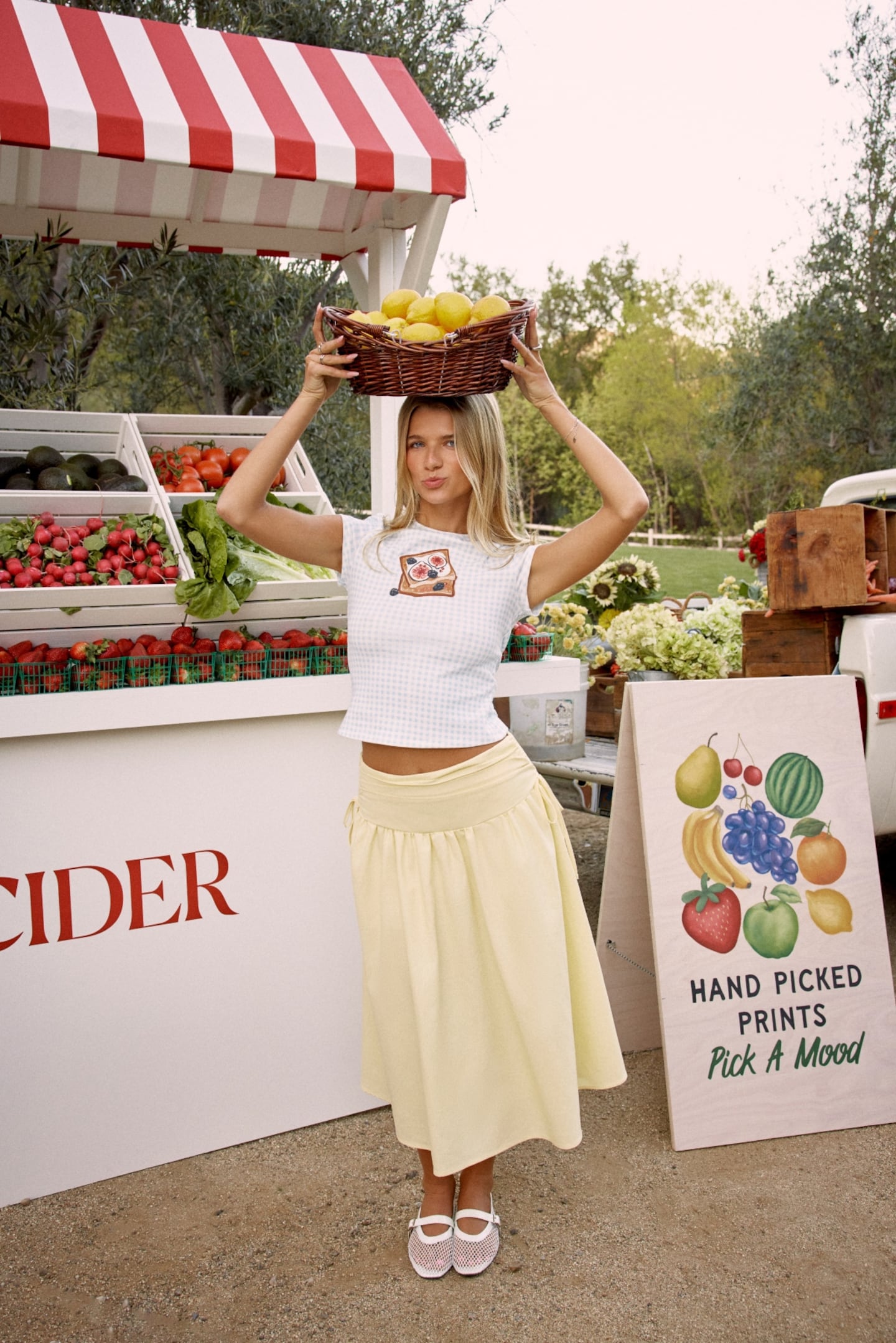
Cider was built for virality.
When TikTok took off during pandemic lockdowns, the founders of the Los Angeles-based online retailer — chief marketing officer Yu Oppel, chief executive Michael Wang and chief fashion officer Fenco Lin — saw an opportunity in creating an online store that responded to trends as quickly as they arose on the platform.
Others in the industry had more or less the same idea. At the time, Chinese fast fashion giant Shein was booming and a handful of other digitally native businesses sought to capitalise on the new, hyperfast social media-driven trend cycle. There’s Edikted, founded in the same year as Cider by a team of Israeli entrepreneurs; Garage, a decades-old Canadian retailer that plotted a post-pandemic resurgence; and the Australian label Princess Polly, which expanded to the US in 2019.
All of them have since found considerable success. Edikted hit $460 million in sales in 2025, the Wall Street Journal reported, and now operates 15 stores. Garage-parent Groupe Dynamite and Princess Polly-owner A.k.a. Brands going public, went public in November 2024 and September 2021, respectively.
ADVERTISEMENT
Behind the scenes, what makes Cider stand out is not only a distinct ability to follow trends but merchandise toward them on its website, grouping products by aesthetic “moods” rather than traditional categories. A proprietary backend infrastructure, developed in house from day one, enables the company to communicate directly with its factories, with whom its founders have had longstanding relationships from their previous roles at Chinese fashion companies. This allows Cider to churn out new products within weeks and quickly order restocks of hit items.
“Virality takes luck, but … having the product to support it requires a very agile supply chain,” Lin told The Business of Fashion.
Compared to rivals, however, the stakes may be higher for Cider. Since its founding, it has raised at least $140 million from heavy-hitting backers like Andreessen Horowitz and DST Global. In September 2021, just a year after launch, the company landed a $1 billion valuation. That’s compared to Edikted, which has raised just $9 million.
Venture capital investors historically expect fast, aggressive growth. On that front, Cider has made meaningful progress: annual sales today clock in at the mid-nine figures, though Lin declined to say whether it has crossed the $500 million threshold.
But pulling ahead in the saturated online fast fashion market and getting to the $1 billion mark will require new levers to be pulled. The first is brick-and-mortar: Cider opened its first store, an 8,000-square foot space in Los Angeles, last month. Lin confirmed plans to open three more stores across California before the end of the year.
The more difficult endeavour lies in distinguishing itself from its peers and establishing a brand identity that stands for more than just selling trendy items at an affordable price.
“We have to do better on every step of the way to get ahead a little bit in this ultra competitive landscape,” said Lin.
While every successful fast fashion brand today boasts an agile supply chain, Cider’s primary advantage is its ability to speak to a Gen-Z customer.
ADVERTISEMENT
In a gamified online experience, Cider’s assortment is organised not just product type, but also by “moods,” which reflect trending aesthetics on social media, like the bohemian “Feeling Free” or coquette-ish “Feeling Cute.” Those pages are then populated by a mix of items hand-selected by Cider merchandisers and algorithmically recommended to a specific user. Moodboards are incorporated throughout, using AI to create categories based on trending aesthetics in the early stages of the design process. On Cider’s social media channels, too, content is framed around aesthetics with cheeky names, like the nautical “Paradise Cove” or “Pied-a-Terre,” inspired by summer in the South of France.

“We understand how she shops,” said Lin. “She doesn’t come here just to buy a dress or a top. She shops to express herself.”
Designs reflect not just whatever “-core” is popular at the moment, but also the specific silhouettes that are trending in real time, such as baby doll dresses, lace-trimmed skirts or capri pants for summer 2026. Compared to competitors, Cider “gets much closer to the product that is currently trending,” said Jessica Ramirez, the co-founder and managing director at consulting firm The Consumer Collective.
And then, of course, there’s the volume. Every month, Cider drops 600 to 800 new products, with fresh styles arriving on the website on a daily basis and larger drops every two weeks. On top of that, Cider replenishes about 20,000 products in its database at any given moment. While Shein reportedly drops thousands of new products daily, Cider’s assortment is double that of Edikted, which drops about 300 new products a month.
Building upon successful styles is also key. “It’s always having the right eye on the product and understanding how we can iterate,” said Lin. “For example, if a Peter Pan collar goes viral on a shirt, we think ‘Can we change it into a dress? Can we change the sleeves?’”
Its broad product offering and quick trend reaction time coupled with a price point that is reasonable but not dirt cheap (for example, tops generally hover around $25), has helped Cider succeed while avoiding the controversy that’s plagued Shein, which also has deep ties to Chinese manufacturing.
“Shein is more about being cheap versus Cider is more about being stylish,” said Emilie Delaye, a Gen-Z shopper and the graduate instructor in fashion and apparel studies at the University of Delaware.
Social media has been the primary driver of Cider’s growth so far: Today, it has over 6 million followers on Instagram (significantly more than both Princess Polly and Edikted) and 1 million plus on TikTok, where it incorporates its products into memes and other shareable formats. As well, it’s used more niche channels like Discord to solicit feedback directly from customers and wider wholesale platforms like Amazon and TikTok Shop. Influencer marketing has also played a role: the company gifts products to creators both large and small and then repurposes their content across its social channels and website.
ADVERTISEMENT
“We are very immersed in the culture,” said Lin. “We make people feel seen.”
Its next test will be adapting its social media-friendly ethos offline. Cider’s first store is also merchandised by its signature moods. It’s located at the Los Angeles Farmer’s Market shopping complex, right next door to popular shopping centre The Grove, and just a few feet away from Edikted, Revolve and for the summer, a Princess Polly pop-up. Lin said Cider was drawn to the location’s high foot traffic as well as a front patio that the brand has furnished with benches and photo backdrops. The hope is that existing offline will help Cider build its brand identity beyond social media.
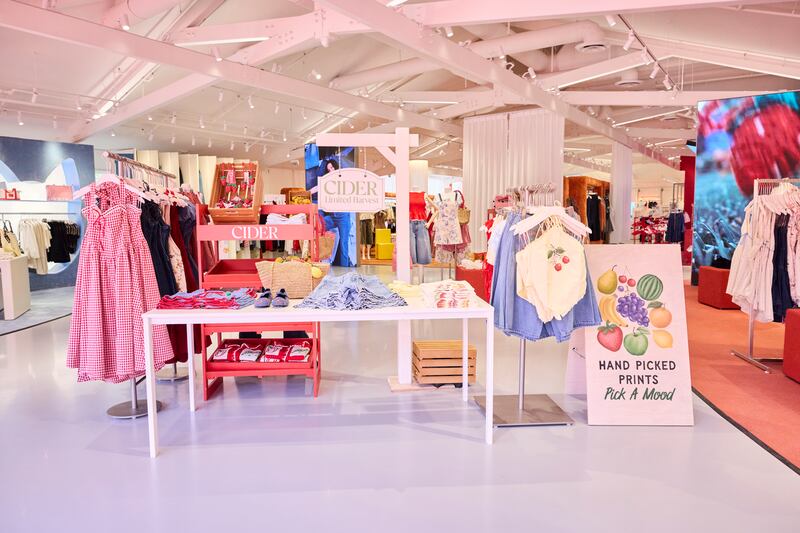
“It’s hard for brands to really build a full immersive brand experience online … where they look like each other,” said Lin. “As we go into retail, building a brand is as important as building a revenue channel.”
Lin said the goal is to eventually be in all major cities and malls in the US and perhaps further out, international expansion. New categories are also in tow: A fragrance launch, Lin said, will be first. But as board member and investor Victor Herrero put it, “they don’t add categories for the sake of adding categories.”
With that in mind, Cider likely won’t stray too far from its core focus on fashion, one of its most notable strengths compared to Shein, according to Sheng Lu, a fashion and apparel studies professor at the University of Delaware said.
“Cider presents themselves differently,” he said. “They’re more specific. Shein covers a huge demographic, while Cider is targeting these more fashionable Gen-Z consumers.”
The fast-fashion giant is offering to let smaller labels plug directly into its famed on-demand manufacturing and global logistics network. But is the boost in speed worth the risk of putting operations in a competitor’s hands?
Gen Z is turning beauty into a social sport, blending AI, ingredient obsession and a preference for in-store shopping. But only brands with real credibility and community cachet will convert curiosity into lasting loyalty.
Fast spreading — and disappearing — online “microtrends” or “cores” have driven fashion conversation for young shoppers over the past few years. Now, the churn has started to slow.

Diana Pearl is Senior News and Features Editor at The Business of Fashion. She is based in New York and drives BoF’s marketing and media coverage.
Loading recommended reads…
Sales of gems, precious metals and artwork at Japan’s department stores climbed 19 percent in the first half of 2026 from a year earlier to $2 billion.
Though Adidas dressed both teams in the World Cup finals, the global football tournament still presented some bright spots for Nike, writes Bloomberg’s Andrea Felsted.
From our archive, the creator and host of award-winning podcast “Articles of Interest” joins BoF founder, CEO and editor-in-chief Imran Amed to explore what clothing can reveal about identity, culture, labour and the world around us.
Saunders, the brand’s first creative director in five years and a skilled colourist, promises to give Kate Spade the clarity it has long lacked. Now, Tapestry must apply the same long-term brand-building discipline that fueled Coach’s success.