Agenda-setting intelligence, analysis and advice for the global fashion community.
Agenda-setting intelligence, analysis and advice for the global fashion community.
Few people know the power of a great blowout as well as Drybar founder Alli Webb.
“I grew up with unruly, curly hair that I just didn’t feel comfortable doing on my own,” she said of her inspiration for the business, which sold its product arm for over $250 million in 2021. “If it wasn’t blown out, it was in a bun. I felt like I just didn’t have another option.”
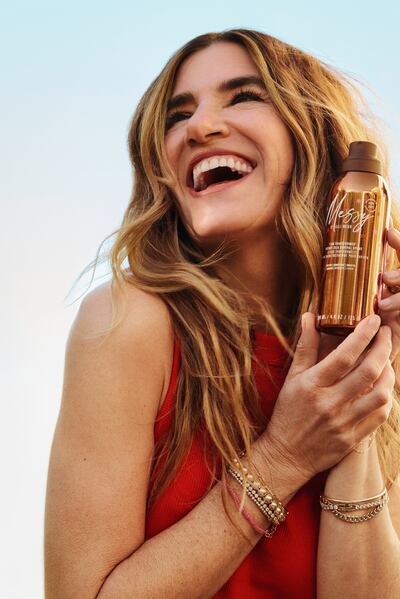
But when the pandemic came, the regular blowout routine began to feel over-the-top for days spent on Zoom calls. She started skipping the blowdry and quickly noticed that her hair felt healthier and was growing longer, after years of heat damage that kept her wearing a “perpetual bob,” she said. When that old challenge reared its head again, this time, she was determined to “figure out a way to get this pretty wavy, beachy, messy look, without having to spend so much time and energy on it.” Last year, she launched Messy, a haircare line centred around the idea of laying off the heat and embracing a curlier texture, with Sephora as an exclusive partner.
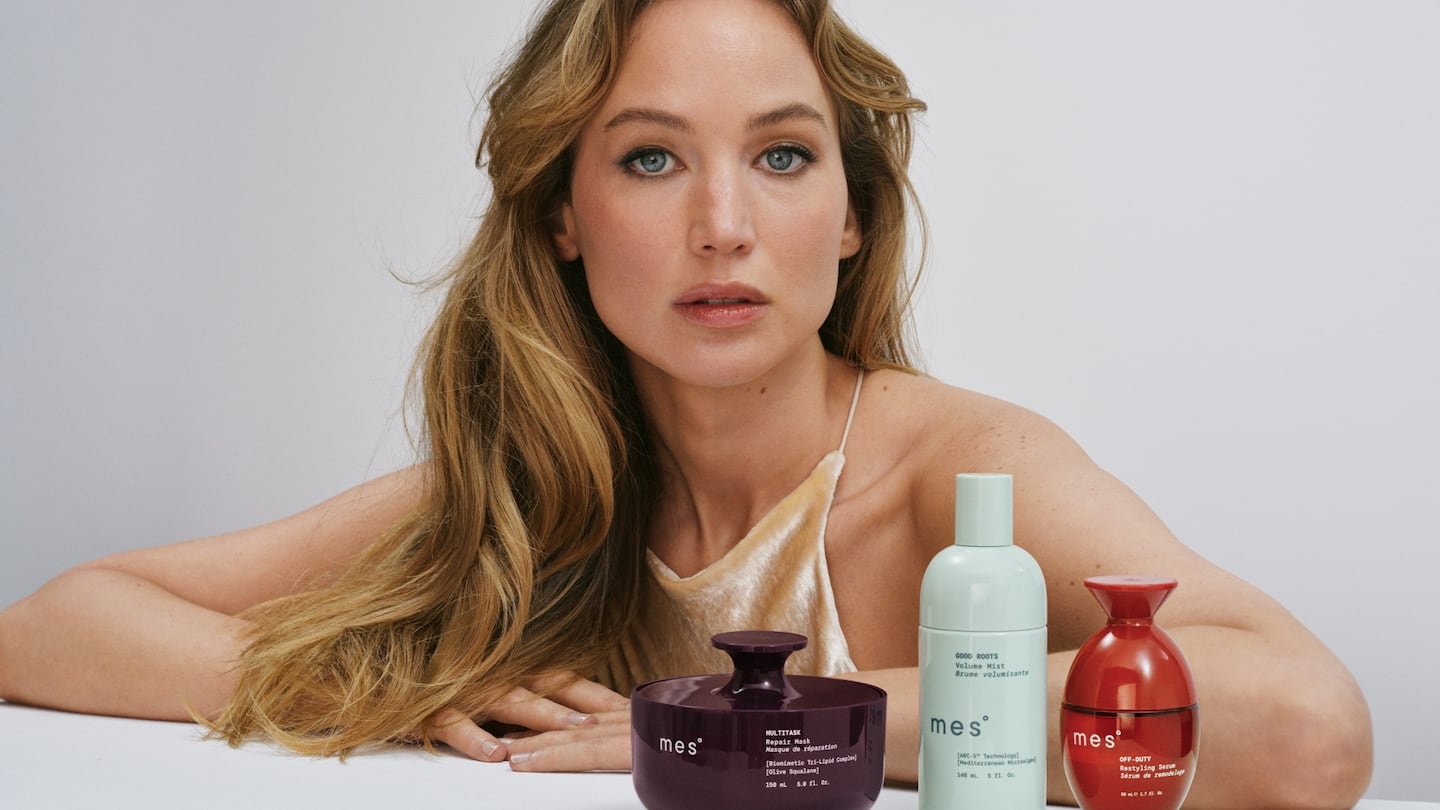
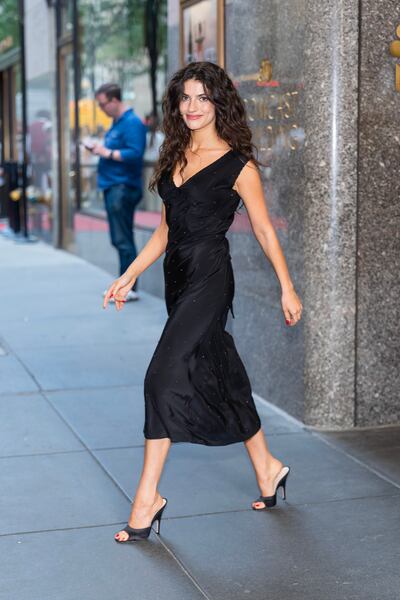
It seems that, lately, undone hair is everywhere. On the runway from Diane von Fursternberg to Dior, models walked down the runway in unbrushed curls. The most talked-about beauty look on TV this summer wasn’t Lexi Mintree’s perfectly coiffed blonde in the “Legally Blonde” prequel series “Elle,” but “Sterling Point” star Ella Rubin’s voluminous, curly mane, which has inspired countless tutorial videos on TikTok. The name of Jennifer Lawrence’s recently debuted haircare brand, which is centred around the idea of a more low-maintenance routine: Mes, pronounced “mess.”
ADVERTISEMENT
The ultimate hope? Hair that doesn’t just look effortless, but actually takes less effort.
“We’re all really busy. We’re all working a ton. We don’t necessarily want to spend hours throughout the week, washing, blow drying, straightening,” said hairstylist Chrystal Lotz, the on-set hairstylist for “Sterling Point.” “It becomes easier to learn to work with your natural texture.”
Think of it as the “no makeup makeup” moment for hair. Years into the category’s so-called “skinification,” which saw more consumers pay attention to their scalp and hair health, those same shoppers are reaping the rewards that those routines gave them. As Diana Pratasiewicz, the senior director of global education content at Ouai, put it: “If you’re going to put all that work into making your strands healthy, you want to show it off.”
Brands and content creators alike are responding to that demand: Ouai, Crown Affair and Roz have rolled out air dry-specific creams and mousses, and TikTok is awash with routines specialising in curly textures and heatless styling methods.
But the deluge in product launches and popularisation of heatless styling doesn’t seem geared to everybody. Many consumers with Afro-textured have historically been pushed into straighter styles — by workplaces, beauty media or society writ large. There’s been some improvement there — it’s now legally required in eight US states for cosmetology schools to teach haircare for curly, coily and kinky styles. But even as more women of all backgrounds embrace their natural texture or curl pattern, what that looks like in practice can differ wildly. For instance, hot tools and overprocessing are detrimental for all hair types, but not all respond to air drying, which can damage kinky or coily hair.
“We’re doing things with our hair that we couldn’t even imagine a few decades ago,” said Stasha Harris, the founder and chief executive of Magic Fingers Institute, a licensing programme that teaches hairstylists and consumers how to work with and style textured hair. “Brands really need to study the market and see the styles natural hair girls are rocking in order to create products that would suit their needs.“
The irony of natural hair’s growing popularity is that it’s never been easier to get a great blowout.
It was a given that not everyone could afford weekly trips to Drybar. But even as at-home options emerged, the earliest, like Dyson’s game-changing Airwrap tool, which costs $649, also remained out of reach for most shoppers. Today, however, there are endless competitors on the market, from Conair’s $130 DigitalAire styling system to Shark and T3’s own versions, which cost $350. Even Drybar sells one, at $350. That’s not to get into the wide variety of heated smoothing brushes also available.
ADVERTISEMENT
That ubiquity, however, likely is playing a part in encouraging people to embrace their own curl patterns. In the same way the Birkin bag’s ubiquity on social media is chipping away at its desirability, the bouncy blowout inevitably feels less special as algorithms feed everyone the same look.
And just as a patina-ed bag feels more personal and distinctive than an unscratched one just out of the box, natural or air-dried hair often feels the same. Both Webb and Crown Affair founder Dianna Cohen named The Row founders Mary-Kate and Ashley Olsen’s wavy, unbrushed locks as the inspiration for the ultimate air-dried look.
Cohen said she always found that more undone look more stylish than so-called “shampoo commercial hair.” Marketing against perfection was part of the impetus for launching her brand in late 2019, because the “the language and the storytelling around hair just didn’t reflect my actual life.” Crown Affair’s own marketing showcases a wide variety of styles and hair textures, from coily curls to soft waves to sleek blow outs.
This marketing becomes especially useful when speaking to consumers with Afro-textured hair, who still face discrimination for choosing to not chemically straighten their hair.
“Growing up, we were taught that straight hair was easier to deal with, now we’re seeing how versatile our hair truly is versus just always going to the heat or a chemical,” said Harris.
Just a few years ago, there were just a few brands that sold textured hair products and they were relegated to the back of a store. Now there are plenty of options, both from texture-specific brands like Rizos Curls and Bounce Curl as well as labels like Crown Affair, Briogeo and more.
And then there’s the content: With so many haircare creators on TikTok and Instagram, it’s much easier to find a model with similar hair to inspire your own routine. Brands, too, have incorporated education into their own content to showcase how to air dry most effectively: Cohen’s own “air dry” technique, which involves using the brand’s claw clips to twist pieces that will fall into soft waves upon drying, is a viral sensation on TikTok.
Shoppers who wanted to rock their natural texture used to have more limited choices for tools and techniques. Today, they’re awash with options, but for curly-specific brands, that’s meant more brands encroach on their territory.
ADVERTISEMENT
“They see dollar signs because they know that there are many steps [in a curly routine],” said Rizos Curls founder and chief executive Julissa Prado. “But not just anybody can develop [products] for curly hair.” Many curly routines are multi-step processes involving several products — arguably still less time-consuming than a blowdry, but not exactly low maintenance.
The sweet spot is likely somewhere in the middle. Curl-specific brands like Rizos, DevaCurl, Productos Latinas and Les Secrets de Loly may have an advantage in speaking to that consumer, but as the air dry movement gains steam, but brands that cater to a broader set of hair types have a chance to prove their worth as well. There’s likely plenty of room in the space, because each head of hair is so unique — products or a routine that work for one may not work for another, even within the wavy or curly categories. Some may prefer a routine that gives
Plus, as Pratasiewicz put it, increasingly, “people want a catalogue of looks that they can go to.” That means more products to get them there.
It’s all representative of a shift in how many women are approaching not just their hair, but also their makeup and getting dressed. Elaborate routines are fine enough, but only if they’re born out of a genuine desire, rather than an insecurity.
“It’s not about achieving the same look as a professional or as if you were spending two hours really drying your hair,” said Cohen. “It’s about demystifying the fact that this is enough.”
Dianna Cohen and Elaine Choi have built an insider favourite haircare label with signature products like the hair towel and brush-applied dry shampoo. Armed with a new funding round, they want to bring the brand to the masses.
This week, Priya Rao unpacks the A-lister’s unexpected new brand with Arcaea.
Mara Roszak spent her career styling the hair of starlets like Emma Stone and Zoe Saldaña. Now, through her hair line Rōz, she hopes to move into salons and Sephora stores across the US.

Diana Pearl is US Editor at The Business of Fashion. She is based in New York and drives BoF’s marketing and media coverage.
Loading recommended reads…
Owner Four Marketing is transitioning the label from founder-led brand to a studio-driven platform, with Bullen’s debut collection scheduled for Autumn/Winter 2027 in Paris
After years of bouncy blowouts, hair is going through its own minimalist evolution, with shoppers seeking out products that allow them to maximise a low maintenance routine.
From capsule collections to festive galas, luxury brands are going all in on Diwali marketing this year as they seek to forge deeper connections with wealthy Indian clients.
The twice-a-year Santa Fe Indian Market has become an effective arena for Indigenous designers to sell their work, connect with their peers and get noticed by collectors. Maintaining that momentum after the booths come down in the challenge.