Agenda-setting intelligence, analysis and advice for the global fashion community.
Agenda-setting intelligence, analysis and advice for the global fashion community.
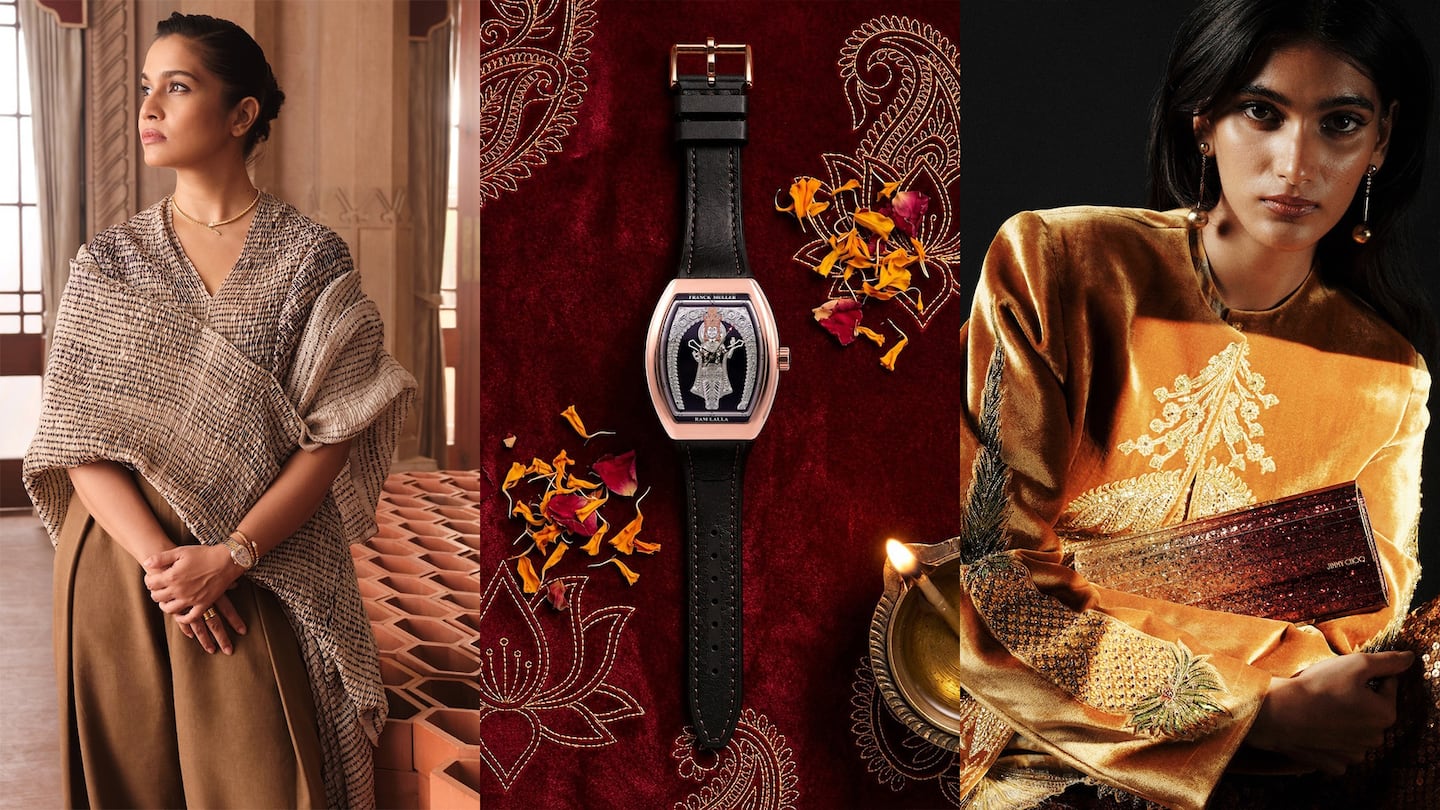
Luxury watchmaker Franck Muller has spent two years developing the newest edition of its Vanguard watch — a limited release designed for the Indian market and launched ahead of Diwali.
The watch pays tribute to the Hindu deity Ram, whose homecoming after 14 years in exile the festival celebrates. Each specially crafted timepiece costs 31.25 lakh rupees ($32,898). Nearly two thirds of the collection has already sold out.
The festival of lights is becoming an increasingly important marketing moment for brands looking to tap into Indian consumers, whether at home or among the country’s sizeable and wealthy diaspora.
From New Delhi to New York, global brands are going all out.
ADVERTISEMENT
Ferragamo launched its first dedicated Diwali capsule this year, while Bulgari marked the festival with a global campaign for the first time. Elsewhere Galeries Lafayette, which opened a Mumbai location last November, marked its first Diwali in India with multiple activations, including a fashion showcase by circular design brand Rkive City and a soirée in collaboration with private members’ club Soho House.
Valentino, Chanel Beauty and Gucci all hosted Diwali celebrations with the fashion and Bollywood set in attendance, while Michael Kors teamed up with Esquire India for a dinner. Burberry dropped its second Diwali capsule and Jimmy Choo launched its sixth in a decade, featuring five shoes and five bags, including glittery, metallic versions of its Bon Bon bucket.
High-profile international activations this year included a Diwali gala at The Metropolitan Museum in New York hosted by designer Sabyasachi Mukherjee and an exclusive Gaurav Gupta couture presentation at Harrods in London.
Major brands’ Diwali celebrations have been “turbocharged this year”, said Che Kurrien, head of editorial content at GQ India.
Big brands’ investment in Diwali marketing reflects a broader bet on Indian consumers.
The country’s GDP is expected to grow at 7.1 percent this financial year, making it one of the world’s fastest-growing major economies, according to the World Bank. Finding ways to tap into that growth has become all the more important as the economic outlook in key consumer markets like China, the US and Europe remains uncertain.
India’s festive season, which kicks off in the autumn with the celebration of Navratri and culminates in Diwali, is a big opportunity. The festival of lights, which falls on Nov. 8 this year, is associated with gifting, occasion dressing and jewellery purchases as part of the celebrations. The result is “a concentrated period of elevated discretionary spending,” said Damien Yeo, a senior consumer and retail analyst at BMI, a unit of research firm Fitch Solutions. Its celebration segues into wedding season, bringing more excuses to shop, he added.
While traditional wear still accounts for the bulk of festive sales, Indian consumers are adding watches, bags, shoes and accessories to their Diwali shopping lists, all categories that global brands can compete in, analysts said.
ADVERTISEMENT
To be sure, spending linked to Diwali remains small compared with shopping festivals like Black Friday and Singles’ Day, or more commercialised holidays like Christmas and Lunar New Year. These still draw broader and more co-ordinated investments from luxury and high-street labels, but the opportunity presented by Diwali is hard to ignore.
The Confederation of All India Traders (CAIT) expects festive season sales to jump as much as 18 percent this year to cross 7 lakh crore rupees ($73.5 billion). Spending on fashion, jewellery and footwear is projected to make up roughly one fifth of sales.
While there are still reasons to be cautious — analysts have warned of economic headwinds like the weak rupee and inflation, and CAIT itself has said recent protests in Delhi could dampen spending — mall operators are preparing for a bumper festive season.
Uzma Irfan, director of Bengaluru-based luxury mall UB City, said the retailer’s brand partners are projecting a 10 to 15 percent sales increase this Diwali compared with last year, with jewellery, couture and premium accessories leading the way. Sathyajit Radhakrishnan, chief executive officer of international brands at Aditya Birla Fashion and Retail Limited (ABFRL), expects to post year-on-year sales growth of 15 to 18 percent this quarter at the company’s multi-brand retailer, The Collective, and the mono-brand boutiques it runs for labels like Ralph Lauren and Fred Perry.
Meanwhile, fashion e-tailer Myntra’s Big Fashion Festival sale in October already delivered strong results. Domestic direct-to-consumer fashion labels, international brands and Myntra’s own Gen Z focused sub-platform, FWD, saw orders nearly double compared with regular business days, the Walmart-owned company said. Brands such as Mango, H&M, Next, Aldo, Michael Kors, Fossil and Gymshark enjoyed especially high traction. Orders at its quick commerce operation M-Now nearly tripled compared with last year’s festive sale, Myntra said.
Diwali’s commercial appeal extends beyond India thanks to the country’s wealthy and culturally confident diaspora, which means tapping into the festival is an increasingly important global opportunity for both local and domestic brands.
“The Indian diaspora is the largest in the world and economically strong, making it an important market for Indian brands and designers,” said Kurrien.
Indian brands seeking to extend their reach internationally are increasingly using the festival as a means to raise their profile, courting diaspora clients with Diwali events and targeted marketing.
ADVERTISEMENT
Jewellery giant Titan, which has been expanding its reach with stores in key international markets, released a diaspora-focused ad, “Share the Light, this India Wali Diwali” (an India-style Diwali). Elsewhere, Indian designers leaned into a well-established tradition of trunk shows to create culturally relevant moments in partnership with major department stores like Harrods and Selfridges.
Indian design duo Abu Jani and Sandeep Khosla held a special showcase at Selfridges in October as part of their 40th anniversary celebrations. The retailer also organised a private presentation with designer Rahul Mishra at its new member’s club, 40 Duke Street, while designer Anamika Khanna and jewellery label Amrapali Jewels collaborated for a showcase at Harrods’ private shopping space, Harrods Penthouse. This year too, Harrods will mark the festival with the illumination of its Brompton Road store.
“Diwali is a significant shopping moment,” said Harrods director of marketing, Rachel Bright. “We typically see heightened engagement as customers prepare to celebrate, entertain and exchange gifts with family and friends.” Last year, the store’s footfall increased 50 percent during the Diwali period, she added.
Perhaps the most opulent sign of domestic brands’ global ambition this year was Sabyasachi’s event in New York. Guests including Bollywood actor Rani Mukerji, designer Masaba Gupta and Indian-American actor Kal Penn mingled at the Met adorned in satin sarees, bandhgala sherwanis, ornate lehengas, brocade jackets, and gem-studded necklaces, many made by Sabyasachi.
Even in a global setting, culturally specific dressing continues to be central to Diwali. Some might see that as limiting, but experts say that is where the real strategic value lies: presenting space to build deep and authentic connections with India’s sizeable consumer base around the world.
“This cultural and emotional link is crucial,” said Jonathan Brinbaum, managing director of Bulgari’s watches division.
Brands’ approach to this opportunity is clear in their increasingly targeted approach to Diwali marketing.
For its first global Diwali campaign, Bulgari partnered with artist Doyel Joshi on an intricate installation at the Jaipur Centre of Art, featuring thousands of terracotta elements intended to evoke traditional oil lamps in the shape of the brand’s Serpenti motif.
Franck Muller’s Ram Lalla watch references the childhood form of Ram. It was created in collaboration with multi-brand watch retailer Kapoor Watch Co., with special care to ensure accurate religious representation. The Swiss watch company saw its sales in India grow 15 percent year-on-year and has stepped up its investment in the country by more than 10 percent this year, said Franck Muller’s Middle East, Africa and India chief executive officer, Erol Baliyan. It plans to create more such lines in the future.
“Culturally and traditionally, India is so big and wide. There are always some stories, some material to address and make a product out of it,” said Baliyan.
Elsewhere, Ferragamo’s maiden Diwali edit included a selection of handbags and shoes in shades of gold, burgundy and navy. Meanwhile, Burberry’s collection featured a velvet vanity bag, a wool-cashmere cape and wool scarf in its signature check, and shirts and polos for men in a rich colour palette.
What makes this year’s Diwali engagement by major brands stand out is partly the volume of initiatives, but partly the level of detail and engagement, said Kurrien.
“They are customising in the context of Diwali while retaining their own heritage and identity,” he said.
Global brands are betting that glittering campaigns and festive designs will tempt Indian shoppers to look past economic headwinds and splurge during a key spending period in the retail calendar.
India’s five-day festival of lights doesn’t come close to Black Friday or Singles Day in terms of overall sales, but brands see plenty of room to grow. That, plus what else to watch for in the coming week.
Arnika Thakur is a contributing writer at The Business of Fashion. Based in New Delhi, India, she is an independent journalist and writer who covers a range of topics including luxury, fashion, beauty, finance and hospitality.
Loading recommended reads…
In this week’s High Margin, a search for images that cut through our visual fatigue — with leads from M/M Paris, Ferdinando Verderi and stylist Emilie Kareh. Plus: Tod’s designer exit; Burberry’s resilient sales.
The producer price index rose 6.5% from October 2025, an acceleration from the prior month, according to Bureau of Labor Statistics data out Friday. On a monthly basis, the PPI increased 0.3%.
The creative director and strategist joins Imran Amed on The BoF Podcast to discuss the evolution of his career, the realities of shaping artist narratives and why long-term collaboration outperforms short-term marketing.
The former Nvidia CEO was central to an AI boom that has propelled the US stock market and fueled the country’s unmatched luxury spending. After his exit, nobody is sure what happens next.