Agenda-setting intelligence, analysis and advice for the global fashion community.
Agenda-setting intelligence, analysis and advice for the global fashion community.

The Business of Beauty's executive editor unpacks how shifting ideals, new players and cultural movements are transforming the global beauty and wellness industries.
Welcome back to Full Coverage.
Does anyone else feel like we are in the middle of a celebrity blitz?
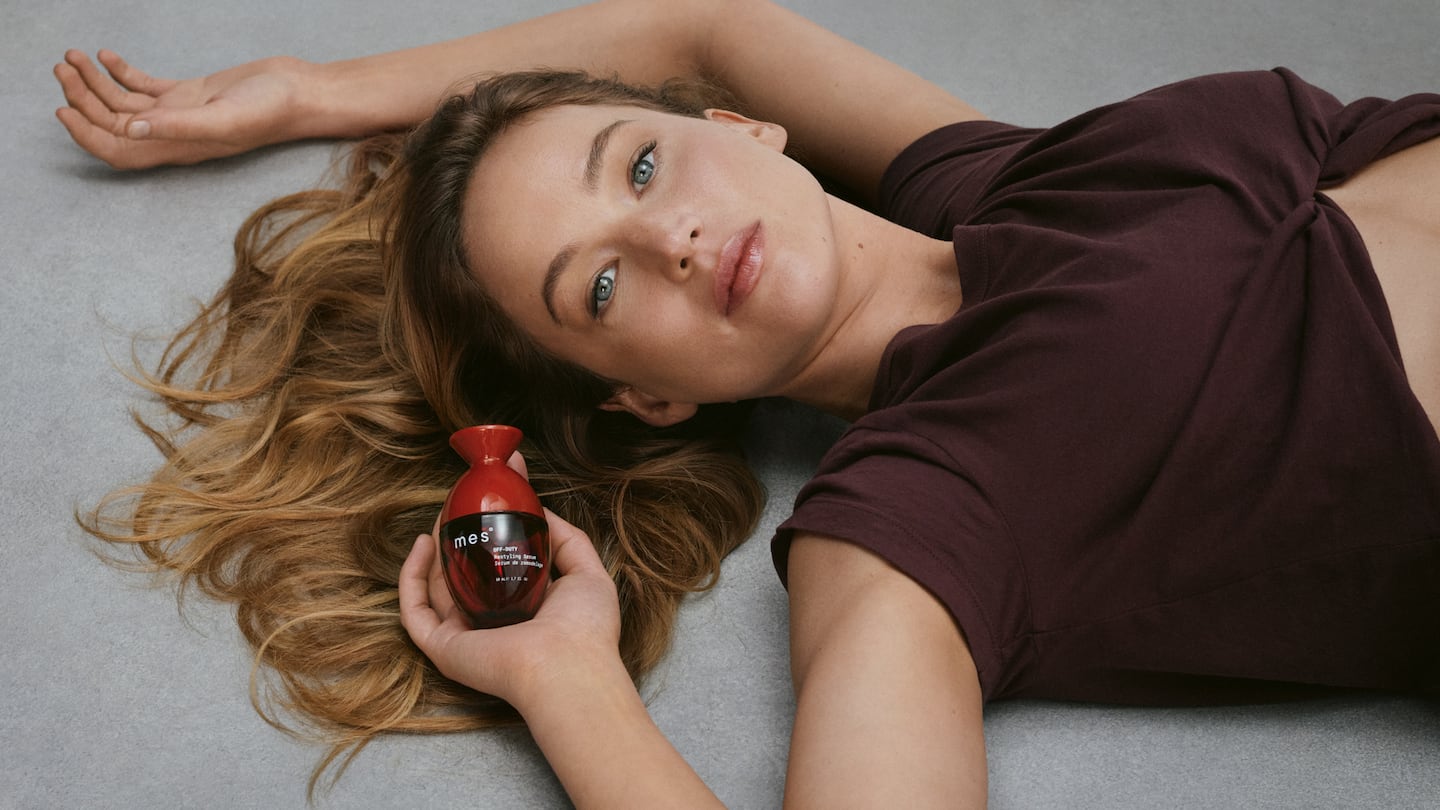
Last week was all about Cardi B with her incredible “Tiny Desk” appearance on NPR, T Magazine cover and her haircare line Grow-Good’s entry into beauty supply stores. Earlier today, we broke the news that Lady Gaga will assume the CEO role at her cosmetics brand Haus Labs. And now, Jennifer Lawrence is on a mega media tour, with the debut of her new hair label dubbed Mes (a play on “mess”), made in partnership with biotech beauty firm Arcaea.
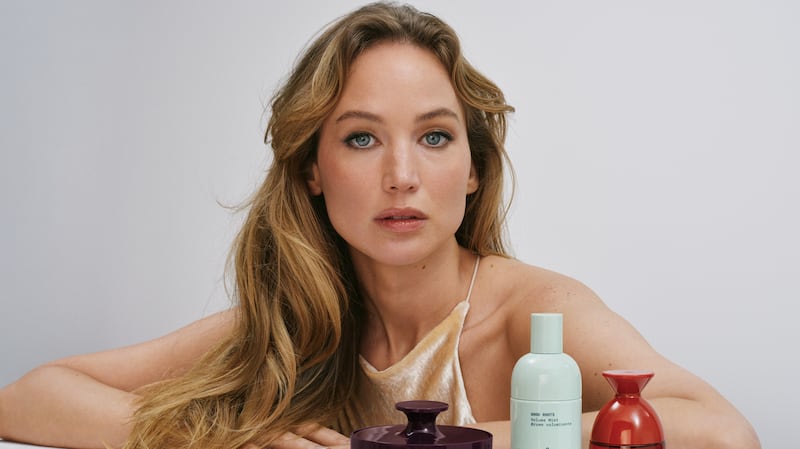
Since Lawrence teased her line last week on Instagram, where she is seen swaying her hips and jumping in circles, the internet has eaten it up, from coverage in legacy outlets like People to a steady stream of comments on Reddit.
ADVERTISEMENT
When I heard about this launch a few months ago, I was surprised. As someone at the top of her field, with her choice of projects, parts and directors at her fingertips, Lawrence never struck me as the “founder” type. Besides, it’s not 2022 anymore: Today, there is a graveyard of celebrity brands, including the recently closed The Outset by fellow A-lister Scarlett Johansson to serve as a warning. Despite her signature humour, Lawrence has more in common with Johansson than Halsey, Kate Moss or Gwen Stefani, all of whom had lines that shuttered in the last year. But as one very high-up beauty exec once told me, most celebrity beauty projects first came out of the pandemic and then the writers’ WGA and actors’ SAG-AFTRA strikes.
Moreover, I was taken aback that Lawrence didn’t lean on someone like her longtime pal Kris Jenner, the ultimate brand builder, or an adjacent powerhouse like Emma Grede.
So the lore goes, Lawrence was looking to do something more intellectual in beauty and after watching Arcaea founder Jasmina Aganovic give a TED Talk, she was eager to meet (this, too, was after the actors’ strike, per The Cut). While Mes didn’t provide details about the meet and greet beyond “multiple people on Jen’s and Jasmina’s teams were involved,” I’m told that it was talent agent and CAA co-founder Michael Ovitz who made the introduction. Before Mes came to life, Arcaea was researching biotech ingredients for haircare that could be sold to other brands, according to the company.
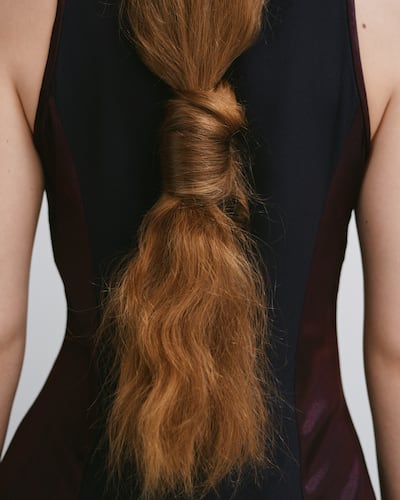
Lawrence does have great hair (as evidenced by much of Mes’ marketing and the stunning pictures in The Cut) and has joined Instagram as a way to likely promote her three-item lineup, made up of a Multitask Repair Mask ($52), Off-Duty Restyling Serum ($44) and Good Roots Volume Mist ($34). But the product mix, which is going to be sold direct-to-consumer, occupies an interesting space, following in the footsteps of labels like Crown Affair and Roz.
“The ethos of the brand is it’s not practical to expect women in particular to show up that way [with two hours of glam] every single day,” Lawrence told The Business of Beauty. “This brand is for the messiness of real life. It’s meant to get you out of the bathroom and back to living your life while still feeling really confident about what your hair looks like.”
But Mes is also meant to offer science-backed gravitas à la K18. Arcaea, founded in 2021, is an offshoot of biotech company Ginkgo Bioworks. The former at first was meant to sell its growing vat of ingredients (brewed in a large tank, much like beer) to fellow beauty firms as a way to avoid culling from natural resources or using petrochemicals. The concept was so alluring that Arcaea secured $78 million in funding; it is backed by Chanel, Givaudan and Cascade Investment, the Gates family’s investment arm.
It was a similar concept to Amyris, which got its start selling sustainable ingredients like squalene to other firms, eventually creating its own brands, like Biossance. Then it went all in on celebrities: Jonathan Van Ness’ JVN and Rose Inc., model Rosie Huntington-Whiteley’s makeup line, were all spawned by the company. In the process, Amyris abandoned its B2B roots, selling its cosmetic ingredients portfolio to Givaudan. You probably remember how this story ended; later that year, Amyris went bankrupt and its brands, celebrity or otherwise, were offloaded in distressed fire sales.
You might be wondering why I’m bringing this up. Arcaea still operates its B2B arm, but it pivoted to a consumer-facing business with the launch of Future Society, a fragrance label that also sells creams and cleansers. Mes is its second portfolio brand; more are expected to launch, per the company.
ADVERTISEMENT
So far, Mes hasn’t said much about the science behind its products. Its proprietary ARC-5™ Technology was touted as helping to lift hair roots. Haircare is big right now and Lawrence and Aganovic are smart to pursue it more than makeup or skincare, but like I said last week, it is a hard category to crack as it either needs to have the right price (Pantene), stylists’ backing (Roz) or real technology (K18). As for high tech haircare, I’m not sure if customers really care about proprietary ingredients or technology — they just want stuff that make them look better. Were people buying K18 because of its patented peptides or was it because it made their hair stronger and smoother? I’ll be interested to see reviews on Mes, as well as the before and afters on real people.
Celebrity endorsements haven’t mattered as much either in hair — with the exception of Jennifer Aniston’s early days plugging Living Proof (but that gravitas hasn’t exactly translated to her own label Lolavie). Brands like Maesa’s Anomaly by Priyanka Chopra and TPH by Taraji P. Henson were sold back to their founders or other partners (in the case of Anomaly, Reliance picked it up); Blake Lively’s Blake Brown has faltered since its debut in Target.
Even the industry’s biggest celebrity success stories are facing growing pains: Rihanna’s Fenty is up for sale at a discounted price (Jay-Z’s MarcyPen is expected to swoop in any day now with the help of another investor, according to my sources) and Selena Gomez’s Rare has steadied after launches into fragrance and body.
So what is it going to take for Mes to be a standout? Aganovic has her own lofty ambitions.
“I genuinely view the launch of this brand as a being, like a line of demarcation in haircare, haircare before the launch of Mes and haircare after the launch of Mes,” she said. “This is fundamentally going to reframe how people think about their hair and also how science is used to create completely different solutions.”
Lawrence likely won’t have to worry if Mes succeeds, but for Arcaea, it’s a make-or-break moment.
With additional reporting from Daniela Morosini.
Jonathan was my first-ever boss (at the now-defunct, but beloved Fashion Rocks) when I first moved to New York. He’s the best profiler in the game; you’ve got to read “Citizen K”! [The New York Times]
ADVERTISEMENT
Ben Bennett’s The Center is on a tear. Its latest acquisition, Boscia, is set to relaunch next year. [WWD]
Incubators and retailers are pivoting to private-label brands. Is there more to it than price? [The Business of Beauty]
Delena is back. [Rare Beauty via Instagram]
“Ferritin face,” the facial symptoms of low iron stores, is beauty’s latest folk devil. [The Guardian]
Victoria’s Secret body sprays have won over their harshest critics: tweens. [The Strategist]
Thank y’all,
Priya
Editors’ Note: This article has been amended on Oct. 29, 2026 to clarify Arcaea’s path to haircare.
Loading recommended reads…
Offhand remarks by French football superstar Kylian Mbappé sparked a backlash from Chinese ‘netizens’ this week, leaving labels from On to Dior exposed in one of fashion’s most important markets.
Photographer, stylist and entrepreneur Daniel Obasi joins Imran Amed on The BoF Podcast to discuss instinct-led world-building, his approach to image-making, and what makes Lagos’ creative scene singularly resilient, yet structurally unsupported.
The launch of Nike’s new Vegum Run shoes exclusively in India lays a groundwork for a new production cycle that could give the brand a leg up in its different geographies moving forward.
The Chinese beauty conglomerate’s revenue grew 29.8 percent in the latest quarter, but its profit decreased by double digits due to increased promotional expenses as it expands overseas.