Agenda-setting intelligence, analysis and advice for the global fashion community.
Agenda-setting intelligence, analysis and advice for the global fashion community.

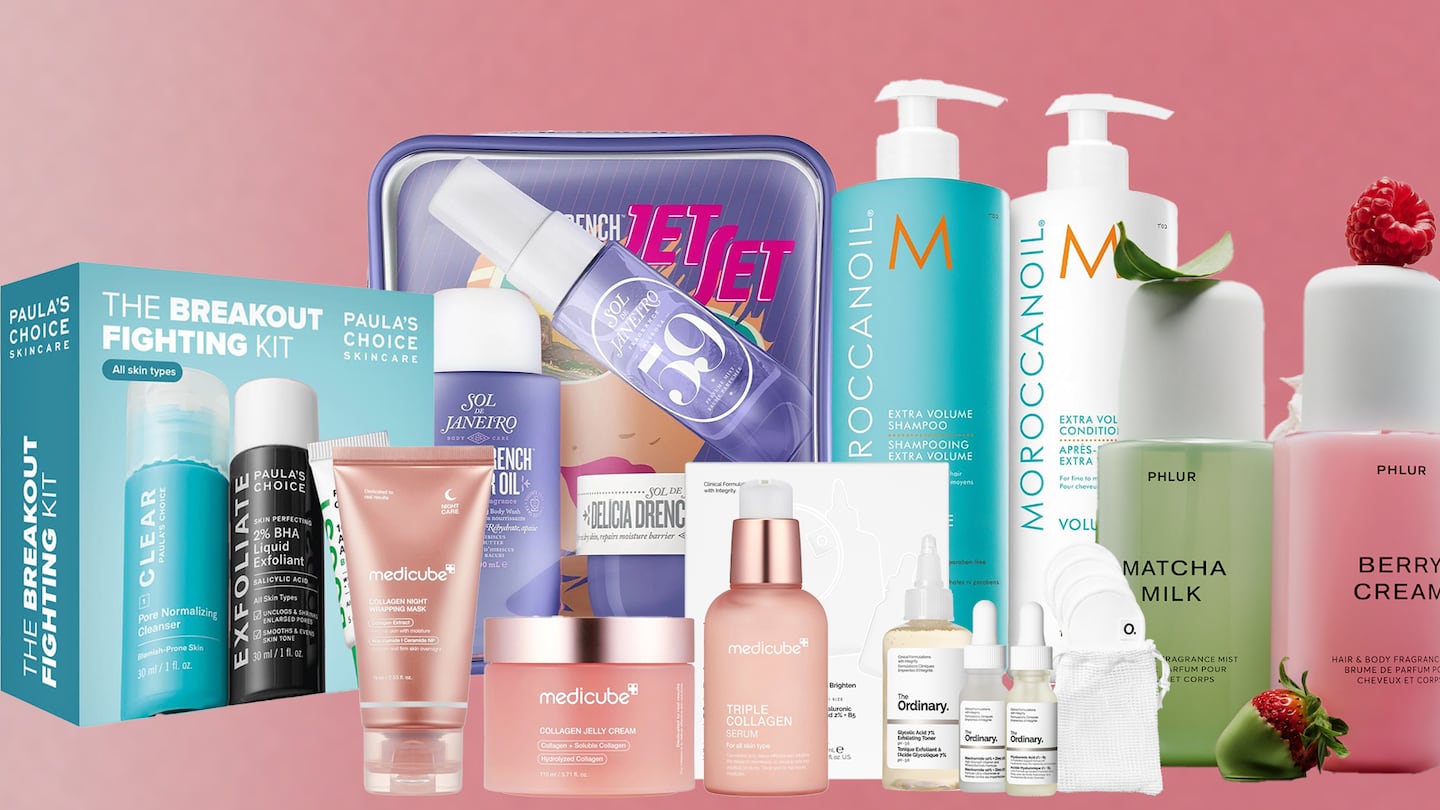
For the 31-year-old brand Paula’s Choice, the skincare landscape has never been more confusing — or competitive. As consumer’s brand loyalty wanes, it’s no longer enough to make it into the bathroom cabinet: They have to own the whole routine.
“It is fundamental,” said chief marketing officer Tina Pozzi of the brand’s bundling strategy, which combines complimentary products to educate its consumers. “When someone has purchased a routine that is custom-built for them, we’re able to retain that customer.”
It’s a new kind of behaviour reflected across the industry, said Jeff Lindquist, managing director at Boston Consulting Group. “The dominant narrative now is that the consumers are tapped out, so any upselling that you would do is opportunistic,” he explained. “That’s a myth. What we’re really seeing is that consumers are not broken: they’re optimising.”
“Upselling” is a dirty word, but a basic concept: retaining a customer, or coaxing them into increasing their basket size, is the key to a brand’s success. The beauty industry has long run on benefits like gifts with purchase. But shoppers are increasingly sniffing out misguided or lazy efforts to induce them to spend more: a mere points system, rote promotion or inclusion of filler SKU is no longer enough to cut it.
ADVERTISEMENT
“In e-commerce, you used to offer something additional for free, and people would just buy it,” said Kirsty Newman, founder of The Boutique Consultancy. “Now, clients are too savvy.”
They’re also not won over by discount alone. A pricing race-to-the-bottom might provide an initial boost, but will squeeze margins and cheapen the customer’s perception image over time. While customers expect some kind of discount, it will take more to convince them to check out. Exclusive offerings, personalisation or well-communicated education around why this product — and why now — are not only crucial to translating value but also to a brand’s bottom line.
“When you upsell or retain a client, they’re 60 to 70 percent more likely to buy more from you versus you finding an entirely new person,” added Newman.
Compiled correctly, bundling provides a frictionless means of brand and product discovery, higher basket value and a higher stake in a consumer’s overall beauty routine.
In the final quarter of 2025, 24 percent of TikTok Shop UK’s beauty bestsellers were bundles, said Emily Caine, the platform’s beauty category lead in the UK.
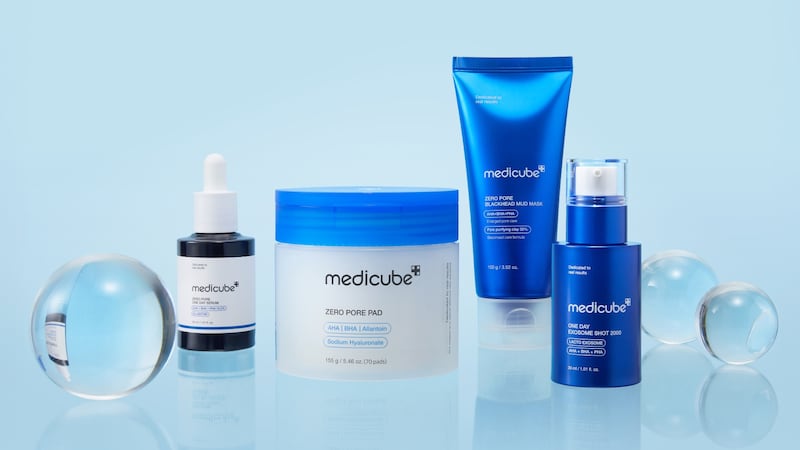
Korean skincare brand Medicube regularly offers bundles of skincare purely for TikTok Shop. They contain heroes like its trio of Zero Pore Pads, for discounts of between 10 and 20 percent. Ulta Beauty, scheduled to launch onto the platform later this week, will also be leading with exclusive bundle drops.
“There’s a discount, but there’s also driving through a narrative of exclusivity,” said Caine. “Particularly in skincare, it’s also about convenience; bundles as a service are really being able to simplify the shopping experience.”
Education is a key aspect of marketing these bundles, especially in categories like skincare and hair. In the prestige hair care category, 8 percent growth in sets outpaced the wider hair category in 2025, according to Circana. To Caine, brands such as UK’s Hair Syrup are excelling as they allow consumers to build a hair care regimen, an area where consumer knowledge tends to be less developed to that of skincare. “It leads to the discovery side of our platform, which is learning about a whole new ritual,” she added.
ADVERTISEMENT
It’s also recently been leveraged by fragrance brand Phlur: new launches Berry Cream and Matcha Milk were dropped as a duo. “We knew that customers want to move towards fragrance layering, but many didn’t really know where to start,” said Erica Dunivan, the brand’s chief marketing officer. “The duos are actually our number one product in units at launch on our DTC, and the discount is relatively modest.”
Fragrance-only bundles increased by double digits, while sets with ancillaries such as shower lotion were in decline, according to Circana. It reflects sharper focus on value from consumers: filler products will be viewed as an extra rather than an enticement, meaning brands should refrain on offloading slow sellers or unrelated products alongside heroes.
As shoppers crave value, jumbo sizes provide a win-win: the brand gets a higher upfront ticket price, and the user gets a lower cost-per-use. It also doesn’t devalue a brand’s positioning. “No one looks at a jumbo size of a premium shampoo and thinks that it cheapens the brand,” said Lindquist. “The jumbo bottle is the most elegant answer to the inflationary moment going on right now.”
It’s also a solution that works across categories. In prestige hair care, shampoo and conditioner in larger sizes (16 – 25 oz) were up 18 percent on both dollars and units sold, said Circana.
Though they’re a means of securing loyalty, selecting which products receive the jumbo treatment requires restraint. “I’m sometimes astounded by the number of people saying, ’Please give us the jumbo size again’,” said Amy Bi, brand vice president at Deciem. Products like The Ordinary’s hyaluronic acid are a better fit for economised sizes than the AHA 30% + BHA 2% Peeling Solution, which are used less and likelier to expire. “The last thing you want is a product that consumers are going to have on their shelf for multiple years.”
A jumbo bottle gathering dust spells decreasing brand relevancy for the consumer. While the brand benefits for the initial spell of loyalty, they have to remain top of mind to lock the customer in again. “You have to think about how to tap back into them,” said Newman. “Is it a relevant article on how to use the new moisturiser? Is it a “how to” tutorial or recommending a new product? From a CRM perspective you want to group these people, and ensure you’re staying in contact."
Like jumbos, subscribe-and-save programmes are a means of securing guaranteed loyalty from your consumer. Customers find value through a light discount, while brands get consistent spending, and a permanent spot in the routine.
There are more challenger brands every day, giving shoppers ever more reasons to switch things up, said Lindquist, adding that LLM recommendations and agentic AI have intensified competition even further. “With the effort that goes into acquiring new consumers, you would rather give them a five to 10 percent discount than lose them, any day.”
ADVERTISEMENT
On Amazon, highly replenishable products such as cotton buds, face wipes and pimple patches build strong loyalty via the platform’s Prime subscribe and save service. “On Amazon we’re seeing a strong uptake in subscriptions, showing us consumers are replenishing instead of experimenting,” said Charlotte Mahieu, UK Marketing Director of Mighty Patch parent company Church & Dwight. “A product becoming non-negotiable like that is the most powerful driver of long-term growth.”

Though the discount is a boon, it’s also nominal: Customers are really paying for the convenience factor of never running out. It means the supply and shipping service must be seamless — any delay will unravel the whole proposition. For this reason, brands might want to rely on a streamlined service from a retailer such as Amazon instead of offering the service for themselves. “The Amazon ecosystem inherently rewards that type of velocity,” said Lindquist. “Reliability, speed, and free shipping: that’s the one big threat to DTC.”
At the most basic level, though, the subscribe and save strategy — along with bundling and jumbo sizes — won’t work if the product isn’t delivering on its promises. “Results are ultimately what get people to return and repurchase,” said Pozzi.
Editor’s note: This article was amended to reflect Emily Caine’s role as beauty lead for TikTok Shop in the UK.
Sign up to The Business of Beauty newsletter, your complimentary, must-read source for the day’s most important beauty and wellness news and analysis.
Want to dive deeper into an insight from this article? Check out The Brain of Fashion, BoF’s new generative AI tool where you can unlock BoF’s beauty archive with a single question.
This weekend beauty brands and retailers will need to use every tool at their disposal — from AI to TikTok Shop to BNPL — to get the biggest return.
Gift sets have transitioned from being a stocking stuffer at a more affordable price to a luxury offering driving this holiday season’s sales.
Consumer sentiment is slumping, but spending hasn’t collapsed – it’s bifurcated. Brands are leaning into desirability, newness and sharp pricing over blanket promos, while luxury department stores chase high-spending customers amid a shake-up. BoF reporters Cat Chen and Malique Morris break down what’s working – and what isn’t.

Rachael Griffiths is a Senior Editorial Associate at The Business of Beauty. She is based between St Helens and London, and covers beauty, wellness and industry news.
Loading recommended reads…
For the last twelve months, the designer has played therapist to the brand’s multiple personality disorder. This latest session for Spring/Summer 2027 was a breakthrough.
Gucci, Moschino, Tod’s, Institution and The Attico each offered their vision of fashion for the people as commercial pressures put the customer squarely in focus, Angelo Flaccavento writes.
A Bank of America analyst downgraded shares of the sportswear maker to underperform from neutral, pushing back expectations of a sales turnaround to 2028.
The manufacturer of the gel eye masks that broke the internet weighs in on why Fenty Beauty, Huda Beauty, and Glow Recipe announced the same product within a week.