Agenda-setting intelligence, analysis and advice for the global fashion community.
Agenda-setting intelligence, analysis and advice for the global fashion community.

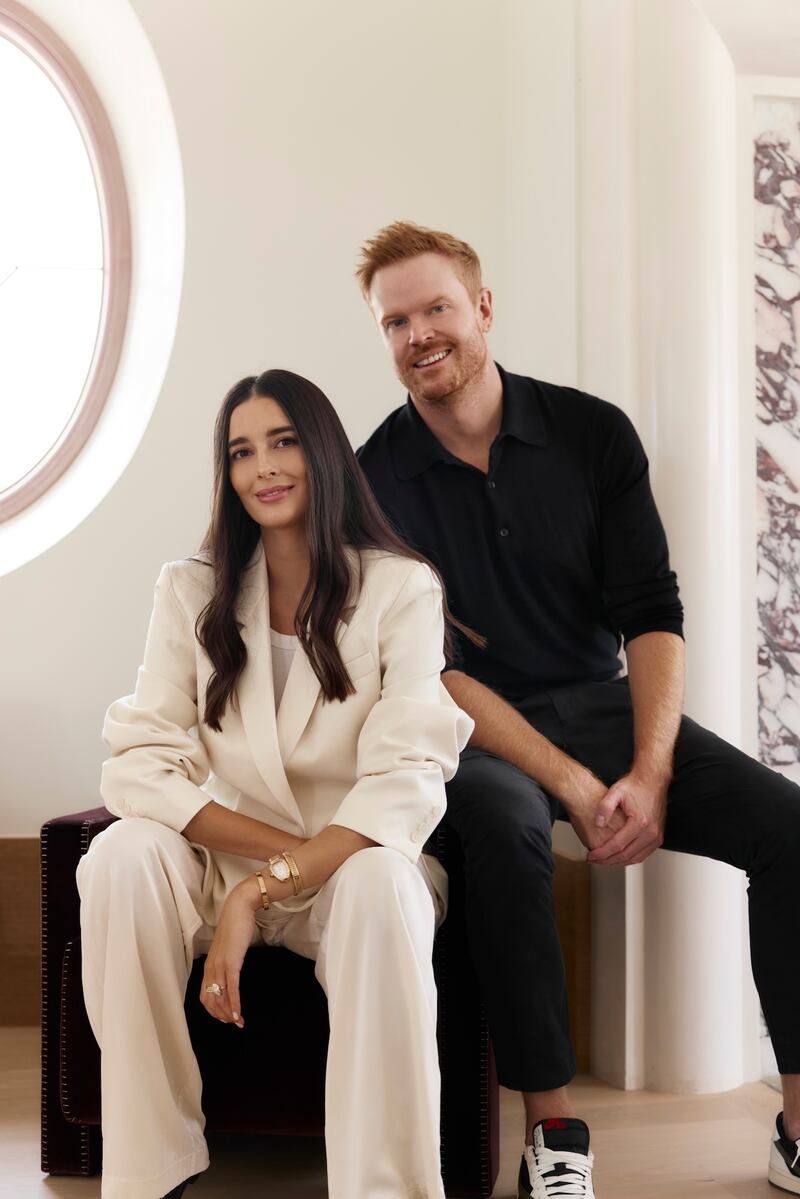
In 2019, Jaimee Lupton was building her first beauty brand, Monday Haircare, with an assist from her boyfriend Nick Mowbray, the co-founder and chief executive of the multibillion-dollar toy company Zuru Group. Monday — a hair care label with salon-quality formulas at drugstore prices — needed a splashy ambassador. Lupton, who had built a career in luxury PR and communications in Australia, approached Blake Lively, whom she met through the actress’s management and who politely declined. Recently, Lupton asked her why.
Lively told her she didn’t think Lupton and Mowbray would last. “You guys had been dating for 10 months and you had this brand,” Lupton said Lively told her. “She said it sounded like a recipe for disaster to launch something with a new partner.”
Monday was launched under Zuru Edge, the consumer goods arm of the Zuru Group, a toy manufacturer that analysts value at between $25 and $30 billion NZD ($14 – $17 billion USD); seven years later, Monday is on track to hit $300 million in global retail sales for 2026. Zuru Group’s now thriving beauty division, led by Lupton, is projected to generate $705 million in sales next year.
Mowbray told The Business of Beauty that Zuru would not have ventured into the beauty space had Lupton, “who lives and breathes beauty,” not been there to spearhead it. “Having great taste is important, and so is the ability to hire people with similar taste who live in that world. Jaimee’s very good at identifying talent, but also driving them quite hard,” he said.
ADVERTISEMENT
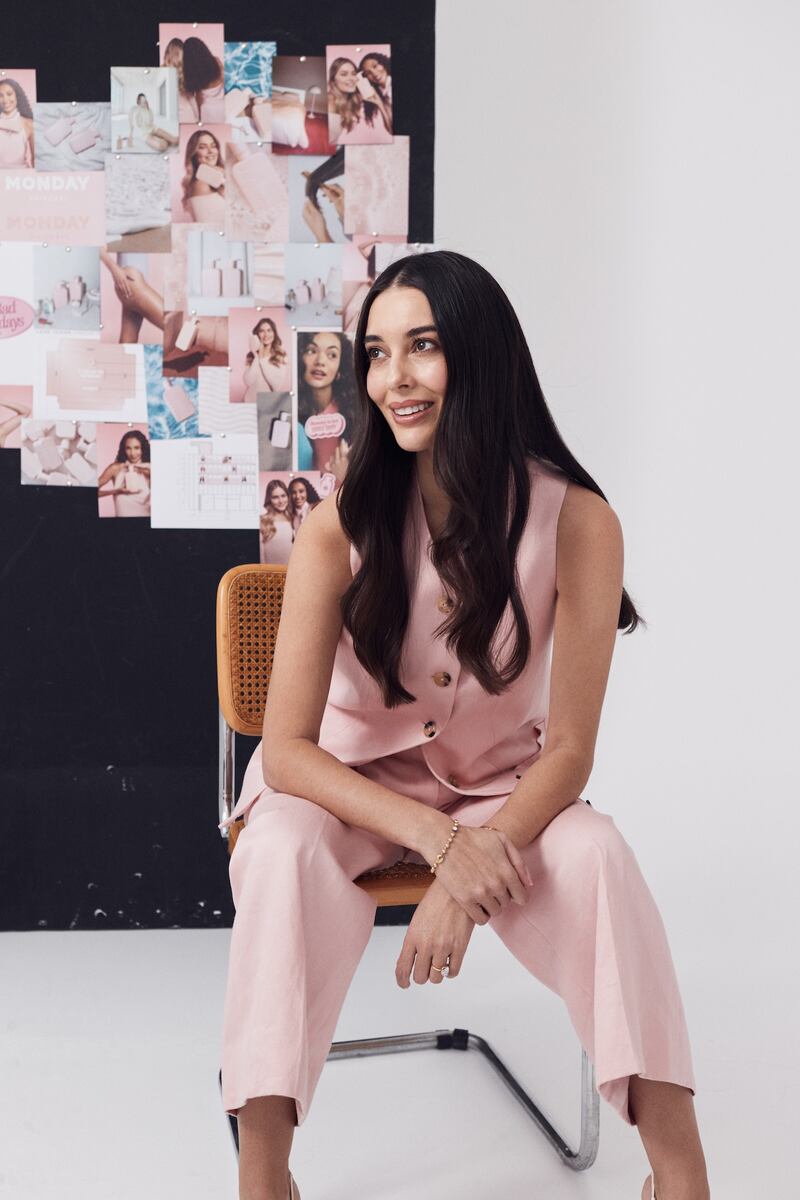
Lupton, who is 34, has an equal skill for applying the kind of glossy marketing she’d think up for luxury PR clients to a drugstore body and hair products. Now she has fashioned herself as a next generation brand-builder, launching a number of new labels in record time. In addition to Monday is another hair care line Being, the Gen Alpha-oriented body care and fragrance line Daise and body line True. There are 12 more brands in the pipeline, Lupton said.
Lupton hopes to cultivate Zuru’s beauty portfolio, housed under the brand’s consumer arm Zuru Edge, into a “conglomerate of brands targeting different consumers, on a truly global scale.” Or, as she’s said in interviews, a “modern day L’Oréal.” It’s the pinnacle of beauty business ambition to grow a collection of brands into the largest beauty company on the planet; the others in that race are way ahead. But only a few of them, like E.l.f. Beauty, can rival the manufacturing resources and retail connections of Zuru’s multibillion dollar toy business.
Though not all of Lupton’s brands have been successful thus far like Laura Polko Los Angeles and Osana Naturals, she has proven herself reliably able to tap into Millennial and Gen Z desire with hits like Monday and Daise, and nimble enough to quickly ditch projects that don’t pan out. But her abilities will be tested as her portfolio expands beyond her demographic and channel comfort zones. A pure play fragrance line is set to debut February 2027.
A knack for trendy products and aesthetics may help launch brands, but it won’t sustain them if they don’t have authenticity and storytelling, said Luc-Henry Rousselle, a managing director at investment bank DC Advisory, specialising in beauty, health, and wellness. Especially in the hyper competitive mass channel where Zuru sells. “Mass is performing really well this year and there’s a ton of opportunity,” said Rousselle. “Certainly, 10 years from now, shelves will look very different.”
The Zuru Group was founded in 2003 by Mowbray, with his older brother, Mat, who had designed a hot-air balloon kit for a school science fair and won. The brothers sold the kits locally in New Zealand for a few years before they decided to scale by moving to China in 2003 with the goal to build their own manufacturing capabilities instead of outsourcing them. Over the years the toy division has had viral hits like self-tying water balloons, known as “Bunch a Balloons,” and a dart blaster called the Xshot.
In 2017, they entered consumer packaged goods with a diaper brand Rascal + Friends, housed under Zuru Edge, which now also sells baby, pet and home care products and supplements. The company, based in Hong Kong with Chinese manufacturing, employs 6000 employees worldwide, and boasts more than 100 acres of automated factory lines. Its model relies on taking in-demand categories and, using its lightning fast supply chain, bringing products quickly to market. (In addition to Zuru Toys and Zuru Edge is Zuru Tech, a “mass-market construction” company that sells modern prefabricated homes.) Mowbray wasn’t planning on expanding into beauty. Then he met Lupton.
The couple first toyed with the idea for a skincare brand, but realised the sector was overcrowded after the rise of disruptive DTC brands like Glossier. Hair care, by contrast, seemed ripe for a design-friendly refresh. “We created hair care like it was a skincare brand. And we had the vibe of a DTC brand, but we scaled with mass retail,” she said, of Monday Haircare, which now sells one SKU every two seconds, according to the brand.

The Zuru Group’s relationships with retailers like Walmart and Target in the US, Superdrug in the UK and Big W in Australia that also sell its toys, has helped grease the wheels of its beauty business. Lupton’s four beauty brands are sold at 250 different retailers around the world.
ADVERTISEMENT
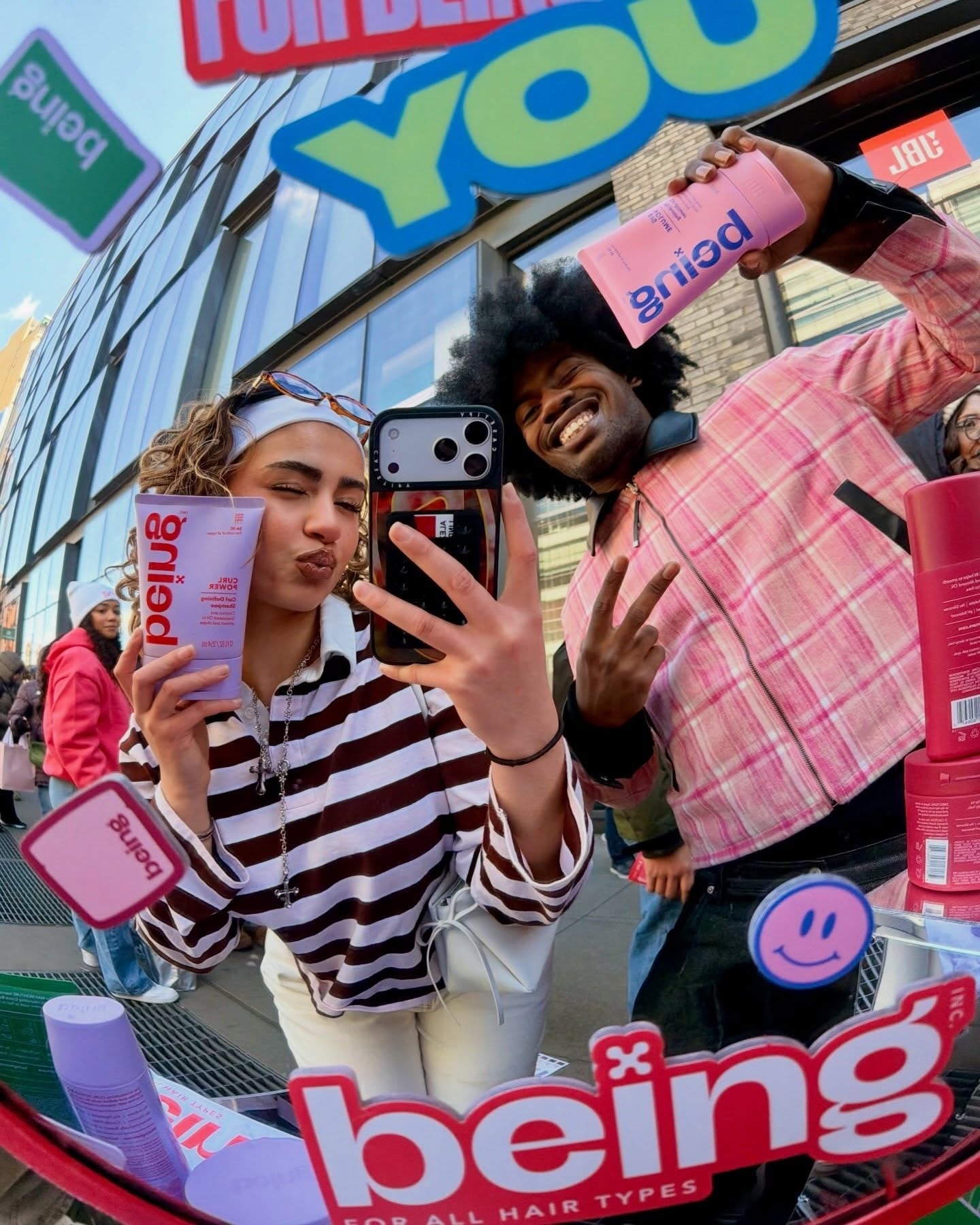
The introductions from the Zuru team, and the subsequent success of Monday, helped Lupton gain retailers’ trust. When Walmart approached her to co-create something new as an exclusive, it resulted in inclusive hair care brand Being. The brand launched in 2024, and was Walmart’s number one hair label for ages 18 to 45 by 2025. Being has since expanded to Target, Ulta Beauty and Amazon, is sold in 20 countries and forecasts retail sales of over $100 million.
Retail connections have helped these brands scale fast. But so has the expertise of Lupton, who seems to know exactly what young consumers want
Mowbray said the rest of Zuru has taken lots of insights from the way Lupton runs her marketing and content strategies. Her team, based in Auckland, Sydney, London, Toronto, Shenzhen and Shanghai — purpose-built offices in Minneapolis, near Target, and Bentonville, Arkansas, near Walmart — is mostly Millennials and Gen Z.
“We’re building a team who understands this demographic because they are this demographic. They know what’s cool,” Lupton said.
There are also, it turns out, lessons to be learned in the Gen Z beauty trade from toymaking. Mowbray said, “you really build this muscle for innovation, and there are quite a few parallels to beauty in terms of trends and innovations coming quickly, and the speed at which you need to react.”
Daise was inspired, in part, by an observation that kids aged eight to 11 were playing with fewer toys. “‘We wondered what they were now purchasing, and it was beauty,” Lupton says. Daise has followed Monday’s footsteps in terms of trajectory and is on track to hit $300 million in retail sales by its second year, a number it took Monday five years to achieve. The brand’s scents and packaging are irresistible to young shoppers, said Simon Comins, the chief operating officer of Superdrug.
But not all brands have worked out. Laura Polko Los Angeles, a Target-exclusive brand, was launched by Zuru in collaboration with the eponymous hair stylist in Dec. 2024, but the company transferred it back to Polko six months later. “The brand just didn’t resonate, and you can’t keep trying when something isn’t landing,” said Lupton. (Laura Polko did not return a request for comment.)
Persistent social media demand for Laura Polko’s products, evidenced by the fresh comments on the brand’s dormant Instagram, indicates at least some resonance. But the same can’t be said for other projects, like the under-$10 clean body care line Osana Naturals and a masstige fragranced hand and body brand Chalon Paris, which came and went without fanfare.
ADVERTISEMENT
Osana Naturals tested well in New Zealand, where the company pilots many of its brands. “We quickly scale the winners and go on to launch them globally,” Mowbray said. But the brand failed overseas in the US, where its brown bottles read more pedestrianly medicinal than aspirationally earthy.
Mowbray isn’t interested in dwelling on the past. “We’re fast to kill off anything that doesn’t perform,” he said.
Right now, Lupton is closer to being a challenger to Maesa, the global beauty brand operator-cum-incubator that owns brands like Kristen Ess, Fine’ry, Being Frenshe and Hairitage, offering a similar more-for-less value proposition. Unlike Maesa, however, Lupton began with Zuru Group’s massive in-house Chinese manufacturing capabilities.
Zuru beauty’s “repeatable formula,” of incubating brands without making acquisitions, sets it apart from competitors, said Rousselle, including conglomerates who have tried and failed to incubate in-house.
And as they scale to fit their L’Oréal ambitions, Zuru may also have to make acquisitions of its own, exposing it to the same uncertainties that have doomed similar ventures and curtailed companies’ growth.
Likewise, as competition intensifies, Lupton will be challenged to build for longevity over virality. Zuru beauty’s brands have a way to go to establish hero product pillars, the way L’Oréal has done with longstanding pillars like Elnett or Revitalift, and newer additions like the Lumi franchise.
For the medium-term, Lupton’s plan is to go wide by seeding brands in new beauty categories; after its fragrance line launches in 2027, Zuru has a makeup label waiting to launch.
“We’re constantly seeing gaps in the market and the aisles, and [figuring out] how we turn those insights into brands,” Lupton said.
Sign up to The Business of Beauty newsletter, your complimentary, must-read source for the day’s most important beauty and wellness news and analysis.
Loading recommended reads…
As extreme weather and nature loss threaten fashion’s access to key raw materials, the industry is looking for ways to shore up supply chains. Early results show it’s possible to build resilience, but also how difficult it is to scale effective action.
The Italian luxury sneaker brand, on pace to reach €150 million in sales this year, is tapping former Golden Goose chief consumer officer Danilo Piarulli as it ramps up direct-to-consumer growth across the US and Asia.
As the tension around influencers and sports culture reaches a new boiling point, brands should reevaluate their partnerships with content creators to prioritise authenticity over reach.
At Hong Kong-based trade show Centrestage, fashion designer and visual artist Kit Wan joined BoF on stage to discuss his path to success, what sets his business apart and the digital-first future of fashion.