Agenda-setting intelligence, analysis and advice for the global fashion community.
Agenda-setting intelligence, analysis and advice for the global fashion community.

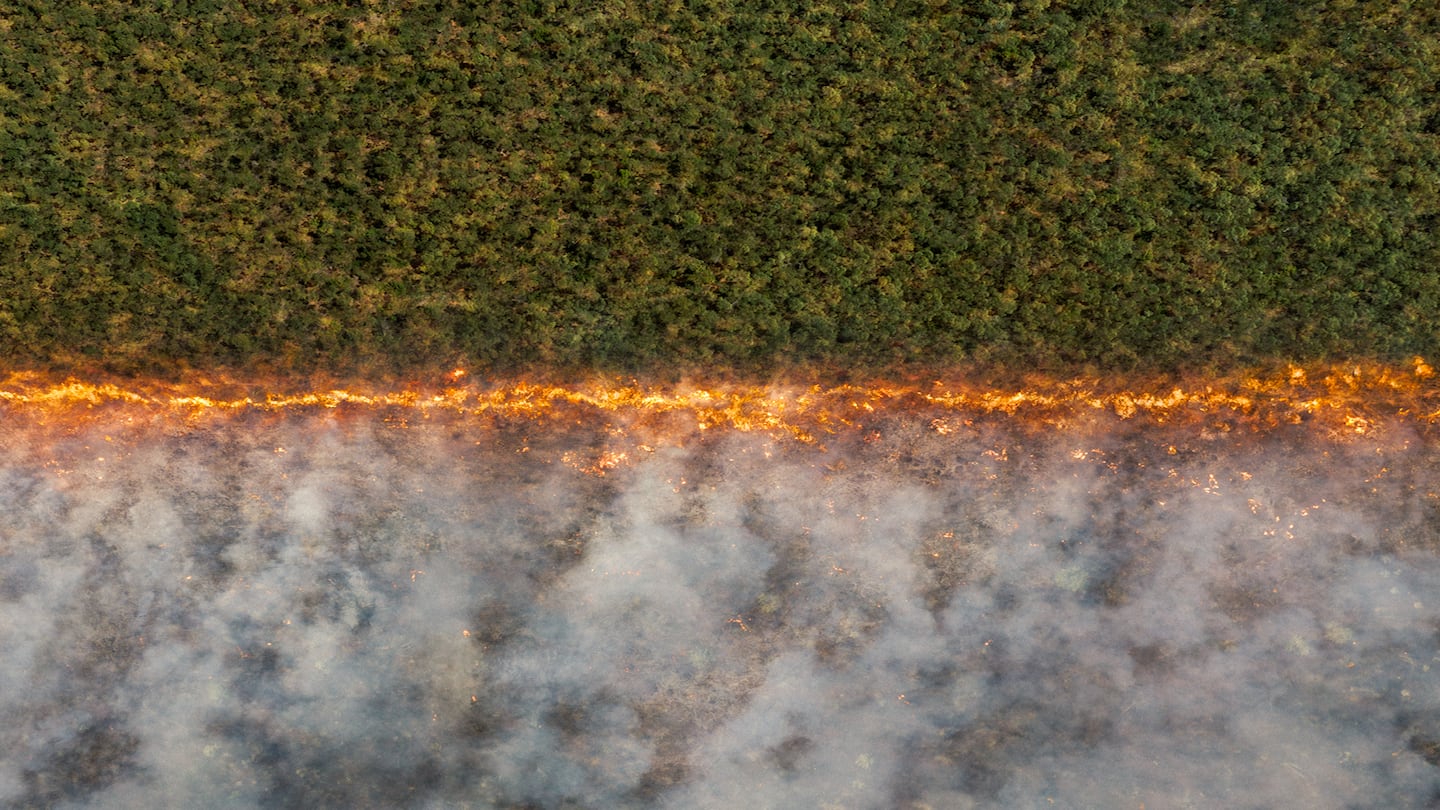
The weather this year has been apocalyptic and fashion’s supply chains are feeling the strain.
Around the world, a destructive mix of climate change and El Niño weather patterns has pushed up temperatures, causing droughts, wildfires and severe floods that threatened crops and livestock. That’s a growing problem for brands that rely on natural materials like cotton, wool, leather and cashmere. Worse, long-term damage to the natural environment caused by deforestation and intensive agricultural practices has made many of the farms that sit at the start of fashion’s supply chains all the more susceptible to weather extremes.
It’s why, even as some of the fashion industry has pulled back on climate commitments, many of the sector’s biggest companies — from LVMH and Kering to H&M and Primark — are doubling down on efforts to protect and restore nature.
“What we’re seeing is a real shift in the business risk agenda,” said Alison Ward, chief executive of CottonConnect, a social enterprise that works with brands and farmers to build more resilient cotton supply chains. Climate might no longer rank as highly on corporate priority lists, she said, but supply-chain continuity sure does.
ADVERTISEMENT
Faced with increasingly vulnerable raw-material supply, mounting regulation and more sophisticated frameworks to measure impact and direct action, more in the industry are beginning to act. The Fashion Pact, one of the industry’s flagship sustainability initiatives, reported nearly two thirds of its members had formal plans in place to address nature risks in 2024, up from just 21 percent in 2021. The Science Based Targets Network (SBTN), an organisation which helps companies measure their environmental impact and set rigorous reduction targets, has seen the number of fashion companies engaging with its nature programme grow from three fashion businesses — H&M, Kering and LVMH — to 17 since it launched in 2023.
“If you want to continue your business, you have to pay attention to nature; it’s as basic as that,” said Marie-Claire Daveu, chief sustainability officer at Kering. “It’s about ensuring we will have the right quantity of raw materials in the future, but also at the quality needed.”
Fashion began looking at nature risks in earnest about a decade ago, propelled by concerns about supply-chain resilience and incoming regulation.
Initially companies’ goals were broad, but over the years, increasingly sophisticated measures of risk and impact, improved supply-chain visibility and the inescapable rise of climate extremes have helped drive more concrete actions and urgency.
“There was a period where a lot of people were focusing on strategy,” said conservation consultancy Biodiversify’s co-founder Dr. Mike Burgass. “Then we went through to a more [of a] compliance kind of mindset.” Today, “there’s almost like a greater need to act,” with companies streamlining the strategy-building process in an effort to get to implementation faster, he said.
Severe floods that hit Pakistan in 2022 were one wake-up call for the industry. They devastated the cotton crop in the country, one of the world’s biggest producers. Brands and industry organisations that had invested in supply-chain visibility were better able to adapt. CottonConnect, for instance, was able to quickly establish whether farmers participating in its training and regenerative programmes were affected because it knew where they were located.
Emerging benchmarking and measurement frameworks developed by international climate initiatives, like the Science Based Targets Network and the Nature Positive Initiative, have also helped brands determine clearer ways to identify where their impacts and dependencies lie and determine where action is most needed.
H&M, for instance, found that previous climate assessments didn’t provide the location-specific sourcing information it needed to identify where its footprint was biggest and its risks were largest, critical details to understand where and how to act effectively. SBTN’s methodology helped it identify cotton in central India and wool in South Africa as priorities.
ADVERTISEMENT
Now the retailer is developing bespoke approaches for the two regions and materials in partnership with WWF. It’s also preparing a transition plan, setting out how it intends to tackle nature and water challenges across its supply chain.
Companies that delay addressing climate, biodiversity and resource scarcity will ultimately pay more to respond later, Kering’s Daveu said. “The investment [in nature] is directly important for your profit and loss.”
Brands that took early action say they are already seeing benefits from projects to protect and restore nature. Efforts to shift to regenerative agriculture and promote soil conservation have prevented supply disruptions and helped ensure continuous access to raw materials in the quality and quantity needed, they said.
For instance, LVMH’s environmental director Hélène Valade said regenerative agricultural practices the luxury giant has deployed in vineyards and jasmine fields in southern France have already improved the soil’s ability to absorb water. That meant the crops were more resilient to drought during record temperatures in Europe this summer. Similar efforts have paid off across the company’s supply chain, from cotton fields in Turkey to nomadic cashmere-goat-herding communities in Mongolia, Valade said.
Her team is now working with the luxury giant’s finance department to demonstrate the value of such efforts. Translating positive impact into concrete numbers can help mobilise more action “to transform the business model,” she added.
Independent luxury label Another Tomorrow also has first-hand experience of how business-critical extreme weather can prove. A few years ago, unusually heavy rainfall altered the quality of wool from one of its farms so dramatically, it no longer met the company’s technical specifications. The experience prompted the brand to diversify its wool sourcing from roughly two farms to seven, according to founder and chief executive Vanessa Barboni Hallik. It signed multi-year offtake agreements to secure supply, giving farmers revenue certainty that helped them invest, in turn, in resiliency measures.
But while efforts to protect nature are growing, approaches vary widely in their effectiveness. There is no one-size-fits-all solution for nature and the challenge is fiendishly complex.
“Each different material requires a completely different approach,” said Dr. Sam Sinclair, co-founder of Biodiversify. What works for cotton in India may have little relevance to leather in Europe and Brazil or wool in South Africa. Different climates, ecosystems and agricultural conditions require locally-tailored interventions, ranging from regenerative agriculture and reduced water consumption to preventing deforestation.
ADVERTISEMENT
Moreover, even seemingly simple interventions can be complicated to deploy. Adapting cotton production to climate risks can mean planting on slightly raised soil to reduce exposure to flooding, improving water storage or using mulch to protect soils. Some of these practices, now grouped under regenerative agriculture, are adaptations of techniques local farmers have used for generations. But implementing such measures requires investment and time.
Some brands have put in place long-term contracts and premium pricing to help support farmers in changing their practices. But scale is a major challenge. Most brands don’t have direct relationships with their raw-material suppliers, or even visibility into where these supplies come from. And premium pricing is difficult when margins are tight.
“Many fashion brands are not used to thinking this way and the system makes it very difficult to meaningfully do so, beyond pilot projects,” Biodiversify’s Burgass said.
Growing regulation is pushing companies to tackle some of these blind spots, but that has also prompted some to see nature as “just a compliance issue, rather than… an existential issue,” said Sinclair. That can be a problem, because compliance does not necessarily translate into effective nature protection. For instance, many companies simply rely on certification schemes, which can vary significantly in quality and impact.
Companies need to think about what their agricultural supply chains will look like five or 10 years from now, rather than looking at nature programmes through the same short-term lens as quarterly sales, said CottonConnect’s Ward. And nature strategies need to account for the people working in the fields too, she added.
Temperatures in parts of India and Pakistan can now exceed 50°C at their peak, making outdoor work dangerous, or even fatal. “That means a strategy designed to secure cotton supply while failing to account for the workers and communities responsible for producing it is unlikely to provide much resilience at all,” she said.
Kering, LVMH and H&M are among a handful of companies pioneering a new science-based framework to measure, disclose and address their impact on nature.
The hottest chatter in Paris and Milan this week has been, well, the heat itself.
Many brands have treated the climate crisis as a useful marketing tool, while viewing the impact to the bottom line as a distant threat. That approach is increasingly untenable, experts warn.

Shayeza Walid is Senior Editorial Associate covering Sustainability at The Business of Fashion. She reports on fashion's environmental impact, climate accountability, supply chain and labour issues. Based in London, she also contributes to BoF's Global Markets and UK coverage.
Loading recommended reads…
In this week’s High Margin, a search for images that cut through our visual fatigue — with leads from M/M Paris, Ferdinando Verderi and stylist Emilie Kareh. Plus: Tod’s designer exit; Burberry’s resilient sales.
The producer price index rose 6.5% from October 2025, an acceleration from the prior month, according to Bureau of Labor Statistics data out Friday. On a monthly basis, the PPI increased 0.3%.
The creative director and strategist joins Imran Amed on The BoF Podcast to discuss the evolution of his career, the realities of shaping artist narratives and why long-term collaboration outperforms short-term marketing.
The former Nvidia CEO was central to an AI boom that has propelled the US stock market and fueled the country’s unmatched luxury spending. After his exit, nobody is sure what happens next.