Agenda-setting intelligence, analysis and advice for the global fashion community.
Agenda-setting intelligence, analysis and advice for the global fashion community.

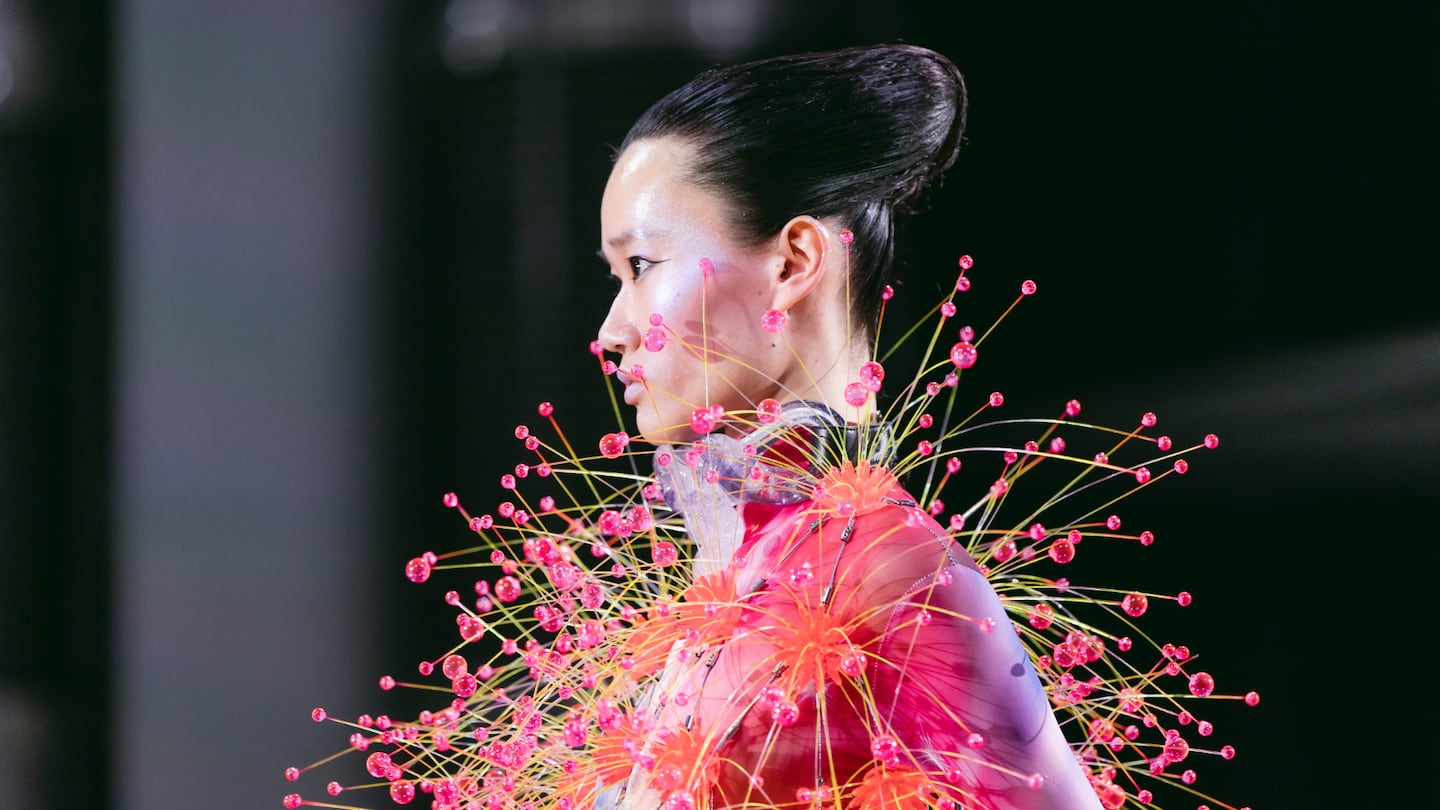
HONG KONG — On September 2, Centrestage — the annual fashion trade show held in Hong Kong — hosted its pivotal “Elites” runway show, a solo presentation dedicated to Kit Wan Studios, the label founded by fashion designer and visual artist Kit Wan, who presented a new collection.
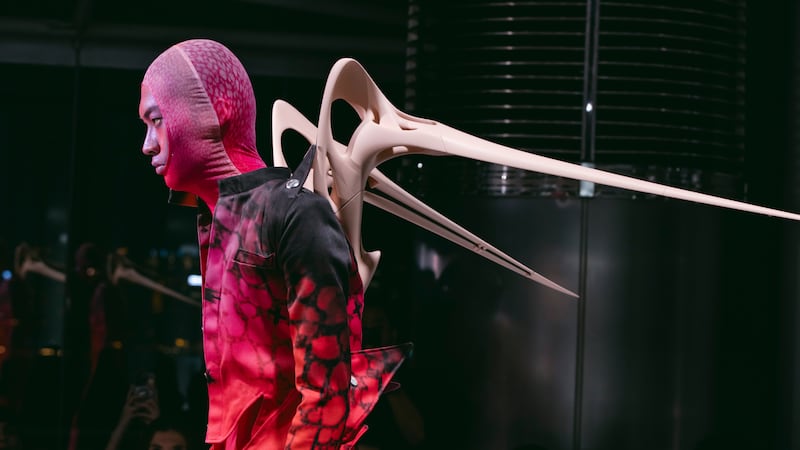
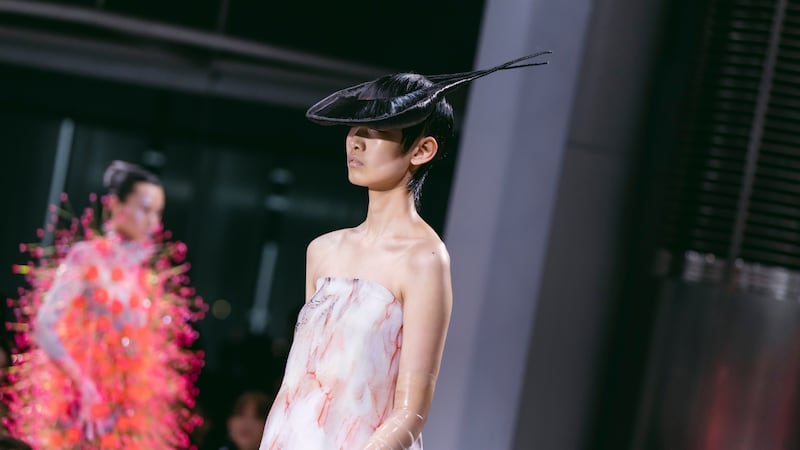
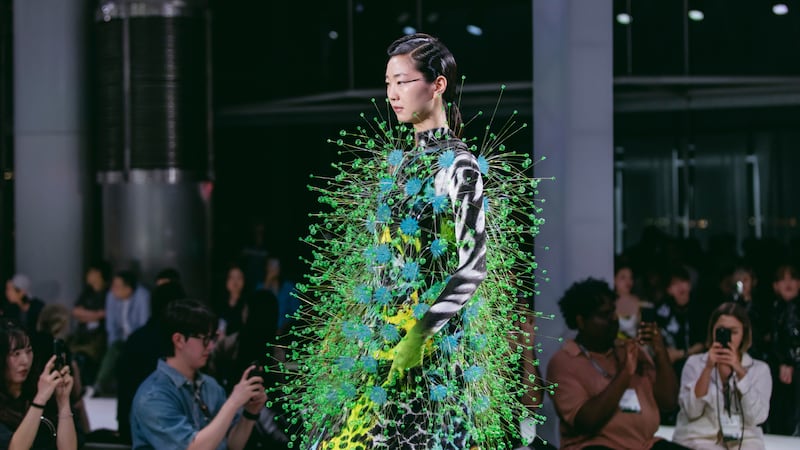
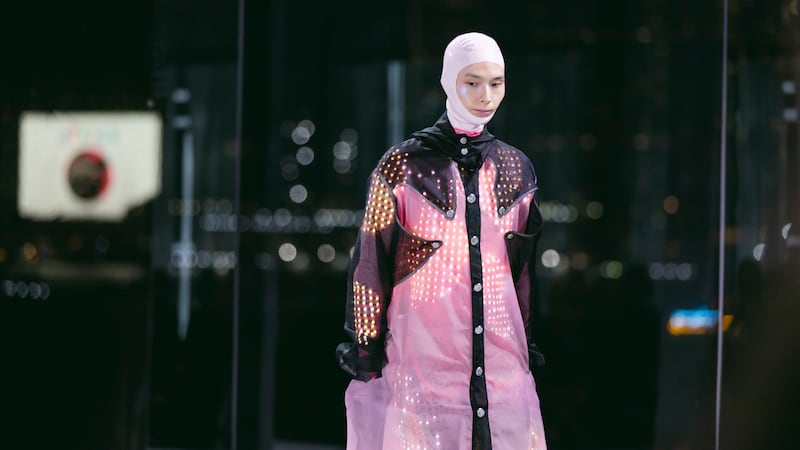
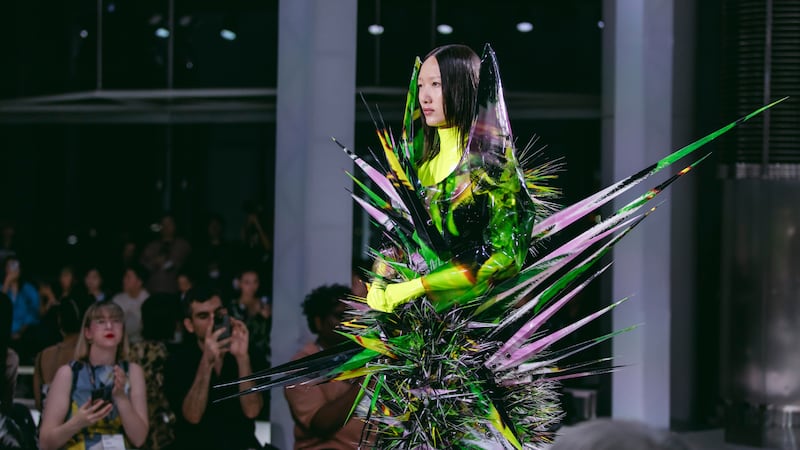
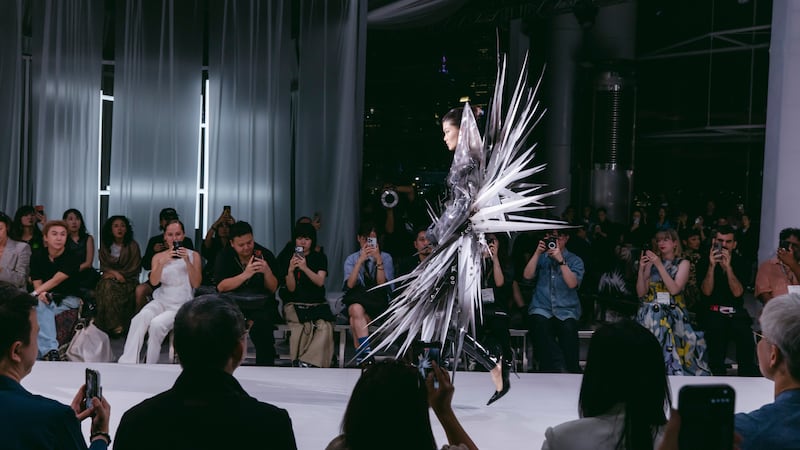
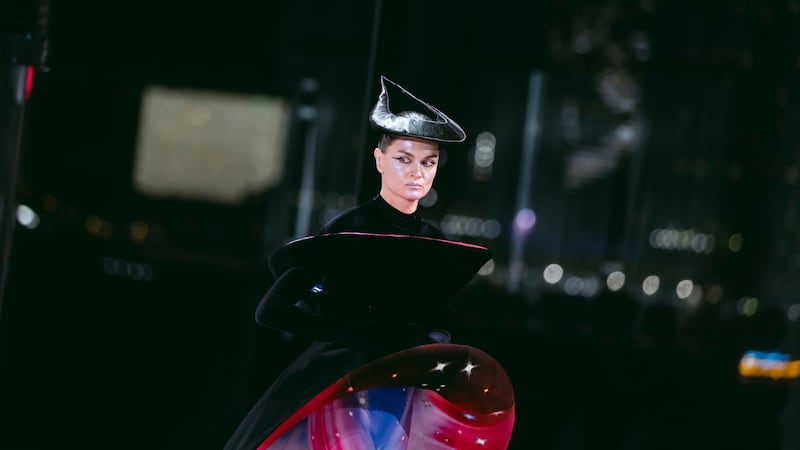
Wan’s futuristic designs featured elements drawn from the natural world, such as spikes, flowers and wings — alongside sharper, punk detailing. Saucer skirts and dresses reminiscent of Space Age designers Pierre Cardin and André Courrèges were complemented by pink galaxy prints across the collection. During the finale, models walked to a slow-paced, robotic cover of ABBA’s “Dancing Queen.” The audience included actors Hedwig Tam, Fish Liew and Lo Chun Yip, as well as Canto-pop musicians On Chan and MC.
Throughout the event, creatives from Hong Kong and elsewhere showcased their work to a record-breaking crowd of over 12,000 buyers as well as industry representatives, media and curious members of the local public. As a flagship programme of Hong Kong Fashion Fest, Centrestage is organised by the Hong Kong Trade Development Council and hosted at the Hong Kong Convention and Exhibition Centre, with sponsorship from the Cultural and Creative Industries Development Agency of the Government of the Hong Kong Special Administrative Region.
For Hong Kong’s own designers, such as Kit Wan, the city’s distinct creative identity — long positioned between mainland China and the West — is becoming an asset. Indeed, Chinese brands are expanding into international markets and domestic shoppers are favouring homegrown labels over legacy European luxury houses.
However, building an independent label from Hong Kong can mean competing without the established infrastructure and institutional support available to designers in New York, London, Milan and Paris. Several Hong Kong-born designers have taken this path before — BoF 500 member Robert Wun, who left the city to build his namesake label in London, showed at Paris Haute Couture week, then dropped wholesale in favour of a bespoke business model. It’s a trade-off more founders worldwide are making, choosing longevity and creative control over scale.
Kit Wan Studios has taken a similar approach, building its reputation on custom-made pieces for musicians and performers. Wan, who trained at Hong Kong Polytechnic University before studying Fine Art and Fashion Design at Oslo National Academy of the Arts, launched the brand in 2018. In Norway, the National Museum acquired a piece from his graduate collection for its permanent collection, where it sits alongside works by painters Edvard Munch, Claude Monet, Paul Gauguin and Pablo Picasso.
Since returning to Hong Kong to build his own studio, Wan has garnered attention as an emerging design talent and was this year’s headliner at Centrestage.
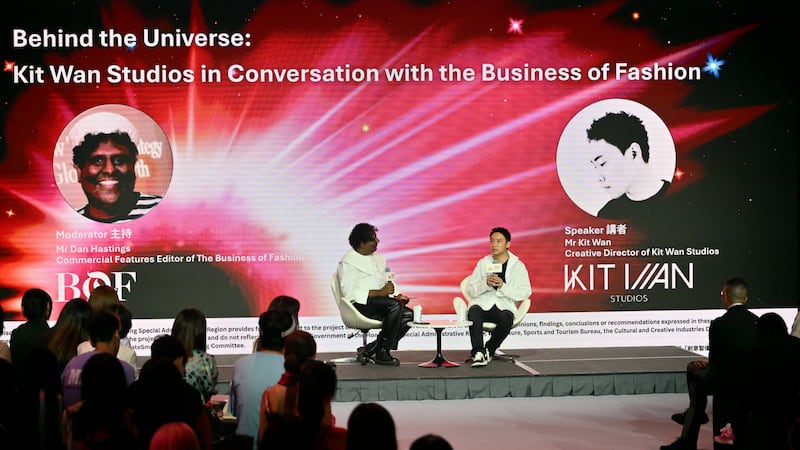
Two days after his show, Kit Wan sat down with BoF’s commercial features editor Dan Hastings for a live conversation in front of an audience of industry professionals, students and creatives. The pair discussed Wan’s path from Hong Kong to Oslo and back and how Kit Wan Studios operates outside the traditional rules of fashion business.
Now, BoF shares key insights from the discussion.
In addition to creating custom performance looks for musicians such as Hins Cheung, Jody Chiang, Jace Chan, and Jeremy Lee, Kit Wan Studios collaborates with celebrity stylist Sam Spector and other unexpected partners, including consumer technology specialist Lenovo. Wan said he chose to build his own path as a multidisciplinary artist — an approach which has lent itself to a wide variety of creative work.
“When I moved back to Hong Kong, I did not see myself in the market,” he said. “What I did, especially in the beginning, was very niche. It wasn’t commercial at all.” Today, his company is a creative studio that includes custom clothing, art projects, theatre collaborations and commercial partnerships.
“Fashion design is just one of my mediums to express my creativity — [it’s the same for] the team at my studio. We don’t really confine ourselves to a box or to a certain category,” he said.
Further collaborations are launching soon, including a tie-up with handbag designer Gabriele Corto Moltedo — son of Vittorio and Laura Moltedo, founders of Bottega Veneta — and with Elinor Nystedt, an artistic director and founder of Emotional Landscape, a brand specialising in glass jewellery and artefacts made using traditional Swedish techniques.
This business model allows Wan and his team to generate steady cash flow from each commissioned project, while traditional emerging fashion designers must often rely on wholesale markdowns.
“Creative people are not always that rational,” said Wan. “We are all emotional animals, and we use our emotions as a driving force for our creative work.”
When it comes to fashion as a business, however, working with a roster of celebrities and concert productions has taught him to adjust his mindset in favour of pragmatism. For Wan, it has been important to learn to compromise.
To this end, Wan advises balancing creativity with commercial realism. “If you want 100 percent freedom in your work, then you must not have any commercial expectations for the result,” he said.
For each project, Wan first defines the objective, the message it needs to communicate and the audience it needs to reach. From there, compromise becomes less a limitation and more a way to get as close as possible to the client’s vision and needs.
0 of 7
“You need to have the mentality to go big or go home. Be it a small or big project, you need that persistence to push through,” said Wan when offering advice to young designers and students in the room.
Wan shared a story exemplifying this approach. As the costume designer for “Crawl Crawl Crawl,” a 12-person opera performance piece, he spent 10 hours in a cold swimming pool in Aarhus, Denmark, developing and testing his own technique using water-sensitive pigment.
As the performers entered the pool, their white garments slowly dissolved and turned muddy. Wan applied pigments to fabric with rubbish prints. From above and from the sides, the audience could see these humans in the pool, polluting the clear water.
“I came across a pigment manufacturer in Europe that produces water-reactive and temperature-reactive pigments,” he said. “It didn’t work in the beginning, but I kept pushing them, calling and emailing, saying, ‘I just need to make this work.’ Eventually, they said, ‘Okay, we can try if you take the material and do the experiments yourself.’”
To him, being close to the material and craftsmanship is another key creative approach he encourages all aspiring artists to follow.
“Part of me is still used to being outside — on the streets or in nature — and getting my hands dirty,” he said. “When you see a coffee table, you shouldn’t just look at an image of it — you need to see it in real life, feel it and notice its reflections and texture. You can’t feel those tangible aspects through an image on Instagram or social media. Those first-hand experiences give depth to our work, rather than creating a polished facade without a human element.”
The “Mutant // Mythology” collection presented at Centrestage drew inspiration from a mid-1990s film set in 2035. Models and audience members were immersed in a “laboratory setting” — with venue staff even donning white lab coats for the show.
Indeed, futurism clearly fascinates Kit Wan and provided a fitting conclusion to the fireside chat. The discussion turned to what the next generation of fashion consumers might be wearing two decades from now — in Wan’s case, his 10-year-old nephew. “Being a huge sci-fi fan, I hope we will have flying cars by that time,” Wan said. “But for fashion, I hope it involves AI and digital environments.”
Wan envisages a future in which physical garments become less central as consumers increasingly inhabit digital spaces, from video games to virtual environments, where the colour and patterns of an outfit could be changed with a click. “I hope technology reaches that level when he’s my age, and hopefully I’ll still get to enjoy a bit of it from my retirement home!”
This is a sponsored feature paid for by Centrestage as part of a BoF partnership.
As the region’s creative and design scene drives economic growth, BoF sits down with the next generation of talent in Hong Kong to understand how they are navigating its growing presence on the global stage.
Hong Kong’s fashion and luxury sector is preparing for an invigoration — with the recently established Hong Kong Fashion Fest designed to position Hong Kong as a premier fashion and design hub in Asia. At the Asia Fashion Leaders Forum in Hong Kong, BoF’s president Nick Blunden sat down with regional and global business leaders to speak about the opportunity and market reality of the region.
Loading recommended reads…
At Tom Ford, The Row, Dries Van Noten and more, the clothes spoke volumes without the need for high concept, reports Angelo Flaccavento.
The Kering CEO also denied any interest in buying a minority stake in Armani, adding that the group was focusing on other challenges.
Nearly two years after investigations exposed labour abuses in Italy’s luxury supply chain, brands have strengthened oversight and increased audits. But questions around pricing pressure, subcontracting and accountability remain. BoF global markets editor Sarah Kent joins The Debrief to unpack what has changed — and what hasn’t.
The new initiative will explore how the industry can take responsibility for the millions of used and unsold garments exported to secondhand markets around the world.