Agenda-setting intelligence, analysis and advice for the global fashion community.
Agenda-setting intelligence, analysis and advice for the global fashion community.
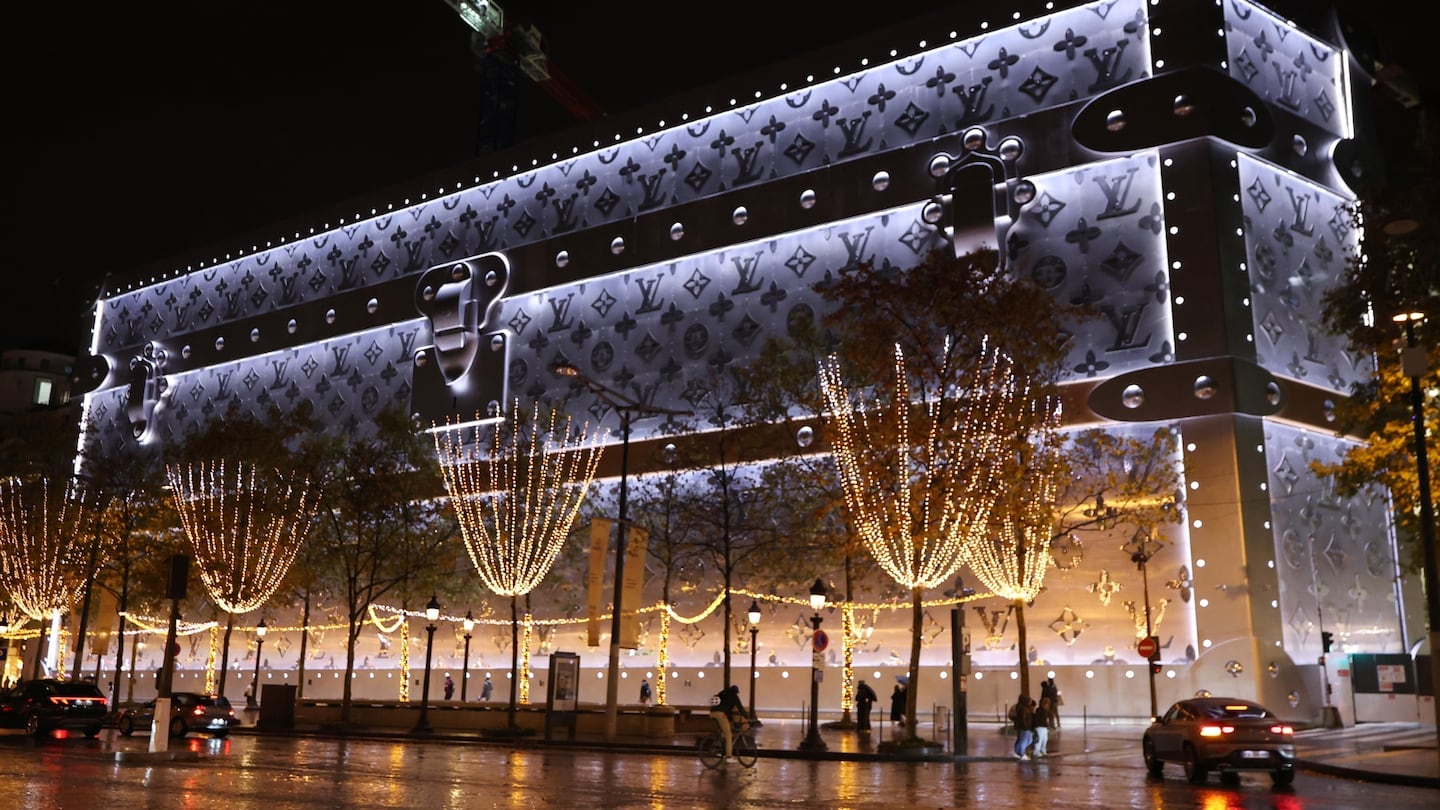
PARIS — The giant silver trunk lining a block of the Champs-Élysées continues to serve as a very expensive advertisement: Six years after Louis Vuitton owner LVMH took over the lease for the 20,000-square-metre complex, the site remains under construction behind its LV-monogrammed hoarding.
First earmarked for offices for stablemate Dior, then a Louis Vuitton mega-store and hotel, the pharaonic worksite has slipped roughly two years behind schedule even as ambitions for the push into hospitality were put on ice. When the scaffolding comes down — sometime late next year, the company has said — it will be a key opportunity for LVMH to outline its plans for Louis Vuitton, which is navigating its first prolonged downturn in sales in over 35 years amid a lengthy management transition.
Shares in LVMH have fallen 40 percent so far this year as the conglomerate struggles to shake off the slowdown in global luxury demand. Beauty giant L’Oréal pulled ahead of LVMH in September to become France’s most valuable listed company. Controlling shareholder Bernard Arnault and his family — estimated to be the wealthiest people on Earth during much of the luxury industry’s post-pandemic boom — have fallen to number 17 on Forbes’ list of the world’s biggest fortunes.
While LVMH does not break out sales for individual brands, one thing is clear: the group’s recovery depends on Louis Vuitton, which is estimated to generate more than half of LVMH’s operating profit.
ADVERTISEMENT
For 35 years following Arnault’s acquisition of LVMH, its flagship brand Louis Vuitton embodied everything that made the French luxury sector seem unassailable.
When the economy was booming, the handbag- and luggage-maker was flush with new customers. When markets slowed, the world’s biggest and most profitable brand deployed its unrivalled budgets for marketing and real estate to steal market share from competitors. Its monogrammed canvas bags and belts sold for unthinkable mark-ups, with gross margins on some styles reportedly exceeding 90 percent. Its logo-driven ethos fuelled a virtuous circle: every product sold doubled as an advertisement, reaffirming the brand’s status as luxury’s most visible, must-have name. High prices, tightly controlled distribution and heavy investment in brand image helped keep Vuitton from becoming overexposed.
Growth continued through the bursting of the dot-com bubble and 9/11 in the early 2000s, as well as during the 2008-2009 financial crisis. Following 2020’s pandemic lockdowns, Louis Vuitton surged back to double-digit growth in just a few months.
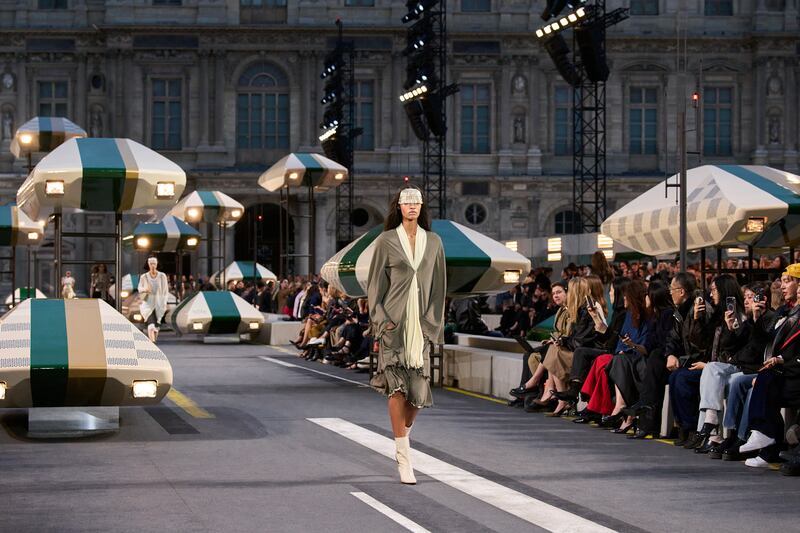
But over the past few years, Vuitton’s magic formula has come under pressure.
Vuitton’s annual sales fell in 2024 and again in 2025. In 2026, sales have continued to slide even as rivals including Hermès, Chanel, Prada Group and Moncler grew briskly. Goldman Sachs expects a third consecutive decline in 2026, with sales down 5 percent to €19.5 billion, ahead of a return to modest growth 2 percent next year.
At the current rate, Chanel is likely to surge past Louis Vuitton to become the world’s biggest luxury brand next year.
That shift is enough to prompt some serious soul-searching: Whether it was opening the world’s biggest boutiques — including a megastore and exhibition space shaped like a steamer ship in Shanghai — tapping the world’s biggest designers and celebrity ambassadors, staging the world’s splashiest and most expensive marketing spectacles or acquiring the 1,758-carat Sewelô diamond to give a communications boost to its high jewellery division, “biggest is best” has long been a pillar of Vuitton’s brand platform.
To some observers, Vuitton’s slowdown is hardly existential. After years of rapid growth — doubling revenue from €10 billion in 2018 to more than €20 billion in 2022 — the brand needed time to cool off as customers digest price hikes and refocus spending on experiential luxuries like travel and restaurants that were put on hold during the pandemic. Like the rest of the luxury sector, Vuitton is also navigating elevated global inflation, economic gloom in China (long its most reliable growth market) and geopolitical crises in the Middle East.
ADVERTISEMENT
If revenues have pulled back slightly from highs over €20 billion in 2022 and 2023, they have nonetheless remained resilient compared to the likes of Gucci, whose sales have nearly halved. And the brand continues to pull in an estimated operating profit margin of 48 percent, according to Goldman Sachs — by far the highest in the sector. Louis Vuitton only sells at full price, via its own retail stores.
But consumer behaviour is changing in ways that could require a deeper reset of the brand’s strategy. For years, Vuitton has leaned into fashion novelty to drive growth and cultural relevance: star designers Marc Jacobs and Nicolas Ghesquière ensured that its womenswear image and offer were the sharpest and most innovative on the market. In menswear, partnerships with Virgil Abloh and Pharrell Williams positioned the brand as an agitator in pop culture and deepened the brand’s engagement with a younger generation of luxury shoppers as well as a buoyant US market.
Beyond its fashion collections, a spate of far-flung initiatives anchored the brand in sports including tennis, football and Formula 1. Vuitton expanded into high watchmaking and high jewellery. Eyewear, sneakers, perfume and colour cosmetics offered lower entry prices. Designer collections were supplemented with art collaborations: tie-ups with Yayoi Kusama, Takashi Murakami, Jeff Koons, Keith Haring Foundation and more. The brand also branched out into photo books, airport lounges, chocolate shops and cafés.
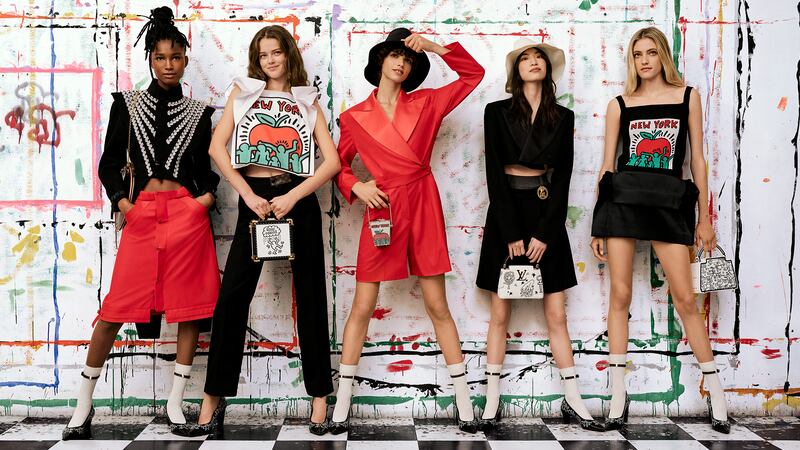
While those initiatives have all served to reaffirm Louis Vuitton’s stature as the world’s biggest and most visible luxury brand, they have at times distracted from the brand’s efforts to activate its DNA in high-end travel: an emotional and universally aspirational axis of communications where Vuitton’s history as a trunkmaker gives it unrivalled credibility.
“The biggest issue at Louis Vuitton that is Vuitton-specific boils down to brand positioning. Eighteen months ago you had a wide variety of fashion-driven initiatives — campaigns like the Murakami collaboration with Zendaya that were very colourful, kind of ‘cheap and cheerful’ in a way that generated comments about what was really appropriate for a luxury brand,” Goldman Sachs analyst Erwan Rambourg said.
The recent success of Chanel has shown that a focused, carefully managed refresh of communications and design still has the power to reinvigorate demand for carryovers and new products alike.
But identifying a formula for opening a new growth cycle — and a leader capable of realising that vision — has turned into a lengthy process. Despite three years of falling sales, the brand has mostly sat out the sweeping changes to the industry’s creative and executive ranks.
Sources say Bernard Arnault is personally supervising the effort to relaunch Louis Vuitton. LVMH operatives are pushing the narrative that Pietro Beccari, Vuitton’s CEO since 2023, is “tired”. Others say the real concern is that the Italian manager’s tactics during previous tenures at Dior and Fendi — scaling brands with a rapid pace of spectacular marketing initiatives and an abundance of easy merch — are no longer seen as a fit for the group’s essential cash cow.
ADVERTISEMENT
“When you have a brand like this, either you can milk it or you can pamper and spoil it,” Rambourg said.
A deputy CEO, Damien Bertrand, was brought over from Loro Piana in June 2025 to support Beccari, who added supervision of LVMH’s Fashion Group (which houses brands including Celine, Loewe, Givenchy and Pucci) to his mandate. Bertrand was named to LVMH’s executive committee, a signal of the new role’s importance.
Industry sources say Bertrand is calling the shots on a variety of key topics. But a year and a half after his arrival, the group has yet to clarify the scope of the executives mandate.
Louis Vuitton declined to comment for this story.
Initiatives undertaken since Bertrand’s arrival include emphasising the “Trunk Collection” of easy-to-style, understated men’s products and an anniversary campaign featuring close-up photography of vintage monogram bags.
Vuitton’s 2026 holiday campaign, which is set in a train station and celebrates “the magic of reunions and the excitement of departure,” the brand said, puts the focus squarely on travel for year-end, but seems to confirm that the company is in a holding pattern: The initiatives feel almost deliberately conventional; hardly the opening salvo in a new cycle of communications and growth.
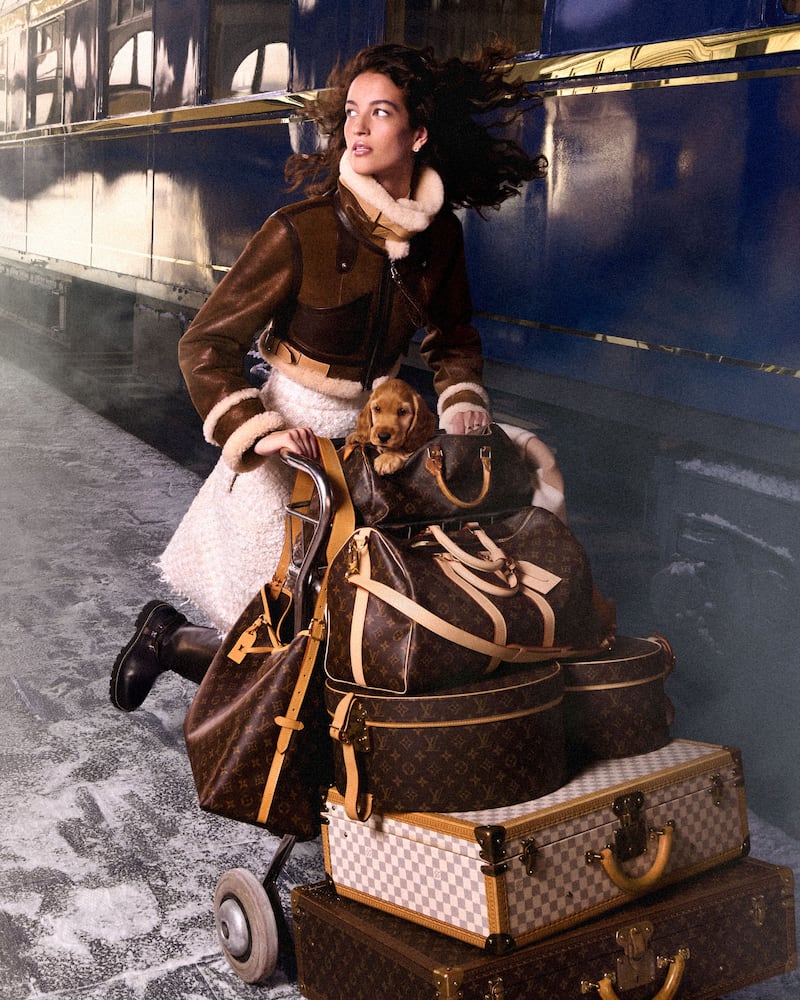
Whether safe bets on carryover styles and travel can satisfy the market’s hunger for perpetual growth remains an open question.
“When you move away from something that’s fashion driven, you can’t hope for tremendous growth, but you can have a business that’s more reliable. As a family [the Arnaults] should be happy with that trade-off,” Rambourg said.
Refocusing Vuitton’s message on travel will have limited impact if the brand’s storytelling can’t capture the emotional impact of previous cycles — whether it was the Annie Leibovitz-lensed “Core Values” travel series depicting major cultural figures in unguarded moments on the go; Nicolas Ghesquière’s groundbreaking cruise shows, set at architectural landmarks around the world; or Virgil Abloh’s archetypal hero’s journeys: over the rainbow, from boy to man, transcending race, social class and national borders. Suggesting travel by shooting a campaign in a train station or on a sailboat is not quite the same thing.
Then there’s the need to reset Vuitton’s product offer, which has grown far beyond its core of bestselling, ultra-established products like Keepall, Neverfull and Speedy bags. An army of merchandisers fill its boutiques with items that are colourful, expressive, new — perfect for an era when stores were flooded with new customers seeking eye-catching, novel designs. But that assortment may be less well suited to fashion’s current era, which is being driven by wealthy shoppers in more mature markets, who are increasingly hesitant to branch out beyond more reliable elements of style.
Punchy price hikes have also pushed some flagship items like the Capucines handbag — priced $8,150 for a medium calfskin model — into an increasingly tricky middle zone. Most middle-class luxury buyers can’t afford it, while wealthier ones often prefer to “trade up” to prestigious models from Hermès and Chanel.
The brand says it’s working to rebalance value for money by introducing more innovative, higher-quality designs at a wide range of price points. “We all agree that in order to counter a macro that is deteriorating, we need to increase and to sharpen self-help initiatives and bottom-up execution and that’s what we’re doing,” LVMH chief financial officer Cécile Cabanis said during the group’s third-quarter investor call.
“It’s really about finding the differentiated design to stay fresh. It’s about ensuring that functionality, materials are in tune with the zeitgeist… You need to keep in mind the desirability of your brand and make sure that what you do can ensure momentum for the next cycle. It takes time, but I don’t think there are a lot of shortcuts here,” Cabanis said.
The consensus among LVMH executives has long been that Louis Vuitton’s main problem isn’t its designers. Fashion makes up a small portion of the brand’s sales, even as it provides a halo to the broader assortment.
Yet refreshing the brand’s creative ranks has started to feel like a necessity as the brand loses market share to rivals like Chanel. Even leather goods stalwart Hermès has joined the sweeping shakeup of the luxury industry’s creative ranks: Grace Wales Bonner will debut as the brand’s menswear creative director in January.
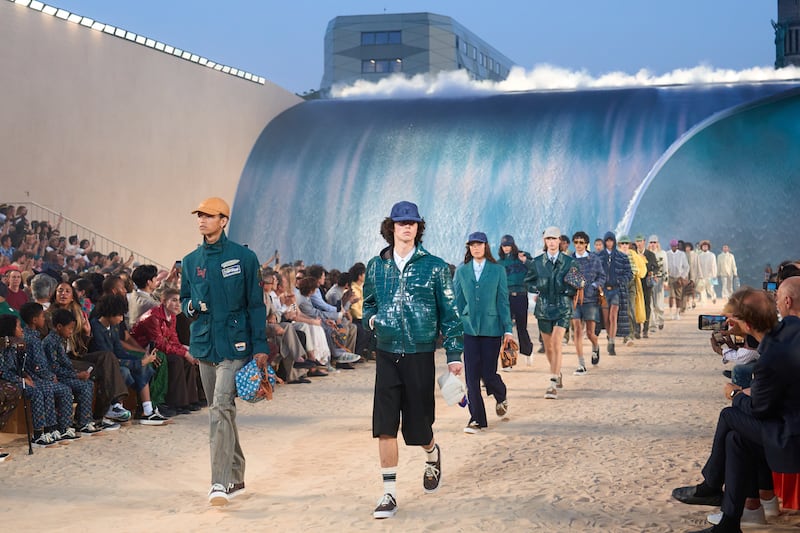
Louis Vuitton’s menswear creative director since 2023, Pharrell Williams, has helped to engineer a soft landing following the hype surrounding Virgil Abloh’s blockbuster tenure. Williams’ collections have fed demand for logo-driven, casual luxury while gradually transitioning the brand’s menswear offer to something more dressed up, dandyish and refined. But even if Vuitton’s experiment with putting a showman and cultural connector in the creative director seat hasn’t failed, the time may have come to reinvest the brand’s menswear with a more authoritative, innovative touch.
Nicolas Ghesquière, Louis Vuitton’s womenswear artistic director since 2013, is a trusted steward of the brand. While he’s created hit products like the Petite Malle, his tenure has mostly been focused on enhancing Vuitton’s aura of exclusivity by creating unexpected, sophisticated silhouettes and inspiring images to counterbalance its real-world ubiquity. The fact that the Ghesquière client is rarely spotted in the wild is kind of the point. But his runway image feels increasingly out of step with a fashion moment that prizes easy-to-wear, legible silhouettes. Even many fashion insiders have tired of deciphering Ghesquière’s experiments in fashion time travel, with collections often combining references to the Belle Époque, science fiction and niche couturiers of the 1970s and 1980s. Ghesquière’s current contract runs through 2028, according to a 2023 statement by the brand.
Scarce communication on Vuitton’s future plans has sent fashion’s rumour mill into overdrive.
In September, LVMH was quick to dismiss a report in Miss Tweed that the brand had been in touch with former Dior Homme and Celine designer Hedi Slimane about a role at Louis Vuitton. The rare public rebuttal has done little to quell chatter that Arnault would look to Slimane, long seen as fashion’s most bankable designer, to restore coherence to Louis Vuitton’s fragmented image and merchandising.
Another potential solution could come from within LVMH’s designer ranks: current Christian Dior creative director Jonathan Anderson, whose far-reaching relationships with directors, artists and actors would dovetail with Vuitton’s longstanding ambitions as a “cultural brand”. The conceptual bent of his ready-to-wear collections could make sense for a handbag giant where image-making — not putting saleable clothes on the runway — is top priority.
Free agents on the market include Anthony Vaccarello, whose laser-focused vision of Parisienne style helped power a decade of growth at Saint Laurent. But Vaccarello’s sexy, skimpy silhouettes have rarely resonated in the key Chinese market, and his persona as a fashion purist who refused to ever put a handbag on the Saint Laurent runway makes him an outside pick for the world’s biggest bag brand.
If Louis Vuitton has yet to determine its next destination, the brand is already reinforcing its bench with senior executives to helm the ship.
Hector Muelas, a former Apple executive who has held senior positions at LVMH’s Rimowa and Tiffany, joined Louis Vuitton earlier this month in a new role overseeing brand image and strategy. In September the company brought in a chief product officer for men’s categories, former Acqua di Parma CEO Giulio Bergamaschi. Another recent CEO-level recruit was Schiaparelli chief executive Delphine Bellini, who is joining Vuitton as managing director of the brand’s Champs-Élysées hub.
A Louis Vuitton spokesperson did not provide an opening date for the Champs-Élysées megastore. On the one hand, the day can’t come soon enough, as the site can finally start generating sales and give Vuitton an opportunity to clarify its strategy and identity.
On the other hand, a longer wait may be for the better: Many shops in the French capital remain boarded up after protests in October devolved into riots and looting. Civil unrest risks picking back up between now and a French presidential election next April, in which far-right and far-left parties are expected to make historic gains. A late 2027 opening would leave time for the dust to settle after a race that’s being positioned as an ultimate showdown between France’s haves and have-nots — an awkward time for a luxury megabrand to make a splash.
Disclosure: LVMH is part of a group of investors who, together, hold a minority interest in The Business of Fashion. All investors have signed shareholders’ documentation guaranteeing BoF’s complete editorial independence.
For LVMH and big bling to return to a more encouraging trajectory, China needs to show signs of improvement, writes Bloomberg’s Andrea Felsted.
A decline in fashion and leather goods sales underscores the industry’s struggle to reignite shopper enthusiasm.
Bernard Arnault reaffirmed his confidence in LVMH even as stagnant sales, a tumbling share price and questions over succession have dented its image. Can the world’s largest luxury group reclaim the narrative?
Robert Williams is Luxury Editor at The Business of Fashion. He is based in Paris and drives BoF’s coverage of the dynamic luxury fashion sector.
Loading recommended reads…
LVMH is struggling to map out a new cycle of growth at its biggest and most profitable brand amid changing tastes, macroeconomic headwinds and a leadership transition.
As growth becomes harder to capture, beauty brands are seeking new routes into international markets. Four Cosmoprof Worldwide Bologna exhibitors tell BoF how they use the trade show to build distribution networks, enter new markets and scale their businesses.
Consumer brands from Gap to Under Armour are increasingly turning to artificial intelligence to help set prices, hoping to reduce discounts to protect profit margins.
The breach allowed unauthorised access to certain data relating to the retailer. It’s the latest in a string of UK companies to be caught in cyberattacks.