Agenda-setting intelligence, analysis and advice for the global fashion community.
Agenda-setting intelligence, analysis and advice for the global fashion community.


Interviews and views on creativity and business in the world of luxury writ large — from fashion and watches to art, wellness, travel and more — from our chief luxury correspondent in Paris.
Subscribe to High Margin by Robert Williams: perspectives on creativity and business in the world of luxury.
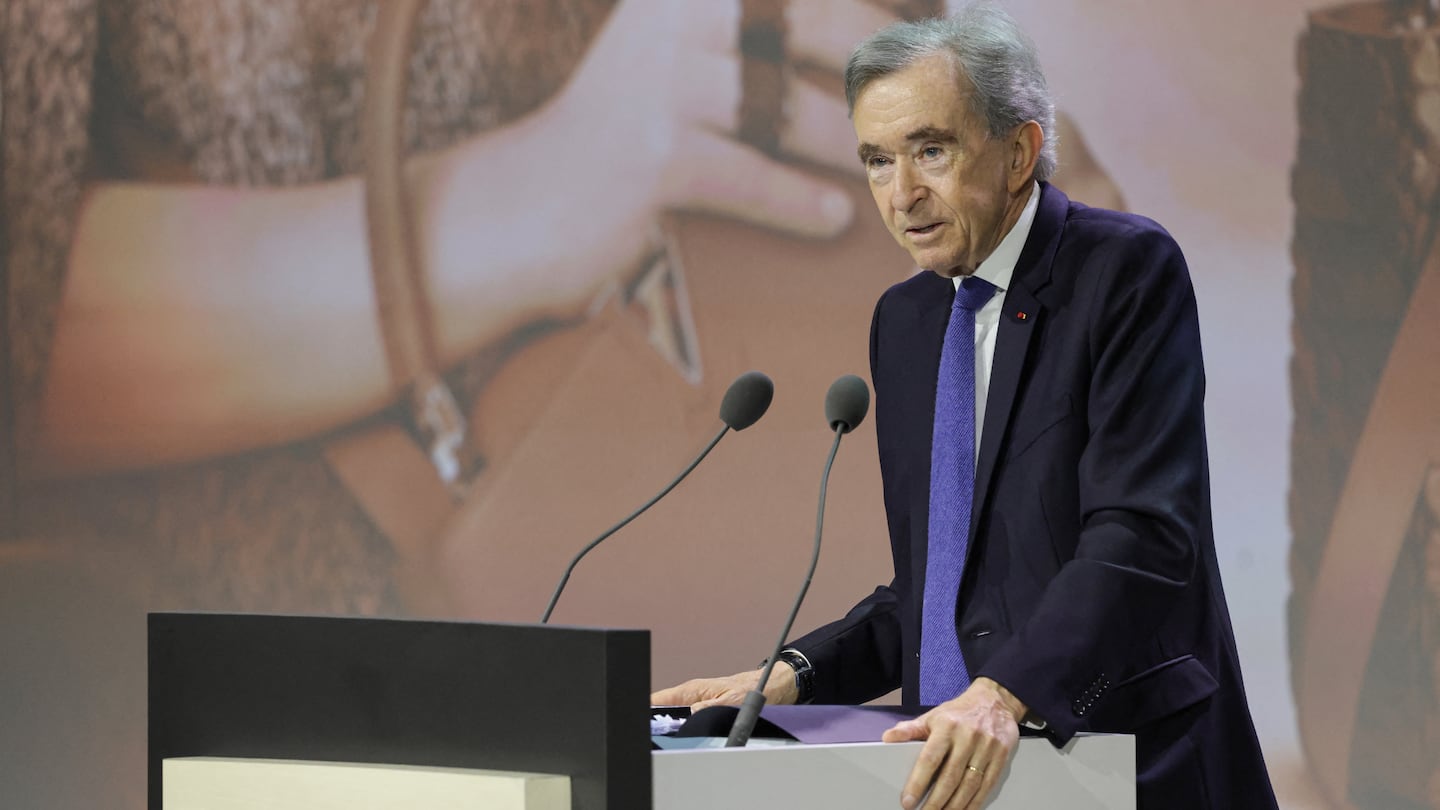
Hello from Paris, where LVMH held its annual general meeting Thursday morning in the Carrousel du Louvre: a high-security event space in the basement of the world’s largest art museum, favoured by corporations like LVMH and L’Oréal when they want to use geography to underscore their central role in French life.
The mood was unusually tense. Opening the floor to unvetted questions from investors is an awkward exercise in the best of times — typically drawing interventions from animal rights protestors, disgruntled individual shareholders and superfans alike.
This year’s assembly did not come at the best of times. LVMH’s shares have tumbled 26 percent year-to-date and are now trading in line with 2020 levels. Luxury’s sector-wide slowdown, followed by a fragile recovery in China and war in the Middle East, has wiped away nearly all of the stock’s gains from the industry’s post-pandemic surge.
ADVERTISEMENT
Meanwhile, a three-part series released last week in Le Nouvel Obs, headlined “LVMH’s Succession War” capped off a bruising couple of weeks in the media for the group and its controlling shareholders, the Arnault clan.
In this week’s newsletter:
The good news for LVMH is that the annual general meeting went off without a hitch. Aside from the sometimes awkward questions, how could it not? With over 50 percent of capital and 66 percent of voting rights, Bernard Arnault can pass any resolutions himself. As it happened, most of them passed almost unanimously.
It helps that amid an industry-wide slowdown that has hammered all but a few rivals (Miu Miu, Cucinelli, Hermès…), LVMH was able to kick off the proceedings by pointing to how resilient it’s been. Group sales slid just 1 percent organic last year. Fashion and leather goods sales fell 5 percent, but the division remained a cash machine with operating margins of 35 percent.
The missing piece of the puzzle — what’s driving the sharp downward trajectory of its stock — is growth. Short-term growth will depend on war in the Middle East and its ripple effects.
“You will have noticed that the world is now in a very serious crisis in the Middle East,” Arnault said Thursday. The industry’s immediate recovery “all depends on how this crisis unfolds.”
Mid- and long-term, Arnault said he remained confident that growth would continue, driven by the desirability of LVMH’s brands combined with the upward trajectory of worldwide incomes.
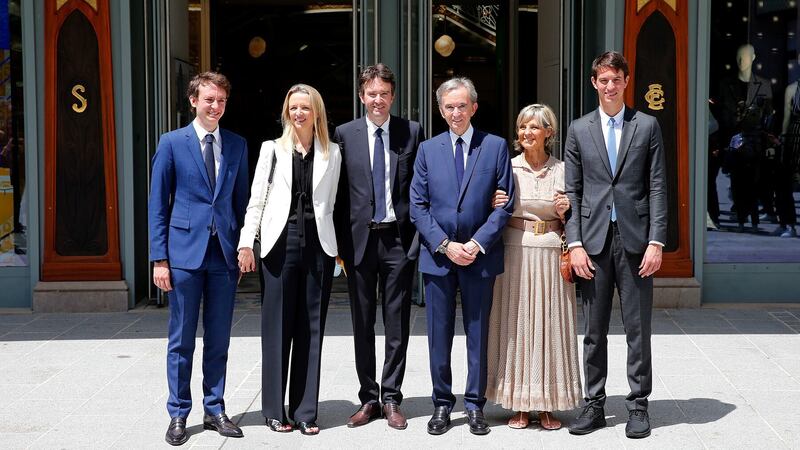
Arnault pointed to Africa as a key driver of growth in the future, inviting his son Alexandre (now co-CEO of the group’s drinks division) to speak about how Hennessy is making in-roads in South Africa and Nigeria.
ADVERTISEMENT
This was when the assembly deviated from its usual déroulement: Arnault went on to invite each of his five children to speak about what they’ve been working on in the company. The youngest, Jean, gave a brief introduction to La Fabrique du Temps, Louis Vuitton’s high watchmaking subsidiary. Frédéric spoke about his first year as CEO of Loro Piana and the introduction of two innovative new fabrics. The eldest, Delphine, spoke about a new store concept at Christian Dior and about steering the 13th edition of the LVMH Prize.
Only then could Antoine — a key spokesperson at the group level, helming LVMH’s image and communications functions — get back to regularly scheduled programming with a recap of the company’s environmental and social initiatives last year. (He had the day’s only announceable, the return of Journées Particulières, an initiative through which LVMH opens its brand’s workshops to the public one weekend per year, positioning them as part of France’s shared national heritage.).
Arnault’s five-man press (basketball metaphors being inevitable in light of the family’s elongated statures) seemed to be aimed at showing a unified front in the face of recent reports of infighting amongst his heirs. Call me cynical, but I came away with the opposite impression: wondering how bad things had gotten if it was suddenly a problem for one or some, but not all five of Arnault’s heirs to speak in a given forum.
When asked about his succession, Arnault batted away the question as usual. “You saw the kids, you can tell me how ambitious they seem. You all voted 99 percent to renew me for another 10 years last year. Let’s talk about it in another seven or eight years,” he said.
Compared to other luxury groups contending with the slowdown, LVMH may seem to provide few specifics on how it plans to return to growth or reverse its share price’s downward trajectory. Guidance is usually topline: Customers are responding to novelty; they are responding to flashy new stores, especially at Louis Vuitton and Tiffany. Sephora is doing great.
The reasons for this are multifold. When comments need to encapsulate 75 businesses spanning everything from watches to handbags to hotels to lipstick, it’s understandable that the group doesn’t always go into detail.
More importantly, LVMH simply isn’t in dialogue with the market in the same way most other companies are. Arnault now owns over 50 percent of capital and two-thirds of voting rights: Minority shareholders are along for the ride. Arnault prefers the group’s work be recognised with a high valuation, but when shares are low he is just as happy to take advantage of the opportunity to buy more of them, bolstering his stake. The group barely has to answer to lenders as it remains spectacularly underleveraged, with debt dwarfed by its equity and free cash flow.
The dialogue Arnault and his family seem more concerned with these days is with French policymakers and the voters who elect them, particularly in the run-up to a presidential contest next year.
ADVERTISEMENT
Arnault and LVMH enjoy staggering influence as the country’s biggest tax payer, biggest employer and the top advertiser for many media publications. But the family is feeling the heat in French discourse after a spate of unfavourable stories piled up in recent weeks (none of which transcended French borders individually, but start to seem material in the aggregate.)
Earlier this month, Le Nouvel Obs reported Bernard Arnault had attended a dinner with far-right politician Marine Le Pen and populist media magnate Vincent Bolloré, breaking a longstanding tradition of refusing to engage with Le Pen’s National Rally. Paris Match, the popular celebrity magazine owned by Arnault, also ran a cover shoot of the National Rally’s president, Jordan Bardella, attracting further criticism for normalising the movement. Alexandre Arnault, deputy CEO of Moët Hennessy, has reportedly struck up a friendship with Bardella.
Meanwhile, Arnault’s wife Hélène Mercier-Arnault (mother of Alexandre, Frédéric and Jean) has departed from the family’s tightly controlled media script. She tapped an external consultant to organise a press tour ostensibly aimed at promoting her work as a concert pianist, but which seemed more focused on promoting a softer, more relatable image of herself, Bernard Arnault and their children. The effort backfired as the wife of France’s wealthiest person complained publicly about high taxes, saying “too much [social] support takes away freedom and respect from individuals.” Mercier-Arnault purported to stay grounded by occasionally sleeping in three-star hotels. She claimed homelessness was often a lifestyle choice, and got emotional while telling the story of her sister falling in love with a homeless man.
In multiple interviews, Mercier-Arnault attempted to drive home the message that she, Arnault and his five children from two marriages formed a cohesive family unit, denying reports of in-fighting over succession. This message was undermined when she shared a doctored family photograph on French TV, which turned out to be cut together from previous portraits.
All of this culminated in a three-part series in Le Nouvel Obs, released last week, with a cover line on “LVMH’s succession war” advertised on newsstands across France.
It isn’t just a French media debate. Some investors have even started speaking out publicly: Stefan Bauknecht, equity portfolio manager at Deutsche Bank’s DWS (the 12th largest shareholder in LVMH) told Reuters in late January that “succession planning, as of now, appears unclear and opaque” and that the bank wanted “more transparency and a plan on how things will evolve.”
More such scrutiny is likely to come, as Arnault’s refusal to clarify succession planning creates an information vacuum. The Wall Street Journal’s Nick Kostov and Stacy Meichtry are working on a book about LVMH and the Arnaults. A “Succession”-style deep dive by Le Monde is also in the works, scheduled as the newspaper’s tentpole summer series, according to a report in La Lettre.
Disclosure: LVMH is part of a group of investors who, together, hold a minority interest in The Business of Fashion. All investors have signed shareholders’ documentation guaranteeing BoF’s complete editorial independence.
Loading recommended reads…
Brands are finding success with products that are scarce because of real constraints, such as the materials and craftsmanship involved, as consumers tire of chasing limited drops engineered to sell out.
After a fire destroyed more than a decade of her work, designer Kanyinsola Onalaja had just three months to prepare for her London Fashion Week debut. Here, she explains how Adobe Firefly sped up her design and sampling process while keeping her creative vision and the collection’s craftsmanship front and centre.
Pricing for speedier express parcel deliveries is forecast to jump 13.8 percent from the fourth quarter of 2025, according to the TD Cowen/AFS Freight Index.
Whereas Rolex is both a buyer and seller of its second-hand watches through official retail partners, Audemars is setting up a marketplace where sellers set prices.