Circulose Appoints Interim CEO as Textile Recycling Plant Restarts
Chief financial officer Amanda Geijer will take over from Jonatan Janmark as the Swedish textile recycler resumes commercial-scale production.


A congressional report says the Chinese-owned e-commerce business has insufficient systems in place to prevent goods made by forced labour being sold on its platform.

The European Fashion Alliance, a coalition of groups including France’s Fédération de la Haute Couture et de la Mode and Italy’s Camera Nazionale Della Moda Italiana, has weighed in on EU plans to regulate fashion. They’re not entirely happy.

A small, but growing number of people are pledging to radically reduce the number of new fashion products they buy. But a deeply entrenched culture of consumerism makes it hard for many to stop shopping.
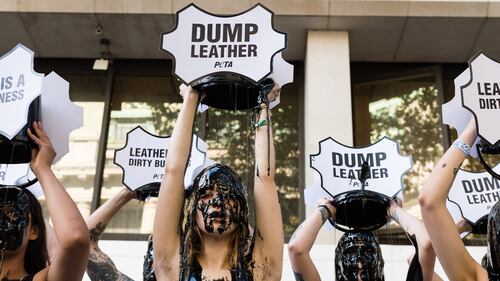
After four decades of emotionally-charged campaigns, Peta founder Ingrid Newkirk can all-but declare victory in the war on fur. Taking on more widely-used animal-based materials will be harder, however.

The EU parliament has backed recommendations to toughen proposed measures to tackle the excessive production and consumption of fashion.

The next two years will be a critical test of whether the industry can translate pockets of progress into real change.

With 100 tons of clothing from the West discarded every day in Accra, ‘fast fashion’ brands must be forced to help pay for the choking textile waste they create, environmentalists say.

The former Vogue Ukraine fashion director and LVMH Prize finalist’s upcycled tailoring label Bettter aims to become a platform that helps big brands give deadstock garments new life.

The buzzy concept is a chimaera that distracts from the root cause of fashion’s worsening environmental impact: overconsumption, argues Ken Pucker.

Kering, LVMH and H&M are among a handful of companies pioneering a new science-based framework to measure, disclose and address their impact on nature.

The move to address businesses’ impact on nature is part of a new frontier of corporate environmental reporting.

Four years after a splashy launch around the G7, the CEO-powered climate drive says it’s gearing up to accelerate action. But it has lost high-profile members and so far delivered little more than a handful of pilot projects.
Chief financial officer Amanda Geijer will take over from Jonatan Janmark as the Swedish textile recycler resumes commercial-scale production.
A new analysis of eight widely used cosmetics ingredients by Verisk Maplecroft found widespread exposure to child and forced labour risks, with palm oil, cocoa and shea nuts among the most problematic commodities.
Global environmental non-profit The Nature Conservancy has launched a new industry coalition to help apparel companies tackle microfibre pollution across their supply chains.
The new initiative will explore how the industry can take responsibility for the millions of used and unsold garments exported to secondhand markets around the world.
Planet-warming emissions associated with the raw materials used to make fashion, footwear and home textiles have risen 30 percent since 2019, according to a new report.
Investments to reduce heat stress for garment factory workers can pay for themselves within four years, a new report from Cornell University's Global Labor Institute finds.
Greenhouse gas emissions rose in 2023 and 2024, due in part to increased global production of fibre, especially polyester, according to a new report by the Apparel Impact Institute.
Lululemon and apparel manufacturer MAS Holdings are among the investors backing the French startup as it scales a proprietary process for recycling nylon from mixed-textile waste.