Circulose Appoints Interim CEO as Textile Recycling Plant Restarts
Chief financial officer Amanda Geijer will take over from Jonatan Janmark as the Swedish textile recycler resumes commercial-scale production.


The industry needs next-generation materials to meet its climate commitments, and quality, not capital, is the most important nut to crack, argues MycoWorks CEO Matthew Scullin.

The industry is becoming incrementally more transparent, but big brands still fail to disclose critical information about their environmental and social impact, according to this year’s Fashion Transparency Index.

Late last month, leading materials start-up Bolt threads said it had paused operations for its leather alternative Mylo. The company’s struggle to raise funds points to deeper challenges for the sector, writes Kenneth Pucker.

Oritain has carved out a leading position helping brands and the US government detect the origin of commodities like cotton, coffee and leather. Investors are betting tightening regulation will turbocharge growth.

The Zara owner outlined plans to expand resale and increase its use of next generation and recycled materials, part of efforts to meet an updated target to halve emissions by 2030.

Last week, Allbirds unveiled what it labels ‘the world’s first zero-carbon shoe.’ It’s a bold claim that puts the brand on the frontlines of one of fashion’s most fraught sustainability debates.

Millions of trees are felled to make viscose rayon, but two new eco-friendly options are being produced at a commercial scale.

Clothes contain BPA, PFAS and other dangerous substances – but we still know little about their cumulative impact.

This week at fashion’s annual sustainability gathering, luxury giant LVMH called for a luxury-only sustainability initiative, while policymakers pressed for an end to throwaway fast fashion.

The United Nations Environment Programme and UN-backed Fashion Industry Charter for Climate Action want the sector’s marketing machine to push more sustainable lifestyles.
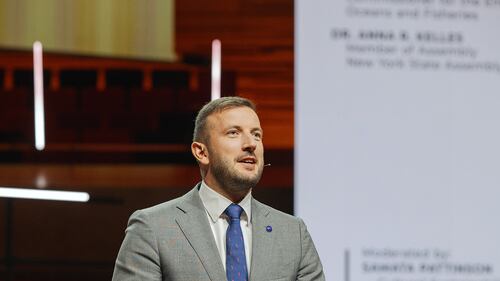
The environmental damage and waste created by throwaway fast fashion is ‘absolutely unacceptable,’ environment commissioner Virginijus Sinkevičius told BoF.

The French luxury group’s head of image and environment addressed criticism over its decision not to join existing industry sustainability initiatives, in which fast fashion players play a large role, and pushed for greater collaboration amongst luxury companies.
Chief financial officer Amanda Geijer will take over from Jonatan Janmark as the Swedish textile recycler resumes commercial-scale production.
A new analysis of eight widely used cosmetics ingredients by Verisk Maplecroft found widespread exposure to child and forced labour risks, with palm oil, cocoa and shea nuts among the most problematic commodities.
Global environmental non-profit The Nature Conservancy has launched a new industry coalition to help apparel companies tackle microfibre pollution across their supply chains.
The new initiative will explore how the industry can take responsibility for the millions of used and unsold garments exported to secondhand markets around the world.
Planet-warming emissions associated with the raw materials used to make fashion, footwear and home textiles have risen 30 percent since 2019, according to a new report.
Investments to reduce heat stress for garment factory workers can pay for themselves within four years, a new report from Cornell University's Global Labor Institute finds.
Greenhouse gas emissions rose in 2023 and 2024, due in part to increased global production of fibre, especially polyester, according to a new report by the Apparel Impact Institute.
Lululemon and apparel manufacturer MAS Holdings are among the investors backing the French startup as it scales a proprietary process for recycling nylon from mixed-textile waste.