Agenda-setting intelligence, analysis and advice for the global fashion community.
Agenda-setting intelligence, analysis and advice for the global fashion community.

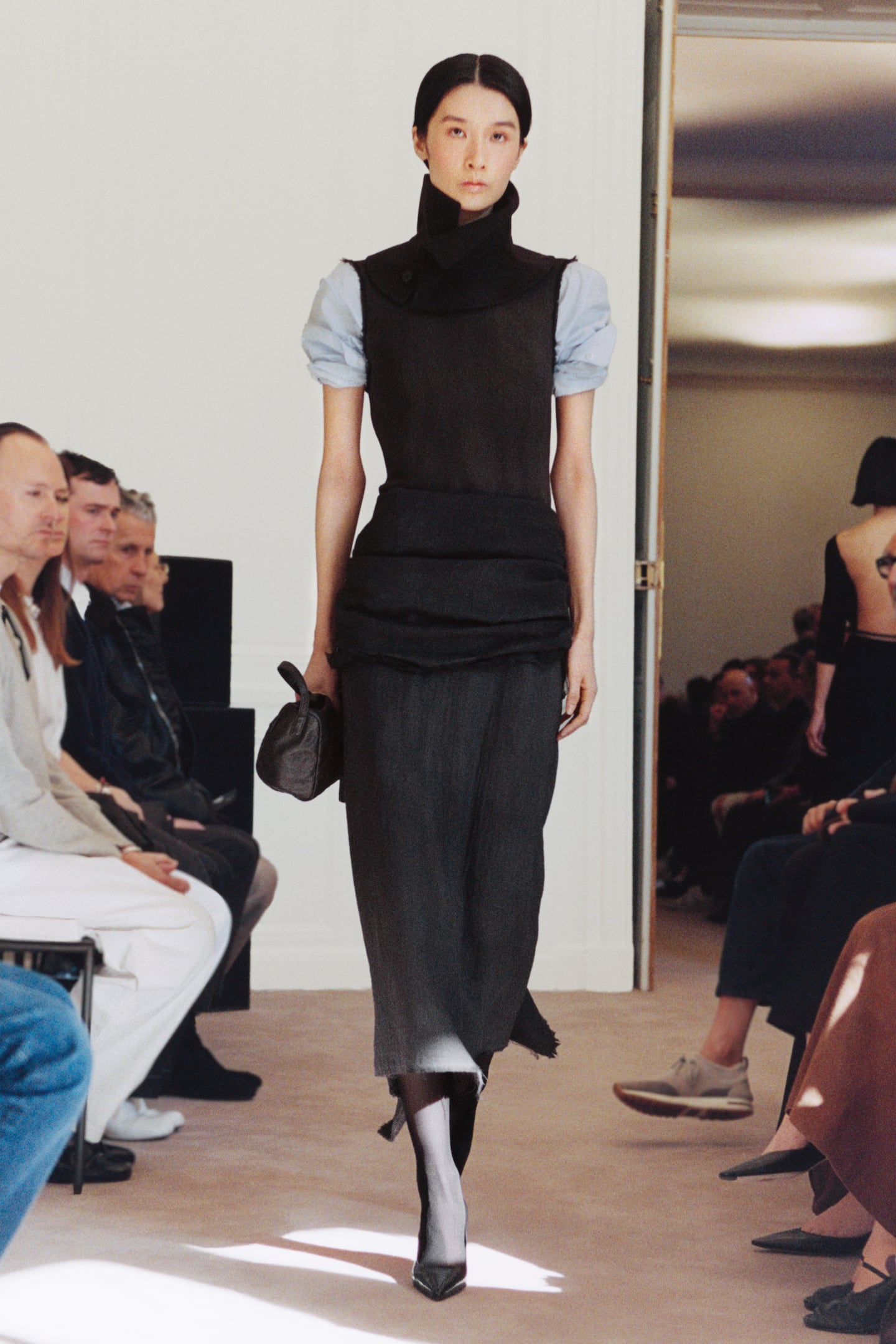
Hundreds of people queued for hours in New York City in October to get their hands on discounted luxury clothing and accessories. But the frenzy wasn’t for designer gear from a household name, such as Kering SA’s Gucci or LVMH Moet Hennessy Louis Vuitton SE’s Louis Vuitton. Shoppers were clamoring for The Row, an understated US label established by former child stars Mary-Kate and Ashley Olsen.
The successes of The Row — it raised funds in 2024 valuing the company at about $1 billion, according to Bloomberg News — and London-based Phoebe Philo go some way to explaining the malaise in the luxury industry. Demand for top-end goods hasn’t evaporated: It’s shifted from the mega-brands to a new breed of labels.
The Row was founded in 2006 by the photogenic Olsen twins, whose personal style had won them a legion of fans. The company launched with a collection of timeless but edgy basics, which are also very expensive. Coats can cost around $5,000; T-shirts about $500. The pair have since added shoes and handbags, the real money spinners, as well as menswear. Unusually for a clothing-led brand, particularly a relatively new one, The Row has established credibility in very high-end leather goods. That’s something even some of industry greats, such as the late Giorgio Armani, couldn’t accomplish.
Little wonder that Francoise Bettencourt Meyers, the billionaire L’Oreal SA heiress, and the Wertheimer brothers behind Chanel Ltd. all invested in the business in September 2024. The Row didn’t respond to a request for comment; industry insiders estimate its annual sales could be around $300 million.
ADVERTISEMENT
To some extent, The Row has been in the right place at the right time. With China in the doldrums, the US has become the epicenter of extravagance. American spending on handbags, watches and jewelry tends to be correlated with asset prices, and with US stock markets at record levels America’s outlay has outpaced other regions. Yet aside from Ralph Lauren Corp.’s highest echelons and Khaite, a US label that’s not a million miles from The Row, European brands dominate the very top end of the luxury market.
The rich prefer pricey but less obvious brands. Take Italy’s Brunello Cucinelli SpA. It has no logo, yet its butter-soft suede and cashmere mark it out immediately. The Row products are similarly unbranded yet distinctive, with their clean lines and fuss-free accessories. Customers also note that The Row, unusually for a designer label, offers some pieces in extra large. It understands how fabric drapes around the body, making styles more flattering.
With the big names fighting to be at the forefront of consumers’ minds — LVMH’s sponsorship of Formula 1 motor racing is a good example — they’ve become overexposed. This week and next, Gucci and Louis Vuitton will stage fashion shows in New York, while LVMH’s Dior will show its cruise collection in Los Angeles. The aim is to capture as much attention as possible — particularly from US big spenders. In contrast, The Row has little social media presence and asked those attending its Paris show two years ago not to use their phones to take or share photos. In a world of noise, sometimes silence is superior.
Perhaps the embodiment of this philosophy is The Row’s Margaux bag. At around $7,000 for the largest size, it costs around half as much as Hermes International SCA’s Birkin, according to price tracker PurseBop. And with secondhand sites awash with Birkins and resale values dipping, the Margaux is an if-you-know-you-know alternative.
But the mega brands are learning fast. LVMH has a minority stake in Phoebe Philo, a label that’s not only growing rapidly but is having an outsize influence on fashion. Prior to the British designer founding her eponymous company in 2023, Philo spent 10 years as creative director of LVMH’s Celine. Delphine Arnault, chief executive officer of Dior and daughter of LVMH founder Bernard Arnault, is a director.
Philo shares some features with The Row, including combining female design with mannish tailoring, essential items that are elegant rather than basic and high prices. Philo is already shaping the way we dress: Her funnel-neck jackets have spawned a raft of main-street imitations. Annual sales at the brand tripled to about $44 million in 2025 from the year earlier, according to its latest accounts — quite a feat given that the personal luxury goods market stagnated last year.
The challenge for both The Row and Phoebe Philo is how to scale further. It’s not a stretch to see The Row reaching $1 billion in annual revenue in the medium term; with just five stores currently operating in the US and Europe, according to its website, there’s plenty of room for expansion, particularly in Asia. Philo is further behind, but with the backing of LVMH it also has scope to grow. A new concession in London’s Selfridges store opens early next month.
The task of the two upstarts might be made harder if big bling can get its act together. Chanel has managed to shift from accusations of greedflation to being the hottest luxury house in the world, according to the latest Lyst Index, a quarterly ranking of the most desirable brands and products. Creative director Matthieu Blazy has injected excitement, while Chanel has priced cleverly, with many bags refreshing the middle to lower ends of its range. Given how expensive both The Row and Phoebe Philo’s collections are, a combination of compelling styles and value for money at the mega-brands would be a threat.
ADVERTISEMENT
For now, though, that looks some way off. Expect a long wait at the next The Row sample sale, too.
By Andrea Felsted
Loading recommended reads…
Sales of gems, precious metals and artwork at Japan’s department stores climbed 19 percent in the first half of 2026 from a year earlier to $2 billion.
Though Adidas dressed both teams in the World Cup finals, the global football tournament still presented some bright spots for Nike, writes Bloomberg’s Andrea Felsted.
From our archive, the creator and host of award-winning podcast “Articles of Interest” joins BoF founder, CEO and editor-in-chief Imran Amed to explore what clothing can reveal about identity, culture, labour and the world around us.
Saunders, the brand’s first creative director in five years and a skilled colourist, promises to give Kate Spade the clarity it has long lacked. Now, Tapestry must apply the same long-term brand-building discipline that fueled Coach’s success.