Agenda-setting intelligence, analysis and advice for the global fashion community.
Agenda-setting intelligence, analysis and advice for the global fashion community.


A monthly briefing on the technology news and trends shaping fashion and the wider world.
Subscribe to Tech Mode by Marc Bain to go deep on the most intriguing developments in AI and how technology is reshaping the fashion industry.
Welcome back to Tech Mode, your monthly guide to how AI and other technologies are changing the fashion industry.
Before we get into our main topics, there’s been a lot of news lately. Here’s a quick catch-up:
ADVERTISEMENT
Ok, let’s dive in.
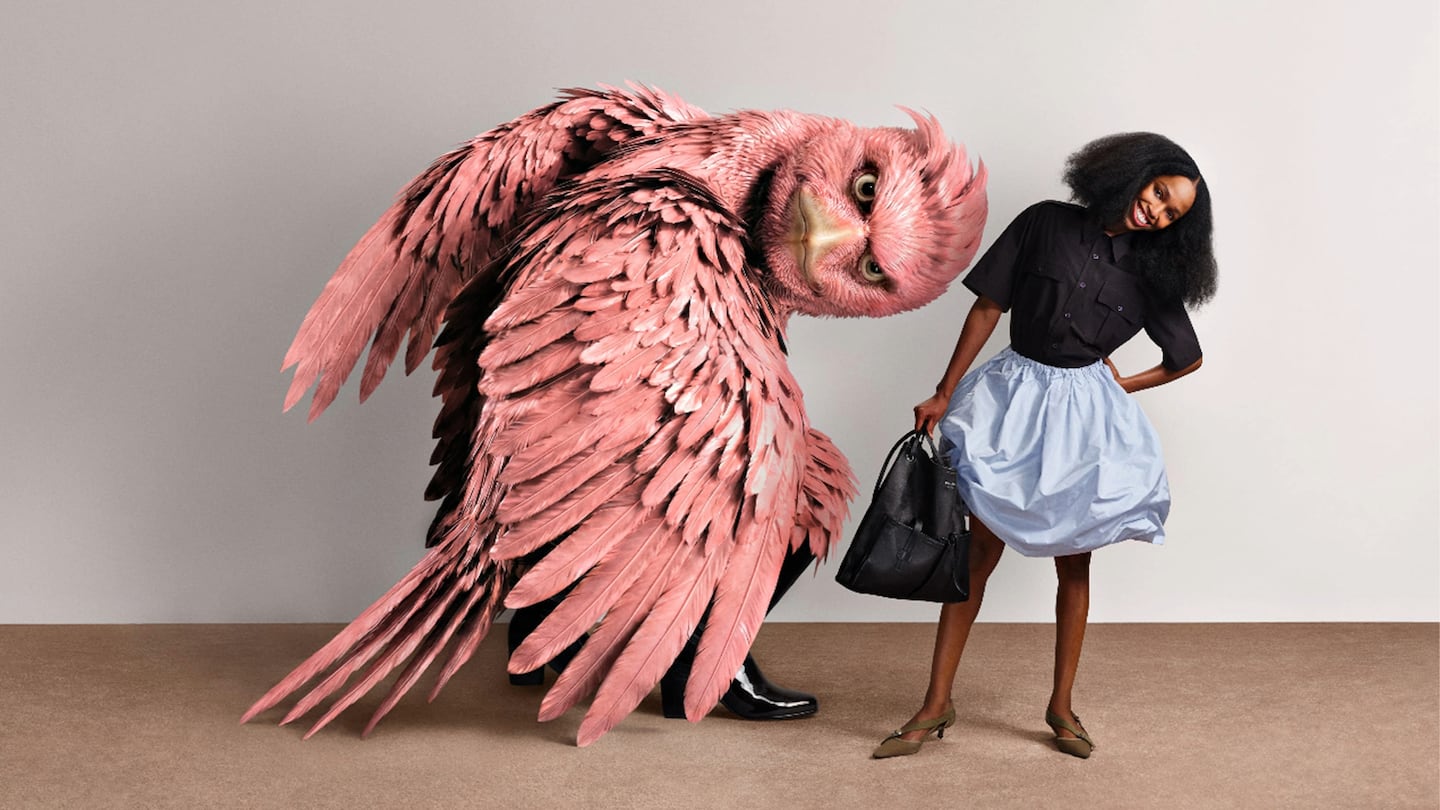
Feathers fly: Prada’s Spring/Summer 2026 campaign is unsettling. The cast features a mix of models and celebrities such as Nicholas Hoult, Hunter Schafer and Liu Wen, but the real stars are the big, bird-ish or scaly humanoids that appear in the images with them, sometimes caressing or cradling them, other times looming behind them. The “unnamed, unreal, and dreamlike creatures,” as Prada labeled them, are the work of artist Jordan Wolfson, known for his eerie figures and use of technologies from animatronics to AI.
The campaign, which Prada posted over the weekend, has divided audiences online. On one side were those who loved its strangeness. “Last week Prada released what I think is the most arresting, bizarre and fantastic fashion ad campaign I’ve seen in a gazillion years,” CNN fashion reporter and critic Rachel Tashjian wrote on Instagram.
On the other were those who felt it fell flat and pointed to its use of AI, even though Prada did not say whether or not AI was involved. “Oh great! More Ai that no one is asking for,” photographer Jack Davison commented on Prada’s post.
AI v. luxury: AI was one of the technologies used in the campaign’s creation, according to a source with direct knowledge, but that fact is less remarkable than the audience’s response. Anti-AI sentiment has continued to grow, with other brands like Balenciaga and Valentino also coming under fire for marketing that uses — or is at least believed to use — AI.
The underlying feeling seems to be that AI imagery is antithetical to the idea of luxury, which is supposed to celebrate human craft and creativity, to take its time and to spare little expense to offer the best possible product. AI, by contrast, is viewed as a way to be fast, cut costs and replace human creatives, whose work AI models were trained on without consent or compensation. (Tashjian, who praised Prada’s campaign, also declared “I hate AI” in her post.)
ADVERTISEMENT
At a moment when luxury’s value proposition is being scrutinised following years of rising prices, AI campaigns threaten to undermine the work brands are doing to win over customers.
Slop or not: Brands are trying to navigate the situation with campaigns that lean into AI’s glitchiness with an ironic wink, as in Valentino’s case, or go the other direction and present something more polished. It’s perhaps a way to get ahead of allegations that luxury brands are producing AI slop, a descriptor for the poor quality, quickly churned out AI images and videos filling up online spaces.
The question is whether or not they can. Hiring an artist like Wolfson, who has said his AI imagery still comes from his mind and the AI just acts as an instrument, isn’t enough to shield brands from such accusations. “The new A.I. slop Prada campaign is bad,” creator Oliver Leone wrote in an Instagram post. The AI backlash could fade over time as the technology becomes just like any other, from photography to Photoshop, that has transformed image making. Until then, luxury labels need to weigh their ventures into AI marketing carefully, and think about how they can use it to reinforce the values they’re trying to project — or if it can at all.

OpenAI’s “stunning admission”: Roughly six months after OpenAI announced it would enable checkout directly within ChatGPT for partners including Shopify, Etsy and Walmart, kicking off a frenzy of retailers preparing for a future of autonomous AI agents shopping their sites, the company has already changed course. The Information reported earlier this month that OpenAI would instead have the retailers’ apps plug into ChatGPT, and users would be redirected to those apps for checkout.
The exact reasoning for the decision wasn’t totally clear, but The Information noted that OpenAI found shoppers weren’t using the feature. Online travel analysts in a note to clients at TD Cowen called the move a “stunning admission” that users weren’t interested in checking out within ChatGPT.
Not the first time: OpenAI isn’t the first company to struggle to remake checkout. In 2019, Instagram launched checkout directly within the app, in theory clearing the way for the social network to become a major shopping destination. It didn’t work. Shoppers may have gained the convenience of not having to navigate to a retailer’s site, but they often lost all the additional information like sizing guidance, material details and additional photos retailers provide on their product pages. Meta wound down in-app checkout in September.
As simple as the idea of making checkout work on another platform may sound, the engineering behind it is anything but. Tech analyst Benedict Evans pointed out in his newsletter this month that “integrating shopping into general-purpose search and discovery layers has been a tar-pit for 20 years: Google and Meta have both failed at this multiple times. It’s very hard to standardise metadata for millions of merchants on a single platform UX, you need to offer merchants a lot of distribution before they’ll give up control, and it’s not clear what the consumer flow should be either.”
AI shopping isn’t done yet: The question facing retailers, however, isn’t whether LLMs will influence how consumers shop. They’ve already begun to, and every day more people are using them to compare products and get information. What’s left to be determined is exactly what role they will play, and tech companies aren’t about to give up trying to shape the answer. Reuters reported this month that Meta is testing its own AI tool for shopping research to rival ChatGPT and Google Gemini, and OpenAI announced more product discovery features just yesterday.
ADVERTISEMENT
Google, meanwhile, continues its efforts to get shoppers to check out through Gemini and AI mode on Google search. Gap just revealed a partnership with the company to enable checkout through both options for its products. Last week, Google also announced new capabilities for its universal commerce protocol, including one that lets agents add multiple items to a shopping cart from a single store. If it works as advertised, it would solve one of the problems that apparently hampered checkout in ChatGPT. Daniel Danker, who heads up Walmart’s AI acceleration for design and product, told Wired the biggest issue with ChatGPT’s Instant Checkout was that shoppers had to buy every product individually.
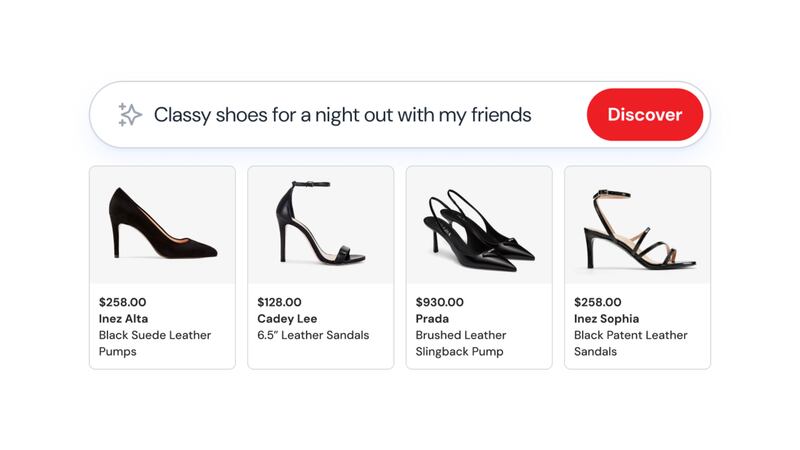
Search party: Perhaps just as consequential for fashion as how AI will transform search on the internet is how it’s changing the search bar on e-commerce sites. Revolve recently told my colleague Cathaleen Chen that its internally developed, AI-powered site search increased its engagement and conversion rates by double digits compared to the third-party software it used previously.
Compared to traditional keyword search, this new variety of search uses cutting-edge AI techniques to better understand the context and intent around a shopper’s search query. As Chen described it in her story, “Rather than manually tagging certain attributes to a product, its AI tool automatically decodes images and tags them with the relevant metadata so that when a customer searches for a ‘party dress,’ anything sequinned, reflective or with a short hem would come up in the results without the product being explicitly listed as a party dress.”
Why it matters: I wrote about the way AI is changing site search in 2024, when Revolve had recently introduced its proprietary search AI on FWRD, its luxury channel, and was testing it on the Revolve site. A year and a half later, the technology could reasonably be deemed a success based on the numbers Revolve shared.
The goal of all this is to make the search bar operate like an AI chatbot, and Revolve isn’t the only company that sees an opportunity in the approach. A number of startups such as Constructor, Lily AI and Vantage Discovery have drawn fashion and beauty customers from J.Crew to Sephora with the promise that their technology can make the search bar into a way to discover a range of relevant products as much as a means of shoppers finding that one specific they’re looking for.
Still going: Interest in this new take on search has continued to the point that, earlier this month, Salesforce acquired Cimulate, a startup that leverages the abilities of large language models as well as synthetic consumer personas for search.
Salesforce plans to integrate Cimulate’s technology into its Agentforce Commerce platform (previously called Commerce Cloud), which powers the e-commerce sites of numerous fashion and retail companies. Salesforce said in a release that the acquisition will help retailers deliver more personalised, contextual and conversational shopping experiences.
Want to dive deeper into an insight from this article?Check out The Brain of Fashion, BoF’s new generative AI tool where you can unlock BoF’s technology archive with a single question.
Editor's Note: This story was amended on March 25, 2026, to clarify that the capabilities Google announced apply to all uses of its universal commerce protocol, not just Google's implementation of it, and on March 26, 2026, to correct the source of the information that Prada used AI in its campaign.
Loading recommended reads…
Online fashion retailer Asos has brought on celebrity stylist Law Roach to bring his creative lens and styling approach to its campaigns and recently relaunched magazine.
In a video that went viral, the longtime trade body president is seen wrestling with protestors at a New York Fashion Week show.
The online clothing retailer, which rebranded as Debenhams Group last year, said Friday that Iain McDonald had taken over from Tim Morris with immediate effect in a move aimed at ‘rebuilding equity value.’
This week, an altercation with animal rights activists at the Cos show in New York has put a long-shot campaign against wool in the media spotlight.