Agenda-setting intelligence, analysis and advice for the global fashion community.
Agenda-setting intelligence, analysis and advice for the global fashion community.

Jonah Weiner, the co-founder of popular Substack Blackbird Spyplane, remembers a time not so long ago when shopping for clothes more often meant the endless scroll of a website’s sale section, conveniently placed at one’s fingertips.
Lately though, the ease and accessibility of online retail has become less and less appealing, he said. Instead, what compels him to shop has swung back to an older mode of commerce: talking to a guy behind the counter at a favourite neighbourhood store.
“There were diminishing returns on the type of hyperconvenience of being able to buy anything at any time,” Weiner said. “The dopamine hit goes away.”
On the other hand, he said, the pleasure of wandering into a physical store, striking up a conversation and discovering something unexpected has gained a new kind of cachet. It’s the reason why boutiques like Brooklyn’s Ven. Space have been able to build fast-growing businesses without e-commerce.
ADVERTISEMENT
They’re not alone. Across the world, a multibrand retail renaissance is taking shape, driven by a renewed consumer appetite for physical stores with a more hand-crafted, human approach to curation and customer experience — that feeling of entering the universe of a thoughtful, trusted tastemaker — in a world flattened by digital transactions.
“The best shopkeepers do the hard work for us,” said Elisa Harca, co-founder of the Hong Kong-based marketing agency Red Ant Asia. “They are the ones doing the doomscrolling at night and going through their Instagram and RedNote feeds so we have somewhere to go for relief and discovery for things we didn’t know about or things we’ve been desperate to have.”
It’s brands as well as shoppers that are powering the shift.
“It’s just so easy to get lost as a brand and as a shopper on the floor of a huge retailer,” said Daniella Kallmeyer, whose namesake label is stocked at dozens of specialty stores like Elyse Walker, Kirna Zabete and Boutique N in Kuwait City. “Independent retailers close the gap on the connection to the customer that I think is so relevant, as is their curation and shopping experience.”
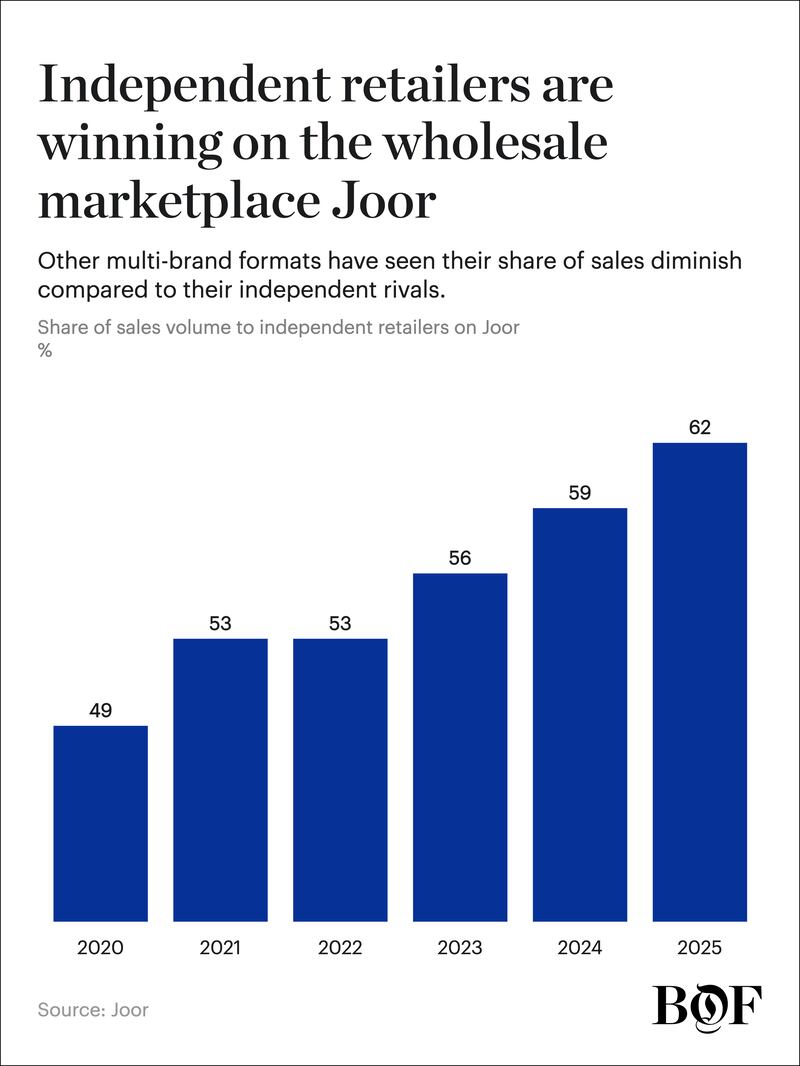
Between 2020 and 2025, independent retailers’ share of total transaction volume on Joor, a major fashion wholesale platform, increased from 49 percent to 62 percent. Their growth has outpaced that of other multibrand formats, including department stores and e-commerce sites, according to Amanda McCormick Bacal, senior vice president of marketing at Joor.
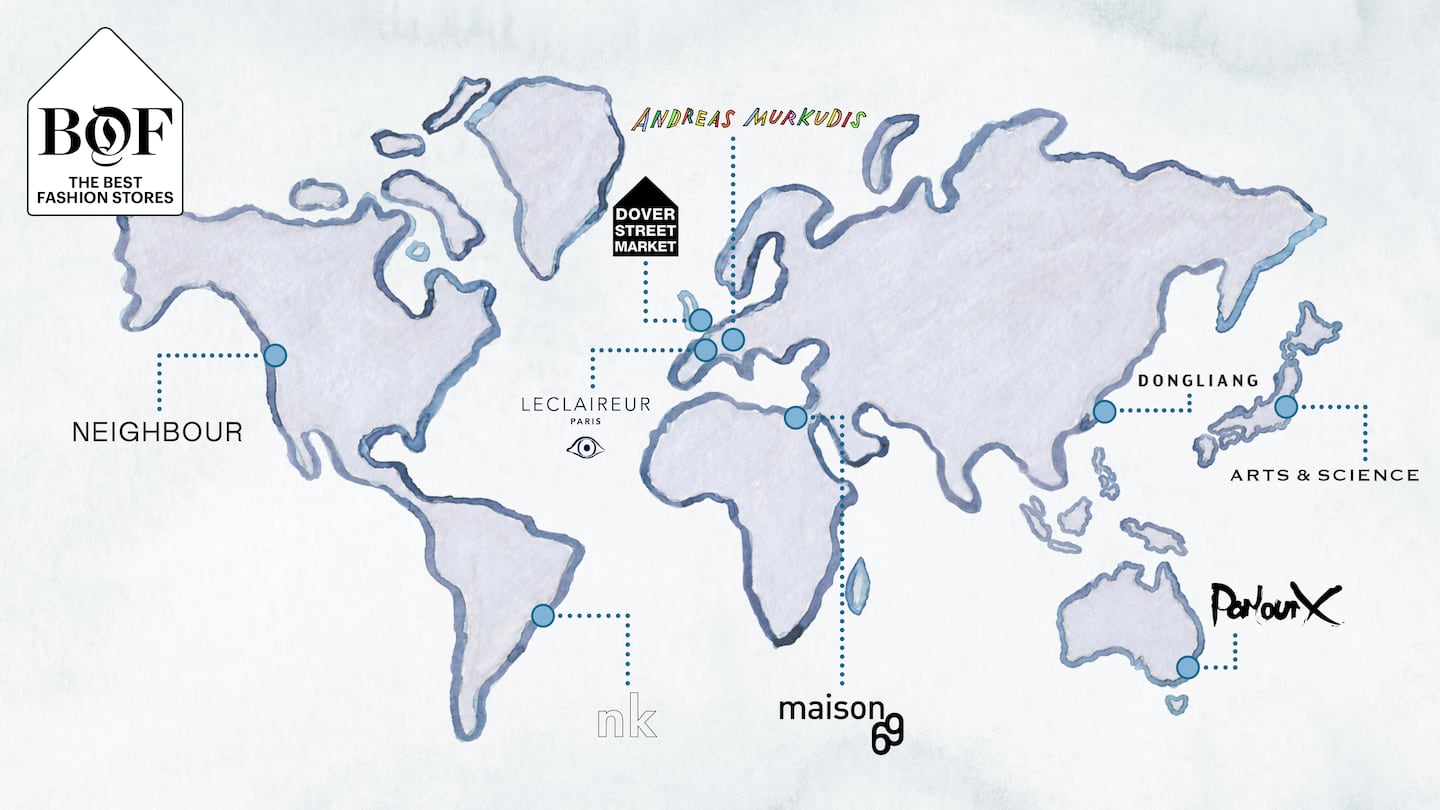
The phenomenon is global. From the US to China to Brazil, independent retailers like The Webster, Dongliang and NK have been able to expand their footprints as small but mighty retail chains because they cater to customers in ways that larger multibrand players have not. Rather than buying for a wide range of shoppers, they buy for a community they know intimately. The result is assortments that feel more distinctive and more likely to resonate with their clientele.
“With some of these small stores, they have customers who come in weekly just to say hello,” said Julie Gilhart, a consultant and the former fashion director of Barneys New York. “These days, with people being more aware of what they’re paying for, they really want to have a relationship with who’s selling the pieces and being able to trust that.”
Brands are placing greater value on key independent boutiques, even if they are more focused on their own distribution network and independent retailers account for a smaller share of wholesale revenue than department stores or large e-commerce players.
ADVERTISEMENT
That’s in part because independent stores offer something difficult to replicate at scale: context. A brand in the right boutique is presented within a carefully considered point of view by knowledgeable sales associates, elevating how it is perceived and, ultimately, its desirability.
“The stores that are valuable have a super strong POV so that they’re able to interpret and show my pieces to people in an interesting, new way,” said Los Angeles-based designer Brooke Callahan, whose namesake brand is largely direct-to-consumer but relies on boutique partners for exposure in new markets.
“Instagram became so oversaturated that we needed a wholesaler’s edit again,” she said, “especially when it’s curated by someone with an eye that makes a whole world.”
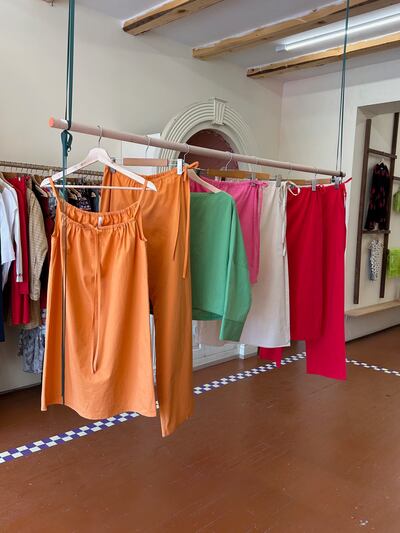
Outside major fashion capitals, independent boutiques often serve as the tastemakers for their local communities. Their endorsement can carry more weight than a national retailer’s, helping brands establish credibility with shoppers in local markets. “Independent boutiques are more important than ever for national and international awareness,” said Kallmeyer.
Another attribute that large chains cannot duplicate: a casual, neighbourhood vibe. Consumers are drawn to what Harca dubs “moseying around” — going about your day in your neighbourhood with no particular aim, and popping into a store or coffee shop. The strongest independent boutiques, she said, craft assortments that cater this easygoing behaviour.
It also helps that some of the most popular multibrand shops today are located in residential areas rather than in conventional retail corridors. What these stores have in common, said Weiner, is that they have hardware stores, cheesemongers and indie bookstores nearby. “It’s a lovely sort of village Main Street experience where people like to come out and pop into these stores,” he said.
But it’s the level of thoughtfulness and human touch that these stores put into every interaction that’s perhaps their biggest draw in a world flattened by digital transactions.
“At all the little stores that have a loyal following, you get a nice handwritten note sometimes and a hand-tied ribbon,” said Marigay McKee, a former executive at Harrods and Saks Fifth Avenue. “All those things have become increasingly important, because the huge increase in digital retail has led to this quest for humanity.”
ADVERTISEMENT
Explore the Best Fashion Stores in the World
An insider’s guide to the independent retailers with the most distinctive edits and experiences in the world, hand curated by the editors of BoF.
Introducing an insider’s guide to the independent retailers with the most distinctive edits and experiences, hand curated by the editors of BoF.
To build our index of the global independent retail landscape, we established a rigorous, multi-tiered evaluation process, by casting a wide net and starting from the bottom up.
As major luxury retailers from Saks to Ssense struggle, independent boutiques are making a comeback.

Cathaleen Chen is Retail Editor at The Business of Fashion. She is based in New York and drives BoF’s coverage of the retail and direct-to-consumer sectors.
Loading recommended reads…
Sacai showed that complicated fashion can work. But technical innovation doesn’t always add up to a convincing vision, Angelo Flaccavento writes, also reporting from Louis Vuitton, Loewe and Jean Paul Gaultier.
The British retail group has brought its stakes in Burberry, Hugo Boss and Mulberry together with its luxury retail operations.
When Nike is at its peak, there’s usually a central product that gives it a cultural resonance that no other brand can touch. Typically, that’s come from Jordan Brand’s retro business. With that no longer working, let’s talk about where the brand can turn.
The retailer is investigating after users of its mobile app received a notification claiming hackers had ‘fully compromised’ company data.