Agenda-setting intelligence, analysis and advice for the global fashion community.
Agenda-setting intelligence, analysis and advice for the global fashion community.

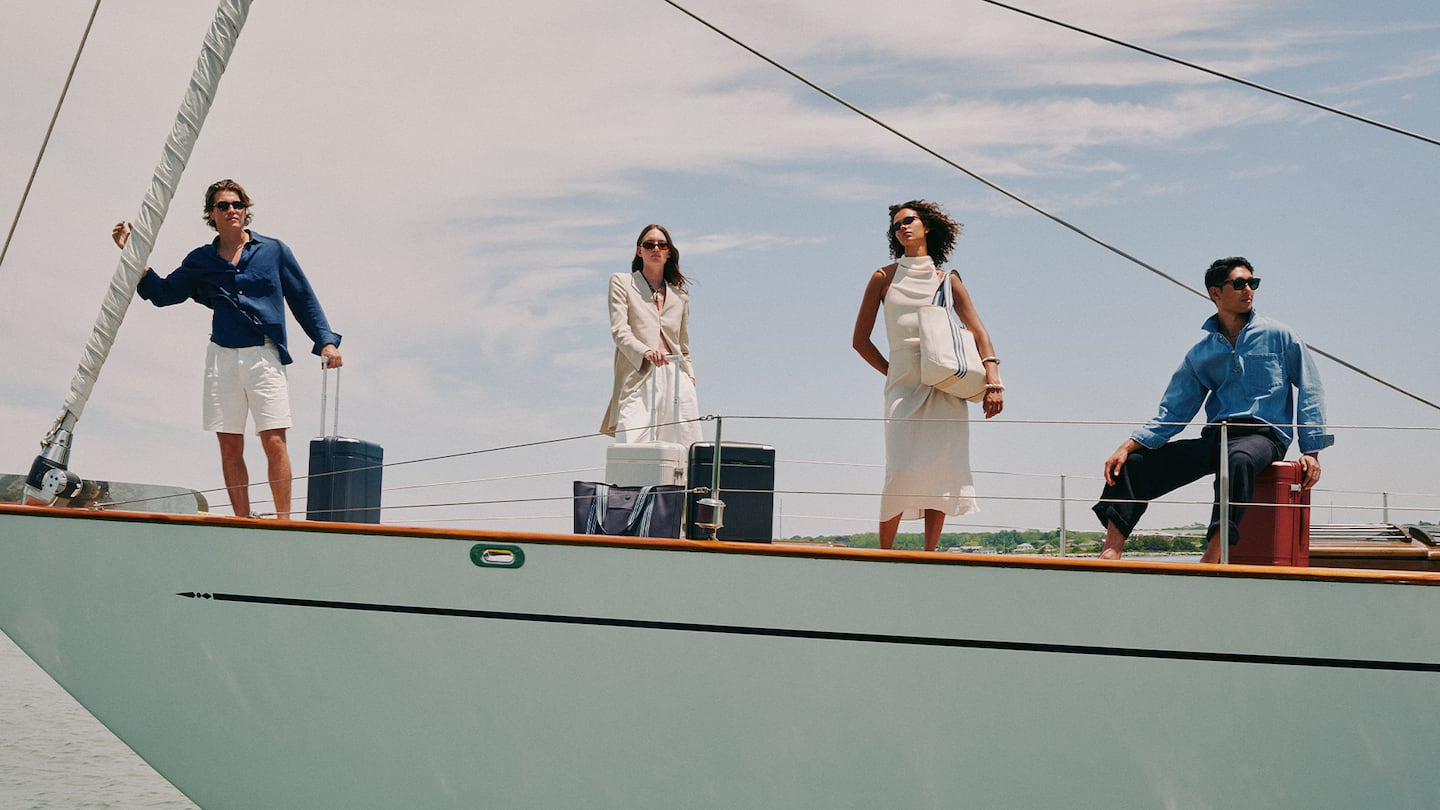
The direct-to-consumer luggage maker Paravel will relaunch on Oct. 8 under a new owner, the parent company of British travel label Antler, it announced Monday.
Antler, owned by Australian travel retail chain Strand (formerly Strandbags), purchased Paravel’s intellectual property in August 2025 in a liquidation auction three months after the brand filed for Chapter 7 bankruptcy. Earlier this year, Strand formed the group ATR House of Brands, comprising brands Antler, Paravel and mid-priced Australian luggage maker Nere, with ambitions to build a £100 million-plus ($135 million) portfolio by 2029. Kirsty Glenne, Antler’s managing director, became CEO of the new enterprise.
Antler is on track to close the next year at over £60 million in sales, twelve-fold growth from the £5 million of sales it posted at the time of its own relaunch in 2023. Paravel generated approximately $20 million in sales in the year leading up to its liquidation.
At launch, Paravel will be sold via e-commerce on Paravel.com, with no immediate plans of entering wholesale. Antler, meanwhile, is available at retailers including Nordstrom and John Lewis.
ADVERTISEMENT
Paravel’s first collection under ATR includes its original hard-shell luggage in four sizes and colourways inspired by coastal New England (with minor variances in design), a canvas tote in two colourways, packing cubes and a luggage tag. With the exception of Paravel’s packing cubes — which rose from $65 to $110 — products’ post-relaunch prices are roughly equivalent to their previous price tags.
Co-founded by Indré Rockefeller and Andy Krantz in 2016, Paravel marketed itself as the first sustainable luggage brand, touting carbon neutral shipping, recycled materials in every product and a B Corp certification to boot. Under ATR’s ownership, the brand will aim to uphold that reputation, and continue to market itself as a sustainable travel alternative.
Paravel will still incorporate recycled materials in all of its products. The new Aviator luggage will utilise 70 percent recycled polycarbonate, a reduction from the 90 to 100 percent recycled polycarbonate Paravel claimed to use in its prior iteration. ATR noted that because the brand‘s supply chain was not then traceable, ATR was unable to substantiate these claims.
The brand will also no longer market its shipping as carbon neutral: Previously, Paravel relied on the controversial practice of offsets, which can legally be used to justify claims of carbon neutrality in the US, but is often penalised by UK regulators. Post-relaunch, Paravel may eventually declare carbon neutrality, said Glenne, though the brand is “just not ready right now to document exactly that as part of our DNA.”
Paravel will also aim to recoup relevant climate certifications, including B Corp, which lapsed during liquidation.
With the purchase of Paravel’s IP, ATR is inheriting the mid-priced luxury luggage maker’s reputation, for better or worse. The group is bracing itself to contend with the fallout of a slew of cancelled orders under Paravel’s previous ownership, which took place shortly after the brand filed for bankruptcy. In a Reddit travel forum last year, several users described negative experiences with order fulfilment, including over a dozen instances of non-refunded orders.
“It’s very difficult to explain to customers that it’s as a brand that we are relaunching. It’s not our responsibility to fix any potential product errors of the past,” said Glenne.
Following a post-pandemic travel boom, US luggage sales have slowed. According to market research firm Circana, sales in the category fell 3 percent year on year to $2.3 billion during the 12 months ended July. At the same time, the luggage category is more crowded with startups than ever, though consolidation seems to be underway.
ADVERTISEMENT
Last month, Samsonite agreed to purchase a majority stake in Béis, the lifestyle luggage startup founded by actress Shay Mitchell, for $178.5 million, enabling the 116-year-old luggage mainstay to tap a loyal customer base of mostly young women.
ATR is relying on differences in price architecture, region and lifestyle segment to prevent cannibalisation within its luggage portfolio.
“Paravel’s aesthetic is classic American, clean and considered. I think that will resonate with a certain customer that is quite different from an Antler customer and a Nere customer,” said Glenne.
Shared global manufacturing and distribution, meanwhile, will streamline ATR’s operations and help its brands scale with discipline. Glenne said she is optimistic about the entity’s chances of hitting the £100 million benchmark sooner than its stated goal.
“Luggage is a very cluttered category now. There are many emerging challengers, lots of choice. Obviously, the macro environment that we’re all living and working in is tough,” said Glenne. “I do think consumers today are still happy to invest in value.”
The Strandbags-owned company is expanding its global portfolio by scooping up Paravel’s IP, betting on fashion-led branding and new categories to stand out in a crowded luggage market.
Tourists have their pick of suitcases at every price point, thanks to low barriers to entry and a travel boom that’s inflated the category’s sales year after year. But amid signs demand has peaked, it’ll take more than a Shopify storefront and slick branding to succeed.

Jessica Kwon is an Editorial Associate at The Business of Fashion (BoF). She is based in New York and holds a bachelor’s degree in English literature, creative writing and Asian/Pacific Islander American Studies from the University of Michigan.
Loading recommended reads…
The ‘sneaker-of-the-year’ conversation has traditionally revolved around models that meet what most people consider a typical sneaker. In 2026, that conversation is shaping up differently.
At New York Climate Week, fashion again pledged to turn its talk into action, with the launch of a new coalition bringing together dozens of brands, manufacturers, retailers and innovators. Real reductions of the industry’s impact, meanwhile, remain elusive.
The veteran makeup artist, who has worked alongside Matthieu Blazy since his debut in 2025, will ‘bring a new perspective, reinforcing the vitality of Chanel Makeup,’ the company said.
LVMH and Kering have seen their post-pandemic gains vanish and Hermès has taken a knock as investors question prospects for a sector rebound. Richemont’s climb, meanwhile, shows no sign of letting up.