Agenda-setting intelligence, analysis and advice for the global fashion community.
Agenda-setting intelligence, analysis and advice for the global fashion community.
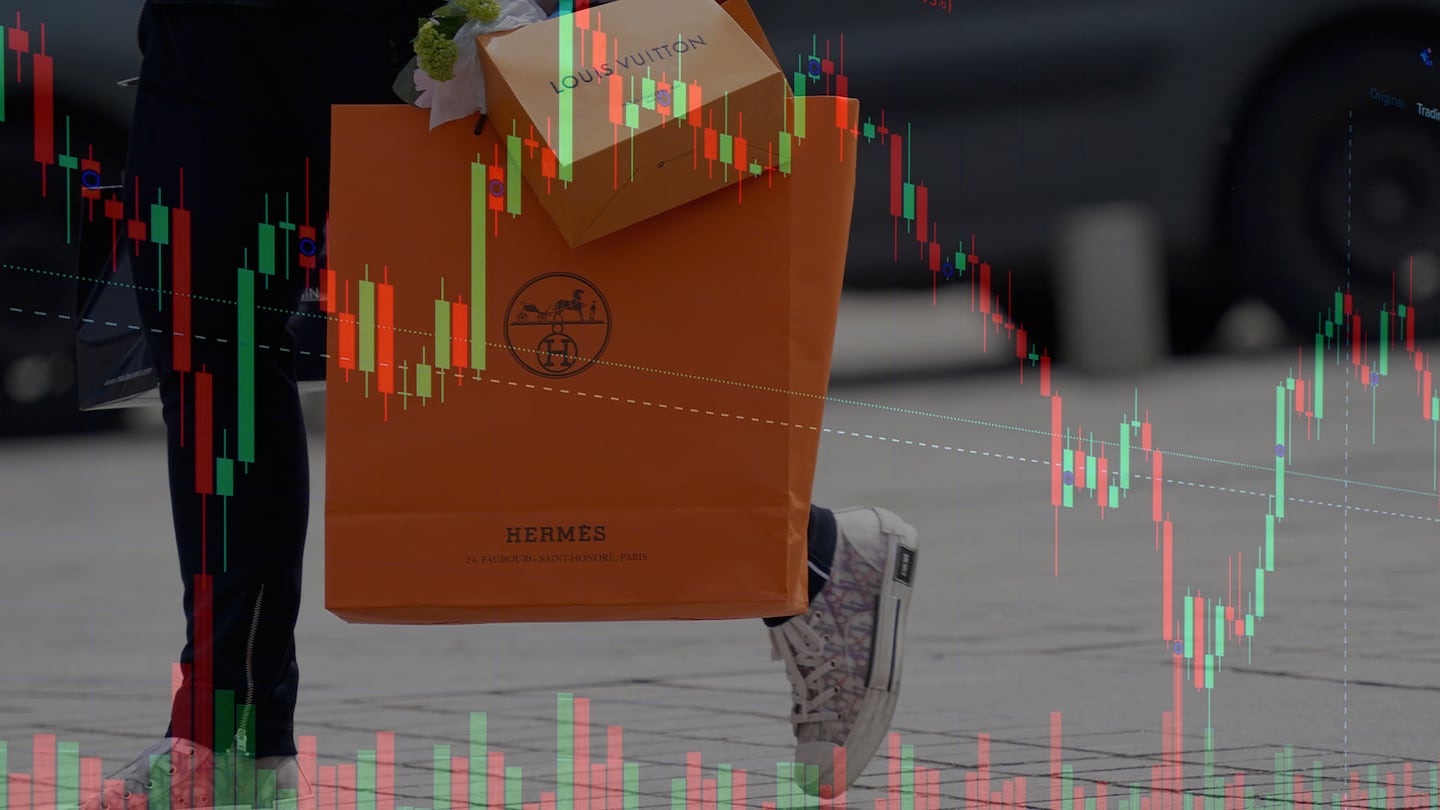
Luxury’s long-anticipated turnaround is taking longer than expected, making things messy on the stock market for some of the industry’s biggest names.
The shift in expectations has resulted in LVMH and Kering seeing their post-pandemic gains vanish while Hermès has taken a knock, dipping down to levels from three years ago. Jewellery specialist Richemont meanwhile continues its climb, with no sign of letting up. Why the dramatic reshuffle in values?
Though analysts did not expect the luxury industry to return to the double-digit growth seen after the pandemic, hopes were high for a solid turnaround after several sluggish years.
Fashion houses have struggled to bring back middle class shoppers turned off by price hikes during the post-pandemic boom that prompted questions about the value proposition of their offers.
ADVERTISEMENT
Sweeping creative change across the industry, aimed at addressing the problem, has yet to take hold at many brands, with gradual improvement at Dior and Gucci, for example.
And while the US luxury market has remained strong, Europe has stagnated, and China’s real estate slump continues to curb appetite there. The conflict in the Middle East, meanwhile, has battered a region that had emerged as a small but promising source of growth at the high end. Some analysts have trimmed forecasts in recent weeks, citing weakness in China, lasting disruption in the Middle East and volatility in the US.
The industry’s struggles are showing up in the stock market. Share prices aren’t a perfect measure of how a company is performing — they can reflect expectations more than current results and a stock that has already risen sharply can fall even as business improves — but over time they offer a picture of how investors view their prospects.
Beyond the broader context of luxury market gloom, the individual stock market performances also reflect their specific situations.
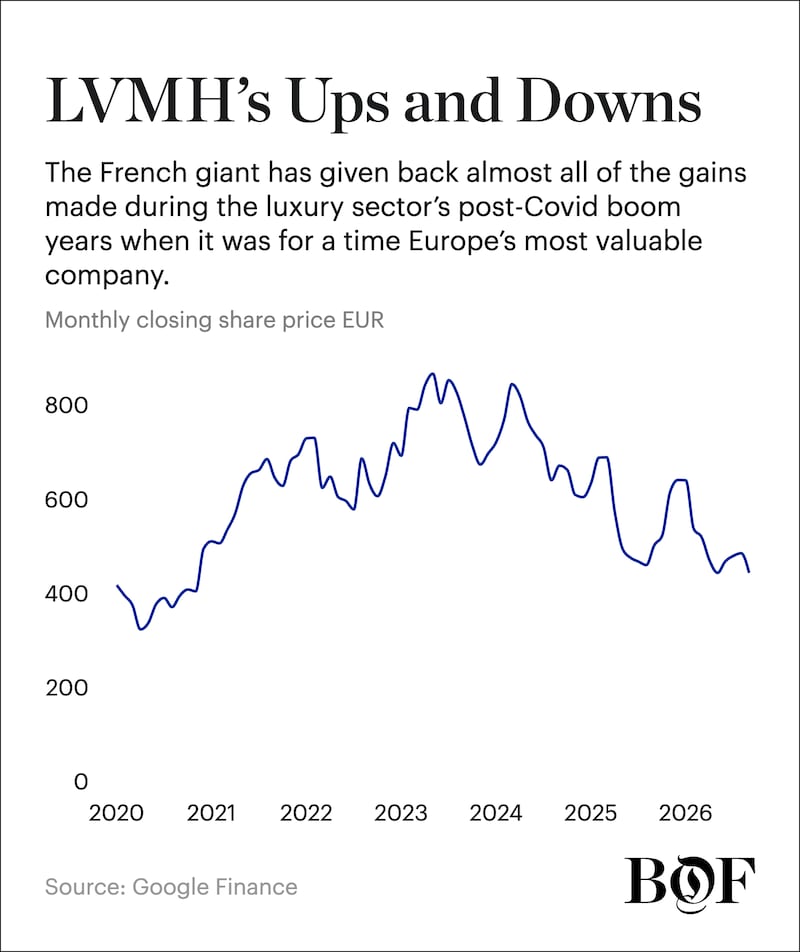
LVMH shares have given back virtually all the gains made during the industry’s post-Covid boom, when they rose as high as €905, making it for a time Europe’s most valuable company.
Currently stuck at the €400 range, the valuation of the industry bellwether reflects expectations for the sector as well as its own challenges.
“Growth across the luxury sector has come under pressure, and LVMH’s Fashion & Leather Goods division has begun to trail some luxury peers,” said Jelena Sokolova, an equity analyst at Morningstar.
Heading into third quarter results, which will be reported in mid-October, signs point to a particularly difficult period for LVMH in China, where analysts are flagging a likely deceleration for the overall sector. Louis Vuitton has faced additional pressure on sales following a trademark dispute with a local tea maker that sparked a patriotic backlash against the brand.
ADVERTISEMENT
But Vuitton’s wider challenge remains reigniting sales growth, which will require re-engaging with a broad base of middle class shoppers, as the world’s biggest luxury brand.
The refreshment of Dior’s offer, meanwhile, is bringing improvement at gradual pace, analysts note.
Despite the recent travails of LVMH, Sokolova expects the company’s results and share price to eventually rebound, thanks to the group’s full control of distribution, brand recognition, high desirability and limited discounting.
Meanwhile, the dramatic decline of the share price has resulted in the company dropping out of the top 10 largest listed companies in Europe as well as chairman and chief executive Bernard Arnault falling off of the list of top 10 wealthiest individuals in the world. On the French stock market, LVMH lost its leading position — which it had held for a decade — to beauty giant L’Oréal.
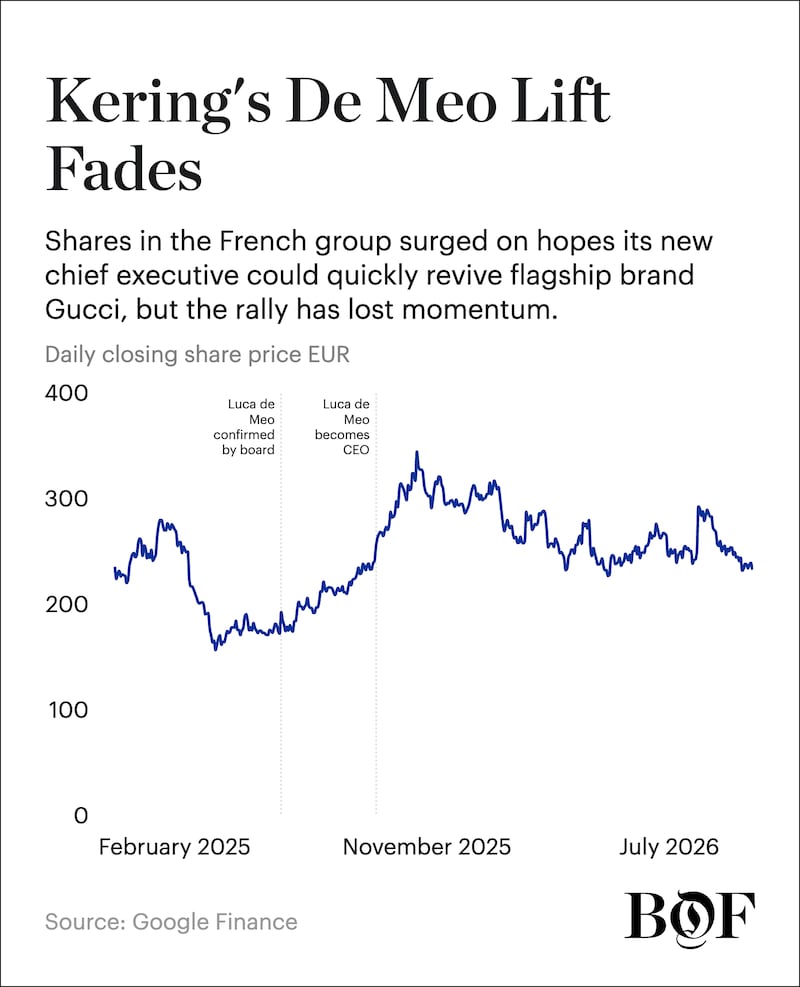
Kering has been working to revive Gucci since sales at the Italian brand — its main profit earner — began to slow. The brand peaked in 2022 with annual sales of €10.5 billion, but has since declined to below €6 billion last year.
The arrival of chief executive Luca de Meo, who built his reputation reviving companies in the auto sector, brought a surge of enthusiasm from investors. Shares made their biggest one-day gain in nearly two decades the day Kering announced his appointment, rising 12 percent, and gained 40 percent between the time reports emerged in June of his candidacy and when he took over in September, a year ago.
Shares further ticked up when de Meo quickly took measures to shore up the company’s balance sheet, selling its nascent beauty business to L’Oréal.
Since then, however, investors have been waiting for tangible signs of Gucci’s revival, which remains a work in progress. While there has been evidence of improved brand heat, sales have not yet returned to growth. Shares have fallen back to where they were when de Meo took charge.
ADVERTISEMENT
Last week, HSBC lowered its sales forecast for Gucci this year, projecting a 2.9 percent fall, lower than a previous forecast for a 0.9 percent decline. The analysts expect Gucci to return to growth next year, with a 4.5 percent sales rise.
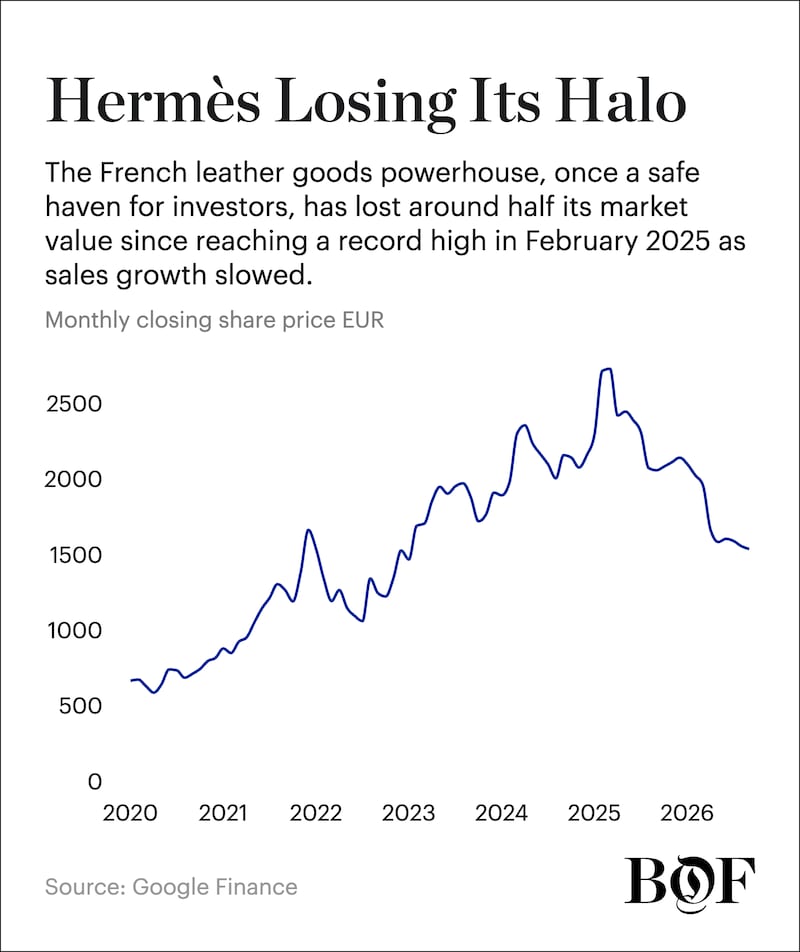
Hermès is known for steadily outperforming peers in times of crisis, thanks to wealthy clients who are less vulnerable to economic headwinds. Sales growth has continued to outpace the sector, but it has slowed, however, while questions have been raised about the potential overexposure of the brand.
In a sign the French house is not immune to the cooling investor interest in the luxury sector, shares fell in the double digits, percentage-wise, after the second-quarter report showed slowing momentum. Shares have lost a third of their value over the past year.
Bernstein this week slightly trimmed annual sales forecasts for the company to 6.2 percent growth, noting it is “subject to gravity” following a “more subdued Chinese demand environment” over the summer.
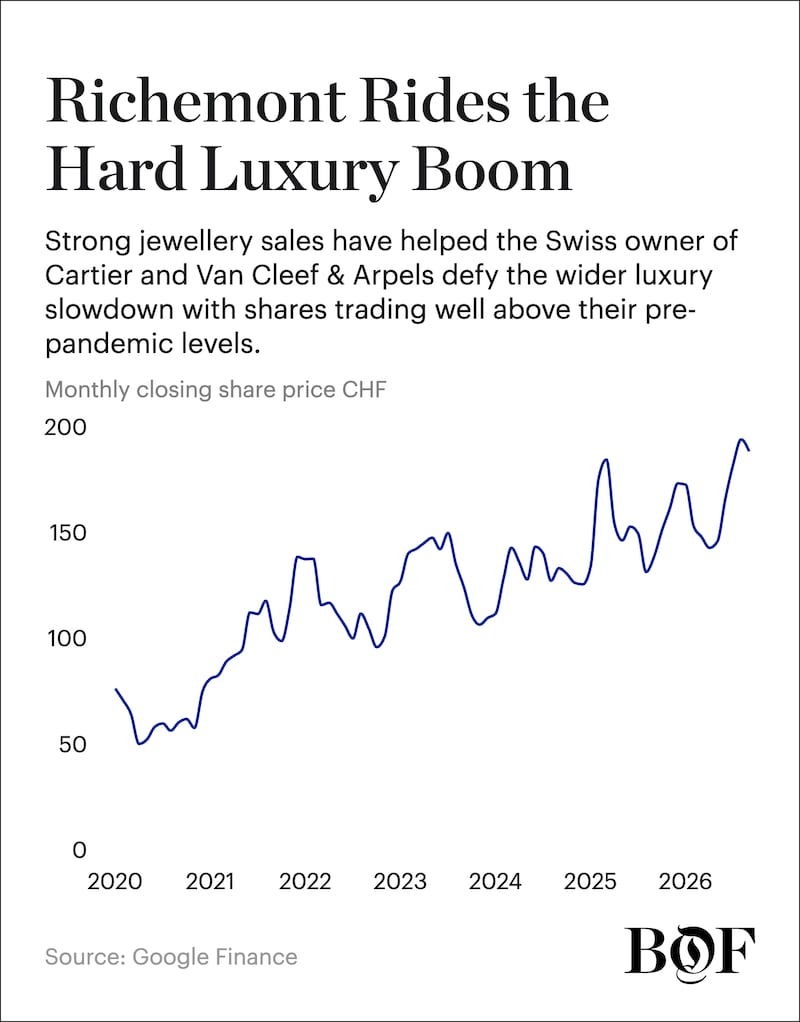
In stark contrast to its luxury peers, shares of Richemont have climbed steadily. The Swiss conglomerate has benefited from its strong presence in jewellery, a rare category of growth in the sector, with its star label Cartier taking market share from rivals. Sales of the jewellery division jumped 24 percent in the most recent quarter, far exceeding expectations.
The outperformance of jewellery compared with fashion, which looks set to continue, comes as shoppers see the category as holding its value better than fashion, with higher gold prices supporting this view.
The luxury industry has spent years waiting for growth to return to its fashion businesses and the stock market performance suggests investors are not expecting a rebound soon.
Illustrating the contrasting fortunes of jewellery and fashion, HSBC forecasts annual sales this year of soft luxury goods — a calculation of average growth of fashion and leather goods divisions of LVMH and Kering — down 0.7 percent this year, while raising expectations for the overall sector to 5.7 percent growth — lifted by jewellery sales.
Subscribe to High Margin by Robert Williams: perspectives on creativity and business in the world of luxury.
Disclosure: LVMH is part of a group of investors who, together, hold a minority interest in The Business of Fashion. All investors have signed shareholders’ documentation guaranteeing BoF’s complete editorial independence.
HSBC analysts downgraded LVMH and Burberry to hold as they said the second half of the year looks harder for soft luxury to navigate.
Kering reported organic growth for the first time in three years. Gucci’s second-quarter sales remained in negative territory, but declined less than expected.
The cosmetics group became France’s most valuable listed company on Tuesday, the first time since 2017 that a non-luxury company has claimed the top spot at the end of a trading day.
Sales at the group’s fashion and leather goods unit returned to organic growth after a two-year slump, with Dior back in positive territory a year into a creative reset piloted by Jonathan Anderson. Group sales rose 3 percent.

Eric Sylvers is Milan Correspondent at The Business of Fashion. He is based in Milan and leads BoF’s coverage of all things Italian.
Loading recommended reads…
The veteran makeup artist, who has worked alongside Matthieu Blazy since his debut in 2025, will ‘bring a new perspective, reinforcing the vitality of Chanel Makeup,’ the company said.
LVMH and Kering have seen their post-pandemic gains vanish and Hermès has taken a knock as investors question prospects for a sector rebound. Richemont’s climb, meanwhile, shows no sign of letting up.
Resolute RGL has built a celebrity following for its luxury sneakers embellished with traditional tatreez embroidery. With $1.3 million in new funding and its first pop-up in New York, the brand co-founded by Oscar winner Basel Adra is eyeing its next stage of growth.
Marni toughened up, Max Mara leaned into pragmatism and Cavalli mined its past glory on a day when clothes, not spectacle, reclaimed the fashion week conversation, Angelo Flaccavento writes.