Agenda-setting intelligence, analysis and advice for the global fashion community.
Agenda-setting intelligence, analysis and advice for the global fashion community.

MILAN — It may be too early to call it a seismic shift, but fashion’s love affair with entertainment is beginning to crack. After seasons in which “content” often overshadowed the actual content, this is shaping up to be a season of clothes to wear, rather than clothes meant to go viral while diluted versions hit the stores.
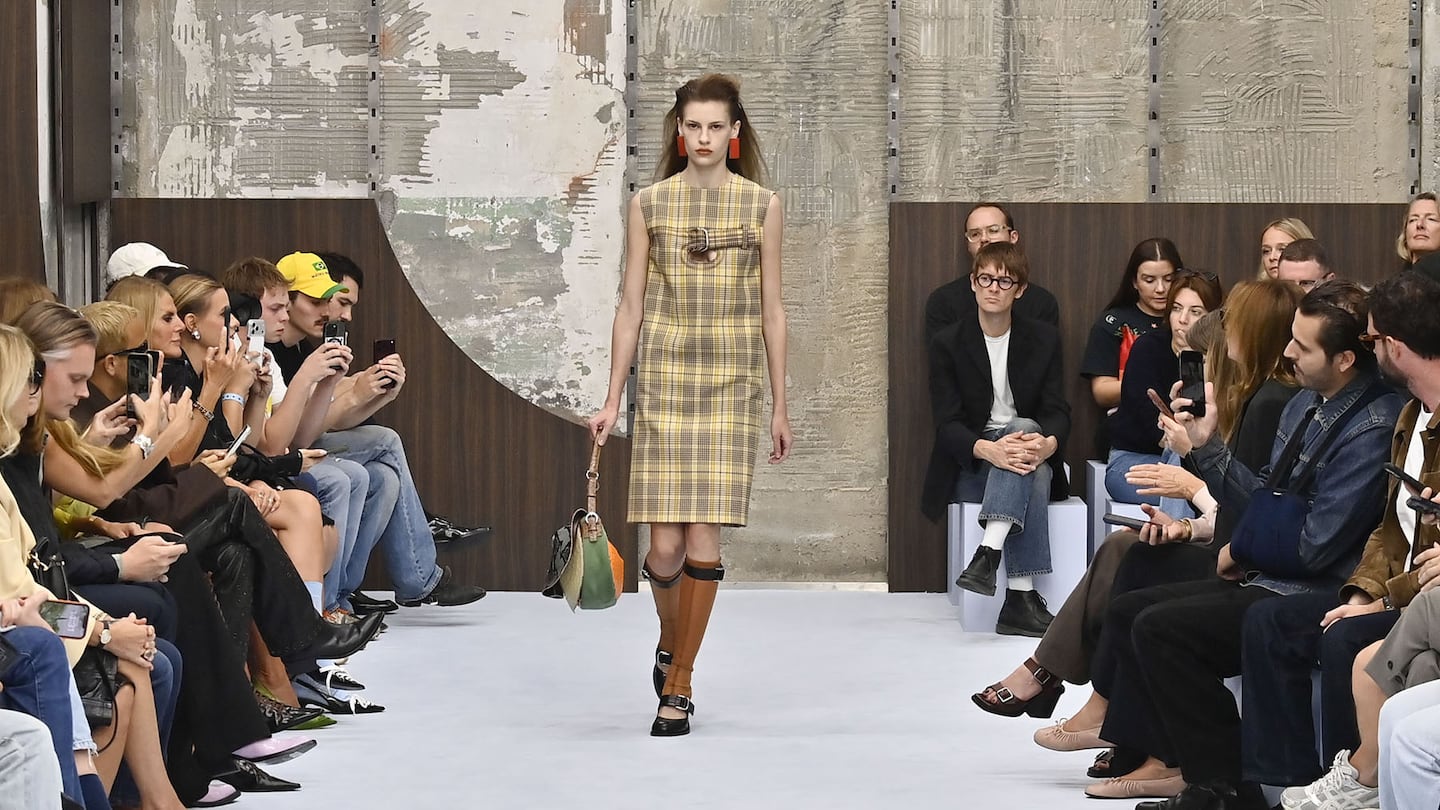
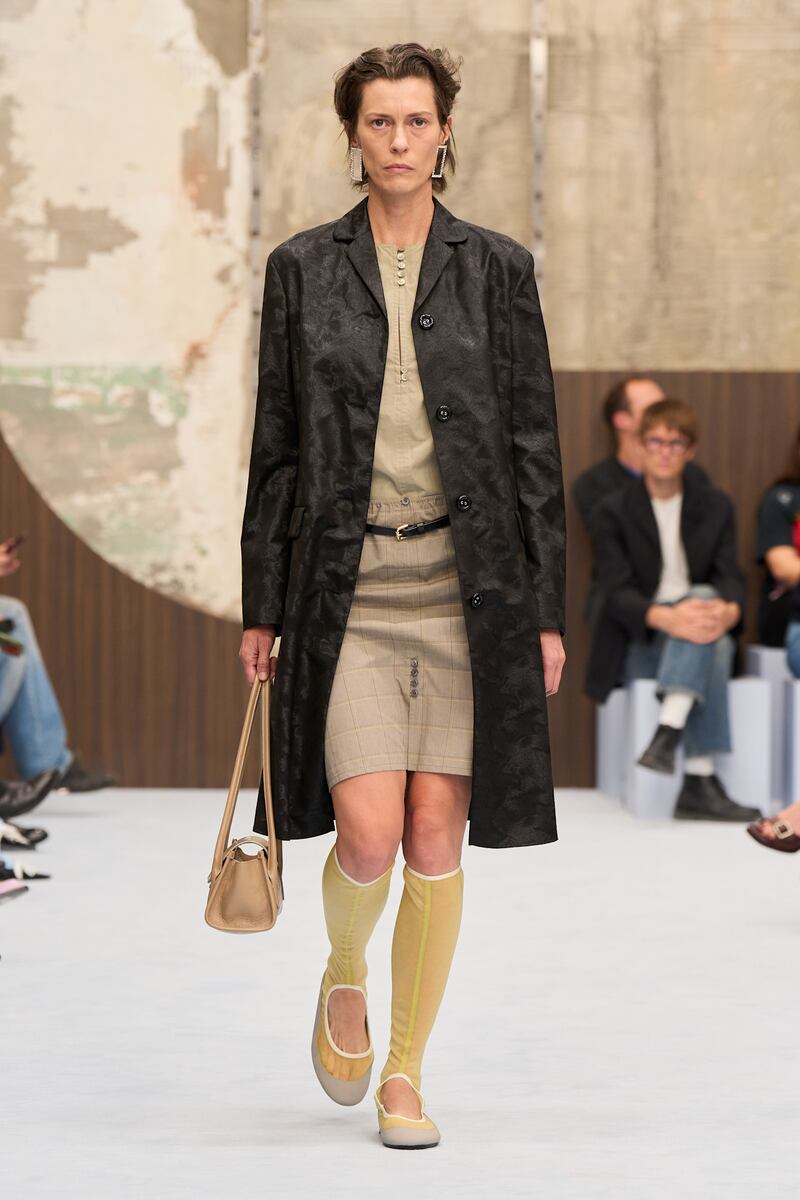
At Marni, Meryll Rogge is bringing gusts of gritty realism in an attempt to make the brand more youthful, more cool. There’s an intriguing friction as Rogge’s harsh edge meets the quirky bourgeois spirit that Consuelo Castiglioni embedded in Marni — a sensibility that once found devoted followers among gallerists, architects and the artsy crowd. Rogge’s proposition is harder and sharper, at times a bit effortful.
The clothes made that shift explicit. Amid the funky knits and mismatched patterns, there were exposed linings and construction; cut-outs framed the body. Knits were stripped of their expected backs; underwear structures moved outwards; industrial stitching became decoration. There was a dryness and severity to it all that had its appeal. But the playfulness of Marni came across as more of a decorative trait rather than a state of mind. Rogge is making the brand tougher, younger, stompier. Time will tell whether that toughness can become equally instinctive.
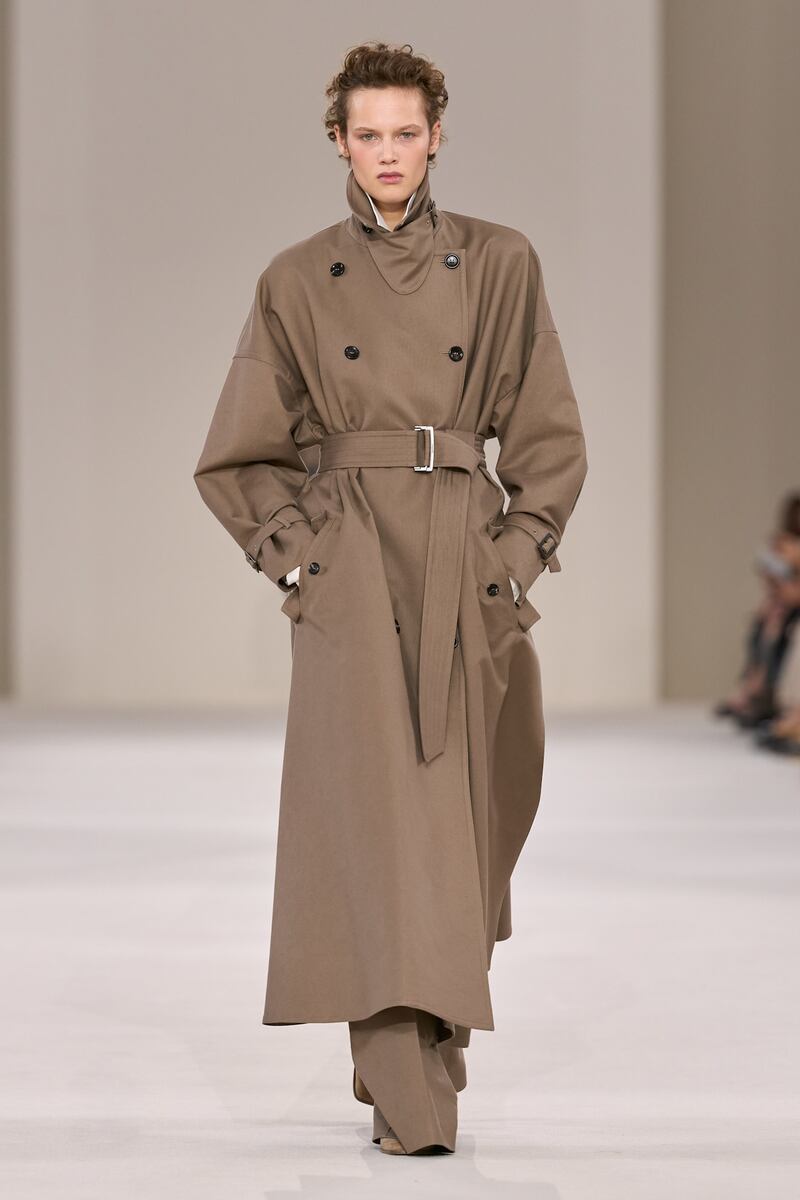
Clarity of purpose has never been an issue at Max Mara. This is a house that dresses real women rather than fantasies of women. That doesn’t mean creative director Ian Griffiths can’t indulge in lofty thinking or flights of fancy; it simply means the clothes eventually have to land on earth.
ADVERTISEMENT
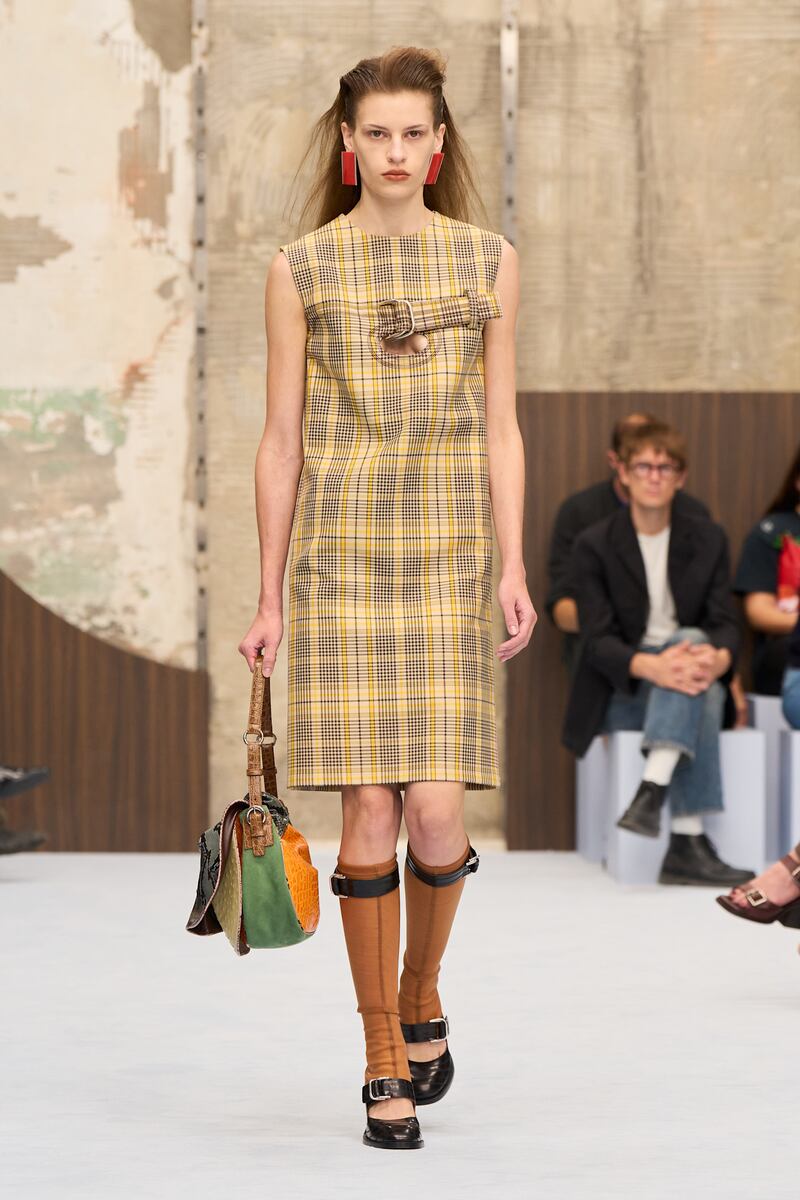
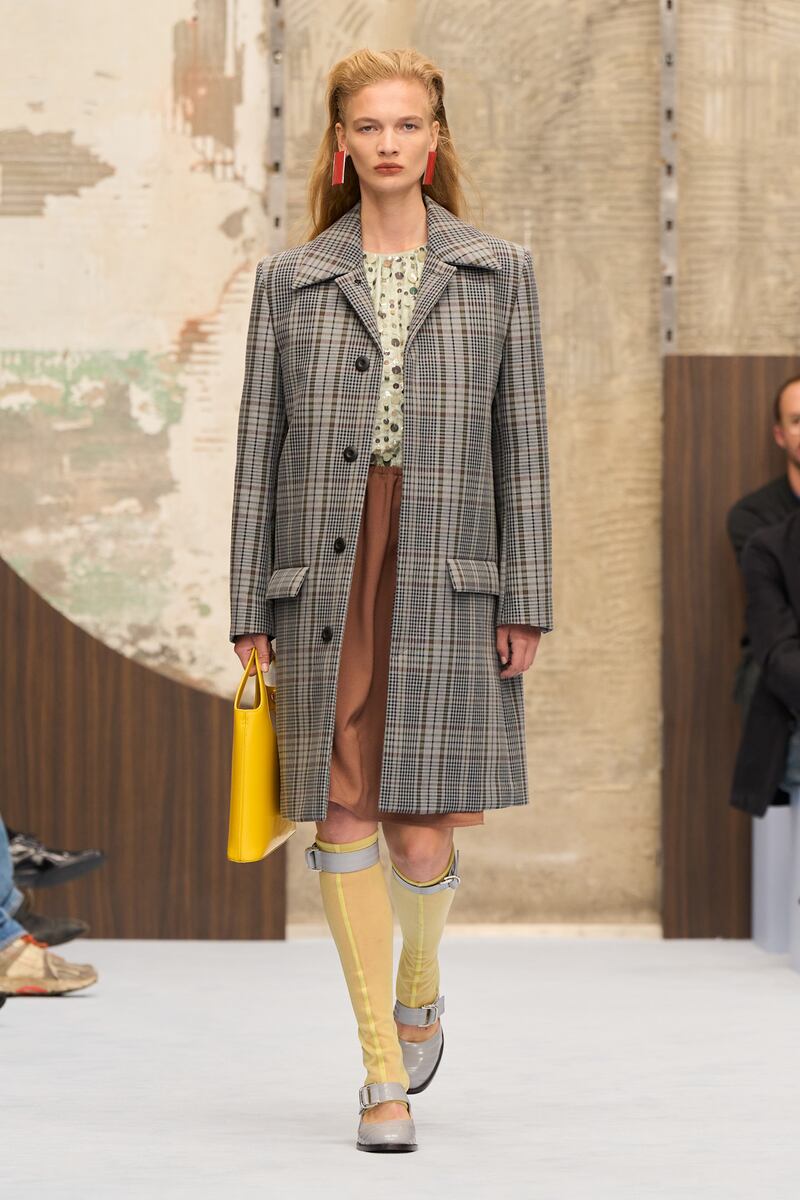
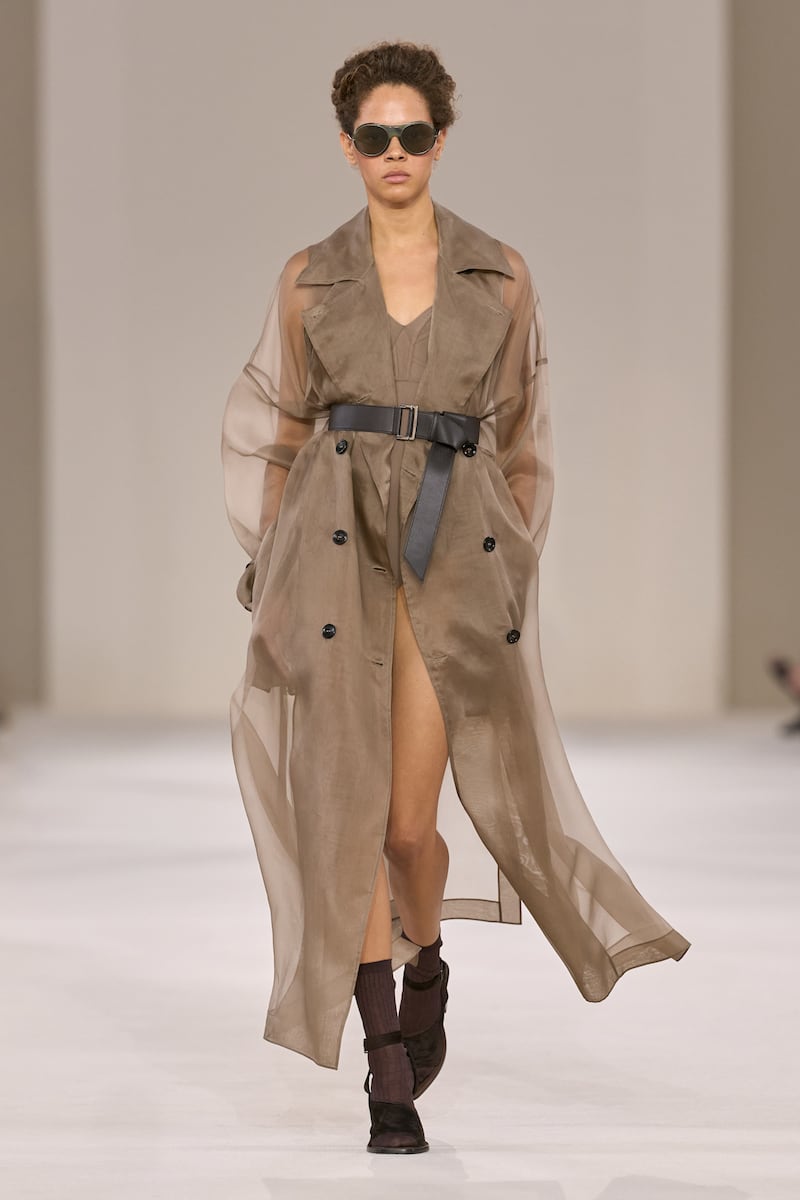
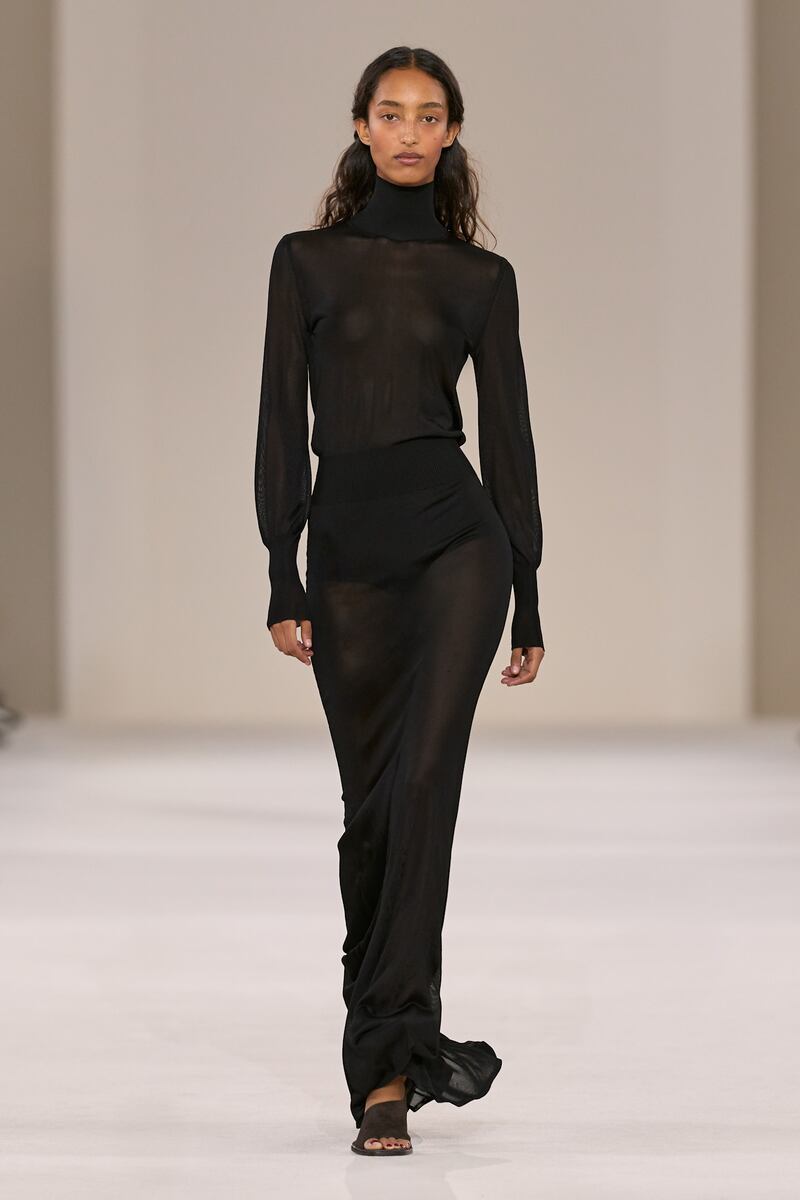
This season, they did so with particular conviction. Griffiths looked to pioneering women of the 1930s — explorer Freya Stark, wildlife photographer Osa Johnson, driver Eva Dickson and aviators Amelia Earhart and Beryl Markham — and imagined liquefied masculine tailoring with something of Madeleine Vionnet’s bias-cut liberation hovering in the background. A safari jacket was draped and knotted or stretched into a duster; fluid skirts and slinky knits softened the utility.
The show, a progression of neutrals, opened with a capacious trench and ended with a body-skimming dress. Nothing bled outside the lines. It didn’t soar either, but perhaps it didn’t need to. Max Mara’s pragmatism was the point.
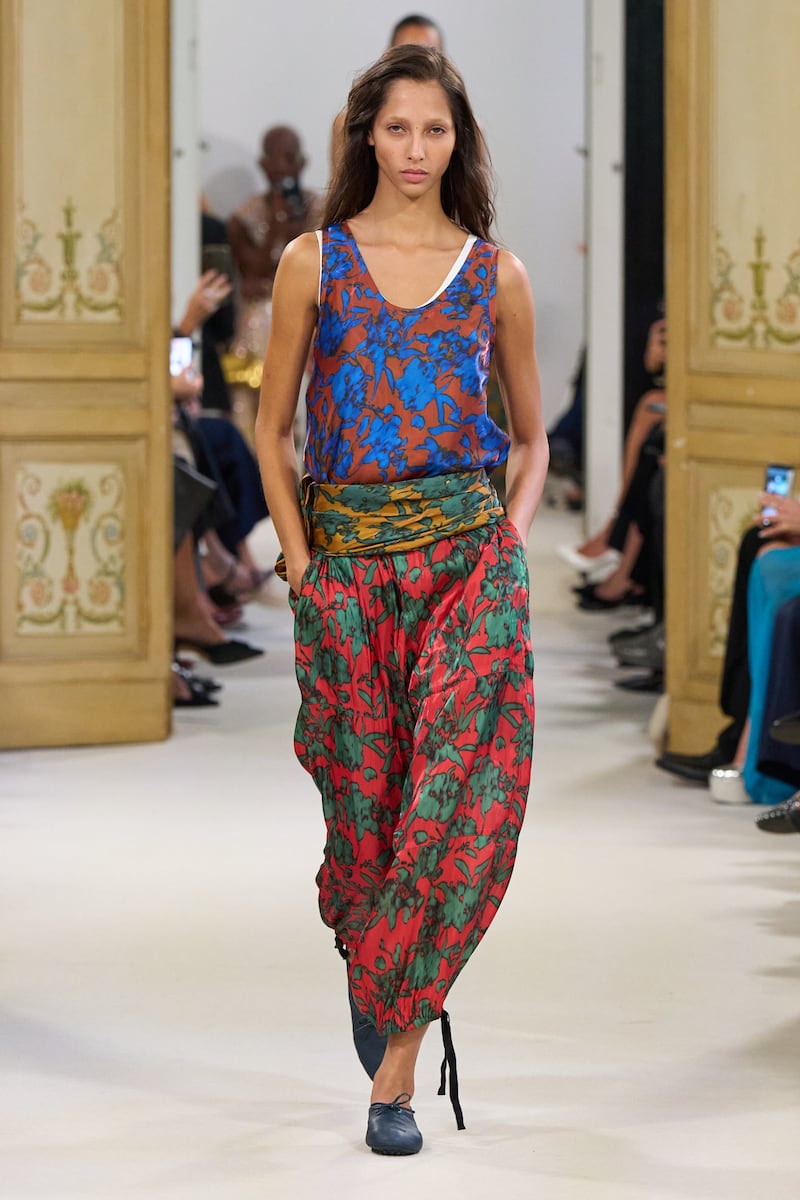
At Alberta Ferretti, Lorenzo Serafini imagined summer as an escape and a state of mind. Lingerie details, slip dresses, kimono jackets, balloon trousers and fluid layers evoked the bodily freedom of Léon Bakst and George Balanchine, while prints brought Matisse into the picture. At moments, an air of Dries Van Noten could be felt a little too strongly. Still, Serafini has a light, almost aloof touch that can be seductive, and knows how to please the female body with delicacy and elegance.
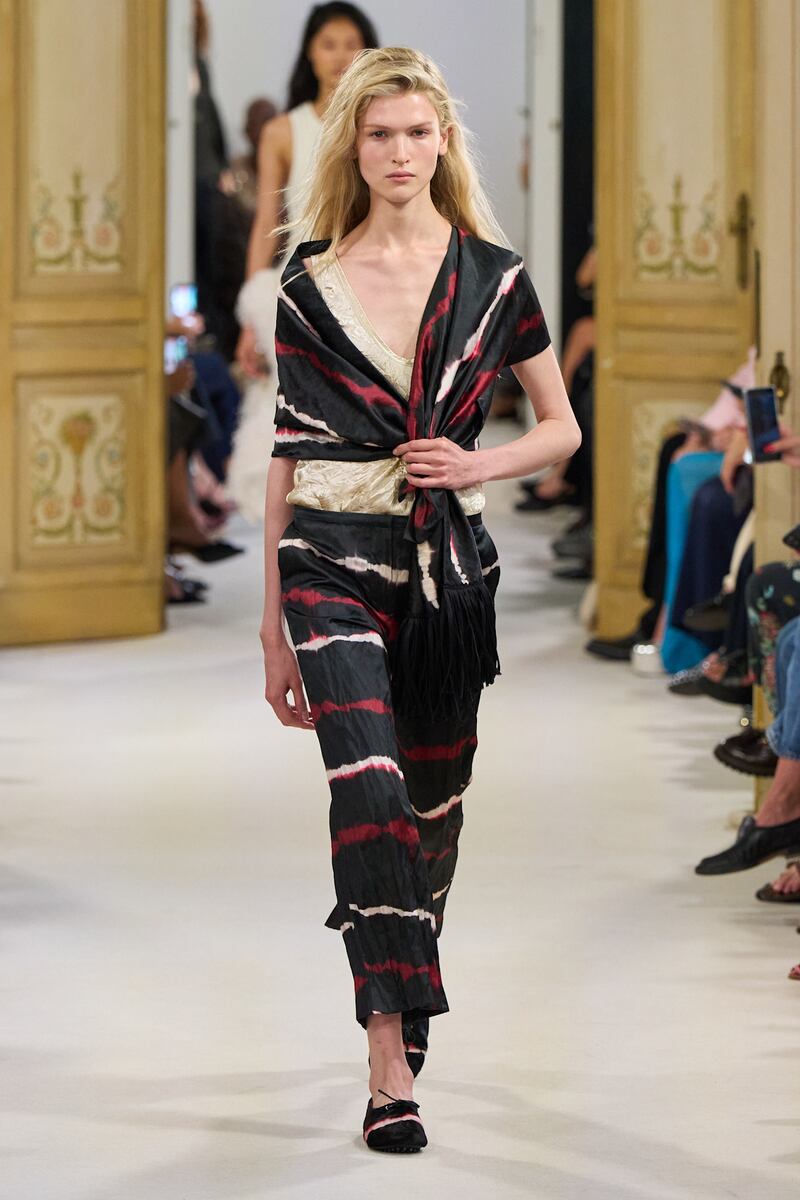
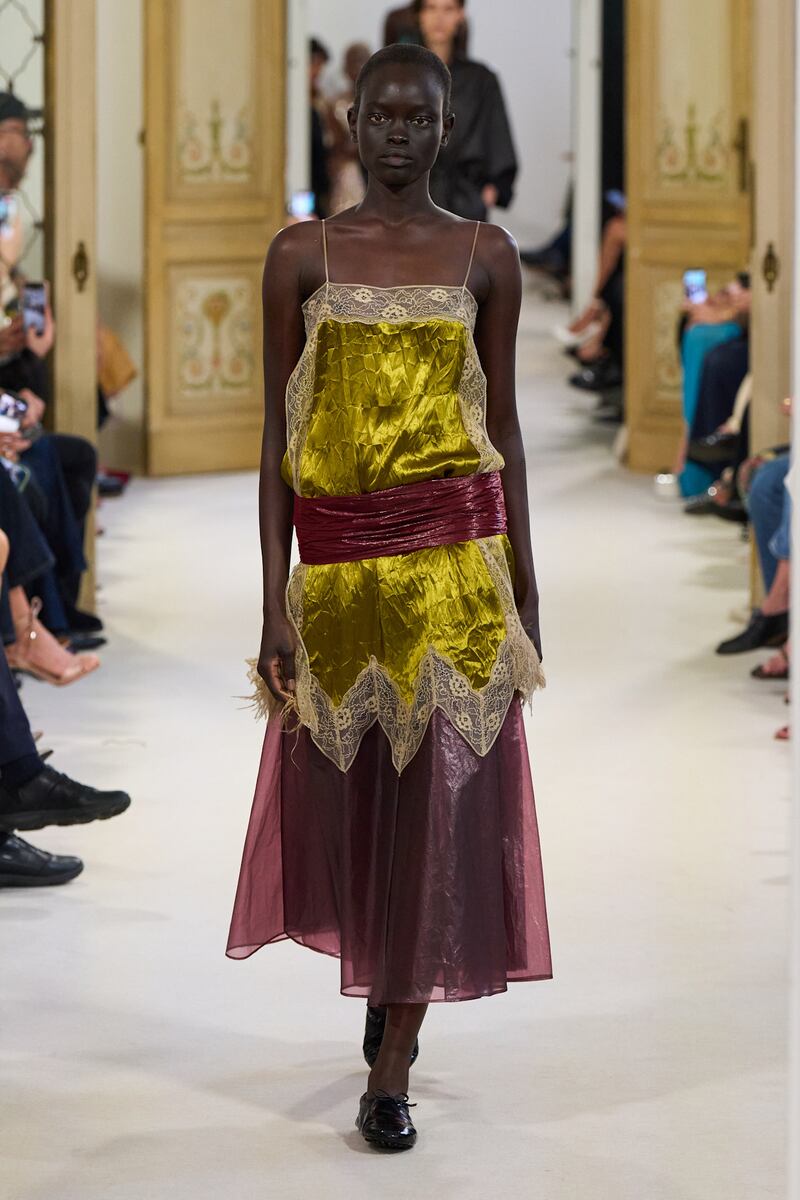
Francesco Murano travelled somewhere more interstellar. His languor had a sci-fi quality, informed by Fritz Lang’s “Metropolis” — the 1927 movie whose events were set, coincidentally, in 2026: Bodies became elongated columns, rigid folds dissolved into fluid draping, glossy jersey reacted to light, capes opened around the body. The young designer handles flou with confidence, and it is engaging to watch his expression grow. A clearer signature would help push it further.
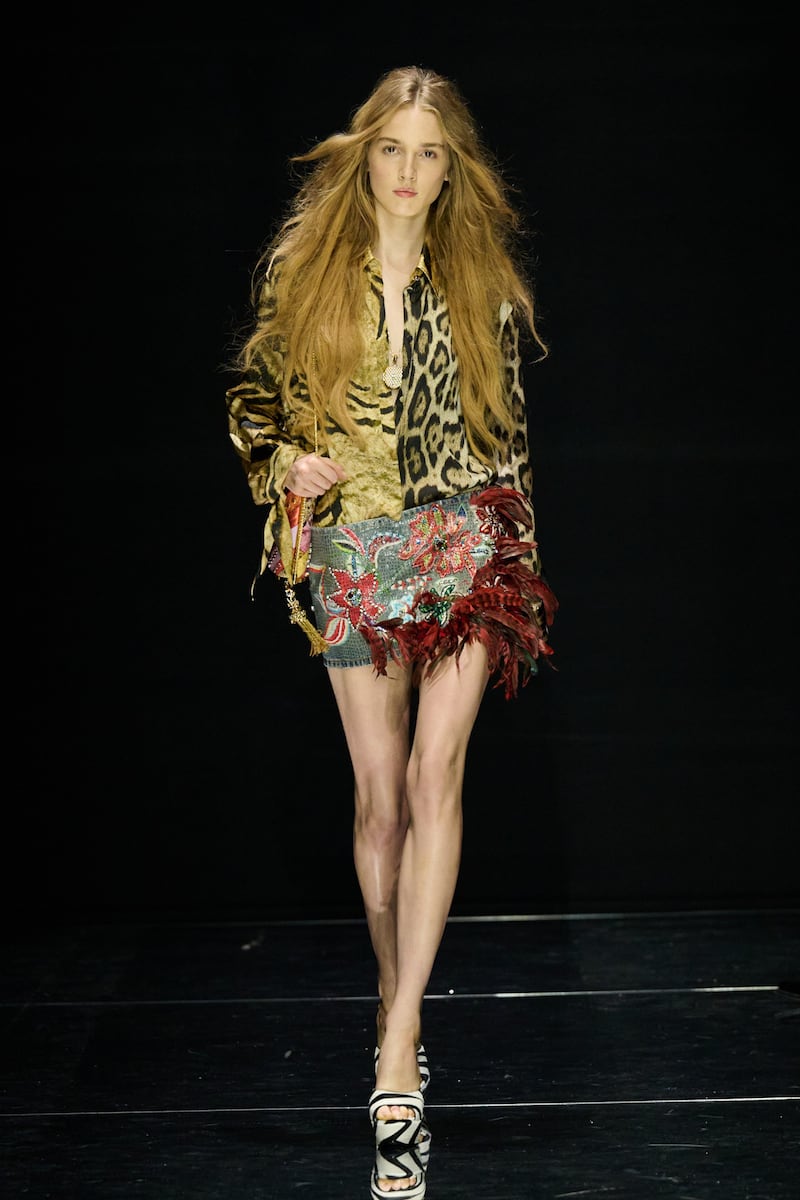
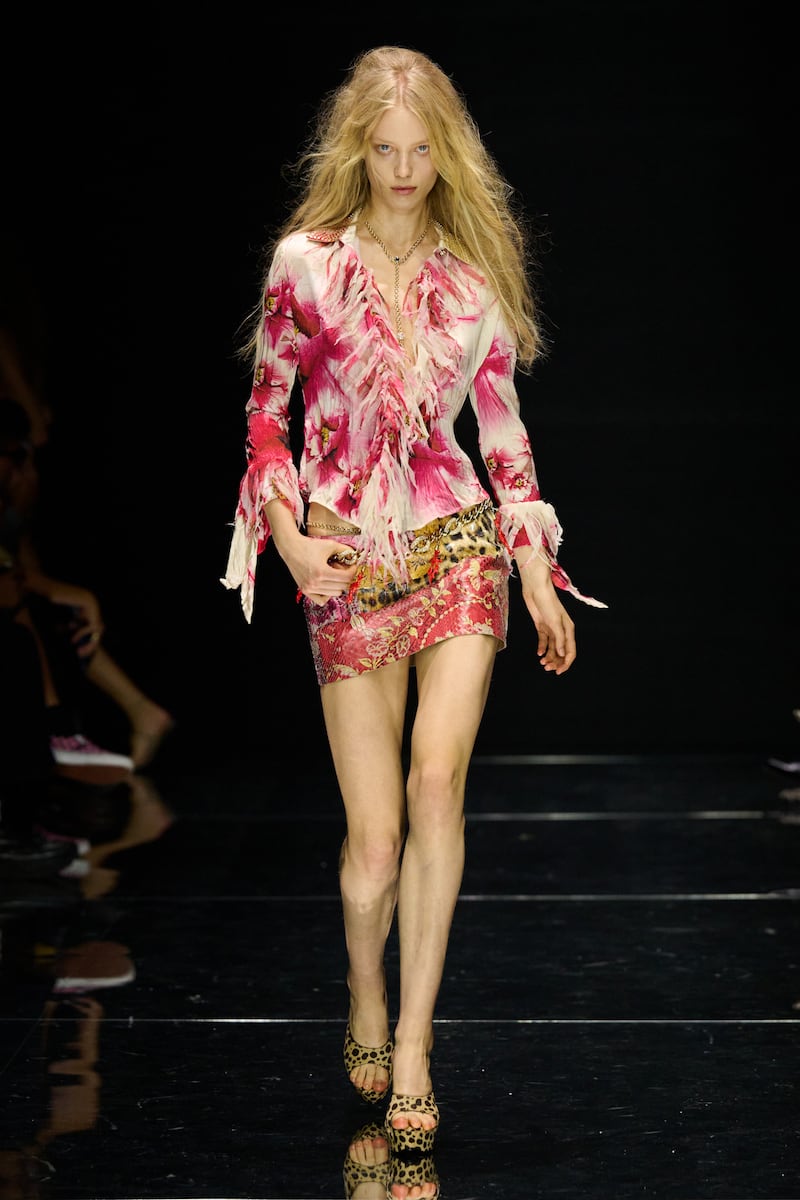
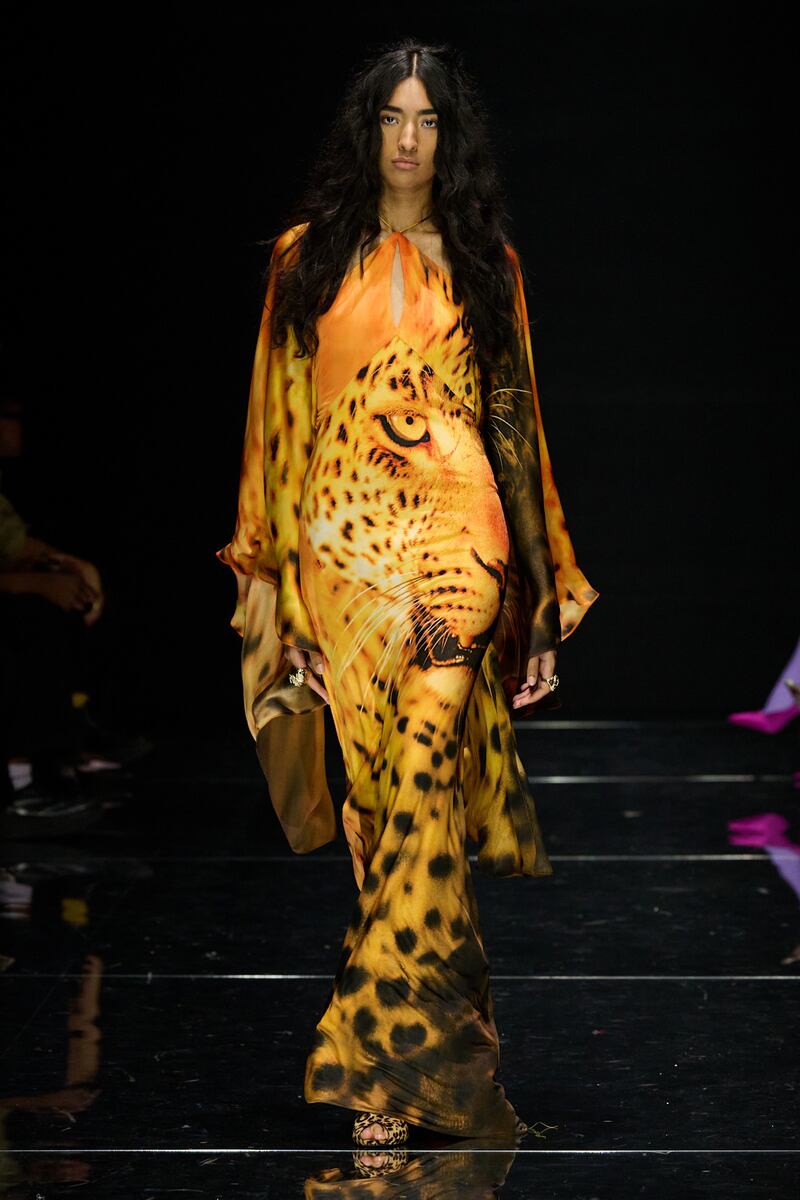
At Roberto Cavalli, Fausto Puglisi looked to the 2000s, when Roberto Cavalli was at his peak. The official narrative placed the collection in Los Angeles, a city of excess, contradiction and restless surfaces, while the clothes piled leopard, tiger, tattoo, floral and other prints onto chiffon, satin, jersey and denim.
On the runway, however, the strongest impression was less Los Angeles than archive. It felt like a raid on peak Cavalli, with pieces mixed with almost philological rigour rather than reinvented. The nostalgia was inevitable. It all felt correct, recognisable and full of Cavalli-ness, but also curiously stuck in the time it was celebrating.
Time had a different weight at Emporio Armani, where everything is set to change next season with the arrival of Dario Vitale. Silvana Armani and Leo Dell’Orco opted for a quiet farewell: womenswear and menswear presented together on mannequins rather than sent down a runway.
It was a wise choice. Up close, the constant exchange between masculine and feminine became particularly present. Salt crystals both decorated and altered surfaces; acid washes and cold dyes made colour irregular; linen looked worn and seersucker crumpled. Everything was fluid and shades of grey were the colour of the season. As such, there was something of a “greatest hits” quality to the exercise. It was also a reminder of how far this vocabulary has already travelled — and how much a fresh point of view could help to move it forward again.
Loading recommended reads…
The New York Times photographer and style columnist joins Imran Amed on The BoF Podcast to discuss why practice makes permanent, the blind spot he had to admit to himself and why the style he looks for is meant to feel within reach.
In Panipat, 1 million tons of used clothing a year are turned into products for global brands, but dangerous machinery and few safeguards mean life-changing injuries are common
The struggles of Nanushka and Coperni expose the challenges of turning a promising label into a sustainable business, even after successfully building a global customer base and distinctive visual identity.
What to keep and what to change when a brand changes designers? Pierpaolo Piccioli’s brief stint at Balenciaga and Kering’s effort to course correct by bringing in Martine Rose offers learnings for houses seeking creative renewal.