Agenda-setting intelligence, analysis and advice for the global fashion community.
Agenda-setting intelligence, analysis and advice for the global fashion community.

If there’s one thing Gen Z knows how to do, it’s follow a trend.
As the first generation to come of age online, Gen Zers have been inundated with fashion content from their earliest days of getting dressed. If previous generations formed their identities through organic, real-life communities, today, those conversations happen online, making subcultural sartorial codes accessible to all. While that’s arguably led to a generation more plugged into fashion than ever before, it’s also caused an epidemic of sameness.
“You become whatever your algorithm feeds you,” said Hillary Taymour, founder of the New York-based indie fashion brand Collina Strada. “Within the phone, it’s quite limiting.”
But after years of keeping up with the fast-paced “microtrend” cycle, now, Gen Z is chasing a different phenomenon: uniqueness. TikTok and YouTube are filled with videos documenting users’ journeys to find their personal style. According to Google Trends, the phrase’s popularity skyrocketed in 2025 and hit an all-time peak in February. Now, younger shoppers are piling on playful accessories, sporting niche logos and layering fragrances in hopes of cultivating a look that stands out.
ADVERTISEMENT
While a few years ago, brands were racing to play catch-up with whatever aesthetic was trending on TikTok, now, they’re speaking to an audience that doesn’t want to look just like their peers. With that, they need to consider how to market to a generation that is increasingly craving individuality above all else.
Gen Zers are hyperaware of their own digital footprint. Historically, that’s meant they’ve been reticent to take fashion risks out of fear of being “cringe” or “cheugy.”
Couple that anxiety with e-commerce making pieces available across borders and influencers recommending the same products en masse, and Gen Z quickly adopted its own uniforms, the most obvious example being the oft-memed “going-out” ‘fit of blue jeans and a black top.
Lately, however, there’s a growing sentiment that keeping up with trends is not only bad for the wallet — pushback against overconsumption has been on the rise — but also one’s “personal brand.”
“If you are one of 10 girls in a pair of jeans, a white tank top and a Chanel bag, that isn’t … projecting your unique, authentic individuality,” said Kristen Naiman, chief brand officer of The RealReal.
The desire to self-differentiate may also be a form of rebellion against the lack of control many jaded Gen Zers feel about the state of the world, including political and economic turmoil, a challenging entry-level job market, overconsumption fatigue and advancements in generative AI that may threaten their creativity.
“We’re bombarded every single day, scrolling, of people telling you what you’re supposed to buy,” said Naomi Motta, a 25-year-old fashion content creator. “There’s this burnout of seeing that constantly [and] of trying to fit into this mould.”
Gen Z’s quest for personal style is manifesting in a multitude of ways. Secondhand shopping, for one, is on the rise, with younger shoppers viewing it as a way to find pieces none of their peers own. In the past year, Gen-Z favourite resale platform Depop saw a 46 percent year-on-year jump in global sign-ups; 87 percent of Depop’s buyers are younger than 34.
ADVERTISEMENT
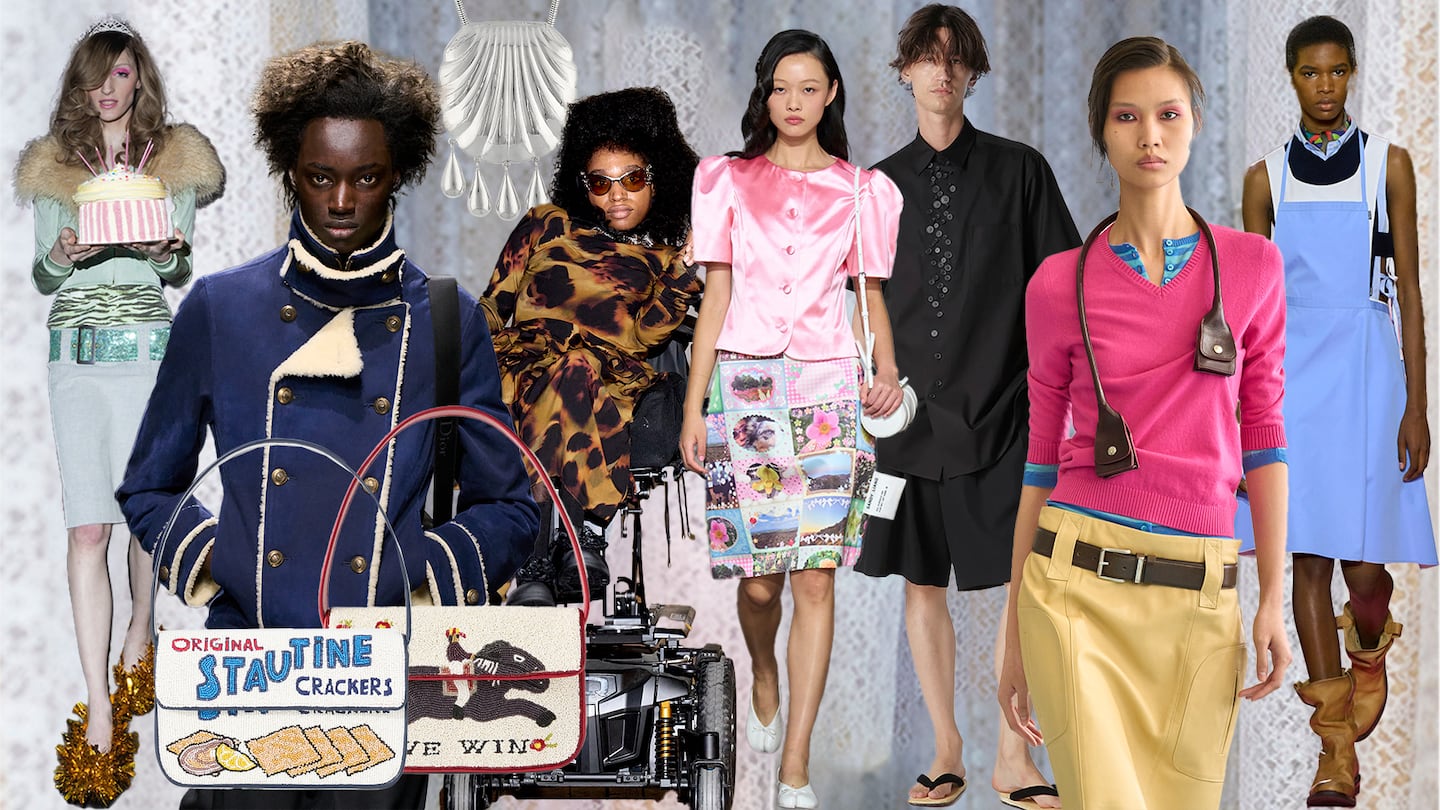
In both the primary and secondary markets, Gen Z is experimenting with if-you-know-you-know markers of taste: small pieces that stand out and can be dressed up or down like statement accessories — think Juju Vera’s viral shell necklace, bolo ties and wide studded hip belts. Even when shopping for basics, they want a twist, like fencing or military jackets from brands like Paloma Wool and Damson Madder. The addition of seemingly simple details, like a funnel neck to a wool coat, or too “many buttons” to a basic collared blouse (Yohji Yamamoto re-released a piece that does just that in February), is a subtle way to distinguish one’s look from the rest.
But there’s a thin line to walk between having no personal style and having “too much.” Fashion content creator Kyan Kri’s over-the-top subway outfits, for instance, were lambasted in 2023 as sensational for the sake of shock value. And the quest for uniqueness can sometimes manifest in even more conformity, as evidenced by the ubiquity of bag charms and Labubu dolls.
Beyond simply making more creative pieces, fashion can also better entice younger consumers by appealing to their sense of individuality.
What that looks like in practice varies. Oftentimes, it starts with reflecting a designer’s own point of view, rather than attempting to cater to an abstract customer prototype.
Miu Miu’s subversion of the traditional — think kitschy aprons and tweed sets with perfectly imperfect tailoring — has cemented the brand’s status as a fashion bellwether for Gen Z. Sandy Liang’s designs often feature unique prints inspired by the paper stationery of founder Liang’s childhood. The brand’s customisable “trinkets skirt” even features vinyl pouches to display the wearer’s own small objects. Taymour is making comically large, insectile sunglasses; bejewelled frog rings and brightly patterned cargo pants affixed to overlaying miniskirts for shoppers who appreciate fun, whimsical dress.
“I just try to make things that don’t bore me,” said Taymour. “When you’re truly authentically yourself, that’s what people want.”
Other brands are finding ways to iterate on hero products to satisfy the craving. Marc Jacobs lets shoppers buy versions of its bags hand-painted with portraits of their pets. Staud sells 40-plus versions of its Tommy bag, beaded with imagery featuring everything from a can of caviar to surfers riding waves at the beach.
Creating new products isn’t the only option. Levi’s, Coach, Dr. Martens and Oscar de la Renta are among those who have started offering secondhand, one-of-a-kind pieces on their own sites, alongside their standard assortments. The independent gender-neutral apparel brand Tanner Fletcher even sells vintage homewares and sweaters on its website, each handsourced by the designers themselves.
ADVERTISEMENT
These personal touches can also be applied in marketing: Jacquemus’ nostalgic, jocular campaign for the Valérie bag, named after founder Simon Porte Jacquemus’s late mother, was shot from the intimate perspective of a child witnessing their mother in mundane moments — and received an enthusiastically positive reception. The RealReal’s marketing, which once focused on scoring a deal on trending luxury goods, is now centred around personal style. Later this year, the platform is set to launch “Real Talk,” a podcast aimed at helping shoppers find their own individual aesthetic.
Making a brand feel more reflective of a single perspective may feel limiting — but in actuality, it helps appeal to customers looking to bring more personality into their own wardrobes.
“[Many] have to think of their brand holistically … as if their brand is an individual, and what it means to be part of this individual’s universe,” said 29-year-old cultural commentator Mina Le.
Many high-end brands are struggling to connect with young consumers, who are either bored by dated marketing, turned off by high prices or both. Time is running out, as Gen Z is poised to dominate luxury spending by 2030.

Jessica Kwon is an Editorial Associate at The Business of Fashion (BoF). She is based in New York and holds a bachelor’s degree in English literature, creative writing and Asian/Pacific Islander American Studies from the University of Michigan.
Loading recommended reads…
Sales of gems, precious metals and artwork at Japan’s department stores climbed 19 percent in the first half of 2026 from a year earlier to $2 billion.
Though Adidas dressed both teams in the World Cup finals, the global football tournament still presented some bright spots for Nike, writes Bloomberg’s Andrea Felsted.
From our archive, the creator and host of award-winning podcast “Articles of Interest” joins BoF founder, CEO and editor-in-chief Imran Amed to explore what clothing can reveal about identity, culture, labour and the world around us.
Saunders, the brand’s first creative director in five years and a skilled colourist, promises to give Kate Spade the clarity it has long lacked. Now, Tapestry must apply the same long-term brand-building discipline that fueled Coach’s success.