Agenda-setting intelligence, analysis and advice for the global fashion community.
Agenda-setting intelligence, analysis and advice for the global fashion community.
When Allie Taylor was expecting her first child in 2022, navigating the baby consumer economy felt like, in her words, “drinking water from a fire hose.” The sheer volume of products she was told to purchase, compounded by the number of options within each category, was extremely overwhelming, she said.
Even so, Taylor managed to encounter a gap in the market: a stylish, somewhat affordable baby carrier. The options were either pricey — Artipoppe’s luxury carriers cost upwards of $400 — or purely utilitarian. So the next year, she and her husband launched Mabē, a line of soft carriers in various prints, priced at $130 each. Last month, the brand entered 1,700 Target stores across the US; it’s slated to grow 40 percent in sales this year.
Mabē’s opportunity comes at a strange time for the baby and maternity market. Around the world, birth rates have fallen to historic lows as people opt to defer parenthood, have fewer children or opt out of having children entirely. In the US, fertility rates have dropped 23 percent since 2007. At the same time, there have never been more baby products available — particularly on the higher end, as more parents trade up for higher-quality diapers, skincare, strollers and childrenswear. Last year, the market for baby- and child-specific personal care products was worth $23.4 billion in retail value worldwide, up from $18.9 billion in 2020, according to Euromonitor. During this five-year timeframe, the premium segment has consistently stolen share from its mass counterpart, accounting for 10 percent in 2020 to 10.8 percent last year.
Capturing even a fraction of a percentage point means a windfall of millions for a burgeoning brand like Mabē.
ADVERTISEMENT
“Even if birth rates are coming down, there’s still so much market share for us,” said Ariane Goldman, the founder of maternity wear label Hatch, which recently expanded its beauty line. “From a business standpoint, it just doesn’t impact Hatch.”
This is largely because parents today, far older than parents of decades prior, have a higher appetite for spending. Beyond a sizable disposable income, they enter parenthood with more knowledge and intentionality.
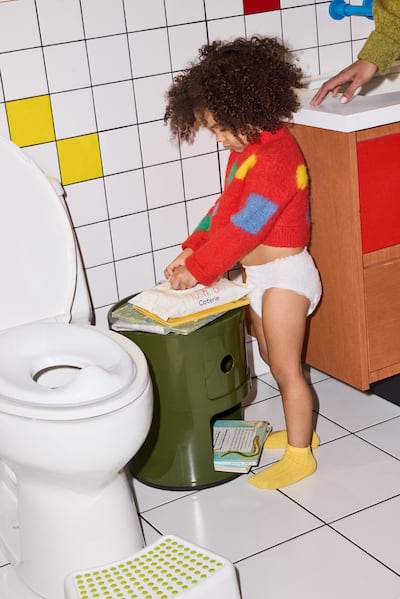
“With fewer babies being born, we’re seeing a really strong shift from volume to value,” said Jess Jacobs, chief executive of Coterie, a diaper brand that markets itself as non-toxic and costs nearly twice as much as Pampers. “Even if parents are having fewer kids, they’re investing more time and money in the products they purchase.”
At a time when inflation-fatigued shoppers are laser-focused on value, baby supplies are the last category that consumers are willing to trade down in. A 2023 consumer sentiment survey conducted by PYMNTS Intelligence found that only 8 percent of American shoppers said they would consider downgrading their baby products to cut costs, compared to nearly 40 percent that said they’d do so on clothes or accessories.
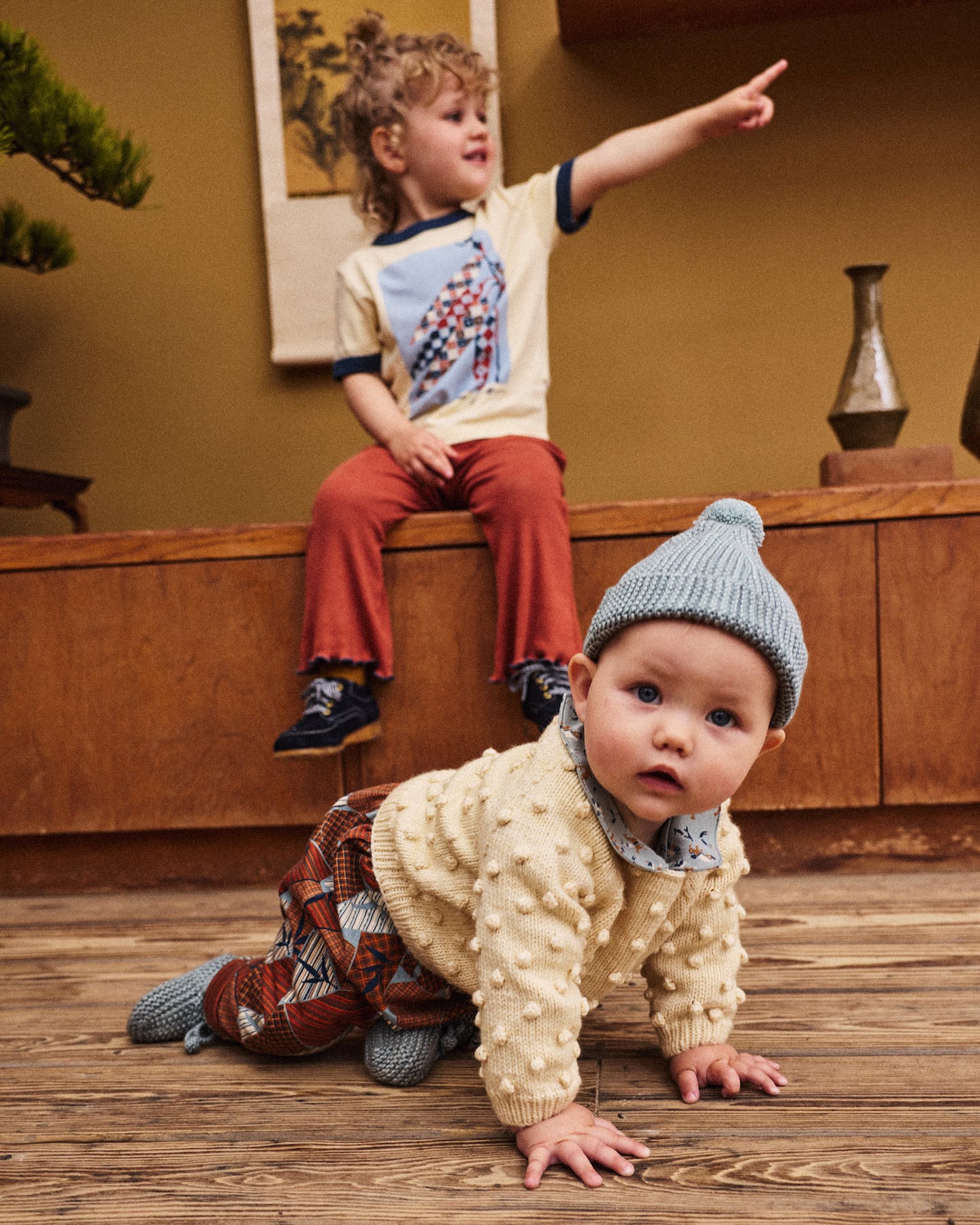
An understanding of high-quality, natural fibres such as wool, for instance, has allowed luxury kidswear brands like Misha & Puff to charge prices upwards of $200 for a single tiny sweater. “A lot of our products are handknit and customers today know what that looks like and what that cost,” said Anna Wallack, its founder.
These new consumer attitudes have translated to further growth for the retailers operating in this space and more opportunity for brands to become full-fledged lifestyle empires beyond their original niche. Target, for instance, is adding 2,000 new items largely in the premium baby space alongside a new “Baby Boutique” retail concept that will roll out in 200 stores. Babylist, a baby registry platform and online retailer, is on track to hit $1 billion in sales this year through direct transactions on its platform in addition to affiliate links and on-site ads.
Meanwhile, luxury stroller brand Cybex is making a significant push into apparel with designer hires in the category and has its sights set on deepening its penetration in China. Another stroller label, Bugaboo, teamed up with Stella McCartney last month on a limited-edition line.
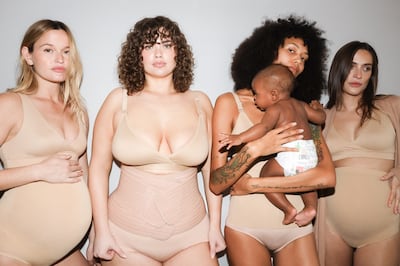
Maternity apparel brand Bumpsuit, meanwhile, is developing a beauty line after releasing a popular postpartum care kit in 2025, and Hatch will soon launch a new line of babywear. Kindred Bravely, known for nursing bras and post-partum apparel, acquired baby gear brand Storq late last year.
ADVERTISEMENT
“The modern parent has such a different approach to what they buy, taking it on as part of their identity,” said Taylor. “It’s kind of like the wild west in this category right now.”
Whereas parents from previous generations may have approached childrearing and the purchases it requires as a problem to solve, today’s new moms and dads see it as an exercise in self-expression — a trend that began in Japan and South Korea, two of the first countries to grapple with declining birth rates, and has more recently spread to Western countries.
The dynamics around low fertility in fact may be the primary catalyst behind the boom in the baby consumer economy.
“People used to get married and have kids because it was something they had to do, but today people realise they have the power to choose,” said Nicole Trunfio, founder of Bumpsuit. “That sits right alongside with the idea of buying more intentionally, and selecting the pieces that they want to support them through this next life journey.”
In the process, high-end baby gear has quietly become the ultimate status symbol. As delayed family planning and rising costs make starting a family feel like an increasingly untenable milestone, parenthood itself is being reframed in the cultural zeitgeist as a luxury. Certain items — whether it’s Artipoppe’s $800 tweed baby carrier or Silver Cross’ $5,000 pram created in collaboration with Lamborghini — now carry the same social currency that a Birkin once did.
Motherhood is intensely complicated and taxing emotionally and physically. And there’s not a lot of actionable ways to address their anxiety other than shopping.
In a similar way that luxury travel and experiences have eaten into wallet share historically reserved for luxury fashion, baby gear has emerged as a badge of a life well-lived, said Sara Petersen, author of the book “Momfluenced” and whose newsletter examines motherhood through the lens of feminism. At the same time, shoppers have continued to stray from traditional luxury brands — US credit card spending on luxury brands fell for a third consecutive month in September, recent Citi Card data shows.
“Investing in luxury baby and motherhood products is an outward signifier that you really value this season of life,” Petersen said. But inwardly, she said, “Motherhood is intensely complicated and taxing emotionally and physically. And there’s not a lot of actionable ways to address their anxiety other than shopping. It’s deeply depressing, but true.”
Unlike in fashion and beauty, where dupes and high-low buying are more or less universally embraced, premium baby brands command an almost austere sense of loyalty from their brand perception alone. “I’m almost apologetic about getting something from Facebook Marketplace, even though I shouldn’t feel ashamed of that,” said Megan Graham, founder of travel beauty brand Ries, who gave birth to her first child in 2025. “The reality is you could get all of this fancy stuff for free secondhand.”
ADVERTISEMENT
In conversations with multiple first-time mothers, many expressed a sense of guilt when they opt for the more affordable version of strollers, bottle cleaners and other gear.
“It’s like when you have the Doona rather than the Graco, you’re doing ‘better’ than the other parent, or at least that’s how people think,” said Hannah Hayes, founder of apparel brand Marjon, who had her first child in June. “It’s definitely a status symbol, and one that people can’t replicate as easily as just buying the new popular designer bag.”
Creating that sense of covetability, however, isn’t just a marketing ploy. At the end of the day, the most important way to carve out market share in this so-called Wild West category is through product innovation, brand operators say.
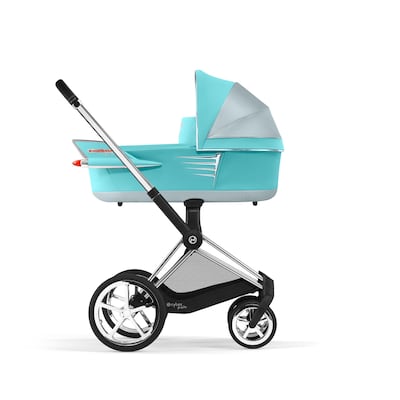
Cybex, for instance, recently launched the first car seat with a full-body airbag in 2021. The brand was also among the first to introduce electric strollers, or strollers equipped with electric motors akin to an e-bike or scooter.
“We concentrate 50 percent of our efforts on technology and the other 50 percent to meet the cultural expectations of our parents,” said Martin Pos, founder of the Bayreuth, Germany-based brand.
When Kindred Bravely first launched its nursing bra a decade ago, there were hardly a handful of alternatives on the market, according to chief executive Carrie Welch. Since then, the brand has obtained multiple patents on its products, including a bra that enables mothers to pump and breastfeed at the same time.
“We’re not in the game of SKU proliferation and taking up shelf space,” said Jacobs, the CEO of Coterie, who added that it took the brand three years to test and develop a skin care line before its launch. “Nothing is white label, and it’s more important for us to say no.”
Editor's Note: This article was amended on Oct. 16, 2026 to update Cybex' correct headquarters location and Martin Pos' at the company.
Once overlooked, pregnancy and perinatal care is becoming an increasingly innovative category. Emerging founders are building global beauty brands rooted in safety, science and emotional connection, proving that “mama care” can be both elevated and enduring.
More fashionable retailers and brands are piling into the $145 billion childrenswear market as a generation of founders and their fans age into parenthood.
Most women only wear maternity clothing for a few months, so are unwilling to invest in fashion when pregnant. Could rental businesses offer a solution?

Cathaleen Chen is Retail Editor at The Business of Fashion. She is based in New York and drives BoF’s coverage of the retail and direct-to-consumer sectors.
Loading recommended reads…
The Indian brand will hold a special event at the Florence show.
Phu Nhuan Jewelry JSC is moving away from its policy of repurchasing diamonds at nearly full value after a smuggling probe shook confidence in the diamond market.
Attendees of the first ever UK-edition of Sephora’s immersive event have taken to social media to voice their complaints after influencers experienced a more generous preview.
Galderma, Natura and L'Oréal are designing products for customers worried about facial sagging and volume loss, looking to capitalise on a new set of skin concerns.