Agenda-setting intelligence, analysis and advice for the global fashion community.
Agenda-setting intelligence, analysis and advice for the global fashion community.

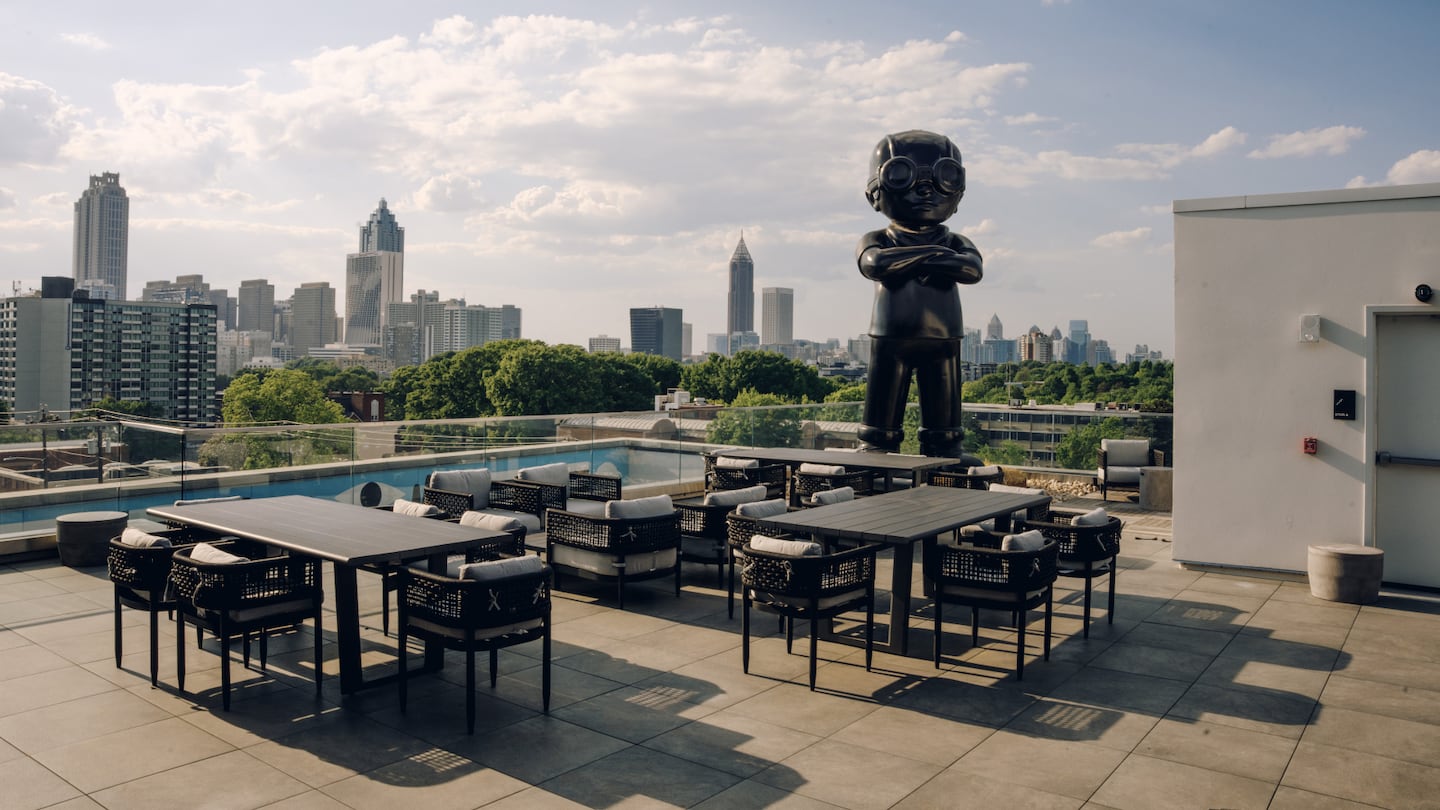
If there’s a single store that illustrates James Whitner’s ambition for multibrand retail under his nearly 20-year-old business, The Whitaker Group, it’s A Ma Maniére’s newest flagship on Edgewood Avenue in Atlanta.
The 23,000-square-foot luxury store, which took six years to construct and opened in May, is six stories tall and features a mural painted by American artist Nina Chanel Abney that scales the height of the building. Beyond two floors of retail selling brands including Nike, Jacquemus, Timberland and Lemaire, A Ma Maniére’s largest location to date also boasts five hotel rooms, a restaurant with a bar, an art gallery and a rooftop lounge.
But The Whitaker Group’s network, which encompasses 24 US stores across its A Ma Maniére, Social Status, APB and Jaide retail banners, is defined by more than ventures into experiential shopping and hospitality. The group is guided by investment in areas which directly address Black buying power that’s traditionally been overlooked. Since opening its first store in Charlotte in 2005, Whitner’s business has bypassed first-tier cities like New York or Los Angeles and instead focused on underserved markets in Black neighbourhoods of cities such as Detroit, Baltimore, Washington, DC, Houston and beyond.
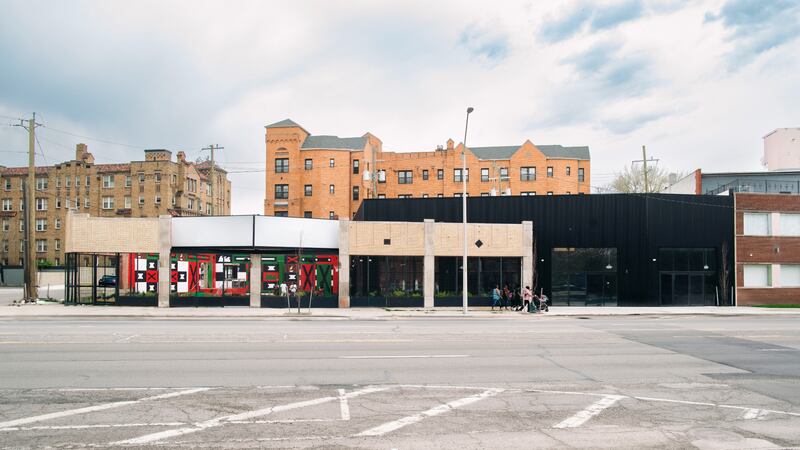
“I literally prioritise the Black dollar,” said Whitner. “If you look at our expansion and growth plans across The Whitaker Group, since we started and through the next five years, you’ll just find it’s where Black men and women show up in the US.”
ADVERTISEMENT
This year alone, the group, which is wholly owned by Whitner, intends to increase its store count to 30, with future openings planned in Atlanta, New York, Chicago, Pittsburgh, Philadelphia and Dallas. Whitner is also trying to hit a goal of hosting more than 6,000 events across all The Whitaker Group’s spaces by the end of 2026.
It’s an ambitious plan for the business, which has hit turbulence at times. Its “best year” was 2022, according to Whitner, when it generated over $100 million in revenue and more than $30 million in profit. Whitner declined to share the most recent figures but acknowledged that sales are down from that peak as customers have cut back.
Multibrand retailers across the industry are facing headwinds, with players such as Ssense and Saks filing for bankruptcy protection as they struggled with rising costs and mounting debt, while sneakers and streetwear — among The Whitaker Group’s key categories in the past — have cooled. Whitner himself had to navigate major hurdles when his business was tied to a federal investigation over a multi-million-dollar sneaker reselling scheme, a matter resolved in 2024 when prosecutors declined to bring charges.
Whitner has forged ahead with the store openings regardless and expressed confidence the business will grow in the coming years by maintaining its unwavering focus on Black consumers, who continue to be its core audience and biggest supporters.
“When we think about this generation, they want to know that you care about the community,” said Shawn Grain Carter, an associate professor of fashion business management at the Fashion Institute of Technology (FIT). “His conversation is ‘I value you, even if other brands don’t.’”
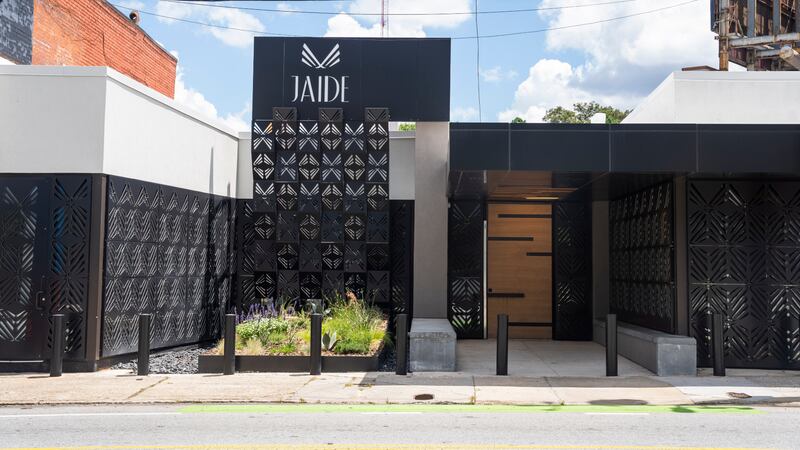
The Whitaker Group’s strategy isn’t just to open stores at random where there are Black neighbourhoods. Each business in its portfolio addresses a specific group within the demographic it’s prioritising. For example, its APB boutiques are located in southern cities that are in close proximity to historically Black colleges and universities, whereas its newly opened Jaide stores zero in on serving women of colour.
“For A Ma Maniére, we look for big major metropolitans that have a high population of African Americans. For Social Status, we focus on reaching Black Americans between the ages of 18 to 30,” said Whitner. “Then we look into those markets and figure out where we need to be.”
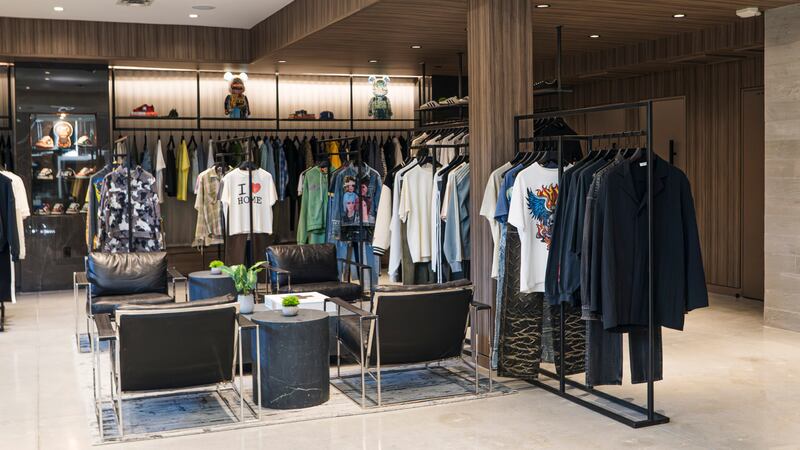
Among Whitaker Group’s four banners, A Ma Maniére carries the most premium brands, from Rick Owens to European luxury houses such as Loewe. It also sells its own private label, known for collaborations with brands like Nike and Adidas that resonate across sneaker culture, like its popular reworkings of retro Jordan models — frequently contenders in “sneaker of the year” conversations — or its new takes on Nike’s Pegasus Premium running shoe.
ADVERTISEMENT
While most luxury retailers open in Atlanta’s Buckhead neighbourhood or Lenox Mall, Whitner purchased land on Edgewood Avenue for his A Ma Maniére flagship because it’s a strip historically connected to nightlife and Black culture in the city. Martin Luther King Jr.’s birthplace is a short walk from the store’s front door.
“The fact that they based their newest store specifically in Atlanta represents something culturally that’s important,” said Josué Thomas, founder of Gallery Dept., a Miami-based label stocked at A Ma Maniére.
The Whitaker Group chooses spaces it can buy rather than lease. Whitner’s background is in residential real estate, and he maintains sole ownership over the businesses that make up the group, including more than two dozen other corporate entities that primarily serve as real-estate holding companies. Whitner is cognisant of the broader gentrification impacting the areas where he’s opening and said his aim is to ensure those stores can remain part of the community even as prices rise.
“Opportunities to own on high streets are often so expensive that you can’t really participate,” said Whitner. “You have to go into neighbourhoods that are historically ours, and try to help reshape them before they hit full gentrification, because it’s about building a place there before the neighbourhood flips so there’s always a piece of us there.”
That approach comes with obstacles of its own. He’s consistently run up against the low appraisal rates that systematically challenge Black property owners in the US, he said. That’s impacted his ability to secure bank loans to invest in the neighbourhoods he’s targeting while also maintaining his equity. Even so, he’s bootstrapped the business and plans to maintain its independence, even if it means slower growth.
“Our mission is more important than speed,” said Whitner. “The thing I won’t do is risk losing this because we get too ambitious to grow too fast.”
As the company seeks to climb past its previous sales peak, it’s thinking beyond just moving product. The retail ecosystem Whitner has built includes spaces designed for gathering as much as commerce, such as an APB-branded skate park and an invite-only A Ma Maniére beach resort in Folly Beach, South Carolina. Events that the group stages range from album listening parties to larger initiatives such as BeSocial, which lends out Social Status stores for free public events hosted by local creatives, nonprofits, interest groups or community organisations.
“He is creating a community of culture,” said Carter.
ADVERTISEMENT
Whitner aspires to create hospitality experiences akin to SoHo House or Aman Resorts for the demographic he serves, and while using retail stores as third spaces for connection is not a new strategy, he believes they can serve a greater purpose.
“If you think about our schools and our neighbourhoods, you see the least of, in a lot of cases, really good schools and educational opportunities,” said Whitner. “If we’re able to create and power up local areas, what starts to happen is we can get better and be more empowered as people.”
That sense of mission is part of the reason Whitner said he’s committed to growing independently, even though other stores that have served a similar customer base, such as Jimmy Jazz and DTLR, have sold to larger retailers such as Snipes and JD Sports. He’s approaching growth at his own pace to ensure that he leaves his mark.
“There’s just an opportunity, at least in my lifetime, to make a dent on all the things that we complain about everyday,” said Whitner. “If I have the time and ability, I’m going to work to shift something.”
Editor's Note: This story was amended on July 14, 2026 to clarify that James Whitner opened his first store in Charlotte in 2005.
From the importance of playing the “long game” to staying optimistic amid social and political change, the founder of The Whitaker Group, known for boutiques like A Ma Maniére and Social Status, shares what it takes to merge culture, community, and commerce.
Wholesale remains essential for the luxury industry, but the rules of engagement have changed. Brands need to know how to minimise the risks and maximise the rewards in their relationships with multibrand players.
As major luxury retailers from Saks to Ssense struggle, independent boutiques are making a comeback.

Lei Takanashi is a Correspondent at The Business of Fashion (BoF). He is based in New York City and covers menswear, streetwear, young consumer trends, and the intersection between fashion and culture.
Loading recommended reads…
Beauty brands have long paid to be featured in ‘Get Ready With Me’ videos. Now, they’re designing their products and tools for maximum screentime.
As she prepares to hand power to the next generation, the doyenne of Italian fashion contemplates what makes Prada Prada and what she’ll leave behind, as well as more immediate matters like absorbing Versace.
As the beauty industry evolves to cover new frontiers, global beauty giant Unilever is proactively shaping its talent strategy to meet the new business realities.
Michele goes deep, Miuccia gets happy.