Agenda-setting intelligence, analysis and advice for the global fashion community.
Agenda-setting intelligence, analysis and advice for the global fashion community.


On October 22, BoF hosted a BoF LIVE in partnership with Launchmetrics, bringing together a global online audience to explore one of marketing’s thorniest questions: how do you measure desirability?
Mass-market brands are trying to reposition themselves as more desirable. A new Launchmetrics report, “The Desirability Gap: How Mass Market Brands are Repositioning to Compete,”shows how measuring the meaning behind visibility, as well as the visibility itself, transforms repositioning activations from instinct into something brands can track, prove and build on.
Fashion, beauty and luxury brands are also investing more than ever in cultural moments. This year alone, Loewe and Jacquemus showed up at the FIFA World Cup, L’Oréal Paris brought Céline Dion to its runway to mark her return to the stage and Lancôme became the official skincare partner of The Devil Wears Prada 2. Celebrity partnerships, designer collaborations and elevated brand activations are also go-to strategies, but proving they pay off is still difficult.
Analysing 50 mass-market brands between January 2025 and June 2026, Launchmetrics found that those pursuing premiumisation strategies generated, on average, twice the Media Impact Value (MIV) of those that did not. Zara’s announcement of its collaboration with John Galliano generated $8.3 million in MIV in 48 hours, according to Launchmetrics.
However, volume tells only half the story, as Launchmetrics shows throughout the report, highlighting how campaign impact extends beyond MIV value alone. Of the MIV the collaboration generated, 62 percent came from coverage linking Zara to fashion heritage and craft, and 54 percent from coverage casting it as more premium. According to Launchmetrics, the partnership helped Zara read less like a high-street retailer and more like a premium fashion authority.
Those insights come from Launchmetrics Analyze Coverage feature, an AI-powered tool within Launchmetrics’ media monitoring platform that surfaces the stories driving a brand’s MIV. “That’s an interesting way, in this new world of trying to create something that has more meaning, to use a quantitative metric to describe the qualitative,” said Alison Bringé, chief marketing officer at Launchmetrics.
To unpack what successful measurement today truly takes, BoF’s commercial features editor Dan Hastings was joined by Bringé and Lucinda Bounsall, founder and head of strategy at sibling studio.
Below, BoF shares key insights from the conversation.
For a decade, Launchmetrics has quantified brand visibility through MIV, which assigns a monetary value to every post, interaction and article across print, online and social media, from Instagram to WeChat.
“Media Impact Value has given people like me, the CMO, one metric — one unit — to benchmark my different activities,” said Bringé, whether that is sponsoring an activation at Art Basel or dressing a celebrity for the Oscars.
But visibility is only the first step. “We’ve entered this new dimension where consumers are more savvy and just understanding your visibility isn’t enough,” she said. “At Launchmetrics, we’ve developed new ways to support brands to do this, and AI is helping close the gap between ‘What did I say?’, ‘What did people understand?’ and ‘What does that mean?’”
According to Bringé, AI now lets Launchmetrics go beyond basic sentiment analysis to more specific questions: “Do they think I’m on trend? Do they think I’m a historic brand? Do they think I’m a progressive brand? It’s been a gamechanger for us at Launchmetrics and what we can do for our customers.”
The leaders aren’t the ones that have the most data, they’re the ones able to see the biggest opportunity.
— Alison Bringé, chief marketing officer, Launchmetrics
For Bounsall, who has spent 15 years in fashion strategy, including at Net-a-Porter and Farfetch, almost every brief now crossing her desk is a cultural strategy brief. Yet brands misunderstand what they are asking for. “Many brands are confusing cultural relevance or cultural meaning with virality,” she said. “Those two things can be the same thing, but they definitely don’t do the same thing in the long run.”
A viral campaign can be forgotten within a week: “It might be easy to measure whether people have seen the campaign, but the hardest thing to measure is whether that has actually meant anything to that consumer,” she said.
To harness culture, she added, brands must understand the rituals, narratives and stories that create meaning, rather than simply showing up at sporting and fashion events.
Mass-market brands are being squeezed from both sides, Bringé explained, by ultra-low-cost players such as Shein below and by premium brands capturing the aspirational shopper above. “Competing on price is not really an option,” she said. “It’s all about brand differentiation.”
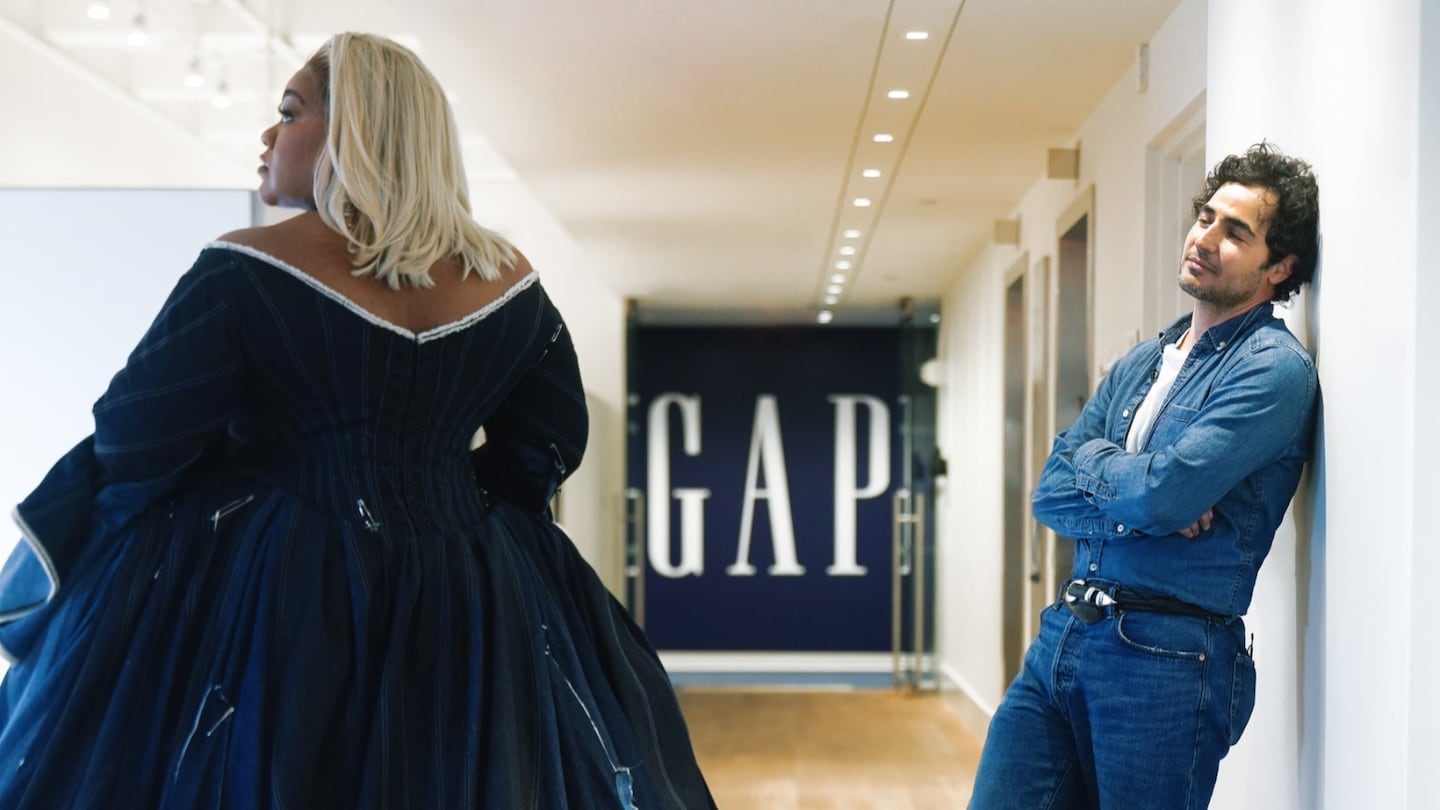
Gap is a case in point. Since Gap Inc. appointed Zac Posen creative director in February 2024, Gap’s MIV has nearly doubled, up 99 percent between January 2025 and June 2026 compared with the same period before his appointment.
Launchmetrics’ Analyze Coverage feature can pinpoint that the nature of the coverage matters too: 78 percent of Gap’s media value came from coverage describing the brand as embodying “accessible elevation,” and 61 percent from coverage linking it to “high-low prestige.” It shows how creative leadership can connect individual initiatives into a broader repositioning, and why measuring this impact is important for long-term growth.
Bounsall sees the same pattern in brands that build lasting desirability. “They have these very single-minded creative director forces driving the brand, and all of the stories coming out of the brand are repeating the same narratives and building that recognition,” she said, pointing to Jonathan Anderson at Dior. Her advice to businesses: let those who understand culture “cook.” “Let them do what they do best without a myriad of red tape and decision-making processes.”
You need an understandable and recognisable brand world that people can enter, understand and participate in.
— Lucinda Bounsall, founder and head of strategy, sibling studio
One attendee asked whether premiumisation and trends are flattening brand identities into the same minimalist look. Bounsall blamed the algorithm, which rewards what performs and pushes brands toward sameness.
The antidote is distinctiveness. “You need an understandable and recognisable brand world that people can enter, understand and participate in,” she said.
“The biggest issue is when brands lean in too hard to something they’re not,” Bringé said, adding that “the leaders aren’t the ones that have the most data, they’re the ones able to see the biggest opportunity.” “If you want to play the long game, define who your brand is, define the customer you want to target and build products and campaigns that fit with those two,” she said.
Bounsall framed this as the difference between fast and slow culture. “Fast culture is the churn of TikTok content, memes, trends and virality. Slow culture is where more structural meaning is made, and that’s where you want to be repeatedly telling the same narratives,” she said.
AI is also changing how brands turn data into decisions. Where sentiment analysis could only say whether coverage was positive, brands now need to trace how their story has evolved over time. “We can go back through a decade of print, online and social coverage to understand what story was being told, so we can compare that with the story now and the story we want to tell in the future,” said Bringé.
AI tools are also becoming a channel in their own right. Launchmetrics’ new AI Visibility (AIV) metric measures how often a brand appears in answers from tools such as ChatGPT, Claude, Gemini and Perplexity. Its latest Fashion Week Visibility Index combines AIV with MIV to show which stories spread across AI tools, the press and social media.
By pairing AIV alongside MIV within its recent Fashion Week Visibility Index, Launchmetrics were able to derive not just what happened from both AI and editorial narratives, but why. Diane von Furstenberg topped the AI Visibility ranking for New York Fashion Week Spring/Summer 2027, but AI answers focused on the designer herself and her signature wrap dress, rather than the collection she showed. For AI tools, the research suggests a brand’s long-standing story can count for more than its latest news.
After a viewer asked how to assess brand health in the age of AI, Bringé recommended tracking three indicators together: visibility, identity and sales. “If the three don’t match, then you’re doing something wrong,” she said.
If you want to play the long game, define who your brand is, define the customer you want to target and build products and campaigns that fit with those two.
— Alison Bringé, chief marketing officer, Launchmetrics
Bounsall — who said she could not have started her business without AI — relies on her tenure and experience as a strategist to trust her instincts and uses AI to validate and speed up her work. “The best CMOs will understand that not everything that’s important can be measured, and not everything that can be measured is important,” she added. That includes knowing when to ignore the data. “If you’re always marking your own homework, you’re only going to keep getting the same answers.”
For Bringé, AI has also reshaped the CMOs like her. “The role of the CMO in this interim phase is of course being strategic, but actually going back to being a bit operational, because you almost have to relearn how you do marketing,” she said.
The session closed on the human element. Bounsall recalled a client choosing the face of a campaign, where testing favoured a better-known name over her instinctive pick. The chosen talent, she said, lacked “that magic that really makes the difference between an interesting brand and an incredible cultural brand. [...] There’s so much intuition and alchemy that comes from really successful culture brands.”
Bringé agreed that AI cannot replace creative talent: “The algorithm is preferring original content. [...] Marketers can’t be replaced by AI in this day and age. Human touch is still so important. With AI, we can work smarter, but it does not replace creativity, authenticity and ingenuity overall,” she said.
This is a sponsored feature paid for by Launchmetrics as part of a BoF partnership.
As fashion’s value spectrum blurs, mass-market brands are looking beyond price to build desirability. A new report from Launchmetrics, “The Desirability Gap: How Mass Market Brands are Repositioning to Compete”, reveals how premiumisation — from designer partnerships to cultural moments — is reshaping the competition for relevance.
Loading recommended reads…
Revenue growth outpaced the previous quarter in the Korean conglomerate’s domestic market, but slowed internationally.
Current president Debi Chirichella will be Hearst Magazine’s next chair.
This week, Priya Rao unpacks the A-lister’s unexpected new brand with Arcaea.
Eli Lilly & Co. raised its full-year sales forecast as demand for its blockbuster obesity and diabetes drugs continues to surge, giving the drugmaker more momentum as it expands into pills and develops even more powerful weight-loss treatments.