Agenda-setting intelligence, analysis and advice for the global fashion community.
Agenda-setting intelligence, analysis and advice for the global fashion community.

Fashion’s much-vaunted recovery has stalled. The backlash to price hikes persists. Higher interest rates have made borrowing more expensive and deal-making across the industry has slowed. Against this backdrop, a central question looms for founders and sellers: Who is still investing in fashion?
More than two years after the post-pandemic boom faded, deal activity in fashion is thinner, but not frozen. Investors have become more selective. Luxury groups like LVMH that were acquisitive in the past have stepped back while private equity is constrained by higher interest rates and uncertain exits. This leaves room for family offices and sovereign wealth funds with longer-term horizons.
For sellers, the shift has prompted a rethink, not just around price expectations, but also around who could realistically become a potential buyer.
The first challenge is to identify such an investor.
ADVERTISEMENT
“I have so many founders trying to find the perfect match between money and being smart about who comes in as an investor,” said Olivier Rivard-Cohen, the head of Europe for investment bank Lempriere Wells and a former investor for Kering Ventures. “I say to my clients, ‘Let’s find the money first and then we can make it smart.’”
Although fashion labels will likely fetch lower prices in the current environment, they may actually find better-suited buyers than they would in boom times.
“We are in a phase of more capital discipline where there is more realism. Brands that have survived now may attract better-aligned, more strategic and patient investors — though at lower multiples,” said Anna Seidel, a business economist and brand strategist.
Rather than chasing well-established brands, many investors are looking at earlier-stage businesses with products that are selling well.
Investors are also taking a longer-term view than they did during the boom years. There is widespread acceptance that there will not be a return of double-digit sales growth seen in the decade before the pandemic.
Private equity firms, which typically rely on leverage and rarely hold assets for more than five years, have been among those most affected by this shift, with uncertainty around exit strategies proving a big sticking point.
“I have to figure out before investing how I’m going to monetise an asset I might buy,” said Francesco Pascalizi, a partner and co-head of consumer at private equity firm Permira. “The good side of the situation right now is that there are lots of opportunities at manageable prices. The bad side is the exit. I don’t have the luxury to hold an asset forever. At some point I have to return capital to my investors.”
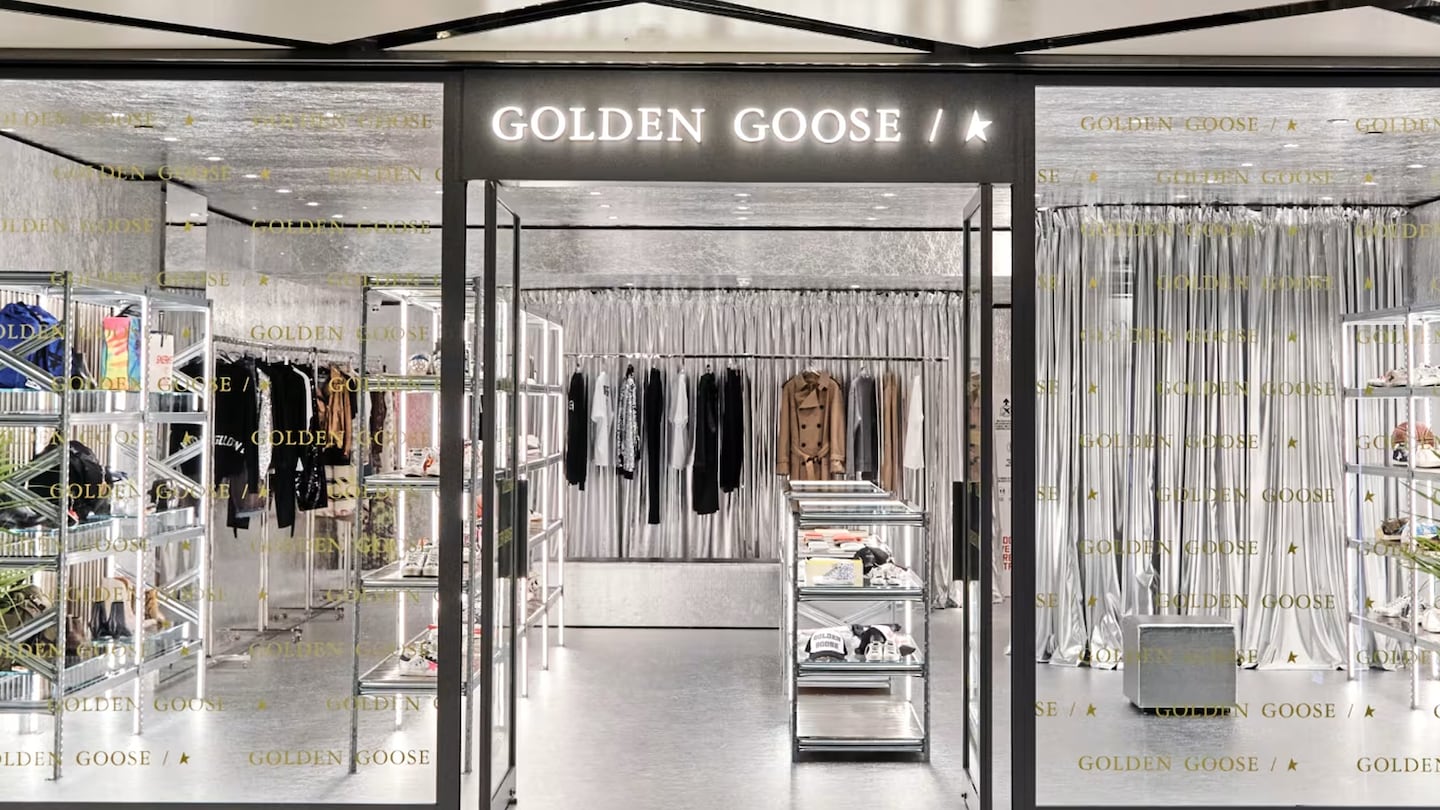
Permira managed to do just that late last year, when it sold most of its stake in Golden Goose to Chinese private equity firm HSG, netting a large profit. But such examples are increasingly rare as exits become harder to engineer, leading many buyout firms to sit on the sidelines.
ADVERTISEMENT
This leaves room for other types of buyers. Last year, French private equity firm Experienced Capital sold Balibaris, a ready-to-wear brand stocked by department stores Galeries Lafayette and Printemps, to a French family office.
The popularity of The Row, which has tapped into rising demand for quiet luxury, has drawn investment from some of Europe’s most wealthy families, including the Bettencourt-Meyers family investment arm Thétys and the Wertheimer brothers owners of Chanel, through Mousse Partners.
Appetite for cross-border fashion deals has been limited, with Chinese investors taking a more measured approach to purchasing US and European fashion labels than they did before the pandemic. As China’s market remains subdued by a property crisis, and Chinese shoppers show a growing interest in local brands, there is less appetite to purchase Western brands with an eye to expanding them in China.
Executives at Richemont, meanwhile, said that while local brands in China are gaining in popularity, it wouldn’t make sense for the group to seek to acquire any.
“Chinese owners are the best at running Chinese brands and probably we are not so bad at running Swiss brands or French brands,” said Richemont CEO Nicolas Bos in a call with analysts last month.
Other markets could yet emerge as future sources of deal flow, with India increasingly cited as one to watch. Wealthy families there like the Ambanis, which own Reliance Industries, are making investments in fashion, media and culture outside the country.
For now, strategic buyers remain cautious. Groups like LVMH, Kering and Richemont, are concentrating on nurturing the fashion houses already in their portfolios rather than pursuing aggressive expansion. Though Kering recently set up a “House of Wonders” platform to make targeted investments in luxury brands it has identified as high potential and recently announced a minority investment in ICCF, the parent company of Chinese label Icicle.
“Fashion is cyclical so if you are looking for a buyer right now you need an investor with a long-term view,” said Panos Linardos, chairman of the RLC Global Forum, a leadership network for retail, luxury and fashion executives. “There is no shortage of sellers. Buyers remain scarce.”
ADVERTISEMENT
When buyers do emerge, many are focused on turnaround opportunities rather than growth stories, with heritage brands offering potential — but in the longer term.
“A strong candidate to be bought right now would be a heritage brand that’s not doing well, but is ready for a relaunch and could benefit from new investment,” said Caterina Sanson, a partner at OC&C Strategy Consultants in Milan and a member of the firm’s Retail and Private Equity practices.
“But a relaunch takes time, especially now that growth has slowed, so you need patience and you must be more diligent in picking the right target,” added Sanson.
Heritage alone is not enough, caution some advisors.
“A lot of investors come to me and say, ‘We want heritage brands’ and I tell them, heritage is wonderful, but heritage is not the criterion,” said Charles de Fleurieu, co-founder of M&A advisory Mallevays Fleurieu and the former head of M&A for Kering. “There are lots of heritage brands that have become irrelevant.”
De Fleurieu added that many brands are still grappling with strategic mistakes made during the boom years, when diversification away from core product categories diluted their identity.
“Brands must be super focused and very good at what they do,” said de Fleurieu, pointing to Golden Goose’s sneakers and Moncler’s strength in down jackets, even as both extend into other categories.
For smaller companies in particular, buyers are focusing on product strength and proof of demand.
“Big splashy deals like Prada buying Versace are symbolically important because they help rebuild confidence in the industry, but the real activity going forward is likely to be around smaller, earlier-stage brands with annual revenue topping out at about €100 million,” said Seidel.
Price hikes, diminished quality, growing inequality and the meaning of luxury itself were under the microscope at the FT’s Business of Luxury Summit this week as the sector struggles to recover from a downturn, writes Imran Amed.
Bernard Arnault reaffirmed his confidence in LVMH even as stagnant sales, a tumbling share price and questions over succession have dented its image. Can the world’s largest luxury group reclaim the narrative?
Behind the headline numbers, the Swiss group’s annual earnings this week will highlight diverging trajectories across the industry, with jewellery driving growth, a likely choppy performance from watches and fashion remaining under pressure.

Eric Sylvers is Milan Correspondent at The Business of Fashion. He is based in Milan and leads BoF’s coverage of all things Italian.
Loading recommended reads…
Sales of gems, precious metals and artwork at Japan’s department stores climbed 19 percent in the first half of 2026 from a year earlier to $2 billion.
Though Adidas dressed both teams in the World Cup finals, the global football tournament still presented some bright spots for Nike, writes Bloomberg’s Andrea Felsted.
From our archive, the creator and host of award-winning podcast “Articles of Interest” joins BoF founder, CEO and editor-in-chief Imran Amed to explore what clothing can reveal about identity, culture, labour and the world around us.
Saunders, the brand’s first creative director in five years and a skilled colourist, promises to give Kate Spade the clarity it has long lacked. Now, Tapestry must apply the same long-term brand-building discipline that fueled Coach’s success.