Agenda-setting intelligence, analysis and advice for the global fashion community.
Agenda-setting intelligence, analysis and advice for the global fashion community.

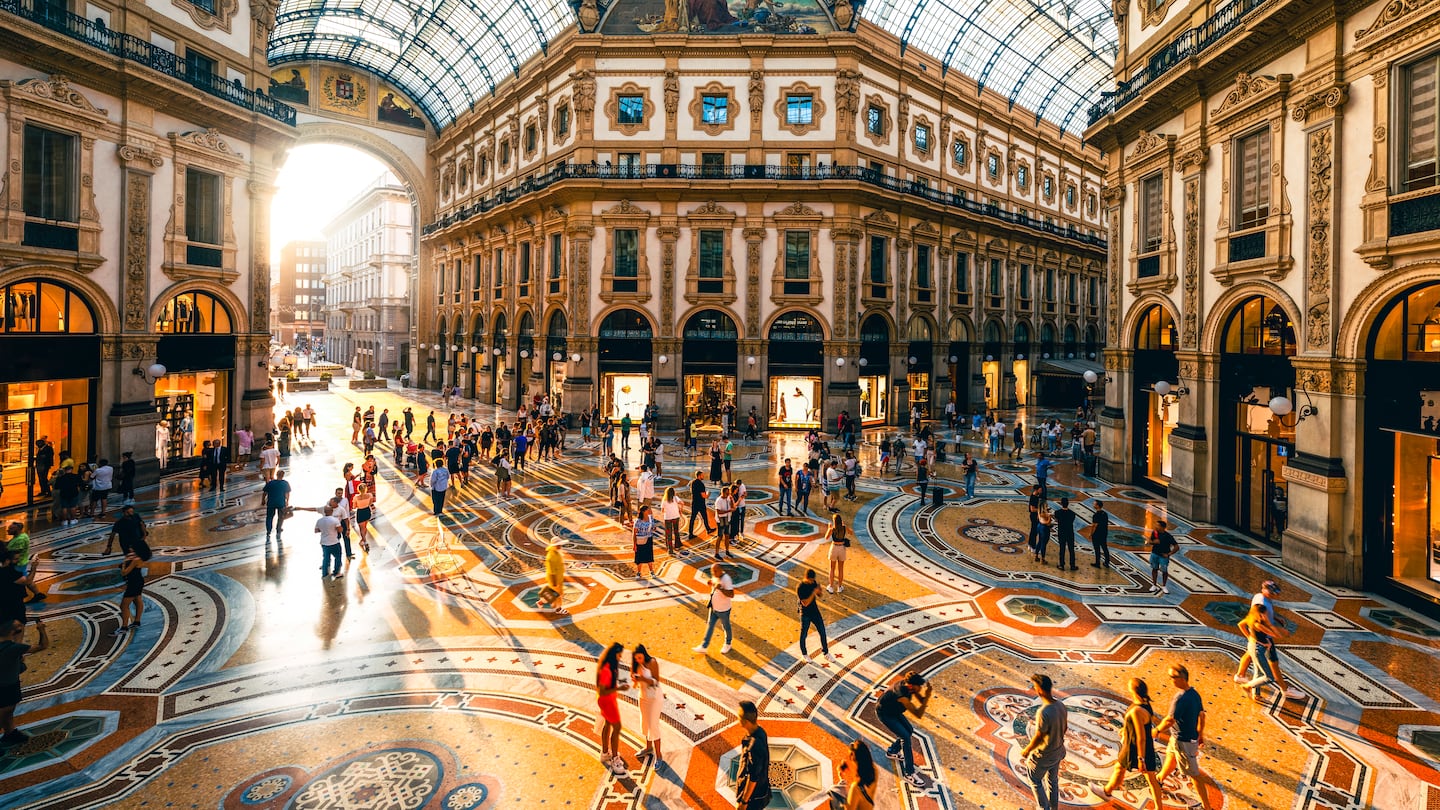
PUGLIA, Italy — On the surface, there was plenty to celebrate at the Financial Times’ Business of Luxury Summit this week. Delphine Arnault and Jonathan Anderson marked one year of their joint effort to re-energise Dior, which LVMH group chairman Bernard Arnault has said is “off to a good start.” Stéphane de La Faverie, chief executive officer of The Estée Lauder Companies, underscored the beauty conglomerate’s three consecutive quarters of growth after four years of decline. And Victoria Beckham said her business is on track to do $170 million in annual revenues, and both her fashion and beauty divisions are now profitable after almost two decades of losses.
But beneath the public relations spin, a reckoning is underway as the luxury industry struggles to recover from a punishing downturn in demand.
According to Bain’s Claudia D’Arpizio, the global luxury industry peaked at around $1.5 trillion in size in 2023, reflecting overall growth of 40–45 percent since 2015, before contracting by almost four percent by 2025.
When asked what is the greatest risk facing the luxury industry, D’Arpizio didn’t cite tariffs, the war in the Middle East or slow growth in China, but rising inequality: the risk that luxury goods are becoming markers of exclusion rather than totems of aspiration.
ADVERTISEMENT
This is a dynamic The Business of Fashion has been tracking for at least a decade. Back in 2016, longtime columnist Luca Solca said inequality drives luxury growth only when it is “socially and politically sustainable.” In 2020, amid anti-racism protests that were inextricably linked to socio-economics, my colleague, Vikram Kansara, argued that if inequality became so deeply entrenched that wealth and status are simply passed from generation to generation, luxury goods will cease to be badges of success and become symbols of oppression.
In recent years, that risk has only increased amid the rise of America’s tech centibillionaires, Asia’s family empires and the global hedge fund class. Contrary to popular belief, “old money” doesn’t drive the luxury sector: The majority of luxury growth comes from aspirants and the upwardly mobile — you get a better life and you mark the occasion and signal your newfound status by buying something beautiful. But when wealth polarisation becomes so extreme that the ladder itself feels broken, aspiration melts away. People stop admiring the wealthy, and start resenting them.
According to research by Bain, the luxury market lost 50 million customers between 2022 and 2024, shrinking from 400 million to 350 million globally, amid macroeconomic gloom and extravagant price increases. “Very important customers” — the top 2 percent of spenders — now account for 45 percent of all luxury purchases, up from 35 percent in 2021, while millions of shoppers have walked away.
So, how did we end up here? The extraordinary growth of luxury’s recent boom years was fuelled by trillions in Covid-era household savings and a wave of aspirational spending amid post-pandemic euphoria, leading brands to industrialise at speed and scale, at the expense of quality and perceived value.
But the big price increases of recent years have been “hardly accepted” by customers, said D’Arpizio — unless they are accompanied by corresponding creativity, quality and value.
Chanel and Dior were among the worst offenders, pushing prices up 59 percent and 51 percent from 2020 to 2023, respectively, according to Bernstein. “We are working a lot on the leather offer and we’re very cautious about the prices,” Dior’s Arnault acknowledged. “We can’t really increase the price of a product without increasing the perception of the quality.”
Indeed, many customers today are more aware of the underlying economics of luxury, especially with heightened transparency and media coverage of luxury business models. They know the gap between what it costs to make a handbag and what it costs to buy one. They know that a significant share of that markup funds marketing, not just craftsmanship and design. Combine that with questions that have been raised by Italian regulators about working conditions in Italian supply chains that power much of the luxury sector, and there’s a growing sense that luxury goods are a “scam.”
And when the creative output does not feel creative — when there is too much product, pushed too quickly, too often — the margins become harder to justify.
ADVERTISEMENT
Cédric Charbit, chief executive of Saint Laurent, was candid about this on stage. The extraordinary growth of the early 2020s, he conceded after some gentle probing by the FT’s fashion editor Elizabeth Paton, was “unsustainable.” The industry, he said, had shifted from a “luxury business to a quality business.”
“In the past a product would sell because of its price point, because it would be on trend or luxurious. If there is a product today that does not have the right level of quality, it’s simply not going to work,” Charbit said. “I believe clients are way more educated about quality. The expectations are much higher than in the past. Quality has won over luxury.”
The beauty industry is learning its own lessons about overzealous expansion and ethics too, amid growing concerns about how it is marketing its products to kids. Estée Lauder’s de La Faverie said that teenagers should only be using moisturiser and sunscreen, an admission that while the “Sephora Tweens” phenomenon might have been good for quarterly numbers, it is not good for the credibility of the prestige beauty industry.
Hospitality is currently a rare bright spot in the luxury sector. Data presented by Bain suggests that experiential luxuries in fine dining, hospitality and cruises are still growing in Q1 2026. But this part of the luxury industry, increasingly run by profit-maximising conglomerates, is facing the same scrutiny from savvy customers seeking authenticity and value. Can you really deliver a luxury product or service at industrial scale?
India Mahdavi, the French-Iranian architect and designer, drew a distinction between what she called “industrial luxury” and “authentic luxury.” In the industrial model, “the brand becomes the product,” she said. The experience is standardised, disconnected from place and replicated across cities and continents.
That phrase — the brand becomes the product — could describe the entire luxury goods industry over the past decade where what customers are really paying for is the image of the brand, rather than the product itself. Marketing expenses in the luxury sector account for about eight percent of revenues, according to estimates by Morgan Stanley.
As a counterpoint, Mahdavi described the work she did with the Adrère Amellal eco-lodge in Siwa, Egypt — built from earth and salt, with no electricity, food grown on-site and candles that take five minutes to light each night. Dinner locations move each evening depending on the light from the moon and the stars.

She also pointed to Aldo Melpignano’s approach to building the Borgo Egnazia in Puglia — the site of the FT conference — where his family began by transforming their ancestral masseria into the region’s first world-class hotel. Construction took over a decade, using local tufa limestone hand-cut by stone masters and modelled on the architecture of traditional Puglian villages. Although the hotel looks as though it has stood for centuries, it only opened in 2010.
ADVERTISEMENT
“We’re a private company. We don’t have private equity investors or the stock market that puts pressure. But if you really want to be scaled, then you need some models, some processes and systemisation,” Melpignano said. “We find partners that have the same idea of taking a place and making it unique, making it special, and just create a completely new story. It takes a lot more time. But for me personally, it’s more fun.”
Creating this authentic luxury experience requires an operational commitment — one that is slow, expensive and impossible to replicate at industrial scale.
That tension between speed and scale on the one hand, and patience and scarcity on the other, was a thread that ran through much of the on-stage discussions. The brands that are winning hearts and minds are the ones where you can feel a human hand — and more often than not these are smaller independent brands, which have a growing resonance with luxury customers looking for something different.
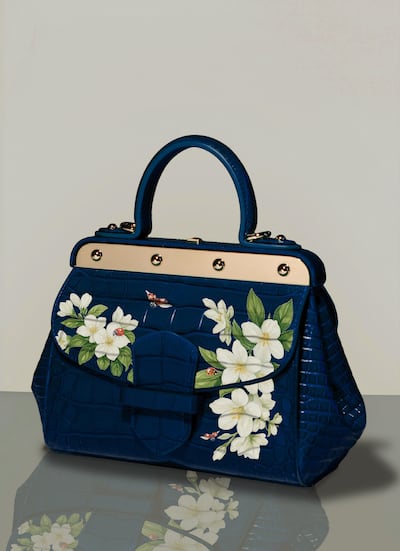
At lunch on Monday, I met Marco Calzoni and Stefan Oelze of Franzi Milano, founded in 1864, which they say makes it the oldest Italian leather goods brand, founded around the same time as Goyard and Louis Vuitton. After years of dormancy, Calzoni and Oelze are trying to do the seemingly impossible: bring a “sleeping brand” back to life.
When I pressed them on their ability to compete with megabrands with immense resources, the duo insisted that their artisanal, slow approach to leather goods is resonating with customers who appreciate the “conversation starter” status of their bags, which start at $2,800 and go up to $49,000 for a highly customised, handpainted alligator-skin handbag. This offers bragging rights to Franzi Milano’s customers when their friends say, “I’ve never seen that bag before. Where is it from?”
And then there is Coach, which is owned by Tapestry Inc., the US fashion group. Some attendees in Puglia sniffed at the presence of an affordable luxury brand at a summit ostensibly focused on companies serving the ultra-wealthy — but they were missing a key point.
Tapestry Inc. chief executive Joanne Crevoiserat framed Coach’s opportunity not around the existing luxury handbag market but around the total number of people globally who can afford one of its bags — a market she sized at two billion people. She then narrowed that down to what she called the “first luxury bag purchase” — an addressable market of 275 million consumers.
“Twenty-five million women in the markets we serve will turn 18 this year,” she said. “And that statistic is true every year for the next 10 years.” Eighteen is the moment when a young woman might “leave [her backpack] at home and want to buy a handbag.” It is a recurring entry point: a new cohort of potential customers, every single year, for a decade.
While European luxury brands are in the doldrums, Coach grew more than 20 percent last quarter. Tapestry is now approaching $7 billion in revenue and targeting $10 billion. Its market capitalisation is nearing that of Kering. And it is growing at double-digit rates in North America, China and Europe simultaneously.
Gen Z, supposedly the least loyal generation, has the highest retention rate of any age cohort at Coach, Crevoiserat said. “They are not disloyal, they just have more choice.”
What Coach has understood — and what the traditional luxury houses have largely failed to grasp — is that the 50 million customers who left luxury did not stop wanting beautiful things. They stopped believing that the asking price was justified by what was being offered. Coach is offering a completely different value proposition: quality and design at a price that does not require a leap of faith. And it is delivering luxury-like margins while doing so.
Pure luxury brands may not consider Coach a peer, but they should consider its success a warning. While they have been concentrating on their wealthiest 2 percent, Coach has been quietly building a relationship with the next generation of consumers — the very people the high-end luxury industry has lost.
The good news is that more than 70 percent of those who left the industry say they intend to come back, according to research by Bain. But they are waiting — for more creativity, more meaning and more reason to believe. The question is whether the system that drove them away can find it in itself to change. Or whether, by the time luxury brands figure it out, someone else will already have taken their place.
“We haven’t been good enough at retaining clients,” Saint Laurent’s Charbit said. “We should do better.”
I’d love to hear your feedback, questions and comments. Please feel free to send an email to editor@businessoffashion.com or leave a comment on Instagram.
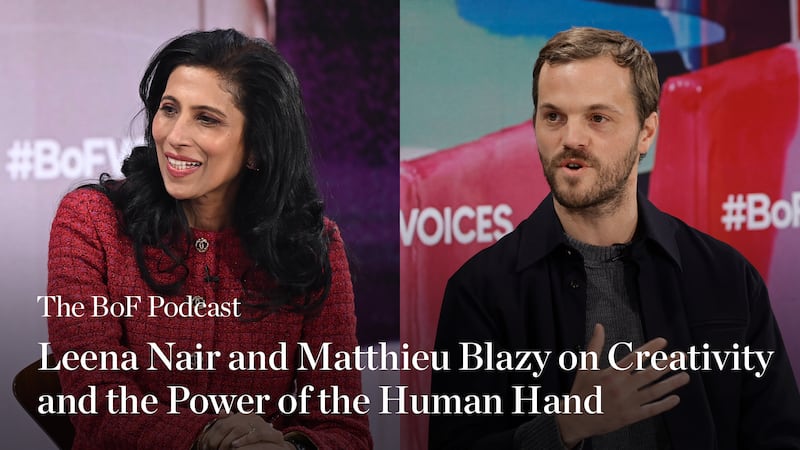
Two years before they would work together at Chanel, the house’s chief executive officer and its future artistic director spoke at BoF VOICES — separately making the case for craft, people and long-term thinking over speed and scale, a synergistic philosophy that is powering the brand’s newfound momentum.
To receive this email in your inbox each Saturday, sign up to The Daily Digest newsletter for agenda-setting intelligence, analysis and advice that you won’t find anywhere else.
Loading recommended reads…
The British retail group has pushed its stake in the German apparel brand above 50 percent in a move that will turn Hugo Boss into a subsidiary of Frasers.
The settlement, equivalent to 44 percent of the ultra fast-fashion company’s second-quarter profit, is the latest blow amid regulatory and tax crackdowns in Europe and the US that have hampered Shein’s growth.
Among the takeaways from the latest round of quarterly reports from European luxury groups: China’s hurting, industry growth in the US has slowed and quiet luxury is having a moment.
Bloomingdale’s chief executive Olivier Bron joins Imran Amed on The BoF Podcast to discuss how a name every American knows is re-earning its place in luxury and why he sees Europe’s biggest houses wrestling with the same problem.