Agenda-setting intelligence, analysis and advice for the global fashion community.
Agenda-setting intelligence, analysis and advice for the global fashion community.


Whether you’ve been following fashion week highlights from Europe, store launches in Asia or the sneakers worn by top US athletes, what has become increasingly clear is that Chinese brands are stepping up their global push.
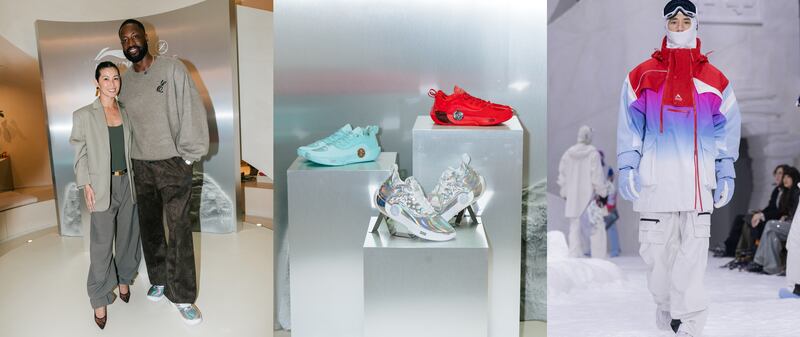
In February, Chinese sportswear giant Anta launched its first US store in Beverly Hills, less than a year after Guangzhou-based Urban Revivo opened flagships in New York and London. At the Milan menswear shows, Beijing sportswear label Li-Ning took to the runway just days before outfitting Greek athletes for the Winter Olympics. This month, Shanghai-founded luxury label Icicle piqued interest at Paris Fashion Week.
This flurry of activity reflects not just the growing confidence and ambition of Chinese brands but also shifting perceptions of them across many Western markets.
“If you rewind 10 or 20 years, there was this stigma that Chinese brands would be of lesser quality. Now, the consumer knows that a lot of the best manufactured products come from China,” said Revolve chief executive Michael Mente, who recently struck a partnership with Li-Ning to become the first US retail partner for its “Way of Wade” basketball shoes.
ADVERTISEMENT
“Now, from a global digital culture [perspective], the creativity is really there, and we anticipate broadly that more Chinese brands coming to America will find success,” he added.
This growing traction is also helped by a surge in American interest in Chinese culture. Familiarity with lifestyle brands like Heytea and Pop Mart, alongside curiosity about Chinese medicine, has given rise to a host of “Chinamaxxing” trends on TikTok .
But there is another reason Chinese brands have accelerated international expansion plans. As China’s economy has slowed in recent years, growth in the domestic market has been weak or has turned negative for many fashion players.
The mainland Chinese personal luxury market contracted by 3 to 5 percent in 2025 following a 17 to 19 percent drop the year prior, according to Bain & Company. The mass market has also been under pressure, with Euromonitor International estimating that China’s broader apparel and footwear sales fell from about $371.4 billion to $369.8 billion between 2024 and 2025.
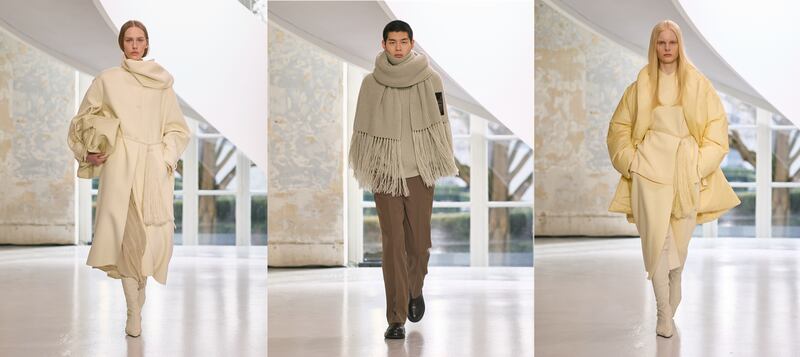
With consumers tightening their wallets and the patriotic buying fervour of the guochao movement beginning to ebb, Chinese designer labels have also stepped up efforts to court overseas buyers. According to digital wholesale platform Joor, orders placed by international retailers with China-based brands surged by 157 percent in 2025, with transaction volume growing 91 percent year-over-year.
However, Chinese fashion giants looking to capitalise on this window of opportunity must do more than simply export what made them successful back home. Instead, experts say, they should concentrate on delivering an attractive price-to-quality proposition, hyper-localised marketing campaigns and strategic retail partnerships within new markets.
“Growing globally for these Chinese brands is not necessarily just a translation job; I think it’s a repositioning job,” said Chloe Reuter, founder of the advisory and investment firm Reuter Ventures, who previously worked in China for around two decades.
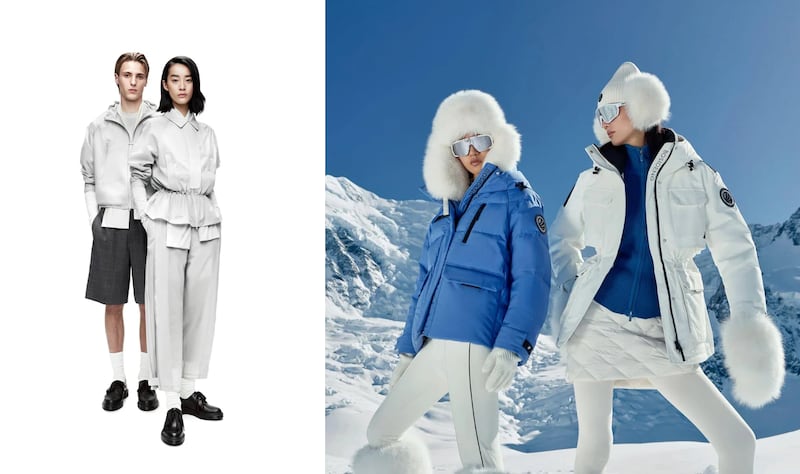
Reuter, whose business helps premium consumer brands expand in Asia and the Middle East, believes that, with more consumers letting go of outdated stereotypes about Chinese-made products, more will be drawn to labels with strong branding and competitive price points.
ADVERTISEMENT
Even though Shein has been criticised by Western regulators, labour advocates and sustainability-minded consumer groups alike, experts doubt that the reputation of one China-founded fast-fashion company will create a negative halo across Chinese brands more broadly.
“If brands can demonstrate their quality, value and expertise in their respective field, they’re going to be generating demand and people will see [them as being] worth it,” said Ellie Thorpe, a manager at data and insights firm Kantar, highlighting how Chinese electric cars have taken off in Europe.
Elisa Harca, co-founder of Chinese marketing agency Red Ant, agrees that Chinese brands are well positioned to market the merits of their products globally. Not only because many of these brands are already popular with discerning, price-conscious consumers in China, she says, but also because they lead with product rather than provenance.
“They don’t go into the Western markets going ‘We’re a Chinese company, come and buy from us,” said Harca. “It’s more like: ‘We’re Bosideng and we’ve got these fantastic coats’, or ‘We’re Songmont and we have these fantastic bags.’”
But what comes after letting the product speak for itself is grounding the brand in localised marketing and retail touchpoints that resonate with consumers across diverse markets.
That approach is what Anta’s vice president, Will Wang, said was at the heart of its globalisation strategy in September, when he announced that Anta aimed to open 1,000 stores in Southeast Asia by 2030 — along with plans to open more stores in the Middle East and the United States.

Anta already operates dozens of stores in Malaysia and more than a handful in Singapore. Gulf markets such as Dubai, Abu Dhabi, Saudi Arabia and Qatar are also covered by its growing store network, and the brand has recently gained a foothold in Africa with stores in Kenya and Egypt. Just this month, it inked a deal with a local distributor in India.
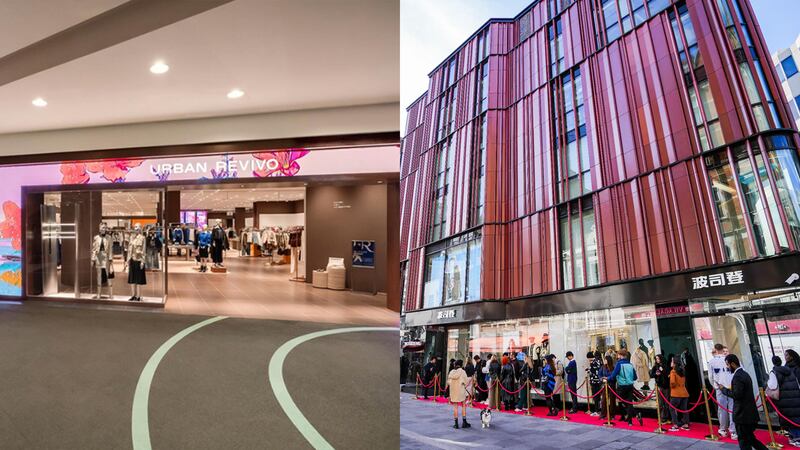
Urban Revivo’s ambitions to grow beyond China and Southeast Asia, where its current retail footprint spans Singapore, Malaysia, Thailand, Vietnam and the Philippines, are being bolstered through investments in regional design centres, including one in London serving the European region.
ADVERTISEMENT
It’s a strategy already established by Icicle, which opened its fourth store in Paris in September and has been steadily building its presence in the French fashion capital since founders Ye Shouzeng and Shawna Tao opened their design studio in the city in 2013. “It’s a phased, deliberate approach rather than a sudden leap,” said Harca.
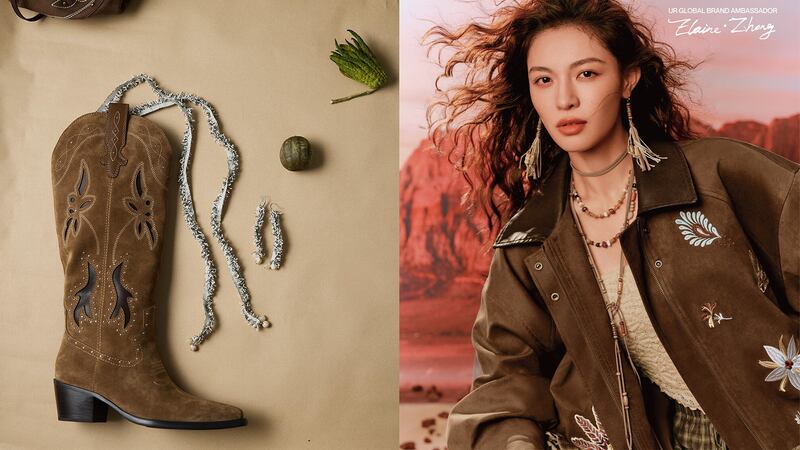
Most of the big Chinese brands trying to go global are now focused on developing strong brand storytelling and securing the right strategic partners, says Jenny Zheng, the founder and CEO of Velvet.Co International, a PR company that specialises in connecting East Asian brands with Western markets.
While many Chinese consumer brands grew e-commerce sales through influencer-led livestreams, Zheng believes that Chinese brands with global ambitions should focus less on quick performance marketing tactics that worked in the mainland. Instead, she says, they should take more care in identifying who their target audience is in each new market and which tie-ups will be appealing.
Songmont — a Chinese handbag brand founded in 2013 by Fu Song and Wang Jie — has done this not just through activations during Paris Fashion Week but also by choosing brand ambassadors with strong cross-cultural appeal. Harca points to Songmont’s collaboration with the British-Chinese it-girl Alexa Chung.
Anta’s ability to pick the right sports ambassadors for the markets it plans to enter is what helped it to consistently rank amongst Kantar’s global top 10 apparel brands, says Thorpe. “They’re really trying to lay down roots in these markets and become part of that cultural tapestry,” said Thorpe.
While Anta’s public-facing partnerships have largely focused on American athletes, such as a potential partnership it teased with NBA star Stephen Curry in February, it has also made greater investments in the European market this year, including the outfitting of Greek teams for the Winter Olympics. Parent company Anta Sports also gained access to one of the world’s largest sportswear brands by shelling out €1.5 billion ($1.8 billion) for a 29 percent stake in Puma.
“With Anta, they’re buying established brands, so they’ve got a great base to work with and global teams already there,” said Reuter, referring to Anta Sports’ international portfolio ranging from Salomon to Arc’teryx.
Some Chinese apparel brands are also hiring big international names for their design studios, as seen by ex-LVMH designers Kim Jones and Kris Van Asche’s creative director roles for sublabels at Bosideng and Anta. Shanghai-based outerwear giant Bosideng made its Paris Fashion Week debut in October after showing intermittently in Milan and reopening a London flagship in 2022.
These brands are not only buying cultural credibility but also recruiting designers with years of experience designing for the markets their employers are vying to break into.
These efforts will not necessarily result in Chinese brands overtaking global competitors in their home markets — at least not anytime soon. They could, however, capture meaningful market share more rapidly than some expect and place greater pressure on local incumbent brands.
Reuter believes Chinese challenger brands like Songmont can ride the same tailwinds that have uplifted affordable French handbag labels such as Polène by zeroing in on consumers fatigued by price hikes at luxury’s top-tier brands. It’s worth noting that some comparable Songmont bags come in below Polène in price.
Harca believes Urban Revivo can compete with Western fast-fashion giants such as H&M by potentially turning fashion trends into in-store products more quickly. Urban Revivo founder Li Mingguang has already done this back home, where the brand operates nearly 400 stores and is often described as China’s answer to Zara.
Yet despite these advantages, some Chinese brands still struggle to grasp the nuances of new markets. While adapting to local tastes always requires careful calibration, some product categories are more challenging than others, Zheng suggests. Handbag and accessory brands tend to have an easier time than apparel players, given the latter’s reliance on market-specific fit.
Sportswear brands such as Anta and Li-Ning may have opened thousands of stores in China, but these and other Chinese brands are prioritising digital platforms to lower entry costs in some regions, Harca says. That does not mean they will remain limited to a handful of foothold cities in markets such as the US.
“If brick and mortar is part of their DNA, they will start to open more stores. But most brands are thinking not about quantity but quality and strategic relevance,” said Harca. “It’s more about making sure that offline experience is in the right place and offers the right experience that can then convert.”
That is evident in Li-Ning’s ongoing partnership with Revolve, which gives the brand the logistical capabilities of an online retailer while enabling it to activate offline in key markets without the overhead of owned stores. The approach contrasts with its earlier US push aiming to challenge Nike, which included a Portland showroom and design centre in 2010 followed by a dedicated US e-commerce platform, both of which were shuttered by 2012.
Whatever the approach, Chinese apparel brands are expanding globally at an opportune moment, with their ability to win customers arguably stronger than ever. Some will be more successful than others, and failure is an inherent risk for any newcomer. However, their experience navigating the demanding domestic market leaves most big players well-equipped to handle a wide range of challenges abroad, Reuter suggests.
“Their biggest advantage is the fact that they are from China,” said Reuter, who believes that few hurdles will prove insurmountable to the best-in-class brands. “If they can do it there, they can do it anywhere.”
After past stumbles, Chinese capital is taking a more measured approach to investments in US and European fashion labels, tempering expectations for breakneck expansion. Will it work?
The growing power, prestige and global ambition of Chinese brands has ended the era of discretion for fashion heavyweights, with figures such as ex-LVMH designers Kim Jones and Kris Van Assche now publicly promoting their roles at Bosideng and Anta respectively.

Lei Takanashi is a Correspondent at The Business of Fashion (BoF). He is based in New York City and covers menswear, streetwear, young consumer trends, and the intersection between fashion and culture.
Loading recommended reads…
Sales of gems, precious metals and artwork at Japan’s department stores climbed 19 percent in the first half of 2026 from a year earlier to $2 billion.
Though Adidas dressed both teams in the World Cup finals, the global football tournament still presented some bright spots for Nike, writes Bloomberg’s Andrea Felsted.
From our archive, the creator and host of award-winning podcast “Articles of Interest” joins BoF founder, CEO and editor-in-chief Imran Amed to explore what clothing can reveal about identity, culture, labour and the world around us.
Saunders, the brand’s first creative director in five years and a skilled colourist, promises to give Kate Spade the clarity it has long lacked. Now, Tapestry must apply the same long-term brand-building discipline that fueled Coach’s success.