Agenda-setting intelligence, analysis and advice for the global fashion community.
Agenda-setting intelligence, analysis and advice for the global fashion community.

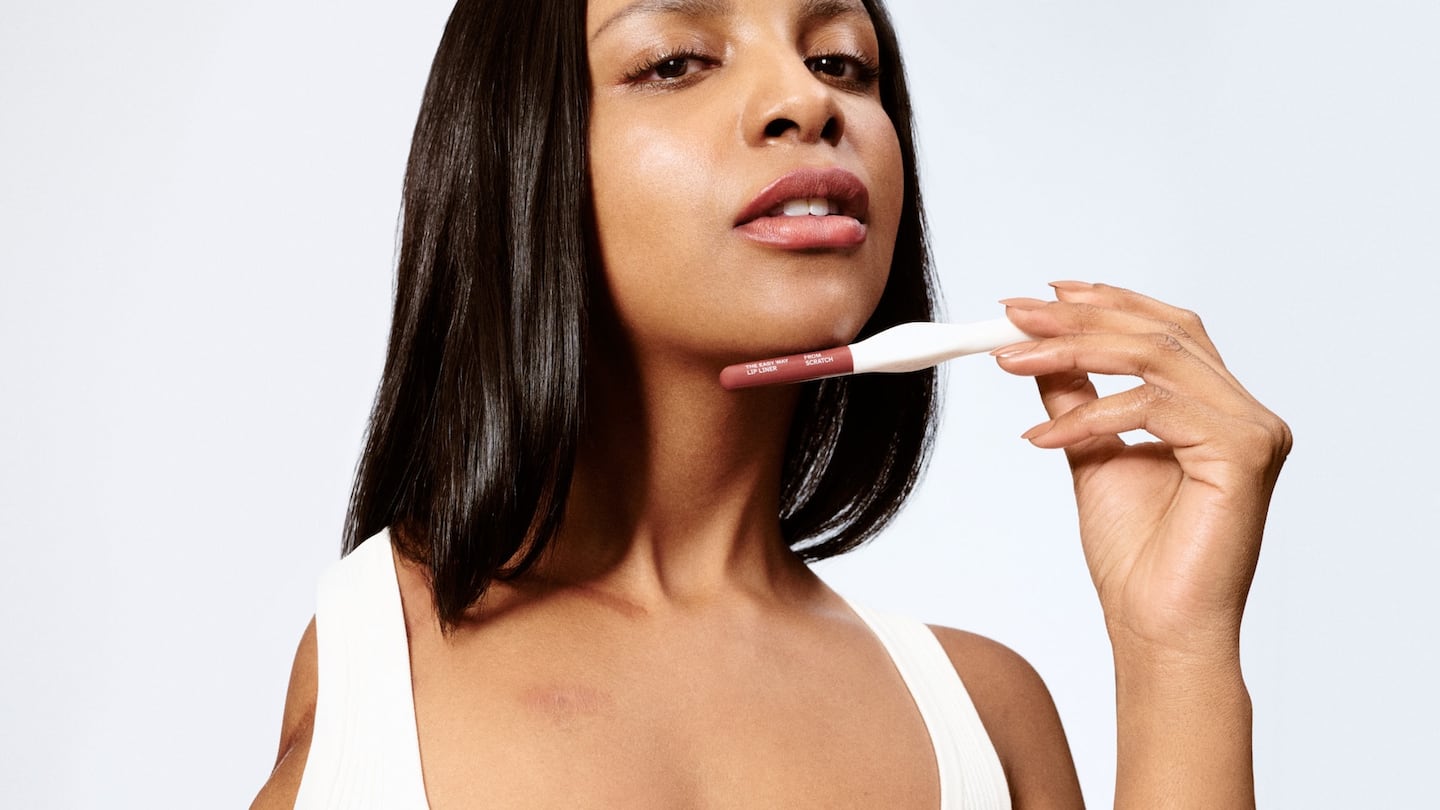

Over the past decade, the beauty industry has expanded its understanding of who its products should serve and how they should perform. Consumers increasingly expect thoughtful design, clean formulations and products that work for a wider range of needs and abilities. Yet most packaging still defaults to form over function.
Meanwhile, according to BoF and McKinsey and Company’s The State of Fashion 2026 report, consumers are increasingly drawn to brands that provide purpose, community and design-led innovation.
For beauty consumers living with disabilities or chronic pain, accessibility in product design has remained largely overlooked. Traditional packaging — often small, smooth and difficult to grip — can make everyday beauty routines a challenge.
Founded in February 2025 in Los Angeles by Aerin Glazer, Tilt Beauty aims to address that gap. Diagnosed with psoriatic arthritis as a teenager — a chronic, autoimmune inflammatory condition that impacts the joints and skin — Glazer struggled with the fine motor control required to apply conventional makeup products.
Frustrated by the lack of solutions available, she started Tilt Beauty, a brand with ergonomic design at its core and a mission to make cosmetics easier to hold, open and apply for everyone — beginning with people experiencing chronic pain, dexterity issues or limited mobility.
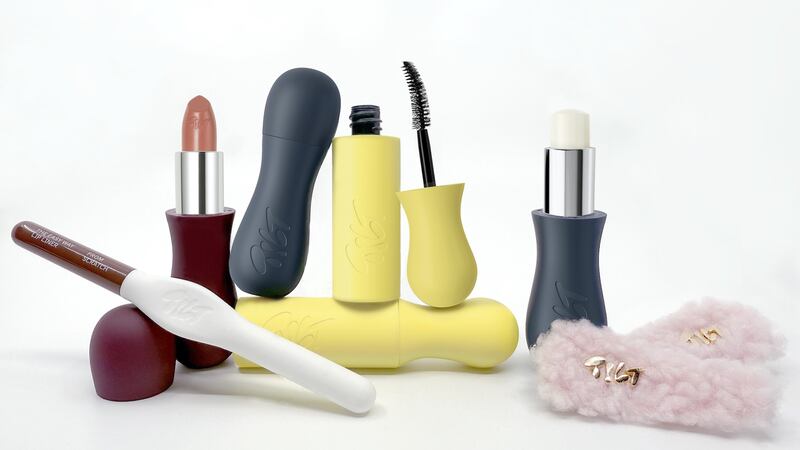
Tilt Beauty launched with a curated lineup of essentials, including the Lashscape mascara and the Grip Stick hydrating lip treatment housed in patented ergonomic packaging designed for comfort and control. This includes features such as a custom shorter wand for better control on the mascara and a patented grippy case for the lip treatment.
The products are refillable, vegan and formulated for sensitive skin, with several earning recognition from organisations including the Arthritis Foundation, the National Psoriasis Foundation, the National Rosacea Society and the National Eczema Association. Notably, the brand became the first beauty brand to receive the Arthritis Foundation’s Ease of Use Certification — which acknowledges the packaging’s suitability for people living with arthritis or chronic pain.
Beyond the products themselves, accessibility informs the brand’s wider design philosophy. Packaging incorporates braille, while its website and labels use the Braille Institute’s Atkinson Hyperlegible typeface to improve readability for consumers with low vision.
To learn more about the brand’s first year in business and its vision for the future of a more inclusive beauty industry, BoF sits down with Glazer to better understand how Tilt Beauty is building community, designing for accessibility and the exciting opportunities ahead.

How did your experience with psoriatic arthritis shape the company you set out to build?
I was diagnosed with psoriatic arthritis when I was 13, which was quite unusual. Like any teenager, I wanted to experiment with makeup and have fun with it, but for me, beauty became much more than a hobby. It was a tool that helped me navigate a difficult period of my life and build confidence.
The challenge was that I couldn’t use many of the products I loved. I would modify makeup products myself, adding things like rubber bands or pencil grips just to make them easier to hold. Beyond the products themselves, I felt disconnected from the branding and marketing around accessibility. Much of it felt patronising rather than aspirational.
I spent five years building the brand I wished has existed for me at that age. Accessibility is at the centre of Tilt Beauty, but the goal was never to create products for a niche audience. My belief has always been that when you design for everyone, you create better products for everyone. We are design-first, engineered for all — and that philosophy guides every decision we make.
Accessibility is often overlooked in beauty. How did you approach designing products that are both functional and desirable?
One of the biggest challenges was that there was no blueprint. There wasn’t another beauty brand I could point to and say, “Let’s do something like that.” We had to completely start from scratch.
The earliest versions of our products were actually developed in my high school ceramics class. I would create clay models during lunch breaks and test shapes that felt comfortable in my hands. Those clay concepts eventually evolved through five years of testing with real users.
My belief has always been that when you design for everyone.
Every detail was considered. The length of a mascara wand, the amount of force required to open a lipstick, the texture people grip onto, the strength of magnetic closures — every decision was informed by extensive testing and feedback. Today, we’re the first beauty brand to receive the Arthritis Foundation’s Ease of Use Certification, but getting there required years of iteration.
At the same time, functionality wasn’t enough. It was incredibly important that the products felt aspirational, playful and beautiful. I didn’t want people to feel like they were purchasing from a separate “accessibility category.” I wanted someone to reach for Tilt Beauty because they loved the formulas, loved the design and felt proud to pull it out of their makeup bag.
What’s been particularly rewarding is seeing that philosophy validated. Whether it’s recognition from the Arthritis Foundation, the National Psoriasis Foundation, Time’s Best Inventions or beauty industry awards, the response has shown that inclusive design and desirability are not mutually exclusive.
How has your community influenced the evolution of Tilt Beauty?
The community has shaped almost everything we do. Initially, we focused on arthritis and psoriasis because those are the experiences I know personally. But, as we started engaging with consumers and advocacy organisations, we quickly realised that the need was much broader. We heard from people with Parkinson’s, lupus, tremors, limb differences and countless other conditions. We also heard from older consumers, makeup beginners and beauty enthusiasts who simply appreciated products that were easier to use.
That reinforced something I’ve come to believe deeply — inclusive design solves problems for far more people than you’d initially expect. We’re constantly listening.
Feedback from our community has directly influenced product improvements, shade extensions and even the launch of updated versions of products. If we see consumers identifying an opportunity to improve something, it becomes part of the conversation internally.
What’s been especially meaningful is seeing that community that has formed around the brands. People share experiences, support one another and, for many, see their needs represented within beauty for the first time. One moment that has really stayed with me was when a creator shared that a pair of Tilt sweatpants designed with accessibility features was actually the first time they had ever been able to put on trousers entirely by themselves.
Stories like that reinforce that inclusive design is about much more than products — it’s about creating confidence, independence and a greater sense of possibility in everyday life.
Tilt Beauty has earned recognition for both formulas and accessibility. How do you approach product development?
Performance has always come first. Growing up, I often felt that clean beauty required compromise. Products might have had great ingredient stories, but they didn’t always deliver the results I wanted. When we developed Tilt Beauty, the goal was never to create a clean alternative. We wanted to create products that could compete with the best performing products in the category.
Every formula contains our “Tilt Calm Complex,” which is designed for highly reactive and sensitive skin. As someone with psoriatic arthritis, I personally experience both joint and skin symptoms, so testing products on myself became a critical part of development. If something caused irritation or discomfort, we went back and reformulated.
Consumers should never have to choose between a product that works and a product that is designed with their needs in mind.
That commitment has helped us earn recognition from organisations including the National Psoriasis Foundation and cruelty-free certification Leaping Bunny. Our Lashscape mascara was recognised as Allure’s Best Clean Mascara in 2025, underscoring its ability to deliver on performance. Everything we make is vegan, dermatologist-tested for sensitive skin and developed to meet a very high performance standard.
For me, accessibility, formulation and performance are inseparable. Consumers should never have to choose between a product that works and a product that is designed with their needs in mind.
How do you hope inclusive design will shape the future of beauty?
I hope that accessible beauty isn’t considered a separate category at all. I hope it simply becomes what good beauty looks like.
If you look at industries like technology, transportation or consumer electronics, universal design has become an important part of innovation. Beauty has been slower to embrace that shift, often prioritising what looks good on a shelf over what feels good in a hand.
That’s beginning to change. More brands are exploring inclusive design, more organisations are recognising accessibility innovation and consumers are becoming increasingly aware of the conversation.
For me, one of the most meaningful moments was seeing Tilt Beauty included in The Met Store for the 2026 Costume Art exhibition. It felt like a cultural signal that inclusive design can be fashionable, artistic, aspirational and beautiful.
Ultimately, my goal is not simply to grow Tilt Beauty, it’s to help move the industry towards a future where consumers expect accessibility as a standard rather than viewing it as an added benefit. When that happens, we’ll know real progress has been made.
Beauty […] often [prioritises] what looks good on a shelf over what feels good in a hand.
What does success look like for Tilt Beauty in the near to mid-term future?
Success means continuing to expand while staying disciplined. We intentionally launched with a focused assortment because we wanted every product to meet an exceptionally high standard. That philosophy won’t change as we grow. Every future launch must meet the same requirements around universal design, accessibility, formula performance and consumer testing.
More broadly, success means demonstrating that inclusive design can succeed at scale. If Tilt Beauty can help prove that accessibility, aspiration and commercial success can coexist, then hopefully other brands will follow.
The long-term opportunity extends beyond any single company. I want to help shift the conversation from “Isn’t accessibility nice?” to “Why isn’t every beauty brand doing this?”
This is a sponsored feature paid for by Tilt Beauty as part of a BoF partnership.
Loading recommended reads…
Sales rose unexpectedly in June as shoppers increased spending on clothing and air conditioning, adding to signs of a pickup spurred by record temperatures and the World Cup.
The renaissance of the Upper East Side shopping district reflects a broader shift in how brands are rethinking their retail strategies, prioritising affluent neighbourhoods where loyal customers live and dine.
The move is the White House’s latest effort to restore Trump’s campaign vision of a near-global tariff after the US Supreme Court in February struck down his ‘reciprocal’ duties.
To become a meaningful fast-fashion challenger, Fast Retailing CEO Tadashi Yanai must expand GU aggressively while preserving the brand’s quality, writes Bloomberg’s Juliana Liu.