Agenda-setting intelligence, analysis and advice for the global fashion community.
Agenda-setting intelligence, analysis and advice for the global fashion community.

For nearly a decade, London-based menswear label Thom Sweeney operated a robust store in SoHo, the bustling retail district in lower Manhattan.
But in recent years, its shopkeepers noticed a clear shift: Many of its loyal customers — young, affluent professional men — were moving uptown. Those who already lived uptown were spending more of their leisure time closer to home rather than making the trip downtown, long the city’s epicentre of cool.
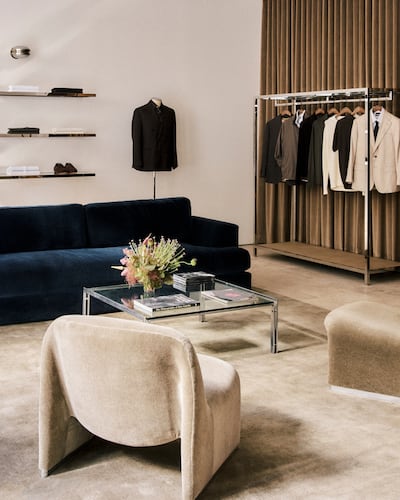
So, in the spring, Thom Sweeney followed suit, relocating its flagship from West Broadway to Madison Avenue. And so far, business has boomed, significantly exceeding the sales that it used to generate in SoHo, co-founder Luke Sweeney told The Business of Fashion. Rents uptown are much higher, he said, but so is the average transaction size — so far, sales per square foot are 40 percent higher than in SoHo.
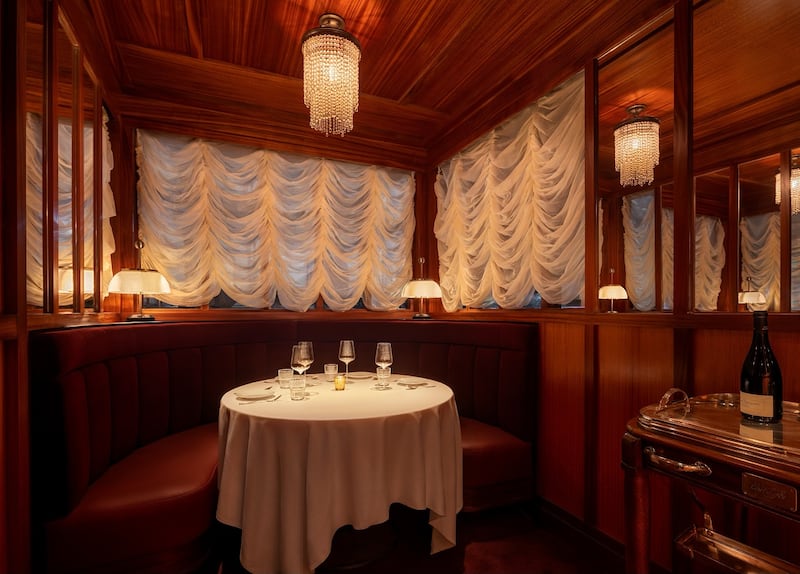
“When I walk around here, I see so many guys in beautiful knitwear, sports jackets and outerwear in winter,” said Sweeney from the hidden bar and lounge located at the back of his store at 761 Madison Avenue. “You go into a restaurant here and it’s like, ‘That’s our customer.’ … Around here, that’s the lifestyle.”
ADVERTISEMENT
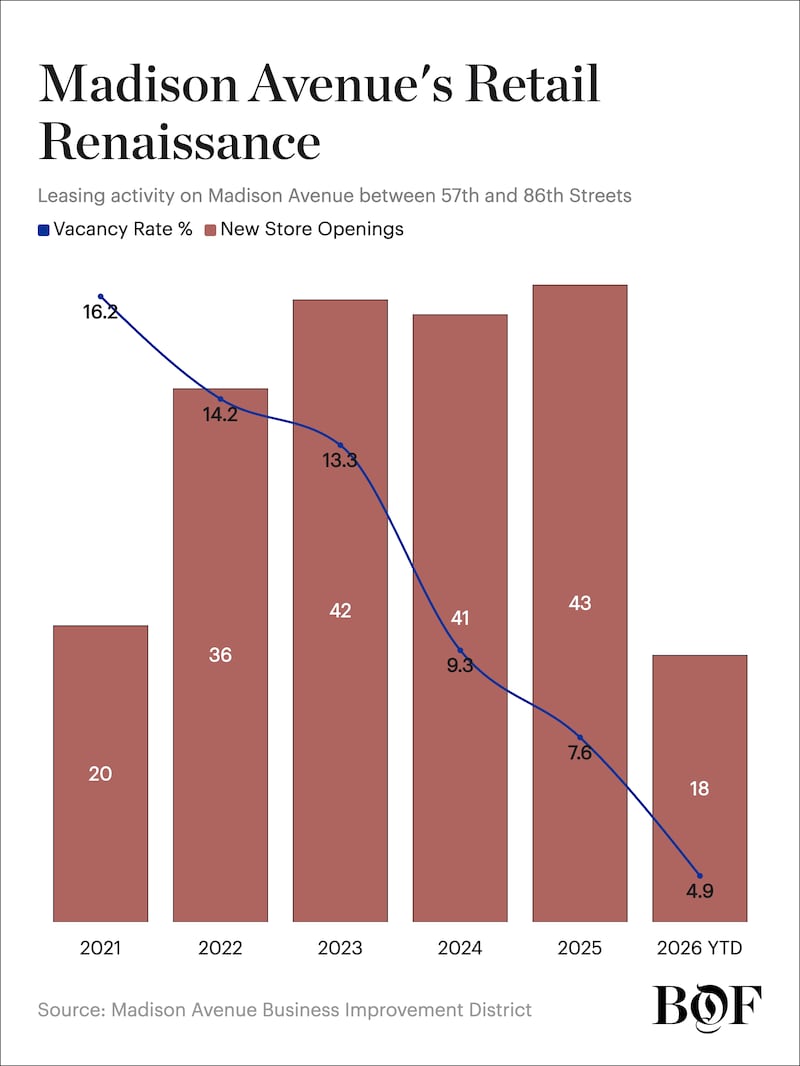
Sweeney’s brand joins a growing cohort of retailers that have opened stores on Madison Avenue in the last five years, propelling a renaissance for the most prestigious stretch of retail on the East Coast. Since Covid, Madison Avenue’s retail vacancy rate has plummeted, falling from 16 percent in 2021 to below 5 percent this year — the lowest in two decades, according to the Madison Avenue Business Improvement District, a nonprofit organisation that promotes business on the 29 blocks of storefronts on Madison Avenue from 57th Street to 86th Street.
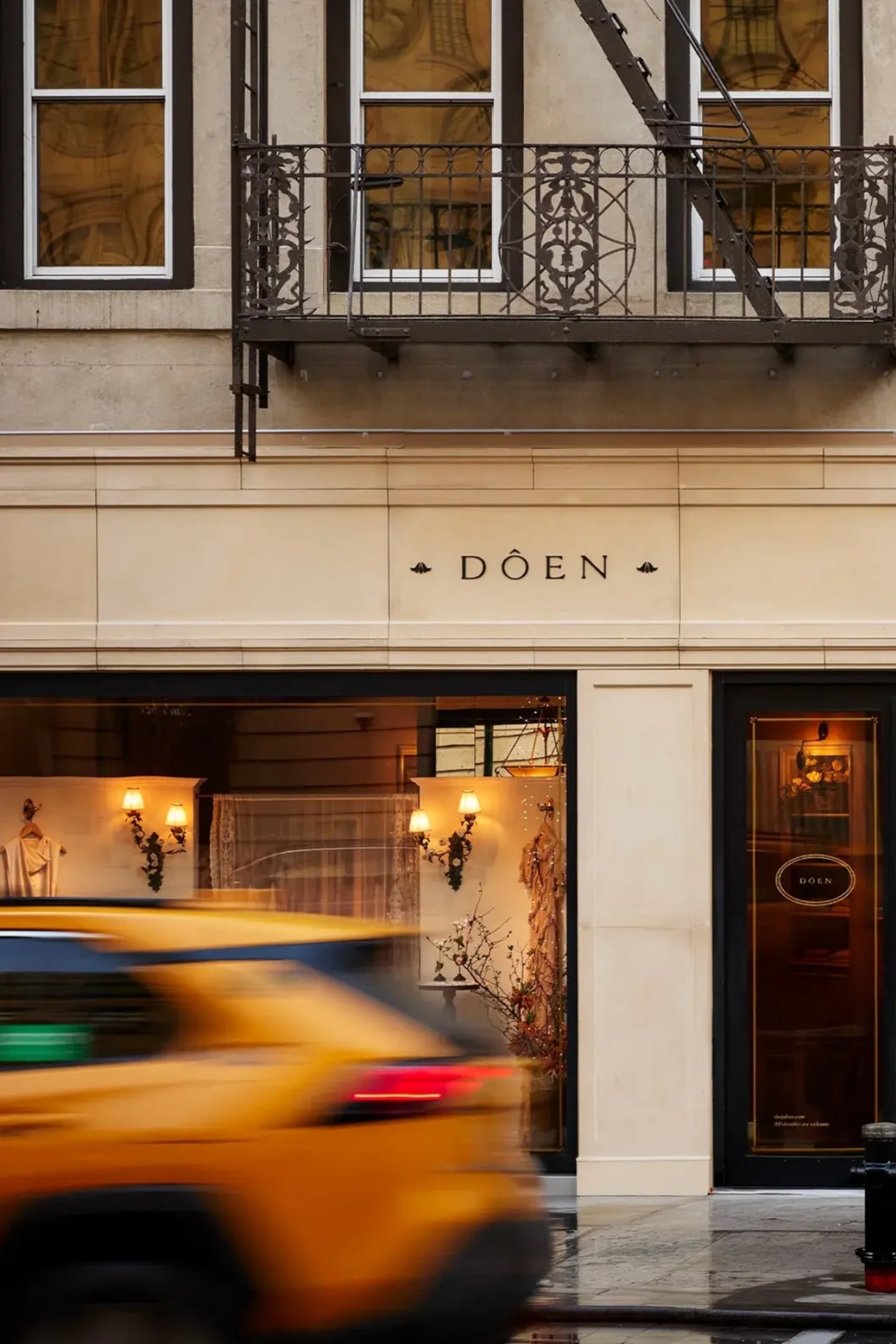
A confluence of factors has made Madison Avenue coveted once again, particularly among the kind of young, emerging labels that once focused on chasing only downtown addresses. A new generation of restaurants and members clubs, including Maxine’s, Chez Fifi and Casa Tua, has given the Upper East Side a fresh dose of energy. The shift was significant enough to merit a Wall Street Journal trend piece last fall asking, “Wait, When Did the Upper East Side Get Cool?” Staud, Dôen, La DoubleJ and Susan Alexandra have all opened Madison Avenue stores this year, while Loewe, Goyard and Cult Gaia have locations in the pipeline.
Madison Avenue’s resurgence reflects a broader shift in luxury retail, as brands increasingly gravitate towards residential neighbourhoods rather than shopping hubs. Leases on Bleecker Street in New York’s West Village, an aughts hub that was filled with vacant storefronts by the late 2010s, are among the most in-demand in the city, with new openings from the likes of La Ligne and Alohas.
London’s Sloane Street and Kings Road in Chelsea are two of only nine key retail streets in London that have realised a full recovery in rents from the pandemic out of 27 total districts, according to Savills data, with new entrants like Ami, Zimmermann and Ulla Johnson. In Los Angeles, Melrose Avenue has seen a resurgence similar to Madison Avenue, with new shops from buzzy brands like Paloma Wool, Khaite and TWP. The trend extends across the globe: Lemaire, for instance, has opened flagships in quieter, more residential enclaves, including Ebisu in Tokyo and Wukang Road in Shanghai.
Since Covid, hybrid work schedules have kept more affluent consumers closer to home, turning neighbourhoods that once served primarily as residential pockets into new centres of commerce, dining and culture. At the same time, as the broader consumer has pulled back on discretionary spending, luxury brands have doubled down on the high-income shoppers who have continued to spend, positioning their stores closer to where those customers live and spend their time.
“When the international tourist traffic ebbs and flows, with currency fluctuations shifting spend, the domestic consumer becomes a bedrock and provides that additional comfort to retailers,” said Marie Hickey, director of commercial research at Savills.
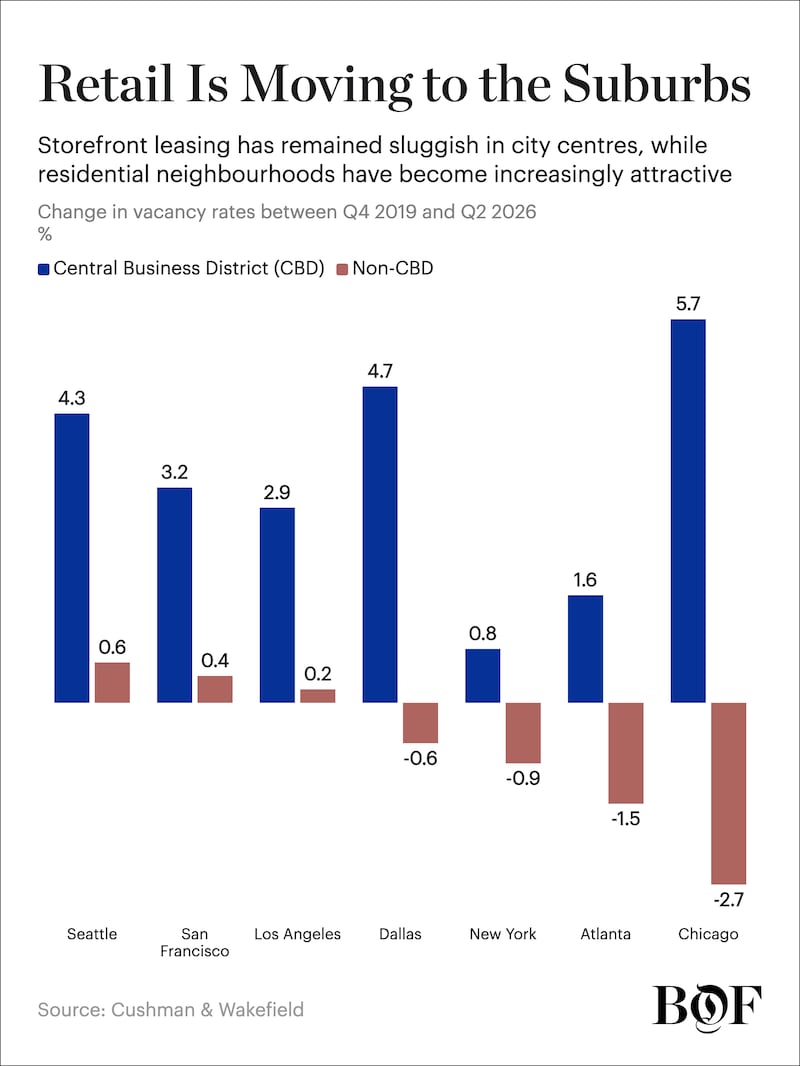
The shift is reflected in retail real estate data in the US. Cushman & Wakefield has found that vacancies in city-centre retail corridors have risen across major American metropolitan areas, including New York, Dallas and Denver, while suburban and non-central retail locations in those same markets have experienced the opposite trend.
“We have seen more experimentation in going out to non-downtown areas, and the reasons for that [are] primarily a result of demographic changes among wealthy consumers,” said James Bohnaker, economist at Cushman & Wakefield. “What’s different in the last 10 years is that there’s been more density around the suburban markets that have become residential.”
ADVERTISEMENT
Madison Avenue has long been a retail destination, but its renewed appeal lies in the strength of its local customer base: affluent residents with a strong connection to the neighbourhood. For that reason, Madison Avenue stores typically see higher rates of repeat purchases and larger average order sizes.
For accessories brand Susan Alexandra, founder Susan Korn said that at its original location on Orchard Street on the Lower East Side, the average order value is $175, while in its Madison shop, which opened in February, it’s $400. Whereas Susan Alexandra’s downtown patron was a woman in her 20s, Uptown shoppers are either much older — in their 60s or 70s — or their teenage granddaughters, Korn said.
“The foot traffic is lower than the Lower East Side, but the sales are larger,” she added. Uptown, she added, multigenerational shoppers tend to buy larger ticket items like bags and homeware; downtown, it’s bag charms that sell.
But serving two different types of clientele means adopting different product strategies. To serve a daughter, a mom and a grandmother, Korn is expanding her catalogue to include a $28 sticker book and fine jewellery that cost upwards of $500.
There is one major caveat to consider when setting up shop on Madison Avenue, Korn warned: the slow summer months, when Upper East Side’s wealthy residents decamp to summer homes in the Hamptons.
When residential retail corridors gain steam, they turn into their own version of a commerce hub, drawing footfall from visitors too.
“Today, in LA, when you ask someone if they’d rather go to The Grove, the Century City Mall or Malibu, they’ll want to go to Malibu,” said Jay Luchs, a retail broker for Newmark based in LA, pointing to popular developments like Malibu Country Mart and Cross Creek Ranch, a new project he was involved in.
Catering to the neighbourhood shopper also means investing in relationship-building. Ruti, a womenswear line known for its pull-on trousers, has always taken a community-first strategy to selecting store locations. It operates five stores across California, mostly in residential enclaves such as Palo Alto and Santa Monica. Earlier this year, it opened its sixth outpost on Madison Avenue, which founder Ruti Zisser felt would jive with her approach to retail.
ADVERTISEMENT

Before opening the store, Zisser said she visited the nearby Butterfield Market grocery store where she saw shoppers stopping to chat with one another — a social energy that she desired to replicate in her store. “It’s important for us for people to come back and say ‘Hi,’ and show us how [they wear their] new pants and talk with other customers,” she added.
In order to facilitate this friendly environment, most of Ruti’s sales associates are salaried employees. Training also entails specific social requirements such as making eye contact with a customer when greeting them and avoiding empty compliments.
“We want to build something authentic and this is why our retention is unusual,” Zisser said, touting that 70 percent of all Ruti sales are generated by repeat customers.
Rents on New York City’s prestigious Upper East Side retail corridor are ticking up for the first time in a decade, as luxury stalwarts and newcomers alike look to tap into the neighbourhood’s affluent customer base.
For up-and-coming brands, a few small, cleverly designed stores in the right locations can have a bigger impact than a giant flagship
With commuting and tourism sharply down, savvy retailers are using creative partnerships with local attractions to target consumers in their neighbourhoods.

Cathaleen Chen is Retail Editor at The Business of Fashion. She is based in New York and drives BoF’s coverage of the retail and direct-to-consumer sectors.
Loading recommended reads…
McQueen’s return from Paris and Christopher Kane’s Mulberry revamp are set to bring fresh energy to a roster that’s relied too heavily on British stalwart Burberry. Shows kick off Thursday.
The buzzy New York designer joins Imran Amed on The BoF Podcast to discuss leaving menswear at The Row to design for her own body and building a fast-growing womenswear label with no investors and no full-time team.
The former Vogue Man Philippines editor will helm GQ’s 23rd international title, whose debut issue features covers starring Darren Criss, Jordan Clarkson and Erwan Heussaff.
The Tokyo-listed company will pay $3.6 million in cash for 100 percent of Undercover, with founder Jun Takahashi relinquishing corporate duties to focus solely on design.